15 Interesting Facts About Rome:
Here are 15 interesting facts about Rome:
- Often referred to as the cradle of Western Civilisation and the Eternal City, Rome is located beside the River Tiber in the Italian Peninsula, it is the capital of both Italy and the Vatican City with a population of almost 3 million people.
- Although there is much debate amongst historians about when the city of Rome was exactly founded, the Roman antiquarian Marcus Teretius Varro dates its origins back to 753 BC but modern historians have pinpointed it to between 753-605 BC. However, there is no recorded history of who established the city-state but many Romans traced the city's foundation back to the Trojan warrior Aeneas after the fall of Troy, the legend of Romulus and Remus and the mythical city of Alba Longa.
- Before the Roman Kingdom in 753 BC, Rome was inhabited by a wide variety of people from various communities such as the Latinum, The Sabines to The Etruscans. These people made up the Roman Kingdom in 753 and were ruled over by a succession of Etruscan Kings started by Romulus, who was succeeded by the Sabine King Numa Pompuilis and later Lucius Tarquinius Superbus in 534 BC, whose reign of tyranny and son Sextus ultimately led to the monarchy's expulsion and the establishment of the Roman Republic led by Brutus and his companions.
- The Roman Republic lasted for nearly 5 centuries from 509 BC to 30 BC. It was not ruled via a democratic system but an oligarchy of powerful families. Rome conquered the whole of the Italian Peninsula becoming the most powerful force in the Mediterranean and administered its territories through promagistracies. In this period, Rome was in a quasi-state of war against enemies such as the Gauls, the Etruscans to the Carthaginians during the three Punic Wars.
- Later in 49 BC, Rome erupted into a civil war between Julius Cesar, the Senate and Roman General Pompey, which resulted in defeat for Pompey, his assassination at the hands of Lucius Septimus, a Roman mercenary on the orders of Ptolemy XIII to gain favour with Cesar. However, despite his victory and appointment as dictator for life, Caesar was eventually assassinated on the Ides of March, 44 BC.
- Octavian and Mark Anthony pursued Caesar's assassins and defeated them in 42 BC. The Roman Republic was eventually split into three territories ruled by Mark Anthony, Augustus and Lepidus known as the Second Triumvirate.
- Augustus became the first Roman Emperor of the Roman Empire in 27 BC after defeating Mark Anthony and Cleopatra at the battle of Actium in 31 BC and started the Julio-Claudian dynasty that ruled until the death of Nero in 68 AD. Afterwards, the Roman Empire was engulfed in a series of civil wars and the succession of four emperors which became known as the Year of the Four Emperors. However, this period also marked the transition from the Julio-Claudian dynasty to the Flavian dynasty, when Vespasian came to power in 69 AD after putting down the First Jewish-Roman War on the orders of Nero.
- During Vespasian's reign, he undertook a series of public works such as The Temple of Peace and most importantly the Colosseum. He didn't live to see it finished, but it was completed by his son and successor Titus in 80 AD. The Flavian Amphitheatre housed 50-80,000 people, it was used for re-enactments of famous battles and dramas from Roman myths, gladiatorial games to mock sea battles. It is also where we get the bread and circus saying from and is regarded as an architectural inspiration for modern-day football stadiums.
- Before the Battle of the Milvian Bridge against Maxentius's forces, Roman Emperor Constantine the Great had a vision of the cross, which entailed replacing the imperial eagles on his army's insignia with the cross to guarantee victory. Constantine adopted the cross, defeated Maxentius's forces and later Licinius's forces to become the sole ruler of the Roman Empire and establish New Rome otherwise known as the Byzantium Empire.
- The Western Roman Empire began to decline and eventually fell during the Sack of Rome in 476 AD by the Visigoth forces led by King Alaric. However, the Western Roman Empire was survived by the Eastern Roman Empire otherwise known as the Byzantine Empire, which lasted from 330 AD to 1453 when Constantinople was stormed by Ottoman troops and the last emperor Constantine XI died in battle, which became a part of the Ottoman Empire.
- Known for its various delicacies, Roman traditional foods include Carbonara, Bruschetta and the Roman Pizza.
- Also referred to as 'Caput Mundi' (The Capital of the World), Rome is considered one of the major hubs of the Renaissance and is considered the home of Neoclassicism and the Baroque architectural style.
- The insignia of Rome is the Aquila, which is an eagle on a penchant with its wings outstretched marking the span of the Roman Empire.
- Rome became the capital of the Kingdom of Italy in 1871, which became the capital of the Italian Republic in 1946.
- Rome is also home to a wide variety of businesses such as the Italian football club Roma FC, the iconic movie studio of Cincinetta and the popular Italian Neorealist movie Rome, Open City (Rossellini, 1946) was filmed on the streets of Rome during WW2 in 1945 whilst the allies occupied the city.
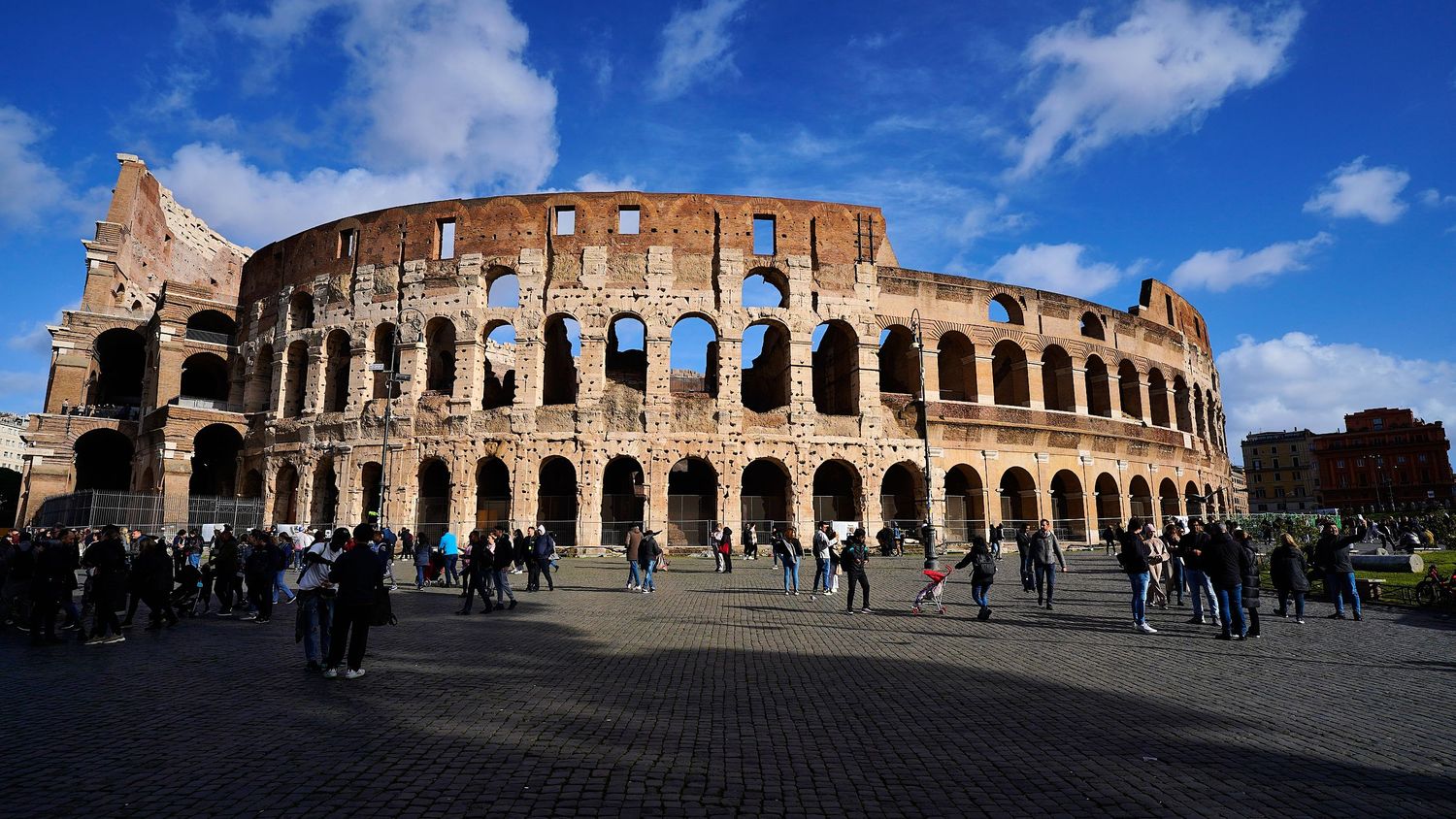
The Colosseum in the Piazza del Colosseo, Rome, Italy.
02/12/2023-Rome:
Around 8:55 am, the plane began its descent towards Rome's Fiumicino Airport, I immediately gripped the nearby armrest and looked out the window, to take my mind off the landing as the plane's tires hit and bounced off the tarmac of the runway. I quickly strapped on my rucksack and proceeded to the exit, breathing in the fresh Mediterranean air as I encountered a sunny climate with a mild breeze. I cautiously walked down the airstair and put on my sunglasses as the sunlight hit my face. The security checks only took a few minutes to complete, as the queues moved fast. We then got a taxi, which took us straight to the Colosseum but on the way, we passed the San Sebastian Catacombs, which I've been told I've been to but have no recollection of. For some reason, I recollect the bumpy and uneven road to those catacombs from a previous visit.
Colosseum, Arch of Constantine & Roman Forum-Anyway, when we arrived at the Colosseum, the roads were full of cars and after crossing I noticed how busy the Palazzi del Colosseo was with locals, tourists, street vendors and large groups of children on field trips. The Colosseum was as I remembered it when I was a kid, massive in size, sophisticated and impressive in terms of its history, symbolism, influence from the Greeks, and Romanesque architectural style. In my personal opinion, when gazing upon it from the outside, it left me speechless, insignificant and marvelled at this historic achievement. The elliptical amphitheatre was commissioned by Emperor Vespasian in 70-72 CE from the spoils of war after putting down the Great Jewish Revolt in 66-70AD on the orders of Nero but the Colosseum would be completed by his son Titus in 80CE. The Colosseum was a part of a mass-building project undertaken after the great fire of Rome, civil wars and the plague. Near the Colosseum is the Arch of Constantine, designed in a Corinthian Order architectural style, the triumphal arch was created by Roman Emperor Constantine the Great between 312 & 315 AD to commemorate his victory over Maxentius at the Battle of the Milvian Bridge in 312 AD and contains architectural features that refer to the reigns of previous Roman Emperors like Hadrian, Marcus Aurelius & Trajan. We finally entered the Colosseum after queueing up for a few minutes, at first I noticed the various entrance points, archways, columns, stones and marbles on display in dimly lit passageways. However, I was drawn towards a large wooden Christian Cross that leads inside into the Colosseum, like when fans walk up a passageway towards their seats in football stadiums. The Christian Cross symbolises the Roman Empire adopting Christendom as its official religion in 314 AD during the reign of Constantine the Great. As I walked through the archway, I came to the first level and could see the entirety of the Colosseum's interior, including its various levels, seats of Roman citizens and the emperor. Stepping out onto that ledge, I felt like I was transported back in time to Ancient Rome and could witness the spectacle, violence & brutality of the mock sea battles to the gladiatorial games, as they were observed by a ruthless crowd and emperors-like Titus who held power over life and death. It also got me thinking about the iconic Pollice Verso (Jean-Leon Gerome, 1872) painting, which refers to the brutality and violence associated with the games. However, I was also drawn to the Hypogeum which is an underground passageway with a series of tunnels located underneath the monument's arena, where the celebs of their day, such as gladiators like Priscus or Verus, beast fighters (Bestiarii) and hunters (Venatores) as well as other prisoners resided and awaited their fate in front of a enormous crowd. As well as exploring the other levels, the Colosseum provides an excellent view of nearby tourist sites like the Arch of Constantine, the Roman Forum & the Arch of Titus, which I could see in the distance. Before leaving the Colosseum, I purchased a small memento of the Colosseum from the gift store. We then proceeded passed the Arch of Constantine to queue up for the Roman Forum. Located in the centre of Rome on land between the Capitoline Hill and the Palatine Hill, the Roman Forum was founded during the 8th century. It was designated as a site for significant political, social and religious activities. Many historians believe that people began to debate in the Forum around 500 BC, which marked the beginning of the Roman Republic. However, due to the long queue, we had to forget the Roman Forum as it would take too long to queue up for and if we stayed it would affect our travel itinerary, so to comply with our arduous travel plans, we proceeded towards the Vatican Museum, along the main road street vendors were trying to sell items to tourists and an old man sang an opera song near a Statue of Julius Cesar. We also passed by a few tourist sites such as the Tempio della Pace in the Roman Forum, the Sacrario delle bandiere (Army Museum), Le Domus Romane di Palazzo Valentini and Trajan's Column both located in Trajan's Forum as well a few narrow streets before crossing the St. Angelo Bridge towards the Castel Sant'Angelo to head towards the Vatican Museum.
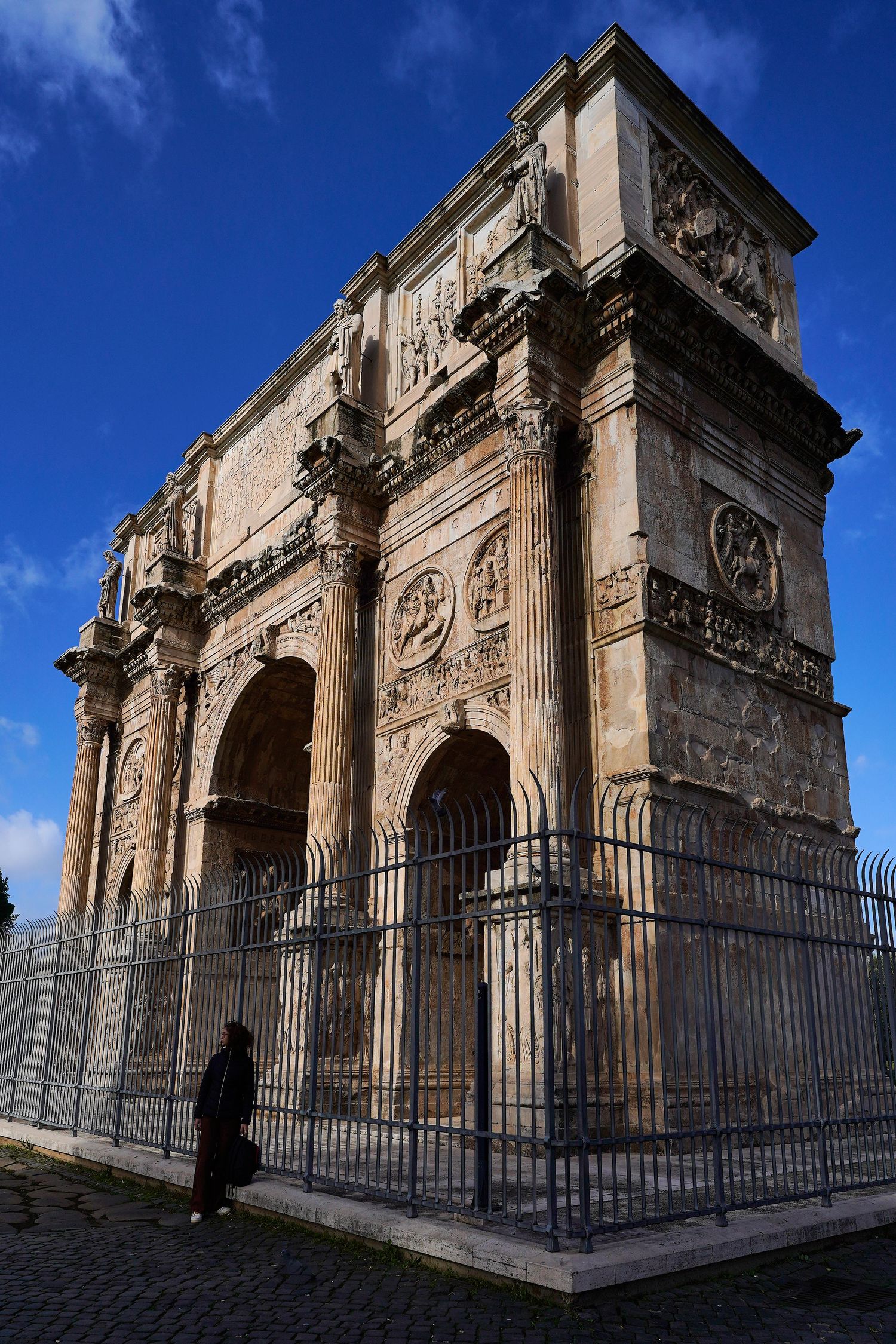
The Arch of Constantine in Rome, Italy.
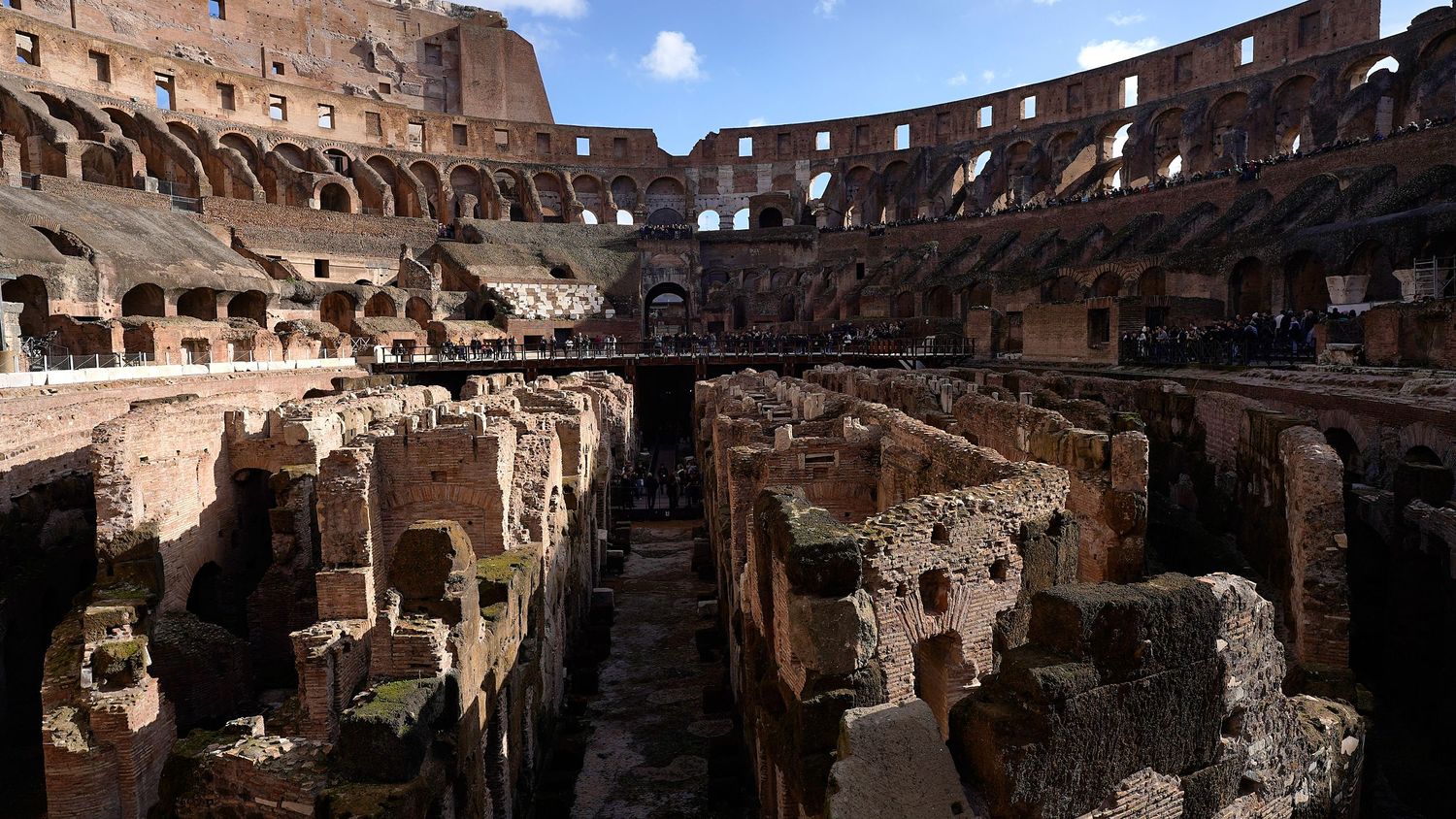
Inside The Colosseum and the Hypogeum (Below) in Rome, Italy.
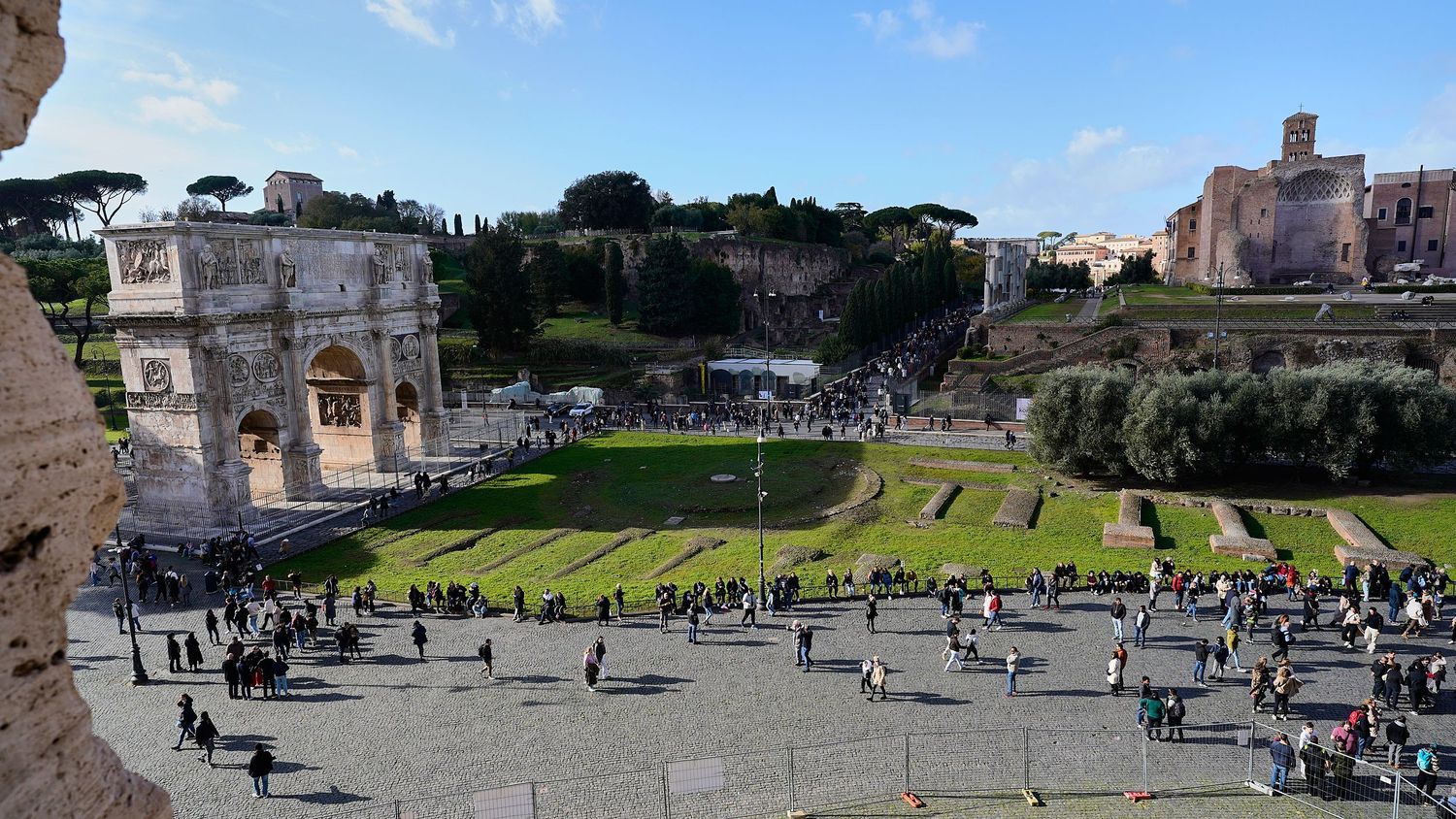
The Arch of Constantine (Left) & The Temple of Venus & Rome in the Forum (Background) in Rome, Italy.
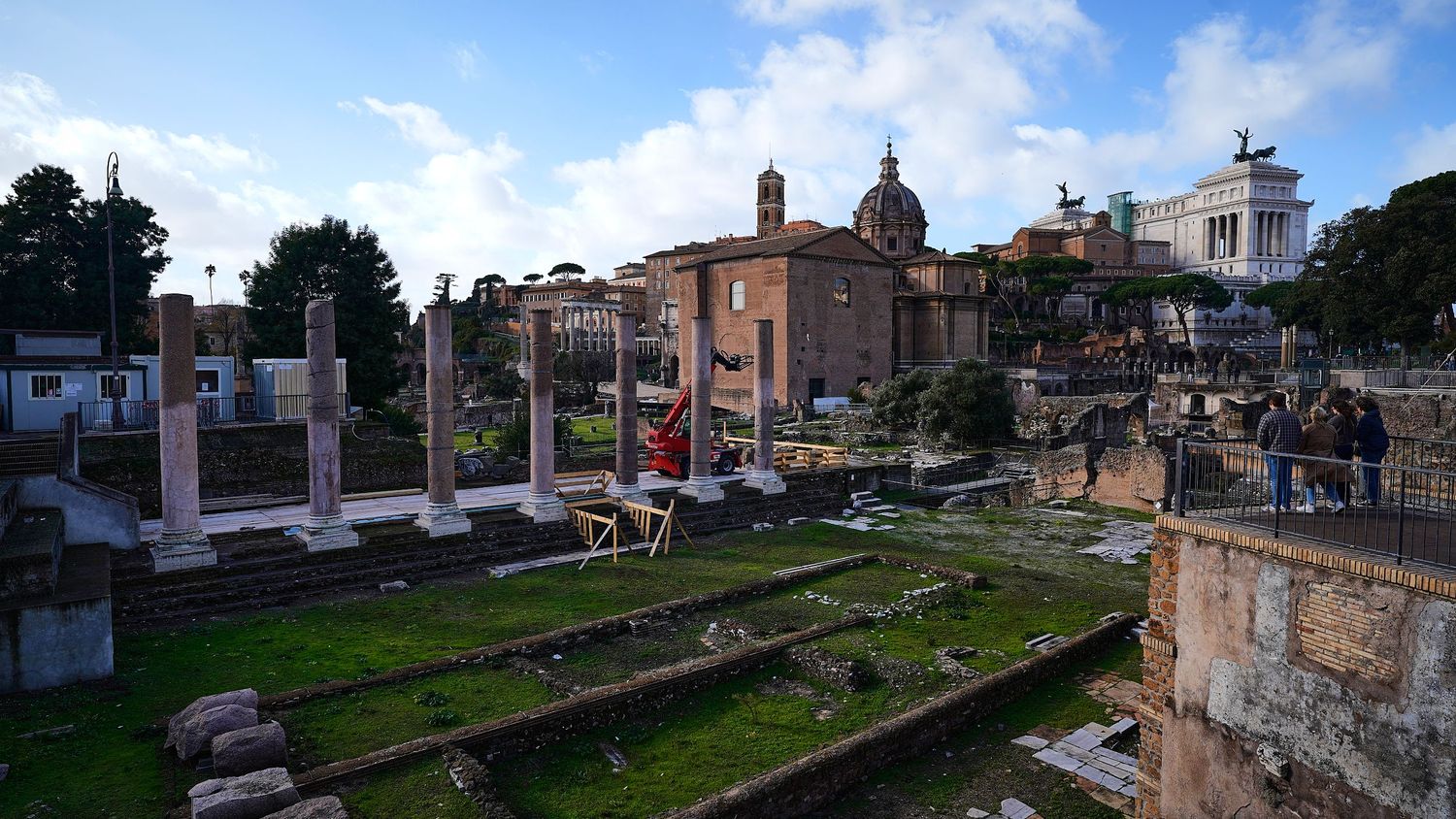
The Temple of Peace (Below), Le Dominus Romane di Palazzo Valentini (Middle) & the Sacrario delle bandiere (Background) in Rome, Italy.
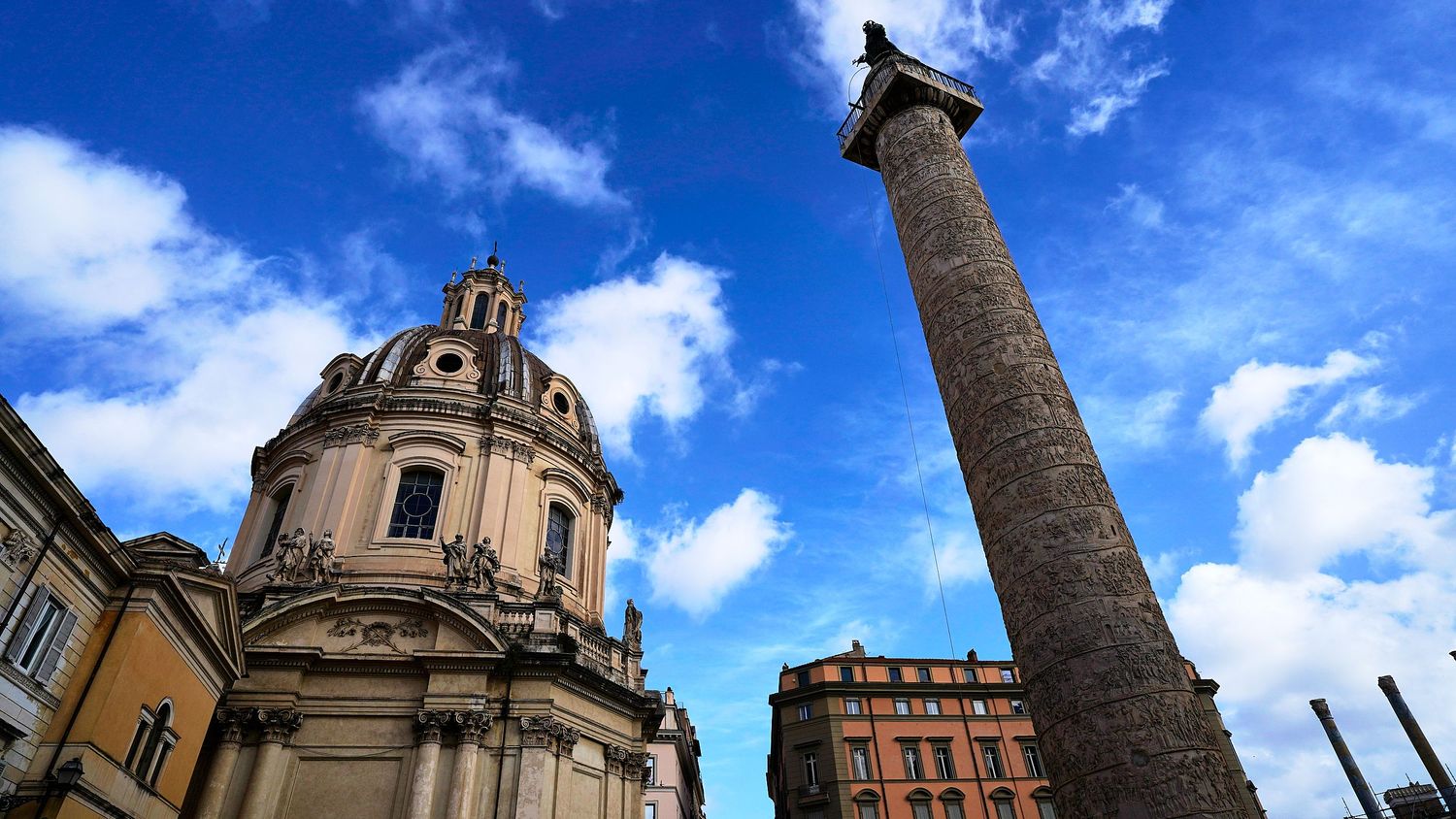
Le Domus Romane di Palazzo Valentini & Trajan's Column in Trajan's Forum, Rome, Italy.
Vatican Museum, The Sistine Chapel and the Spiral Staircase- Our next stop was the Vatican Museum, which was roughly a 40-minute walk from the Colosseum, so we hurried across the city and the River Tiber to the Vatican Museum. As we hurried towards our next destination, I passed by a shiny red Vespa but what stood out in my mind at that point was the enormous wall that encloses Vatican City as we walked up the 107 Viale Vaticano road. Above the entrance of the museum was a giant plaque. After entering, we proceeded through a security check and went on to explore the museum. We walked through a courtyard filled with Roman busts and statues. In the short amount of time, we had we went through many rooms that contained various beautifully sculpted statues, larger-than-life paintings and vibrant frescoes such as the La Pietà di Michaelangelo (Michelangelo, 1498-99), an incomplete Saint Jerome in the Wilderness (Da Vinci, 1480), The Transfiguration (Raphael,1516-20) to the Stefaneschi Triptych (Giotto, 1330). All these pieces of artwork were extraordinary to see but one last room, we eagerly came to see was the Sistine Chapel. After going through a series of rooms to get to the Sistine Chapel, I stepped through the entrance into the room. Everywhere, I looked the walls and ceilings were decorated with colourful, insightful and awe-inspiring artwork such as Adam and Eve in the Garden of Eden (Wenzel Peter, 1800-29) and of course The Creation of Adam (Michaelangelo, 1511), I couldn't decide which part within the room to look at first. In front of us was an altar, behind it was a large Christian cross with Christ on it and the room was filled with people. In the room, security guards watched the crowd of people to make sure that no one took any pictures but that didn't stop people like a middle-aged American from trying and he was warned by security. The American quickly apologised. In that room, the artwork left me speechless, overloaded by the beauty, craftsmanship, intricate details and techniques as well as the extraordinary stories these pieces of artwork communicated. I felt like my head was going in several directions at once. After exploring the various rooms, we entered the gift shop and then proceeded to the exit, walked towards the Scala Elicoidale Momo (Bramante Staircase), which was surprising to see at first as I had never seen a spiral staircase like that before and after strolling down it we left the building and headed towards The Vatican.
The Vatican, St Peter's Square- Afterwards, we endured a fourteen-minute walk from the Vatican Museum to St Peter's Basilica in St Peter's Square. Vatican City is a landlocked independent city-state located on the River Tiber's west bank in Rome, which was once a marshy region known as Ager Vaticancus. St Peters Basilica is the residence of the current Christian pope which is guarded by the Swiss guards, it's regarded as the spiritual home of Christianity and became a sovereign nation via the 1929 Lateran Pacts. The Vatican houses the tomb of St Peter, Renaissance artwork and consists of both Baroque and Renaissance architectural styles. We ended up joining a long queue that stretched from the security gates near St Peter's Basilica in St Peter's Square towards the columns located on the left-hand side, however, the queue pretty much went faster than we expected and we got into the Vatican after waiting for around 15 minutes and passing through the necessary security checks. When we got into the Vatican, I first noticed some statues like La Pietra di Michaelangelo, the mosaics on the floor, the Greek-styled columns in the building, St Peter's Baldacchino (Bernini, 1633) located above St Peter's Tomb in the Necropolis, The Altar of St Leo the Great (Algardi, 1653) and the artwork situated on the walls and ceilings of the structure. Seeing it again was extraordinary and mind-boggling, especially being an adult I felt like I was better able to appreciate it more. After exploring the Vatican, I prayed for a few minutes and then proceeded to go towards the rooftop but only to be notified that access to the rooftop was closed for the rest of the day. We exited St Peter's Basilica and walked down the Via della Conciliazone opposite St Peter's Square, as we tried to figure out the next tourist destination to visit. Along the walk, we passed a few people walking towards St Peters Square, a teenager out with his friends wearing a centurion helmet on a lad's night out and people taking selfies around a red Ferrari and silver Lamborghini. Both cars were of course beautifully designed but I preferred the Lamborghini, because of its design and the green, white and red stripe that ran down the middle of it, which referred to the Italian flag.
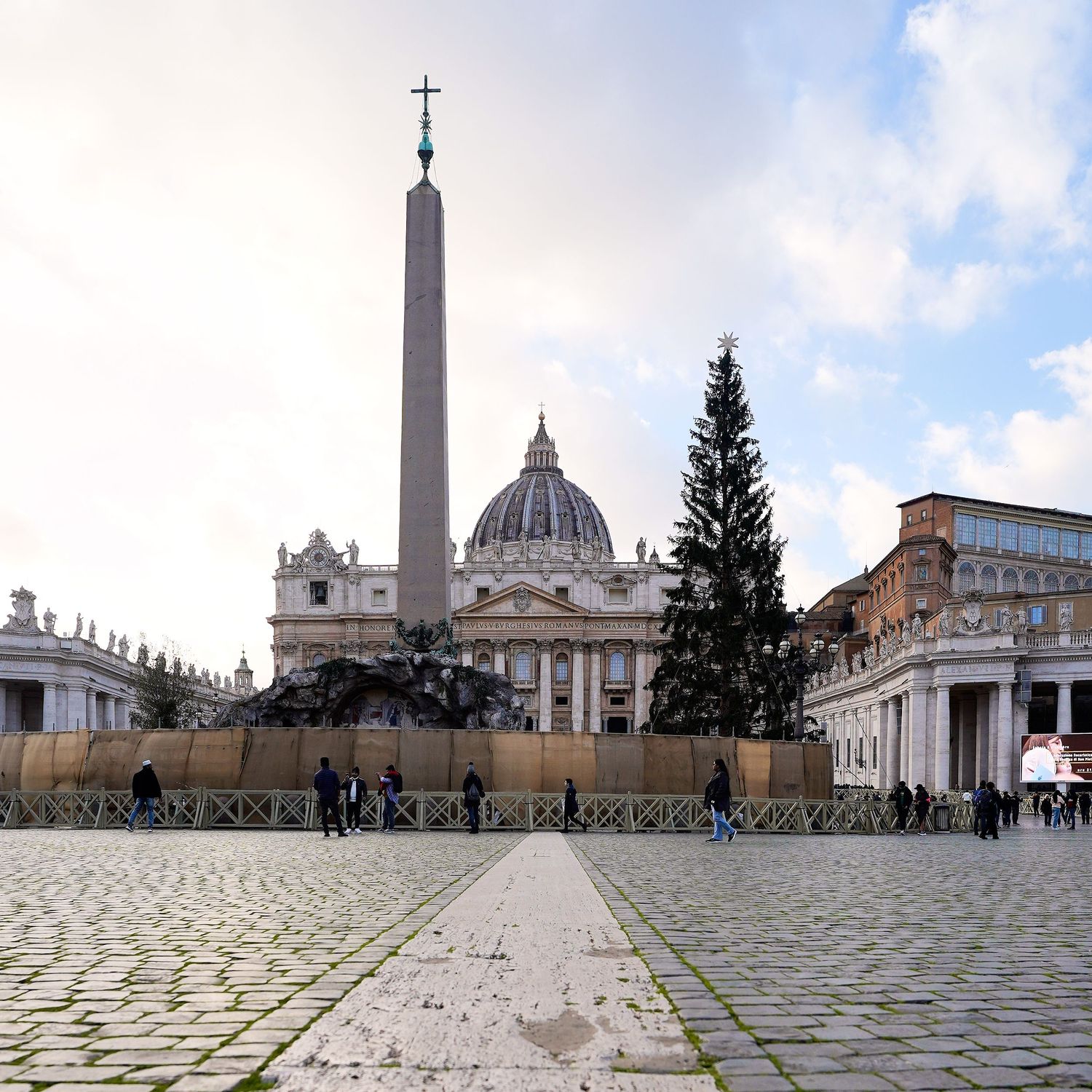
The Obelisk of St Peter's Square with Christmas Tree (Both in the middle) in front of St Peter's Basilica (Background) in St Peter's Square, Vatican City, Rome, Italy.
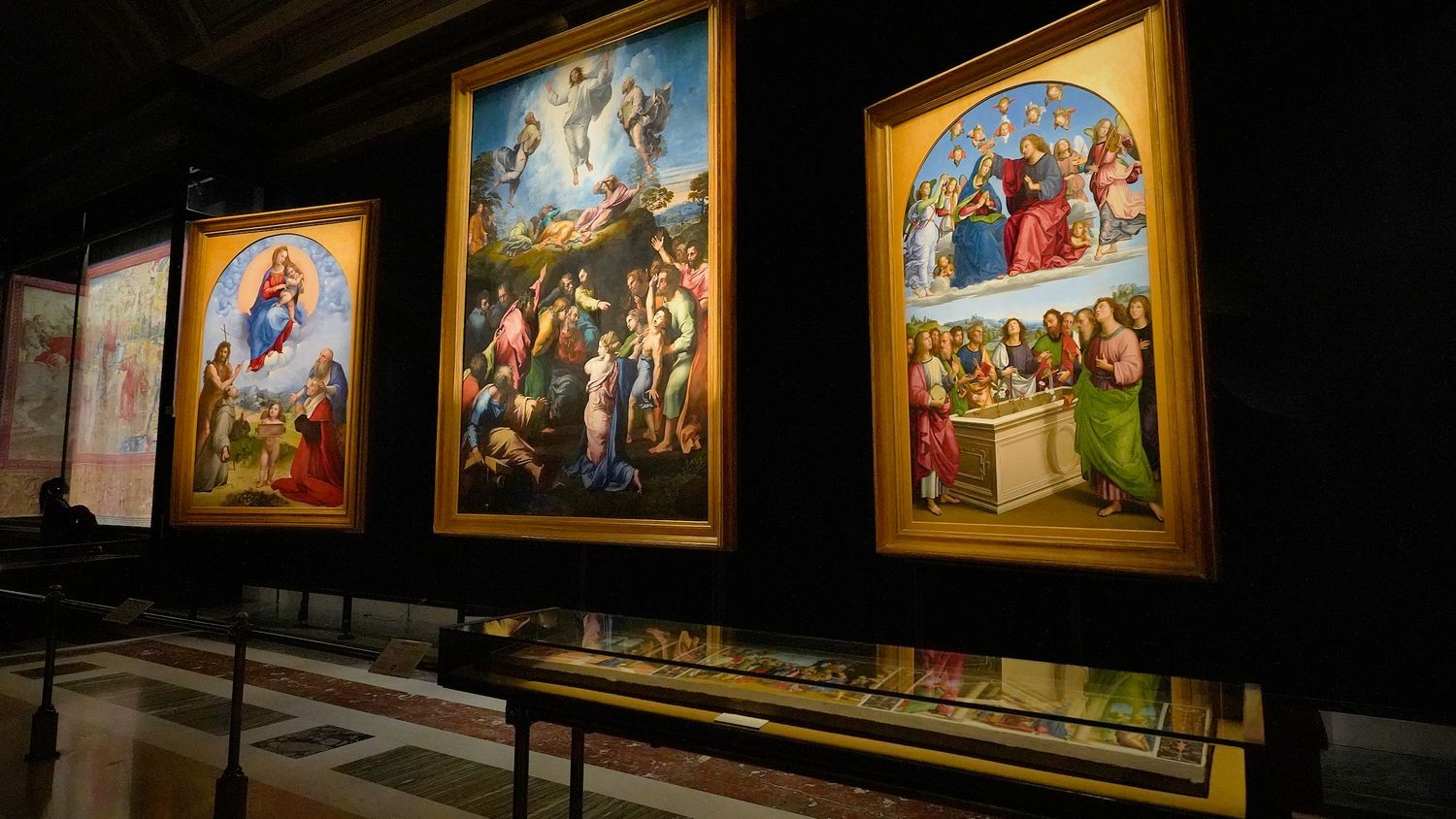
Madonna of Foligno (Raphael, 1511-12), (Left), Raphael's Transfiguration (1516-20), (Middle) and The Crowning of the Virgin ( Raphael, 1502-04), (Right) in the Raphael Rooms, Vatican Museum, Vatican City, Rome, Italy.
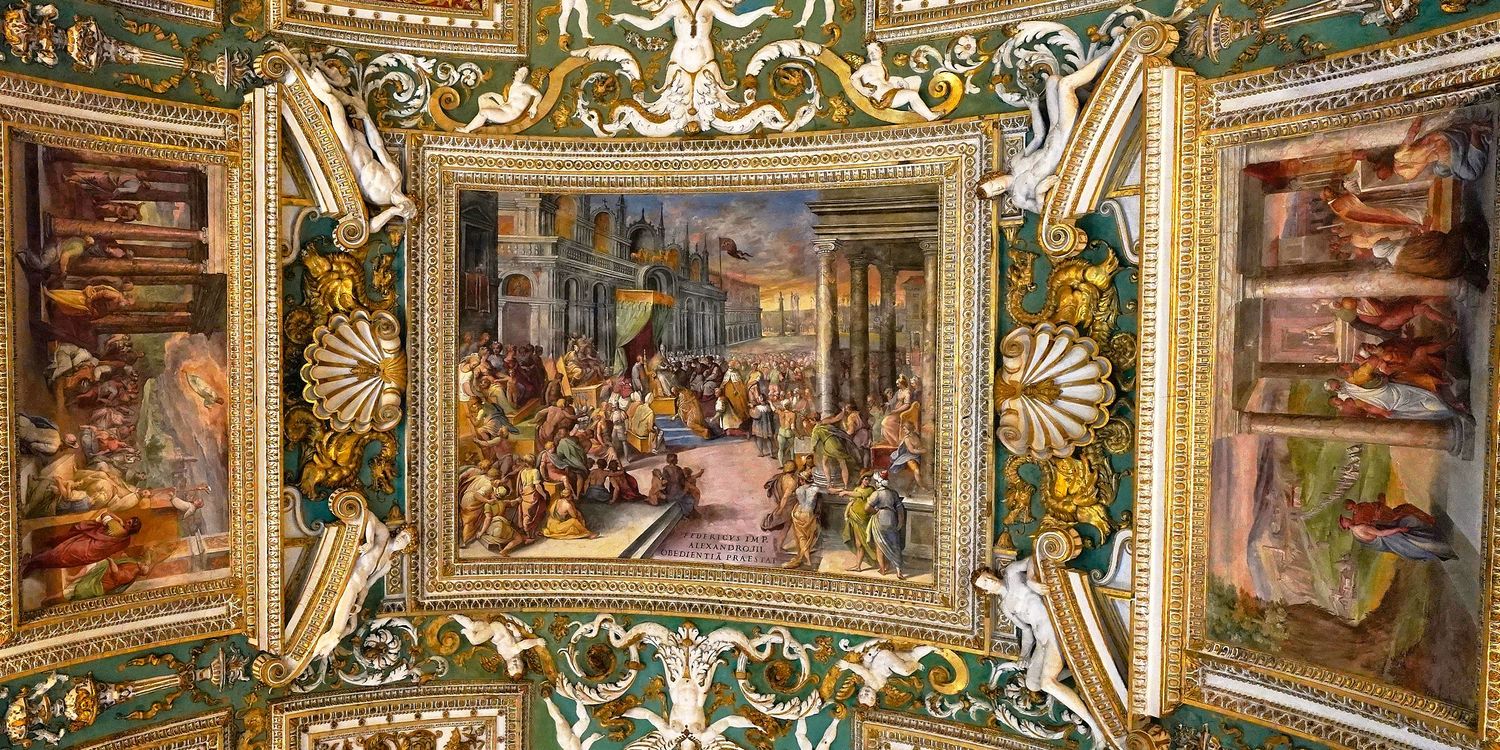
Holy Roman Emperor Frederick Barbarosa Submits to the Authority of Pope Alexander III (Zuccario, 1585) on the ceiling of the Room of Maps, Vatican Museum, Vatican City, Rome, Italy.
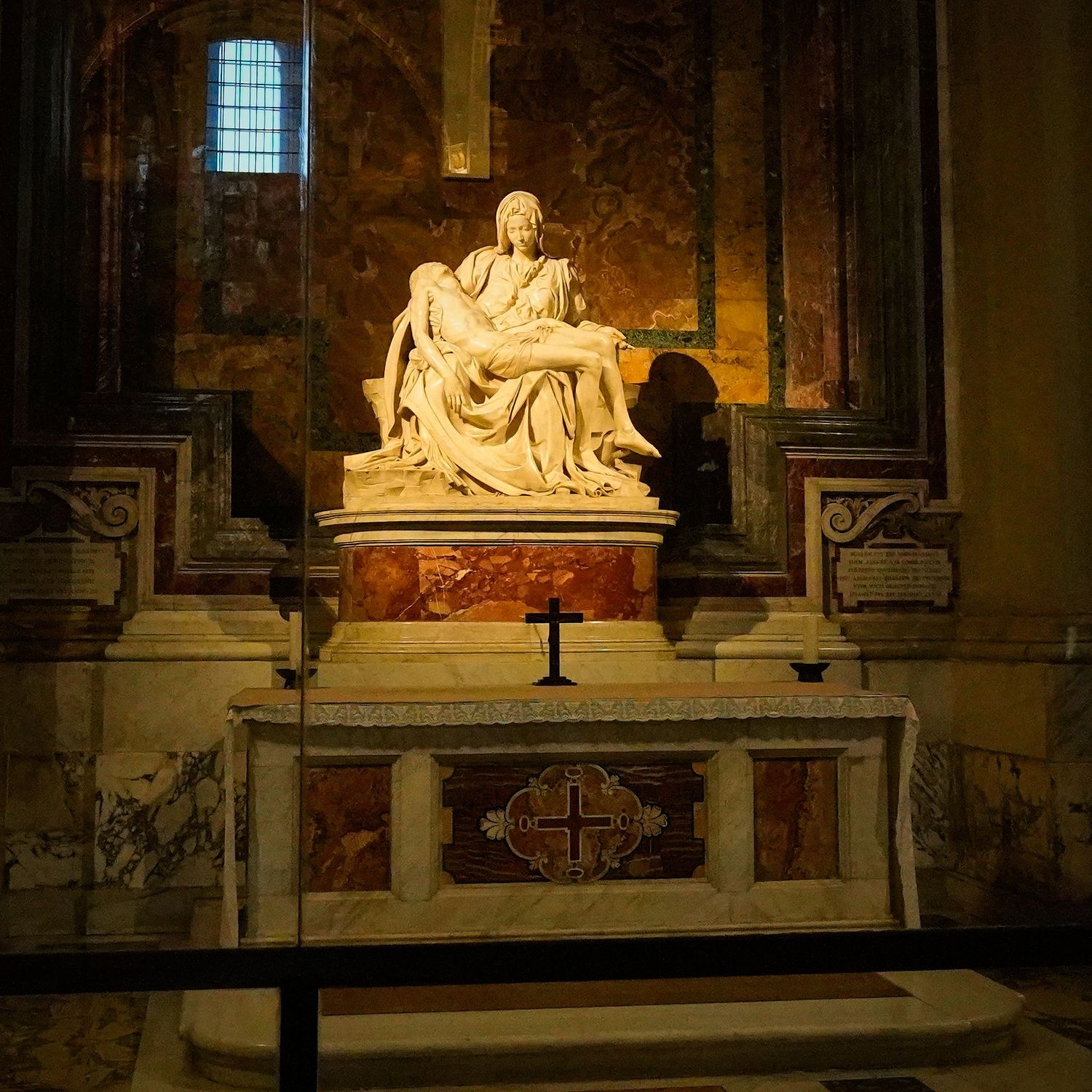
La Pieta (Michaelangelo, 1498-99), St Peter's Basilica , Vatican City, Rome, Italy.
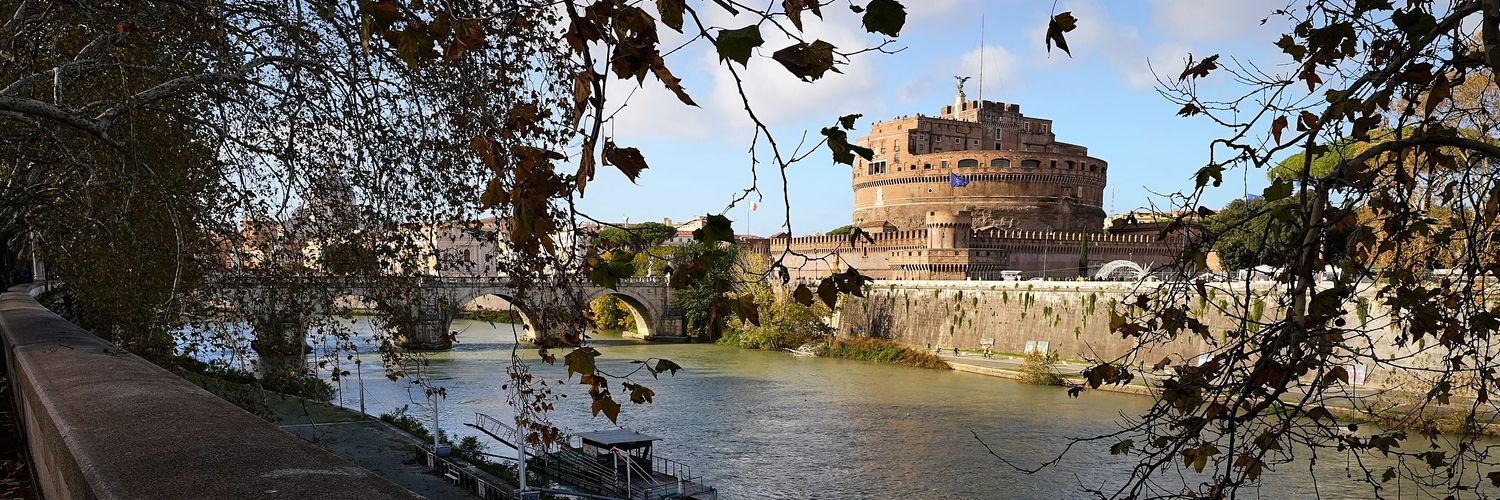
The Castel Sant'Angelo and the St. Angelo Bridge (Ancient Bridge built by Emperor Hadrian): We then walked towards the nearby Castel Sant'Angelo. A few minutes later, we arrived at one of the most famous bridges in Rome, the Sant Angelo Bridge created in 134 AD during Emperor Hadrian's reign, which is positioned above the renowned River Tiber. The bridge was full of people, a photographer conducted an outdoor photo shoot of a woman wearing a long, flowing silk blue dress and others photographed the castle itself as the Italian police strolled down the road on the lookout for trouble towards two people dressed as centurions. The street lamps illuminated the pathway with the statues of angels and saints located on either side of the bridge. In front of us was the Castel Sant'Angelo a towering and domineering second-century castle, built during the reign of Emperor Hadrian to house the ashes of his family. It encompasses both Ancient Roman & Renaissance architecture, the structure now functions as a renowned museum and symbolises Rome's history & heritage over the past two millennia. After purchasing some tickets, we travelled up the spiral ramp and saw some impressive painting collections, military exhibitions, busts of past Roman Emperors, statues and a courtyard, However, what I enjoyed seeing the most was the bronze statue of the archangel Michael positioned above the terrace, the terrace provided excellent cityscape views of Rome, especially St Peter's Basilica it was overwhelming and bewildering to see. Seeing it at night was like seeing another side of the Eternal City. After spending some time on the terrace, we walked down the stairs, along the Alexander VII Walkway which provided more excellent views of Rome but also on display were military exhibitions sealed off from the public, on display were military remnants such as weapons like catapults, armour and canons etc. I was glad to see the Castel, as it was a tourist destination, which I was eager to see and explore. In my opinion, there are only two castles that I've ever seen in my lifetime, which compared to it, which are the Tower of London and the Sforza Castle located in Milan.
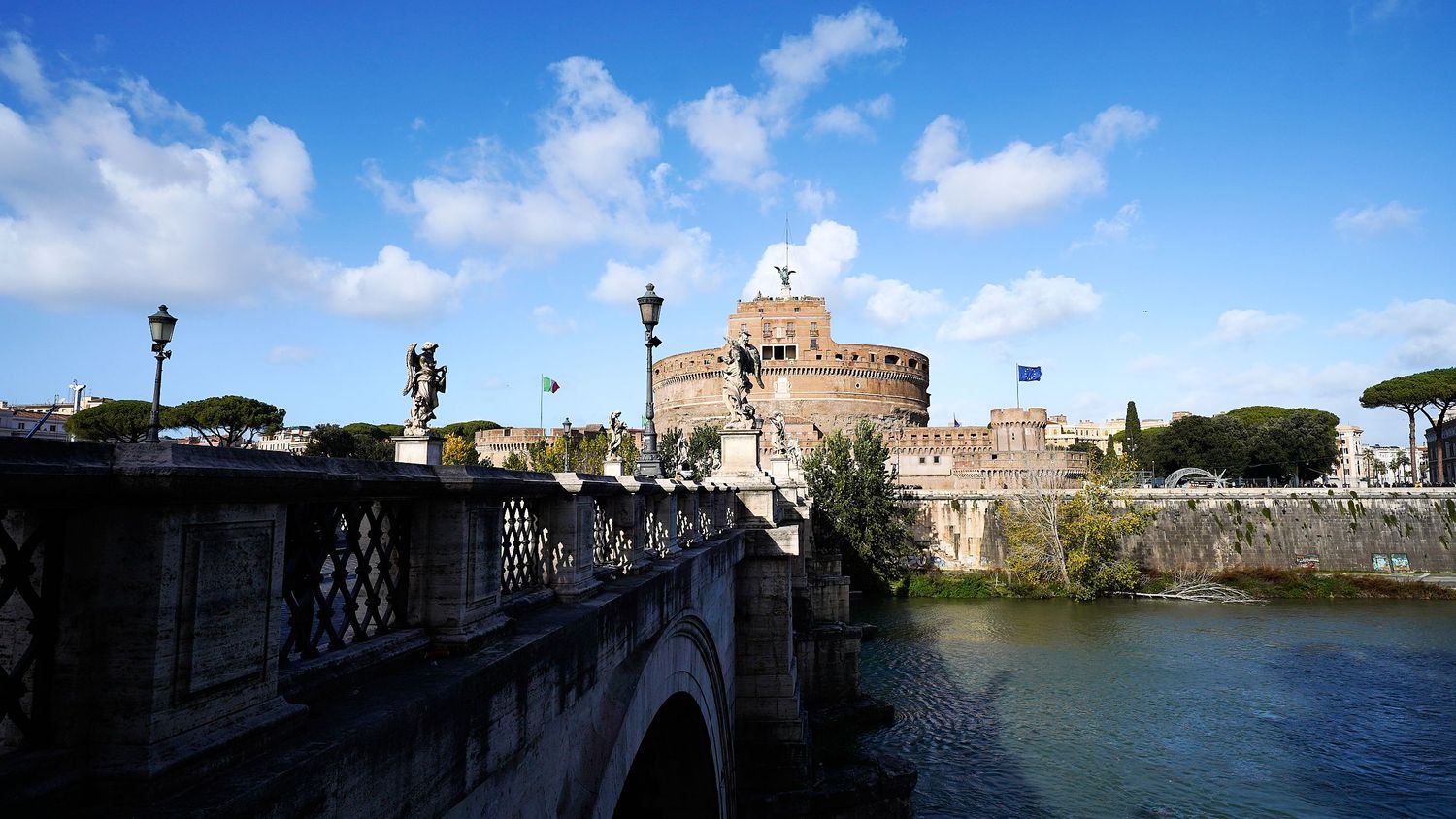
Castel Sant'Angelo with the St Angelo Bridge over the River Tiber, Rome, Italy.
The Pantheon-By the time we arrived at the Pantheon, it was getting dark in the evening, the Piazza della Rotonda was full of people and some sat down around the nearby fountain. As we approached the Pantheon, I could only marvel at one of Rome's longest-surviving buildings with its Greek-inspired columns and circular foundation. Considered one of the best-preserved buildings in Rome, the structure is thought to date back to between 126-128AD during Emperor Hadrian's reign and stands on a previous structure completed in 25 BC by statesman Marcus Agrippa, Emperor Augustus's son-in-law. It's also thought to have been created as a temple to the Roman Gods and the hole in the roof enables light to pass through, which symbolises the relationship between the gods and the temple. As we had previously purchased our tickets online ahead of time, we didn't experience any delays or issues getting inside and there wasn't a queue to wait in, so we immediately went inside. As I went in I looked at my cousin's confused face as he was mystified by the hole in the roof of the Pantheon and the possibility of rain pouring into it. Anyway, after explaining to him why the Pantheon was constructed the way it was, we looked around inside the landmark, looking at sites like the chapel, the tomb of Raphael and past Italian kings. The Pantheon is truly a captivating structure to see and has long roots that stretch far back in Ancient Roman history.
Trevi Fountain-After our brief stay at the Pantheon, it was getting darker in the evening and there was still a mild breeze in the air but at least it wasn't pouring with rain. The Piazza della Rotondo was filled with a wide range of people from different circles of life, people flocked to the nearby restaurants and other people sat down around the nearby water fountain & the Obelisk of the Pantheon eating and conversing. As we left, we had one last glimpse of the Pantheon in the Piazza della Rotonda before heading towards Trevi Fountain. As we walked I saw people having a good time at nearby restaurants ordering their meals and conversing with friends and family. Light beamed from the nearby street lamps that illuminated the streets, a middle-aged man played the guitar as he sang an Oasis song whilst people dropped money into his guitar case and music emanated from various other sections of the city. We passed a few tourist and brand stores like Venchi but unfortunately, we didn't have time to stop and browse. The nighttime life of the city was truly coming alive at that point. Around a street corner, we were met by the magnificent sight of the Trevi Fountain in the Piazza de Trevi, which as you can imagine was surrounded by a bunch of people. Built on the site of a demolished 17th-century water fountain, Trevi Fountain was created by Guiseppe Panini in the 18th century in a Baroque architectural style, that features depictions of ancient deities, myths and legends. A story associated with the fountain is the 'Taming of the Waters' and you can notice the figurines of Neptune towering over another Greek god of the sea, as the Tritons guide a small chariot controlled by Oceanius taming the sea horses. The busy square must have been good for the local store owners, as I saw people going to nearby ice cream stores, taking pictures of the iconic fountain whilst others sat down and took it all in whereas other people threw euros in the fountain. Never had I ever seen so many people congregate into one small space in my life. Seeing the iconic fountain lit up at night was truly mesmerizing to behold. Knowing what little time we had left of this travel experience, I took a few photos to remember the occasion, gazed in awe at the splendidness of the fountain and engaged with my brother & cousin in throwing some euros into the fountain. I'm not sure if you know this but according to the legend throwing a coin into the fountain, will bring you good luck and one day you'll return to the Eternal City. Maybe, there is some truth in that because as the popular phrase goes, all roads lead to Rome. Seeing the Trevi Fountain was truly both a fantastic and memorable experience, that I'll look back on fondly and cherish. If I had more time I would've stayed there a bit longer but sadly we couldn't.
L'Antica Pizzeria di Tevi-Anyway, enough was enough and we needed to grab some food before we set off to get our train towards Fiumicino Airport as we were cutting it close. Before the trip, I researched a few pizzerias near the tourist destinations for the day trip, as we didn't know how many tourist sites we would see within 24 hours. It turns out that on this brief travel adventure, we saw more sights than we thought that we ever would and we wanted to give our cousin a true authentic Roman experience as this had been the first time he had visited Rome. We decided to go to L'Antica Pizzaria di Tevi and purchased two pizzas, a Margherita and a Trevi, which only took 10mins to cook in their stone oven as we waited outside. The pizzas were given to us outside in their boxes. As I lifted the top of the box, I could instantly smell it, it smelled great and when I tasted it, it was scrumptious. My cousin had wished we got one more as they were that good. However, I think that we accidentally set an unhealthy precedent for him as he has a craving for Italian pizza and to live in Rome. I guess once, you've had a taste of Rome, it's hard to let go. Anyway, as we finished off our pizzas and looked at the Roman Forum one last time, I could also distinctively hear the soundtrack of the movie, Gladiator (Scott, 2000) being played in the background. We then went to the Piazza del Colosseo for a brief moment to go around and see the Colosseum one last time. In the evening the historical landmark was lit up and eerily quiet as there were a less amount of people in the square. It is an extraordinary symbol of what means to be Roman and the vast control it had over its territories in the empire. After taking in the grandeur of the Colosseum we hurried to the Roma Termini (Rome Train Station) to catch our train to the airport. At first, the ticket machines wouldn't work when we tried to buy tickets from it but luckily a local helped us out. We purchased our tickets, ran to the platform to get our train and sat comfortably on the train for half an hour to forty minutes until we arrived at Fluminico Train Station. We then got the 23:05 plane from that airport to Gatwick Airport getting in at 1:30 am. From that experience, I was grateful to see some of Rome in all its splendour and magnificence and if you haven't been to Rome, include it on your bucket list. There is no other capital in the world attributed to the cultural & historical identity of Rome.
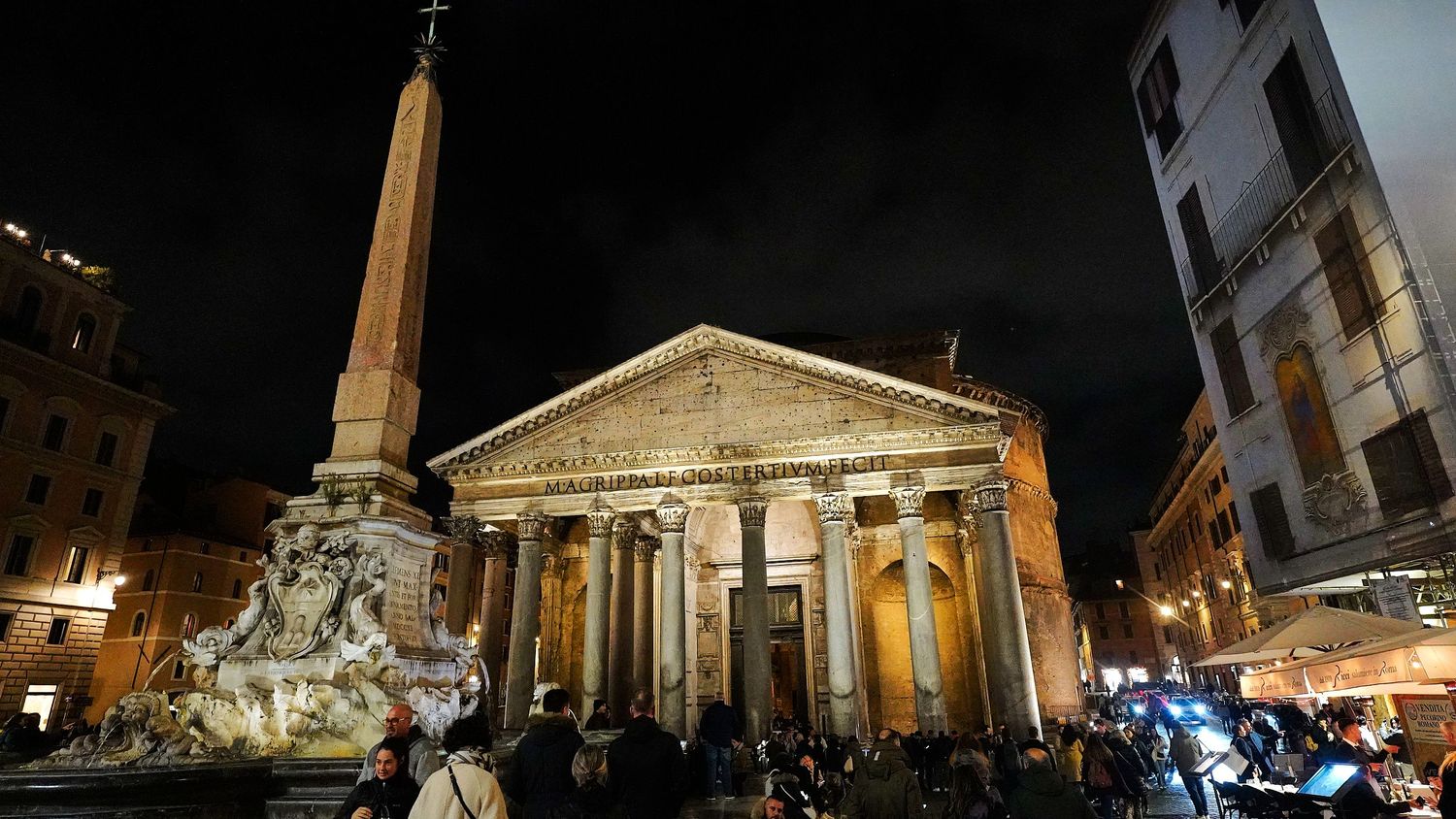
The Fountain & Obelisk of the Pantheon (Front left) & The Pantheon (Background) located in the Piazza della Rotonda, Rome, Italy.
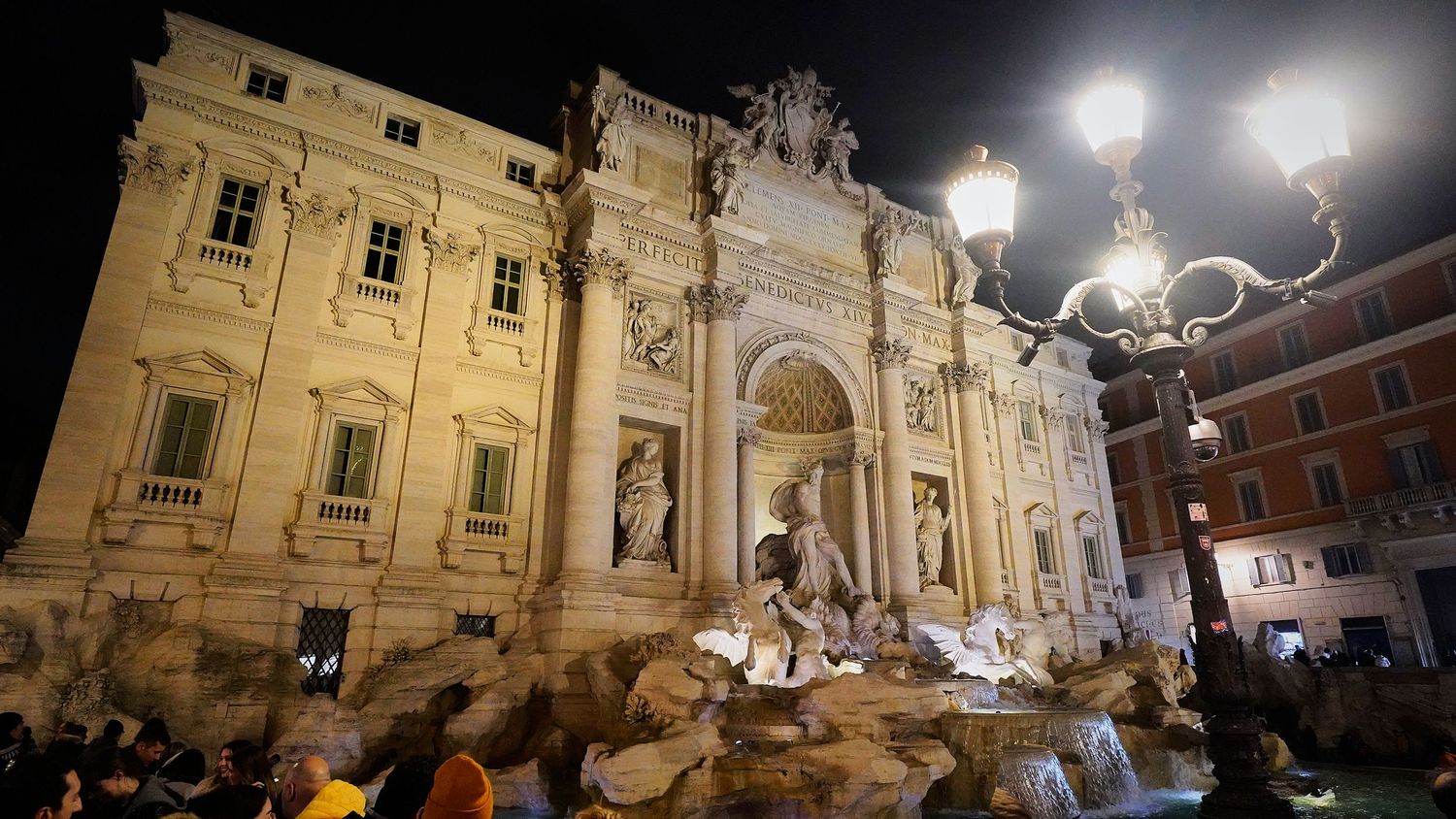
18th Century Trevi Fountain located in the Trevi District, Rome, Italy.
Tips/Recommendations:
- Always book tickets for tourist attractions and public transport in advance when going overseas.
- When planning your travel itinerary, be sure to leave a gap for the time, as you may experience delays at the airport, which could affect your schedule for that day.
- If you haven't booked a taxi in advance from Rome's airport, you may need to catch a bus into the city, don't worry you can which will affect your travel schedule. However, if you haven't booked a cab in advance don't worry as you'll be able to grab one or use an Uber.
- Don't purchase a ticket for the Forum and Colosseum at a predetermined time, as both travel destinations always have big queues, which will severely affect your schedule. I would suggest purchasing a ticket to both those landmarks at any time of the opening hours, because if there are big queues, you can go and see something else and come back to it, just make sure you leave yourself enough time to queue up and get into the venues.
- The tickets for the Colosseum only give you a general view of it, if possible I would suggest buying tickets for the Hypogeum via a private tour, which will allow you access to the tunnels under the platform of the Colosseum and gain further insight into life as a gladiator as they prepared themselves to enter the arena.
- Beware of pickpockets, as big tourist destinations tend to get very crowded and busy. For instance, around the Colosseum, there are big crowds so stay close together to not get lost and keep your valuable possessions like your wallets or watches in closed pockets.
- Beware the street vendors that try to sell tourists items, as sometimes they'll try to rip you off.
- Queues for tourist destinations like the Forum, or even St Peter's Basilica, can be very long. Give yourself enough time to travel and queue up to get into the venues.
- Go to places like the Vatican Museum, the Castel Sant'Angelo as well as not well-known places like the Church of Ignatius of Loyola at the Campus Martius, the Campidoglio to the Mouth of Truth and The Circus Maximus. They include incredible exhibitions consisting of paintings, statues, the Sistine Chapel, frescos, excavations etc.
- Try some gelato and Roman pizza from ice cream stores like Venchi and pizzerias like L'Antica Pizzeria di Tevi. Their products are amazing, but do some research so you aren't surprised by expensive prices.
- If you run out of water don't worry, as long as you keep your bottle you can refill it at any one of the water fountains located across the city.
- Although I am very glad to have seen all those spectacular landmarks in the space of 24 hours, I would advise booking more days if possible. This way, you can see more sights, take it in, appreciate it, and not rush to get from one location to another.
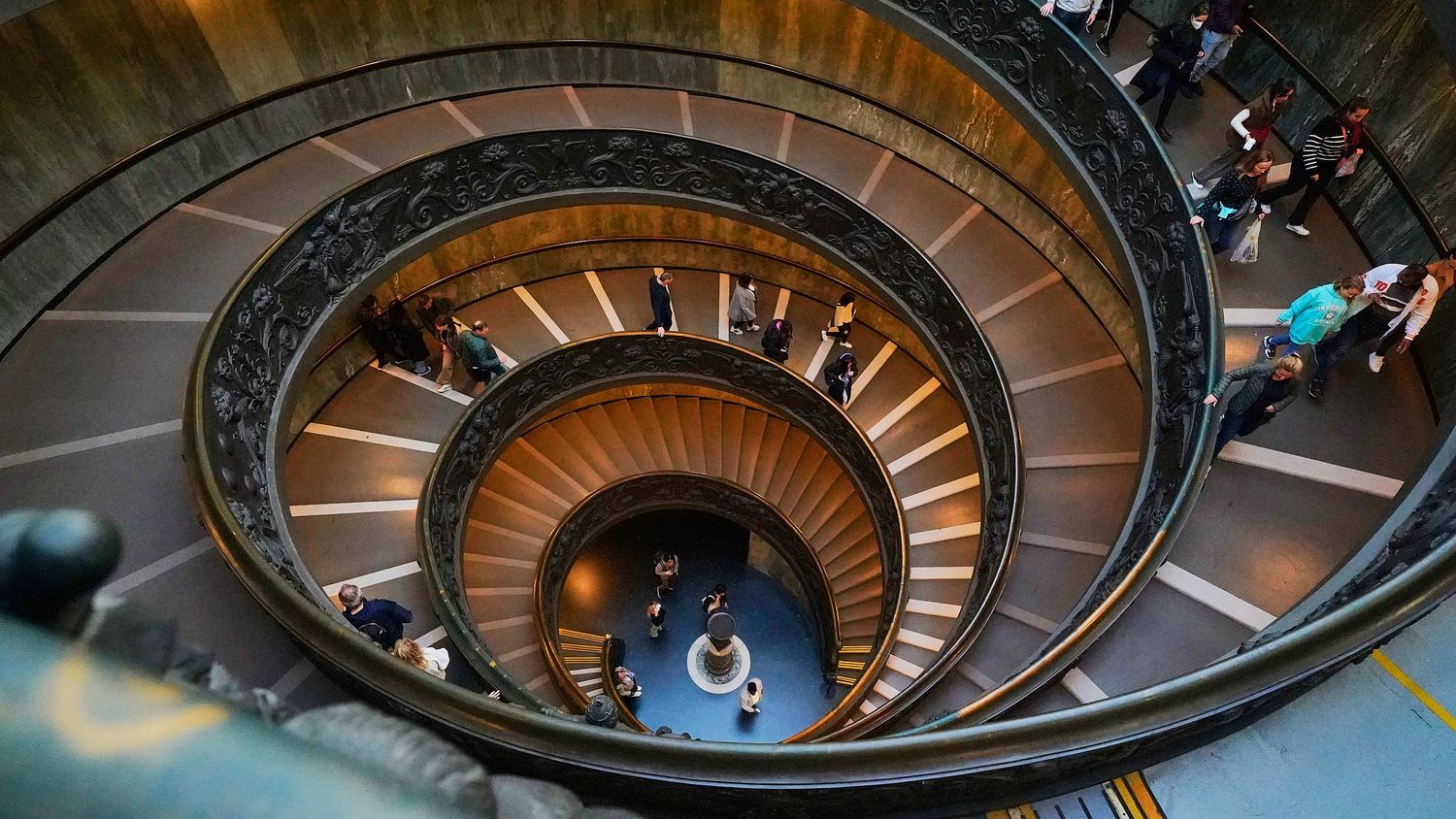
Bramante Staircase (Scala Elicoidale Momo) in the Vatican Museum, Vatican City, Rome, Italy.
Addio Roma. Ciao...:
See if you can unravel the answers to one of these riddles below, to guess my next travel destination:
- Two gods strived to become a city's patron, one offered a saltwater spring and the other god offered an olive tree but the olive tree was deemed more valuable. For that reason alone, the city-state was named after the god. What were the names of the gods and which god won the contest?
- The word marathon inspired the current 26.2 marathon events and comes from when a Greek soldier called Pheidippides ran from Marathon to a city-state in 490 BC, to warn the Greeks that King Leonidas, his troops and allies had been defeated by the Persian army at the Battle of Thermopylae. Which city-state did the Greek soldier run to?