Introduction:
This travel blog provides an accurate insight into my three-day travel within the easygoing, relaxed, photogenic and bike-driven Venice of the North, Amsterdam. In this travel blog, I'll be exploring various tourist sites in Amsterdam from The Anne Frank Museum & House, The Rijksmuseum, which houses amazing authentic paintings from Dutch history, to the Straat Museum, which inspires people with its vast collection of modern art/graffiti. I'll also be trying to immerse myself in Dutch culture, gain a better understanding of its past and overall learn what makes this so unique. Please find below ten interesting facts about Amsterdam.
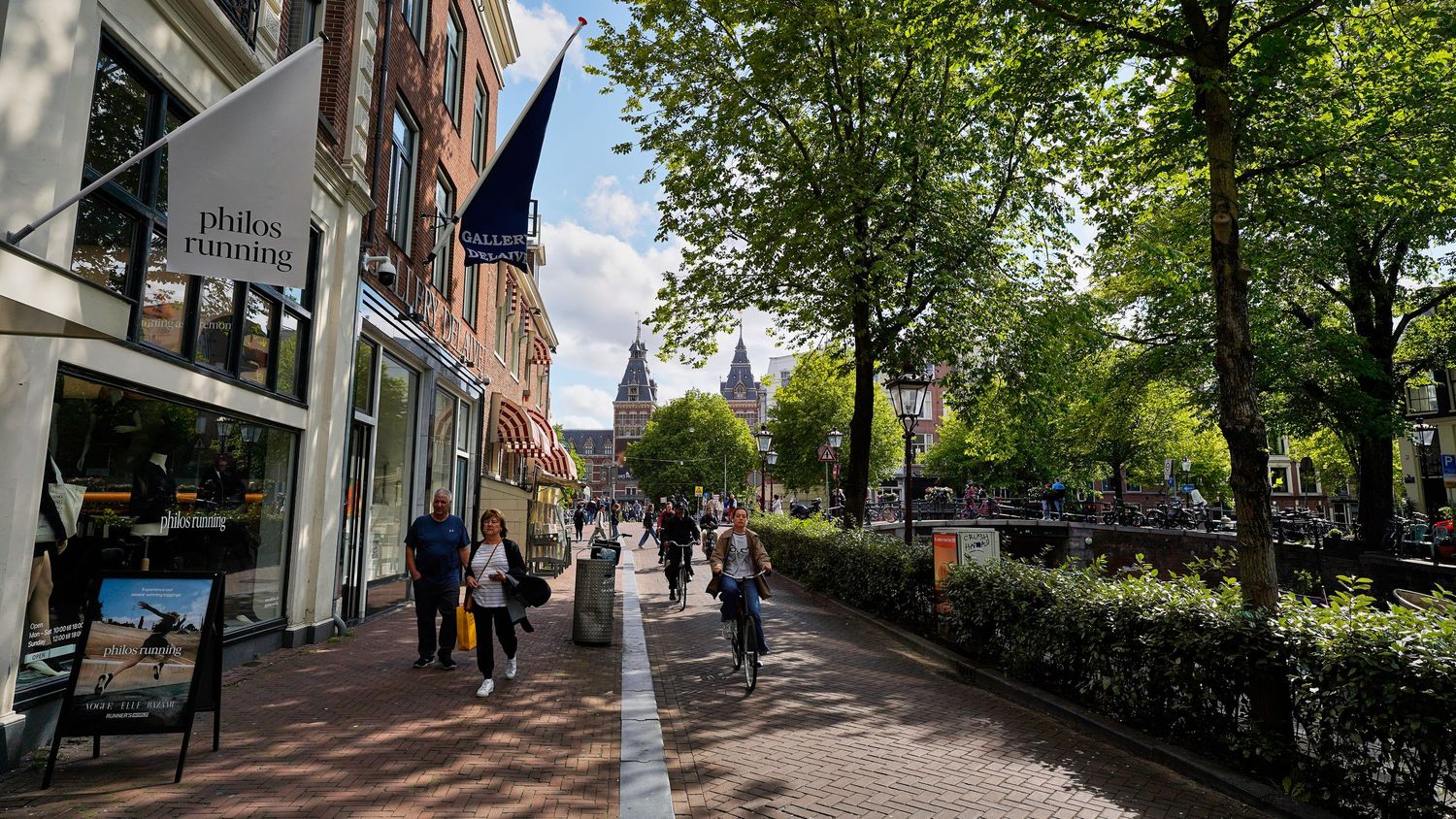
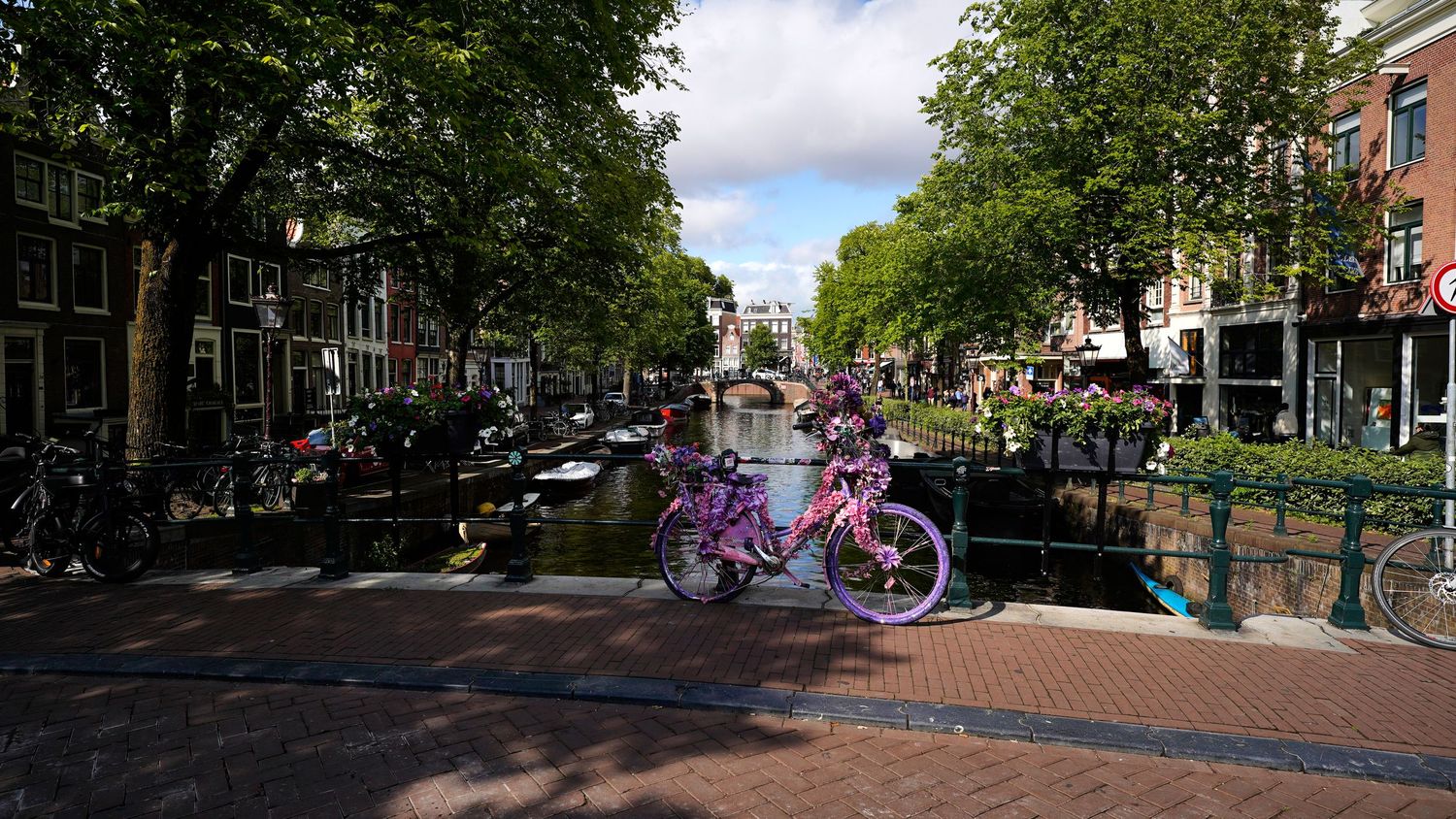
Cyclist cycle down Paulus Potterstraat street, next to Stadhouderskade canal with the Rijskmuseum (Background) in Amsterdam, The Netherlands.
Interesting Facts About Amsterdam:
- The Founding of the Venice of the North: Although many historians have stated that most likely Roman settlements existed at the mouth of the Amstel River, there has been no evidence to support this claim. However, it is thought that Amsterdam originated as a small fishing village around the 13th century, and the original name of the city was Amstelredamme (meaning 'Dam on the river Amstel'). The 27th October 2025 will mark the city's original 750th birthday, and this will be celebrated via concerts, festivals, to Sail Amsterdam in August.
- William of Orange & Royal Ties: Amsterdam's national orange colours stem from the House of Orange, which starts with William the Silent. The Royal Palace was previously the 17th-century Town Hall, gifted to him after the Napoleonic War, where he was introduced as Sovereign Prince. In 1581, William of Orange commanded the Dutch Revolt from his base, which influenced the city's defensive works - he commissioned new walls and bastions around the city.
- The World's First Publicly Traded Company: The Dutch East India Company was founded in Amsterdam on 20 March 1602 and was the world's first joint stock company. The company issued shares to the public, which allowed residents to buy and sell ownership stakes, which started the global stock market and the Amsterdam Stock Exchange.
- Dutch Artistry: The Van Gogh Museum is the only museum in the world which houses Vincent Van Gogh's last surviving paint palette. Also, during the restoration of the Rembrandt House Museum in Amsterdam, researchers found clay pottery belonging to Rembrandt, which contained a mixture of clay and quartz. The quartz soil was used by the artist when he was preparing his canvases. One researcher even mentioned that he began using that particular soil when he moved into the house and was probably the one to do so, for economic and practical reasons.
- The Stroopwaffle - From Humbled Beginnings to Global Recognition: The Stroopwaffle is regarded today as a Dutch delicacy, which was created in the 18th century by baker Gerard Kamphuisen in Gouda. The stroopwaffle was originally referred to as armenk koes (the poor man's cookie) because it was created from a combination of waffle crumbs enclosed between a sweet syrup. Around 22 million packets are consumed every year, which means around 30 stroopwaffles per person, per year. The best way to taste a stroopwaffle is to dunk it in a hot beverage of tea or coffee, wait for the syrup to melt and then taste it.
- Floating Flower & Cat-Boat Markets: Created in 1862, the Bloemarkt (Flower Market) is designated as the world's only floating marketplace situated on the Singel canal and is the ideal place to purchase souvenirs, bulbs of various types and tulips. De Poezenboot, which is a cat shelter located on a river boat, is also hosted in the city.
- The Highest Number of Museums In Any City: Amsterdam has the highest amount of museums per square mile over a 219km per square mile - 90 museums in square metres.
- There are more bicycles than Amsterdam Residents: With around 800 to 950 thousand residents, there are more bicycles than inhabitants in the city. Around 12-25 thousand bicycles are retrieved from the canals yearly.
- More Bridges and Canals than Venice: 1281 bridges & 165 canals exist in Amsterdam, the most renowned bridge in the city is the Skinny Bridge, compared to Venice, which consists of 121 islands connected by 435 bridges.
- A Fitting Legacy for a Football Icon: Originally called the Amsterdam ArenA, Ajax FC's stadium was renamed the Johan Cruyff Arena in 2018, to honour the football legend who was from Amsterdam and progressed through Ajax's youth system. The renaming ceremony entailed a new logo being unveiled on his birthday, the 25th April, to showcase his lasting impact on his hometown and Dutch football.
- Language: The most spoken language in the Netherlands, which is spoken by around 95% of the population. Due to colonisation, trade and geography, the Dutch language is influenced by other languages such as English, German, French and Latin and as for the closest language to Dutch is Afrikaans, which is a daughter language of Dutch and developed from the 17th-century dialects spoken by settlers in South Africa.
- The Dutch Flag: Composed of blue, white and red, the Dutch flag was originally orange, white and blue, which became known as the Prince's flag after William of Orange (1572). The orange stripe was changed to the red stripe in the 17th century, which became known as the State Flag. In 1789, the red, white and blue stripes were adopted during the French Revolution and became known as the "Colours of Liberty", and that tricolour was used in 1796.
- The Dutch Coat of Arms: The Dutch crest consists of a blue shield with gold billets and a gold lion that symbolises the house of Nassau, courage, and nobility. The lion holds a sword for justice and seven silver arrows representing the unity of the original Seven Provinces. The shield is supported by two gold lions and topped with a royal crown, signifying sovereignty. Beneath it is the national motto "Je maintiendrai" ("I will maintain"), reflecting loyalty and steadfastness.
- Dutch Cinema: The most renowned Dutch film ever produced is Turkish Delight (Verhoeven, 1973), starring Rutger Hauer and seen by around 26% of the Dutch population.
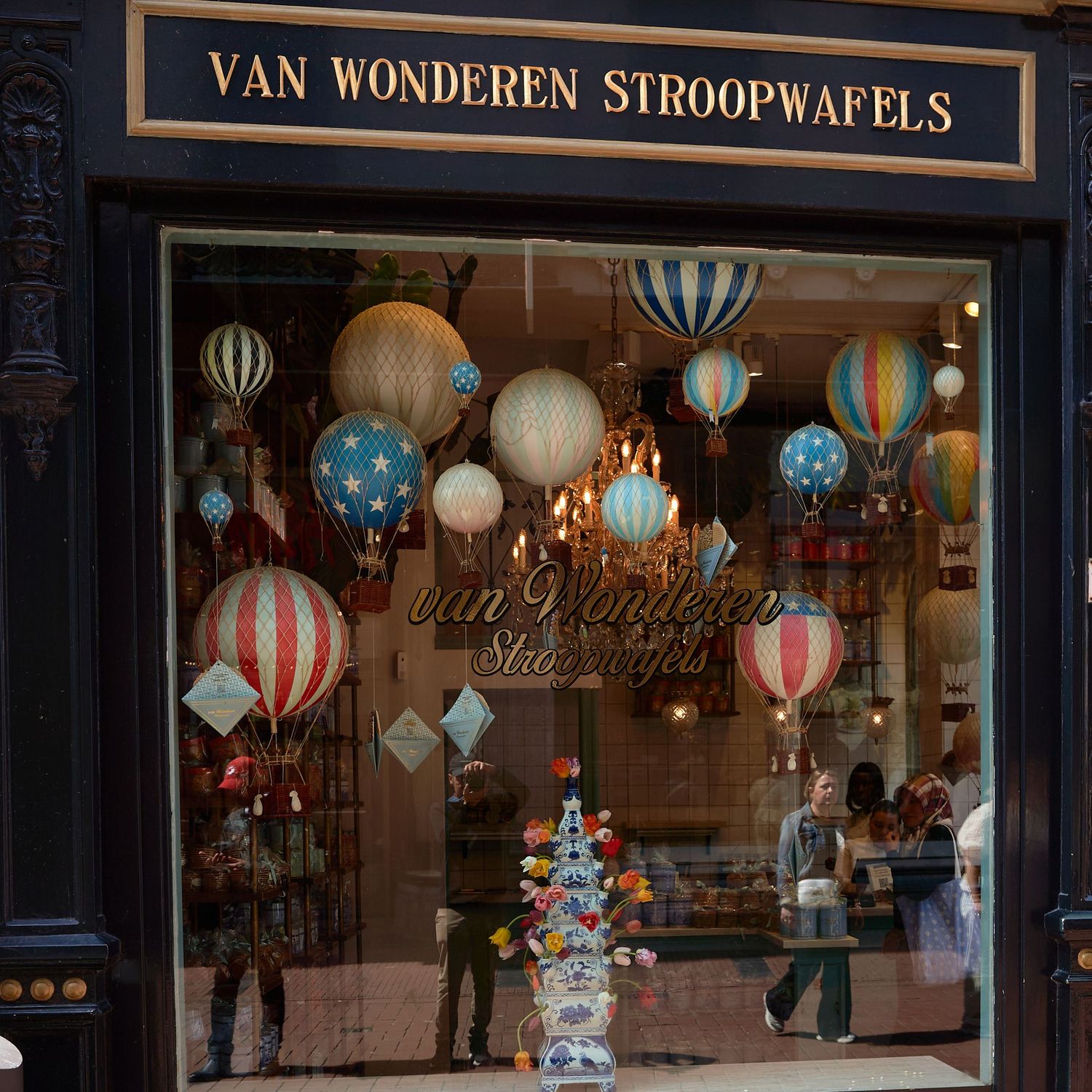
The Van Wonderen Stroopwaffels shop in Kalverstraat, Amsterdam, The Netherlands.
Day 1 (10th June):
My first day of travel started with my brother and I getting on a somewhat busy train towards Heathrow station. The train was mostly filled with people on their commute to work, mostly dressed in smart clothing such as suits or blouses. After half an hour, we reached Stratford and navigated through the small crowd of people and headed towards platform 14 to get the DLR train towards Arsenal Woolwich and on the train were people going to work and few other people holding either their backpacks or suitcases as they were sitting down and like us eagerly awaiting to get of at the destination of London City Airport. After ten minutes, we had reached our destination and headed straight to the airport, where we had to dispose of water before proceeding through security. We finally got through after showing our boarding passes, passport and putting our possessions into the designated tray so that security could check the contents of my bag and anything else which would've set off the metal detector. We next decided to grab some breakfast from a nearby Pret a Manager and headed towards the gate to board our 10:50 am flight. Whilst on the flight, via the stewardesses we were told that due to ongoing weather in Amsterdam, there would be a half an hour delay, so whilst others scrolled through their phone, attended to their kids or listened to music, I read my book about the life and legacy of the Byzantine emperor Justinian. The pilots gained confirmation that the flight could leave the runway and, pretty soon afterwards, the plane accelerated down the runway and ascended into the air and passed over the British Channel towards the Netherlands. In an hour and five minutes, we had reached our destination of Schiphol Airport in Amsterdam.
To our amazement, after proceeding through the necessary customs checks, we heard over the intercom that there were train strikes on that day, so we hurried towards the bus station to get the 397 bus. As I stepped out of the airport, I first noticed tones of people dragging their suitcases going towards the bus terminals, cabbies shouting out that taxi's were available to take them to their destination, above me I heard a commercial plane hurdling through their air and on the ground in the distance was a 'I am Amsterdam' sign, were tourists could get their photos taken. Anyway, we headed towards a bus terminal, and as you can imagine, due to the train strikes, there were two small queues of people awaiting their buses. Luckily, we didn't have to wait that long as the bus arrived in a few minutes. When the bus finally arrived, many people hurried to get on the bus and when we got on after paying for our tickets the bus was packed to full capacity, almost like sardines in a tinnned can and throughout the journey we stood up and we would have to wait around thirty to forty minutes to our stop of Emmastraat. The bus ride wasn't great as it was packed like sardines in a tin. After a forty-minute bus ride, we finally arrived at the stop of Emmastraat, which was only a few minutes from our hotel. We were immediately surrounded by tall, slim townhouses, locals riding on bikes in the streets, and whenever we pressed the traffic lights to wait to cross, it emitted a large ticketing noise, which to me sounded like a woodpecker hammering their beak into trees, which was unnerving to hear at first. We later came across our hotel, 'The Alfred Hotel', which is a large purple building, partly covered in greenery. It was a welcoming sight to see. We headed towards reception via the glass sliding doors, and to our shock, we were notified that there was an issue with our room booking. I won't go into detail about that, but eventually the issue was fixed and we were given our key cards to our booked room on the ground floor. The room was a good size, it was spacious, cabinets next to the bed with one that included a safe and a TV with not many channels that only spoke in Dutch. Connected to our room was a small room with not much of a view that included a chair and desk, with a coffee machine, a desk lamp, a telephone, and there was a small, spacious and luxurious bathroom with a shower, a few towels and a round marble sink. On that day, we had no plans as we figured we would settle in at first, and so we took a stroll and explored downtown Amsterdam. We gathered our stuff and exited the hotel and headed towards the Vondelpark, which we reached within 20 minutes after navigating through a few clean-kept streets. Once we entered the Vondelpark near our hotel, I immediately noticed the luscious greenery, branches of trees swaying in the air as they were forcibly hit by the wind, and I could hear the tranquil noise of birds communicating amongst one another in the trees. As we walked further into the park, I noticed people walking, jogging, some people with friends enjoying a picnic and cyclists driving their bikes fast. In the distance, near a lake, was a gazebo surrounded by plants, which overlooked a lake, and near was a cafe covered in glass and artificial lighting. We walked up one secluded route, which took us towards the main road in the Vondelpark. The pathway was full of cyclists, which was surprising to see as I had to make sure that I wouldn't be run down by a bicycle. Which is somewhat nostalgic to me, as I have only ever experienced that mentality in Naples, Italy, where I had to be fully aware of the motorbikes. In the park, I noticed a bronze statue of Joost van den Vondel, which is surrounded by plants and was created in 1867 to commemorate the Dutch poet, playwright and writer. The statue is magnificent to see, is intricately detailed and is situated in the northern part of the park, which overlooks a lake full of ducks and beyond the tree line, a spire of a classical-style church. As we headed towards the church to look at it further, we came by a large, eerily old-looking building with two vans parked outside, with people bringing equipment into the premises, which I presume they were setting up for some kind of event. As we walked towards one of the exits of the park, I noticed an elderly couple buying tea or coffee from a nearby beverage stand before almost getting clipped by a cyclist. We left the park and came to a tall, slim and magnificent church called the Vonderkirk. The building has a brown exterior with the spires in blue. The church was built in 1872 and has a Gothic Revival architectural style. I was so amazed by the style of the building, as I had never encountered anything of that style before, as the spire ascended into the clouds. We later passed by a few streets and a few historic landmarks such as the Stedelijk Museum Amsterdam, the Van Gogh Museum, the Moco museum, the Rijksmuseum and the Voormalig bolwerk Amstelveen situated on the canal bank. Below was a middle-aged couple cosied up together on a small boat, and on the other side was a canal tour operator, where people could purchase tickets for canal cruises. Over the canal bridge, in the distance, I noticed cyclists, many enticing shops, cafes, and cars parked next to a canal, and locals sat down next to the canal, eating their food in front of the narrow streets. As you can imagine, looking at the town houses that were very mesmerising and confusing at first as the buildings very slim and tall I was just left speechless by the predominant Dutch Baroque architectural style of those buildings and the beautiful various canals in the city, which I passed by me were very picturesque and made me feel like I was in a painting. I would later learn that the reason houses were built in that particular manner was so that the locals could pay little tax as possible and the hooks above the houses had two purposes, they were first used to pickup products like spices from the boat into the houses/shops and it also helps with putting furniture into the houses. We navigated the streets to figure out the route towards the Anne Frank House and the meeting point for our canal cruise for the second day. We did get to pass by other historical landmarks like the Skinny Bridge, the National Opera & Ballet building, the Westerkerk and the Flowers from Holland. The Skinny Bridge, or otherwise known to locals as the Magere brug, is a white coloured narrow bridge which stands over the River Amstel that connecting the banks of the river at Kerkstraat between Prinseganct and Keisersgracht, designed in a traditional Dutch double-leaf basculating style. In the middle section of the bridge is a bascule bridge, which opens to allow river boats to pass. The bridge was created in 1934 to replace a previous version, which dated back to the 17th century. Aside from its drawbridge, other key characteristics include its timber construction, as it mainly consists of white painted wood, which is a reference to older Dutch Drawbridges and its classical Dutch design of its elegant and narrow structure, understated appearance reminiscent of modern-day interpretations of 17th-century Dutch styles. According to locals, a kiss between lovers on a passing boat underneath or on the bridge means the couple will remain in love forever and at night, lights illuminate the bridge, which makes it a romantic place for couples. When I looked across both sides of the bridges, I got a good view of river oats as they progressed up the river and in the distance, I noticed the National Opera & Ballet, which is a large white and brown building that locals are not too thrilled about as it resembles a toilet from above. We later passed by other historical landmarks such as the Walter Suskindbrug bridge, which was opened in 1972 and designed in the same classical Dutch style as the Skinny Bridge. After passing over the bridge, we came to the Westerkerk, which is a classical 17th-century church designed in a Dutch Renaissance style. The church is very elegant and beautiful to look at, and its tower is very tall, which can be seen above the nearby trees. A few streets down was the Flowers From Holland, located on the Singel Canal, which is the world's only floating flower market, and its origins can be traced back to 1862. The flower market consists of a few flower markets, full of plants such as tulips, and for sale are tourist souvenirs such as clogs on keychains, to little garden gnomes. Nearby were some tourist shops, and outside was a large clog that people were trying out and getting their picture with.
Before we came to the Anne Frank House, there was a bronze monument dedicated to Anne Frank and on either side were two flower pots and a bench in front of a protestant church called the Westerkerk. The statue was so lifelike and filled with character that it almost made me cry, thinking of the tragic story of the people hiding in the annexe and what happened to them. Further down the street was the Anne Frank House, which had a large modern glass exterior connected to the house and below were two large queues of people waiting patiently to get inside the building. Down the left-hand side of the Anne Frank Museum is a dark green door which states the Anne Frank House, and above that door is a window, which got me thinking of the only known picture of Anne Frank looking outside the window. Nearby is a protestant church designed in a Dutch Renaissance style with a crowned-topped spire that rises into the air, and it is where Rembrandt is buried. On either side of the church, or the Westerkerk, are two beautifully flower-covered bicycles to indicate the meeting points for canal cruises. After venturing passed the narrow streets of the canals and browsing through a few shops, we went to a local supermarket and bought some much-needed supplies before returning to our hotel room. Back in our hotel room, I was so tired from walking all day, I immediately fell onto the bed and ordered some wedges and the legendary Royal from a nearby vegan restaurant called Vegan Burger Brothers Amsterdam West. The food was delicious, spicy and was well worth the money I paid for it. Aftewards, I got my stuff sorted for tomorrow morning and hit the hay, eager for the next day's adventure to begin.
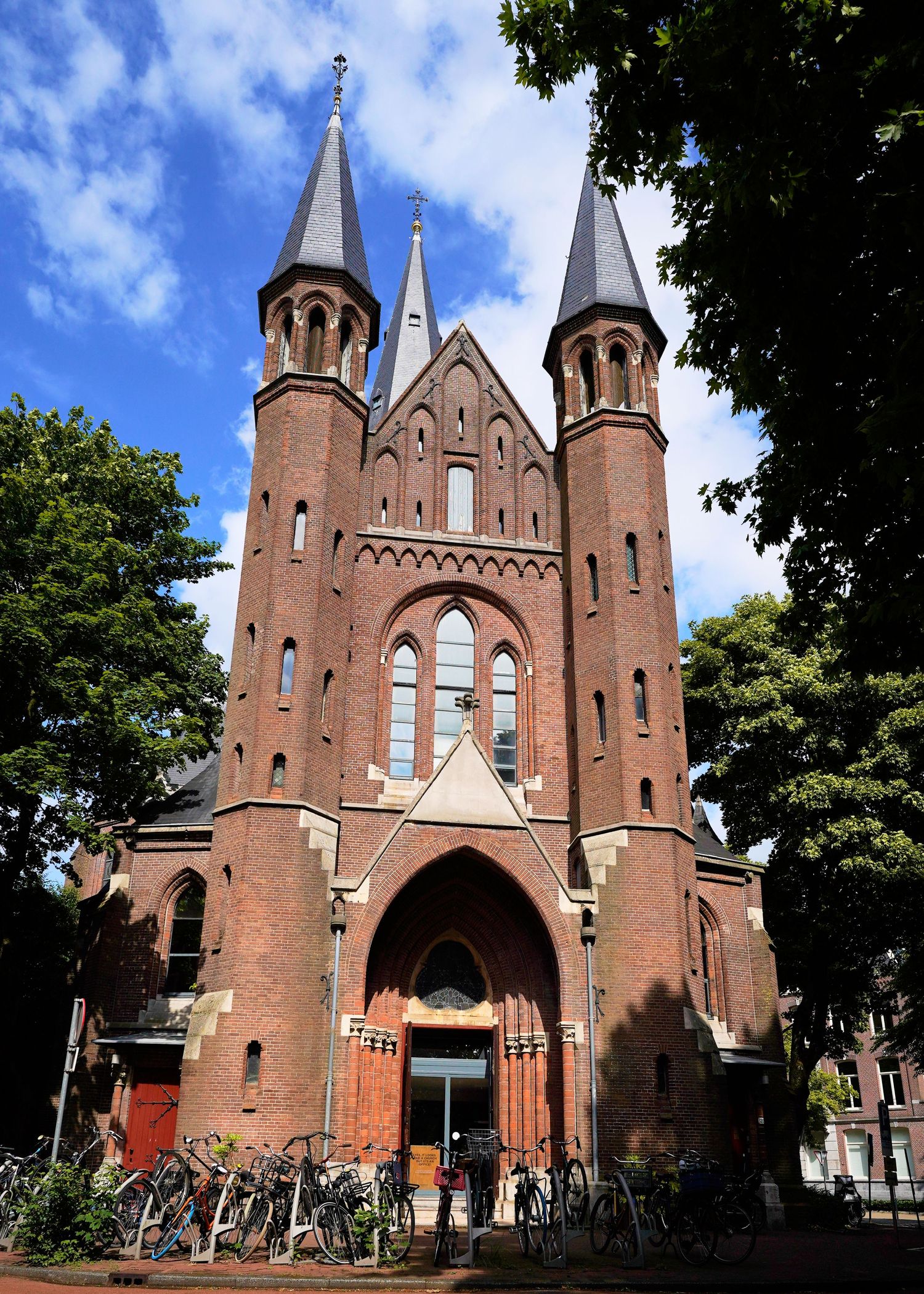
Vondelkerk (Church) near the Vondelpark in Amsterdam, The Netherlands.
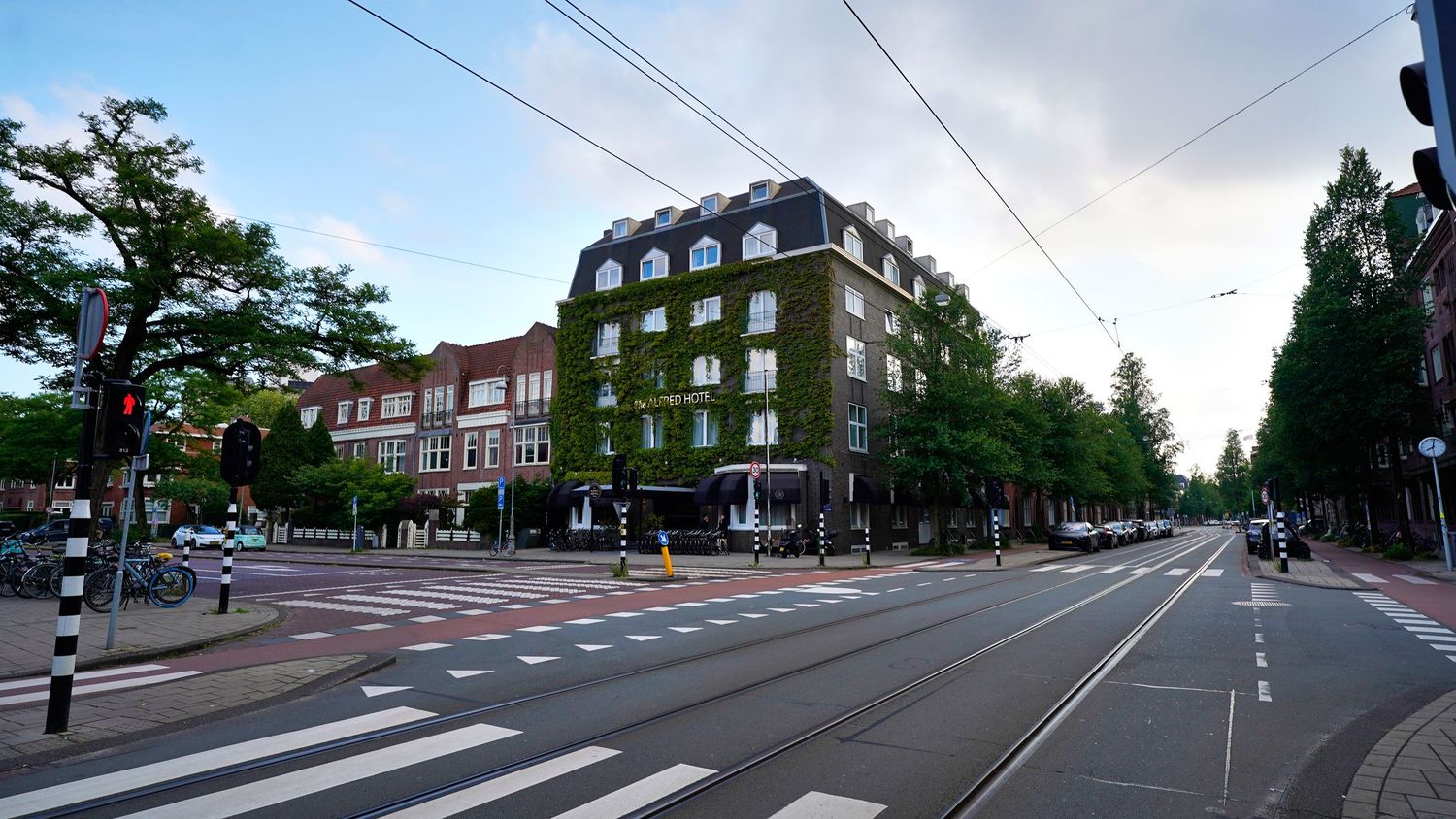
The Alfred Hotel in Amsterdam, The Netherlands.
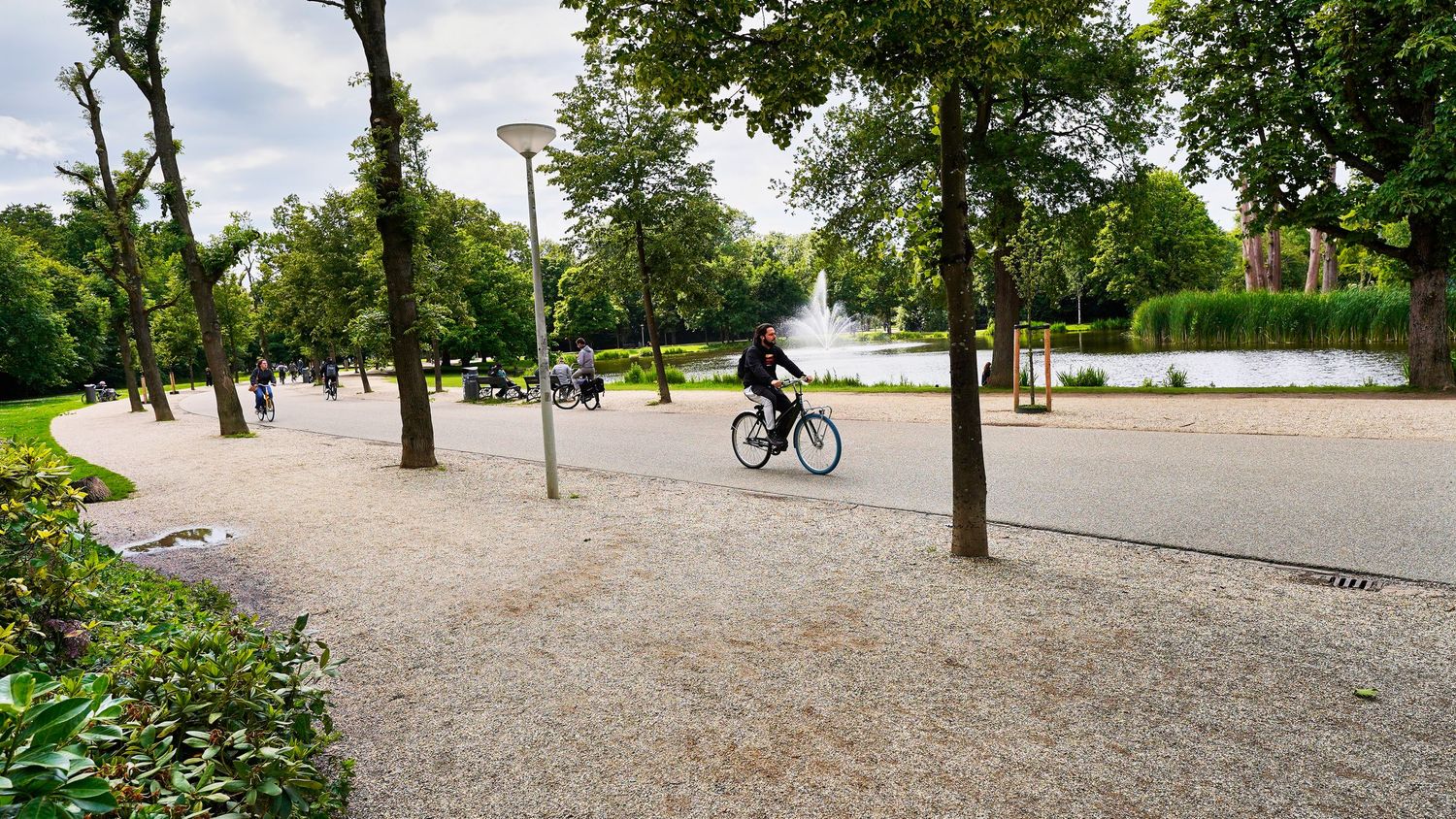
Cyclist in the Vondelpark, Amsterdam, The Netherlands.
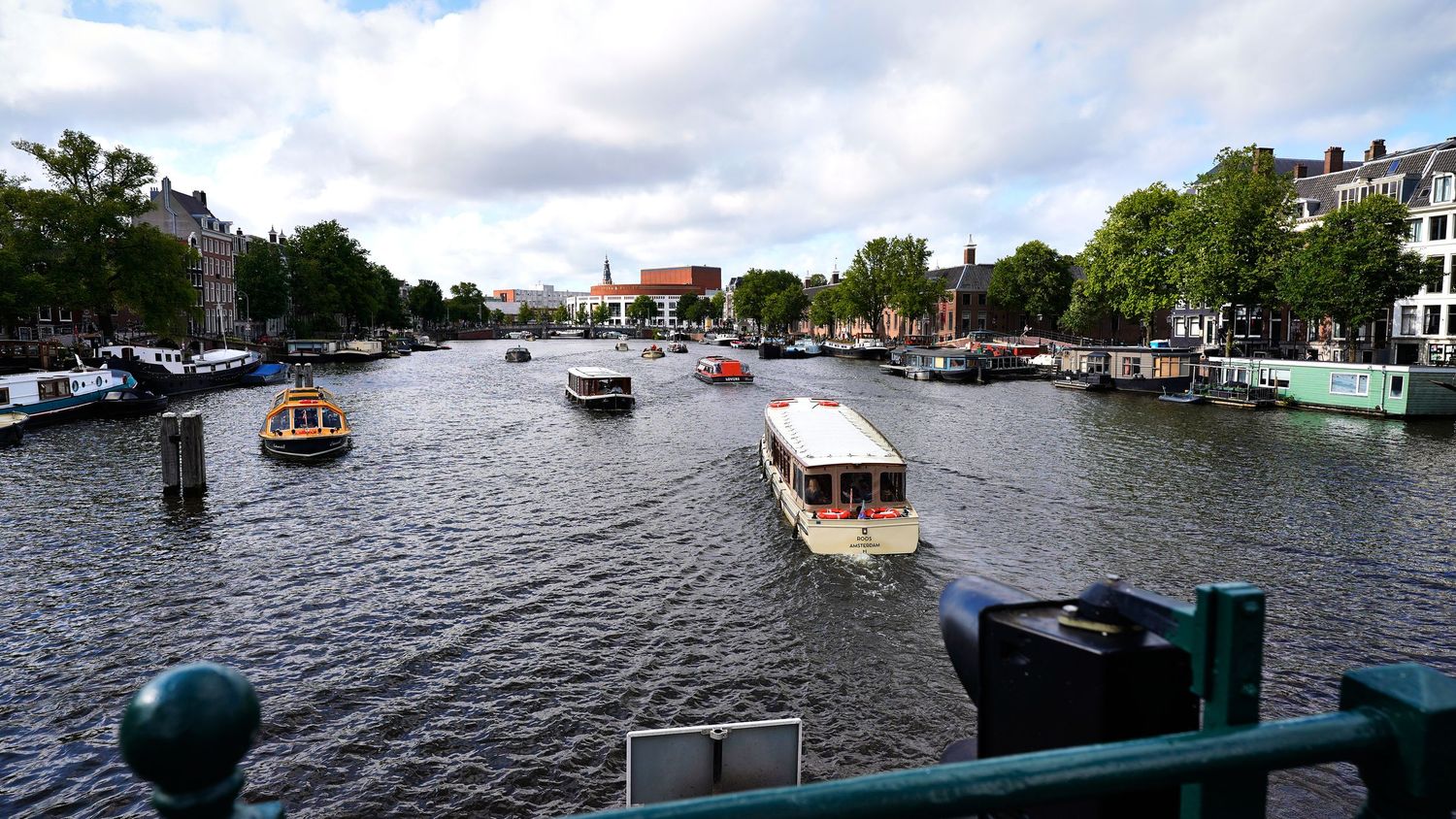
River boats on the River Amstel taken from the Skinny Bridge in Amsterdam, The Netherlands.
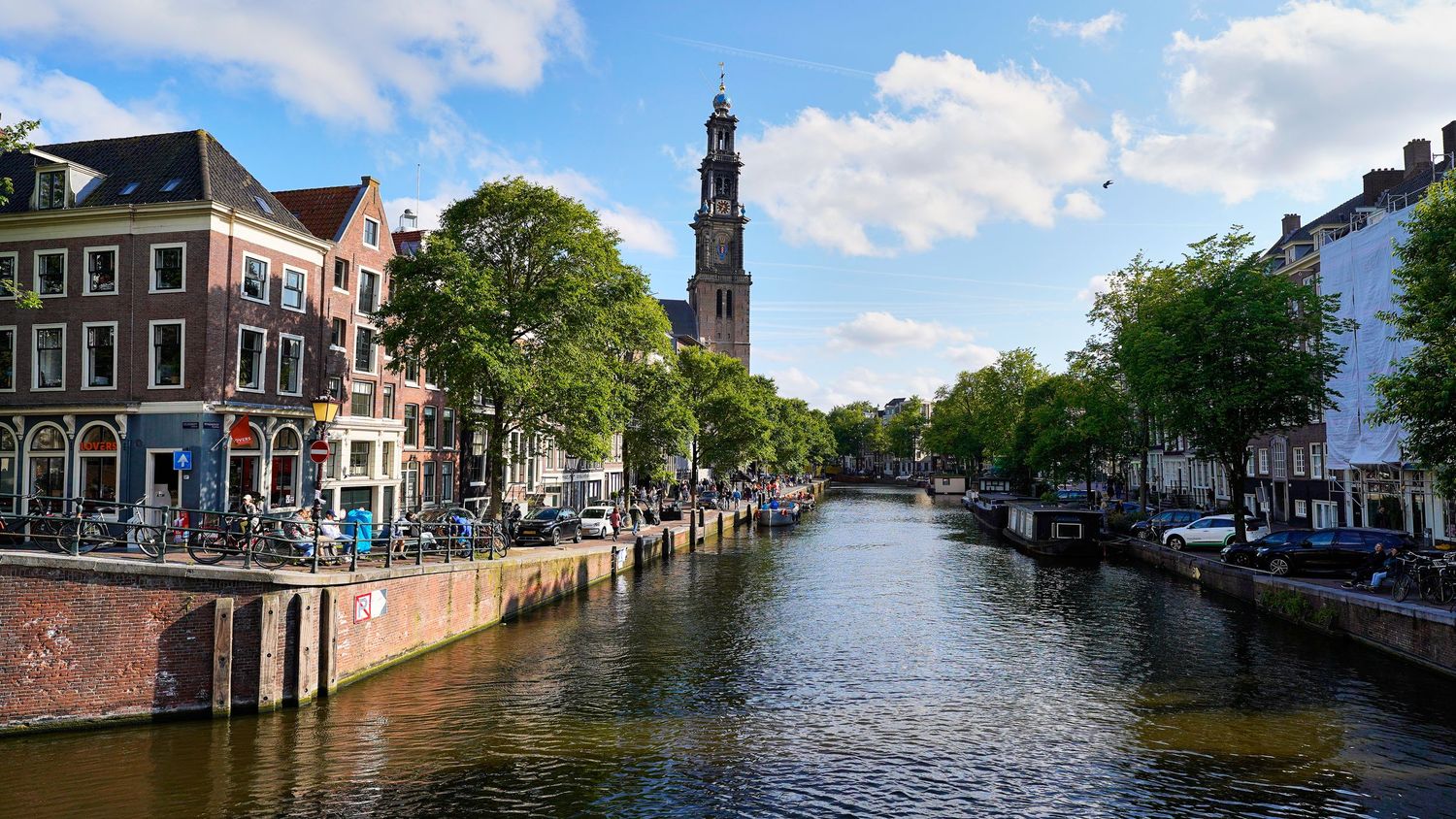
The Prinsengracht Canal (Below, foreground) and the Westerkerk Tower (Left, Background) adjacent to the Anne Frank House taken from the Westermarkt Bridge in Amsterdam, The Netherlands.
Day 2 (11th June):
My second day in Amsterdam started with getting up early in the morning, to get ready for the 10 am booking for entry into the Anne Frank House. This entailed passing by landmarks such as the Royal Ballet Concert Hall, the Stedelijk Museum Amsterdam, the Van Gogh Museum, the Rijksmuseum, navigating through a few streets, traversing over the canal bridges and resisting the urge to go into various shops. Along the way, I saw a few canal boat operators offering tours for tourists near landmarks such as Voormalig bolwerk Amstelveen, but we eventually arrived at one of the most visited tourist destinations, which was, of course, the Anne Frank House. For the past few months, I've heard people's accounts of when they visited this destination and the kind of experience they had there. When I arrived at the Anne Frank House a few minutes ahead of time, I remember there were two distinct queues to gain entry into a large glass building, which led into the Anne Frank Museum, which led into the Annexe. Outside the building was a canal boat operator with a bicycle covered in flowers, and members of that particular tour operator were helping people onto the tour boat. People also walked down the streets of the canal, close to the houses and shops, in order not to get struck by cyclists, cars or even motorbikes and around the corner was a restaurant with an outside area where a small group of people ate their pancakes. The weather on that particular day was very cool, bright, and there were a lot of tourists like me who couldn't wait to get inside and see the interior and any personal documents and items related to people's experiences in the Annexe. Inside the Anne Frank Museum, we gave over our bags to a staff member so that they could be checked in and put into lockers before collecting audio guides from staff members. We then started our audio guide tour around the property, as we walked into various rooms in the building, we scanned the numbers on the wall and the audio guide immediately provided me with a historical insight into events ongoing at that time such as the rise of fascism in the Germany, the persecution of the Jews, Otto Frank moving his family from Frankfurt to Amsterdam after taking a new position at thecompany he worked for and the other members of his group that helped with the plan to hide in the Annexe. The rooms were very small, some of which housed interactive video screens, maps on the walls, and I remember Anne stating in her voice that they had to be quiet when walking around in the Annexe so as not to alert the workers below of their presence. In various rooms were still the original items used by people hiding in the Annexe, such as the original bookcase which concealed the entrance to the Annexe, the kitchen stove, letters, posters and other items. Looking at those documents and watching the interactive videos, I was so moved by the experience that those people went through, but the videos really provided an insight into those people's perspectives and what they felt whilst in that tragic situation. What I recount from my experience in the Anne Frank House the most is seeing the overall map of Otto Frank's journey from Auschwitz back to the Netherlands. That part of the tour was especially sad and tragic to look at and hear because Otto Frank not only found out he was the only survivor from the Annexe, he stated the different responses he received from various communities across Europe, him receiving Anne's diary, discovering that his wife had died and he held out hope that his children survived and he would be reunited with. I was saddened to hear that after returning to Amsterdam, he learned from a holocaust survivor that his daughters Anne and Margot had sadly perished in Bergen-Belsen, which was so tragic to hear and from a picture of Otto revisiting the Annexe before the Anne Frank Museum opened, I was left wondering how did he go on with his life and strength to dos so. I next walked to the museum shop and browsed through the various books and other products for sale. I then came across an interactive video and map on the wall behind the museum shop, which highlighted the work that the museum was doing to combat antisemitism across various countries, which I thought was good and impressive, and I ended up donating some money to their noble cause. I then handed back the audio guide, retrieved my bag, left the building and found myself very moved, saddened and speechless by the overall experience, but I also learned about the enduring and inspiring legacy of Otto and Anne Frank. It was an awe-inspiring and profound experience to think of the lasting positive legacy left by Otto Frank and the positive impact it's having in the world as it strives to make sure that history doesn't repeat itself and that we learn from that dark part of history.
After leaving the Anne Frank House, we proceeded towards the Rijksmuseum, which was a twenty-eight-minute walk and along we came across a shop called Van Wonderen Stroopwaffels, located on a street which to me eerily resembled Carnaby Street in London. Anyway, the shop had two glass windows and inside I could see miniature hot air balloons, tulips in a vase and a classically designed chandelier. When I walked around the shop, there were shelves full of products for sale and next to the cashier counter were various stroopwaffels in different flavours. Stepping inside that shop was like stepping into another world, and inside I browsed the various products and settled on purchasing a small tinned can layered with Dutch windmills, and when I spun the bottom around, a tune from the carousel started playing. It was magical. After purchasing the product, I walked up the street towards the Heinen Delfts Blauw and heard music playing. As I walked further up the street, I heard the music emitting from a portable music box, which was unusual to see. As we walked up the street, I could see in the distance from the narrow street. The building had a high bell tower, which looked like it grew out of the ground. We later passed by a few shops, entered Dam Square, which was sparsely populated by people and looked at the Royal Palace, The New Church, The National Monument and the Beurs van Berlage. We took a little break from walking to just rest and then headed towards the Rijksmuseum for our 13:15 booking. Along the way, we navigated through various streets, canals, passed a lot of other people and cyclists until we had reached our destination and sat in the Rijksmuseum garden eating our lunch before walking to the entrance for our 1:15 pm booking. The queue outside the museum at that time was very small, security was very thorough and quick when it came to checking our bags. We next checked in our bags and explored the countless rooms of paintings, statues, weapons, jewellery, to scale models from eras throughout Dutch history. As you can imagine, the rooms were full of artefacts and antiquities from Dutch History. It was an overwhelming sight to see: it was like an overload on my sight as everywhere in the rooms I looked, my eyes were drawn to particular, enchanting and innovative pieces of artwork. Inside the museum, they had iconic paintings from artists such as Rembrandt, Vermeer and Van Gogh. On display were works such as The Night Watch (Rembrandt, 1642) which was spectacular but under renovation at the time, Sunflowers (Van Gogh, 1887) & The Milkmaid (Vermeer, 1657) but what caught my attention was a massive painting called The Battle of Waterloo by Jan Willem Pieneman in 1824, which was very impressive to see. The large collection of art was outstanding, and seeing it up close not only made me feel amazed at the genius of those artists and the beauty encapsulated in them but also provided a good insight into how they perceived the world in their time. After going to each room and bustling sometimes through small crowds of people to make sure that we saw every piece of art, we visited our favourite pieces of artwork one last time before leaving the museum.
Afterwards, we headed towards the Anne Frank House to board our canal cruise scheduled for 5:15 pm with Flagship Amsterdam. We managed to reach the tour boat operator with a few minutes to spare and found out that they had two boat cruises, one of which was open-top and the one which had a roof over it. We waited at least around ten to fifteen minutes until the boat arrived as the queue grew bigger than expected as some passengers had missed the previous canal cruise or were too early for their canal cruise at 17:30. Anyway, the boat arrived, people were helped off it and I along with other passengers got onto the boat and took our seats. The boat came with a cheese and wine option, which I decided not to take up, and as the boat sailed, the host introduced herself and asked what countries we came from. One couple answered that they were from America, so the host replied I'll try to not make too much fun of you today and this couple looked so typically American and stood as tourists as they wore the stereotypical Americanized clothing like a hawaain shirt, khaki shorts and tube socks stretched up their legs, it reminded me of that American tourist stereotype from the Lilo & Stitch (Sanders & DeBlois) film, which was somewhat amusing. Anyway, we passed few various canals, waved to locals, passengers tried the cheese and wine, I took lots of photos of the buildings, boats, landmarks to the houses and on the cruise we were told amusing facts like every Amsterdam local owns two bikes, the good bike and the shitty bike, the highest number of bikes to end up in the canals is fifteen thousand but the most amusing of them all is that a dutch tradition, which is if someone breaks up with their girlfriend and the girlfriend doesn't agree they have the right to take one of your bikes and throw it into the drink. I'm not sure how true of a fact that is, but it made me think that if fifteen thousand bikes ended up in the canals, there must have been a lot of scorned girlfriends. I thoroughly enjoyed the experience and would book again if I decide to return to the Netherlands. I would maybe do it around the Amsterdam Central Station, as I feel that would've been a great area for a canal cruise, but I am glad to have done it.
We then walked to a local vegan restaurant called Soil Vegan Cafe. I ended up ordering some dragon noodles to take back to the hotel room and bought a bottle of Coke from a nearby supermarket, and went back to the hotel. Once we got back to our hotel, I fell onto my bed tired from the day, ate the food, which was delicious and spicy, but I felt it was overpriced in regard to what I had received. I then tried some stroopwaffles, which I previously bought from a nearby supermarket. The stroopwaffles tasted great, but I found I was only able to eat two due it how sweet it was due to the caramel/syrup inside the delicacy. We then wondered if we should go back out again to experience Amsterdam in the evening, but from the day of activities, we decided to stay in as we were shattered from the day's itinerary and instead packed our backpacks for tomorrow as we had an early check out that morning.
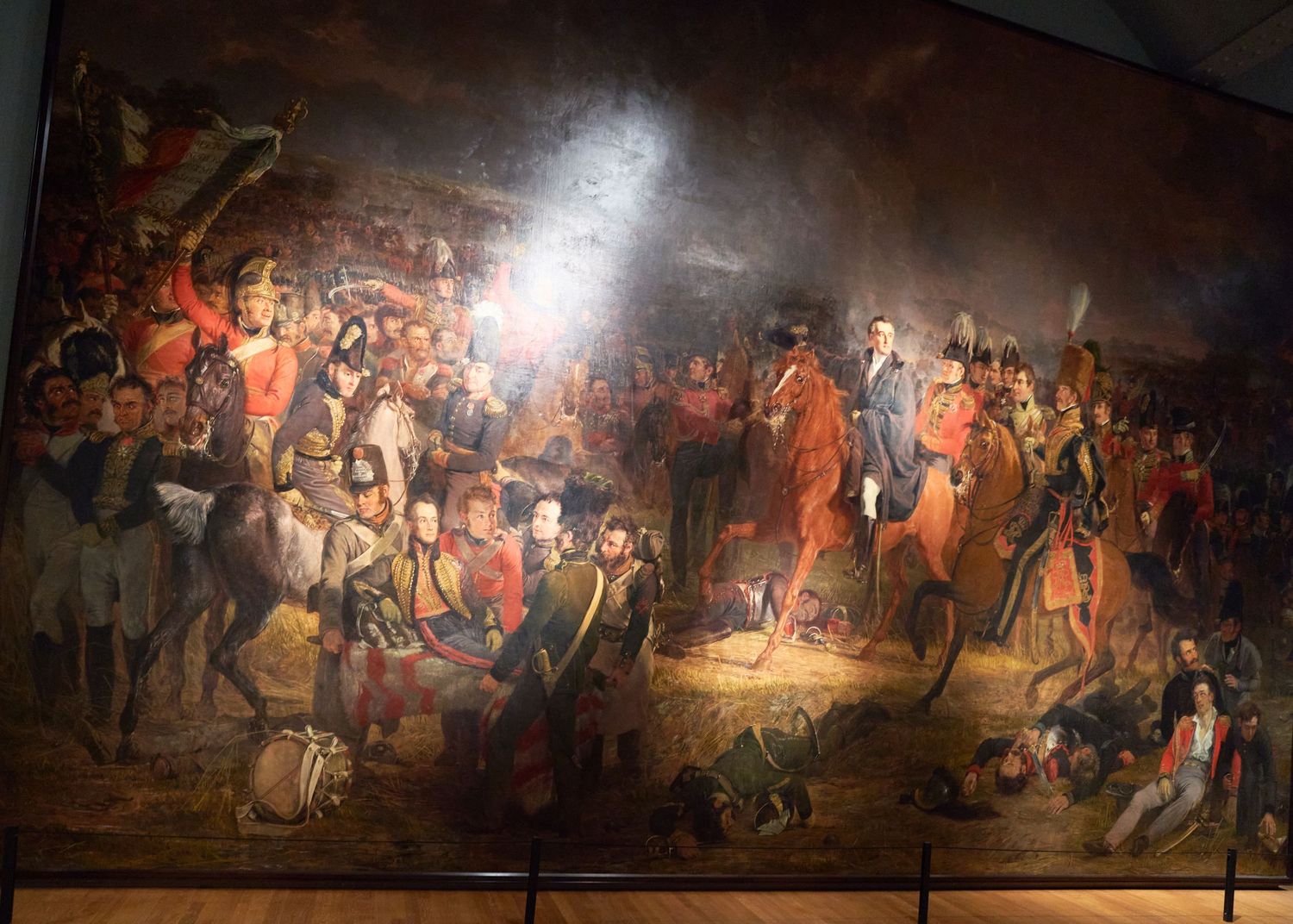
The Battle of Waterloo (Pieneman, 1824) at the Rijksmuseum in Amsterdam, The Netherlands.
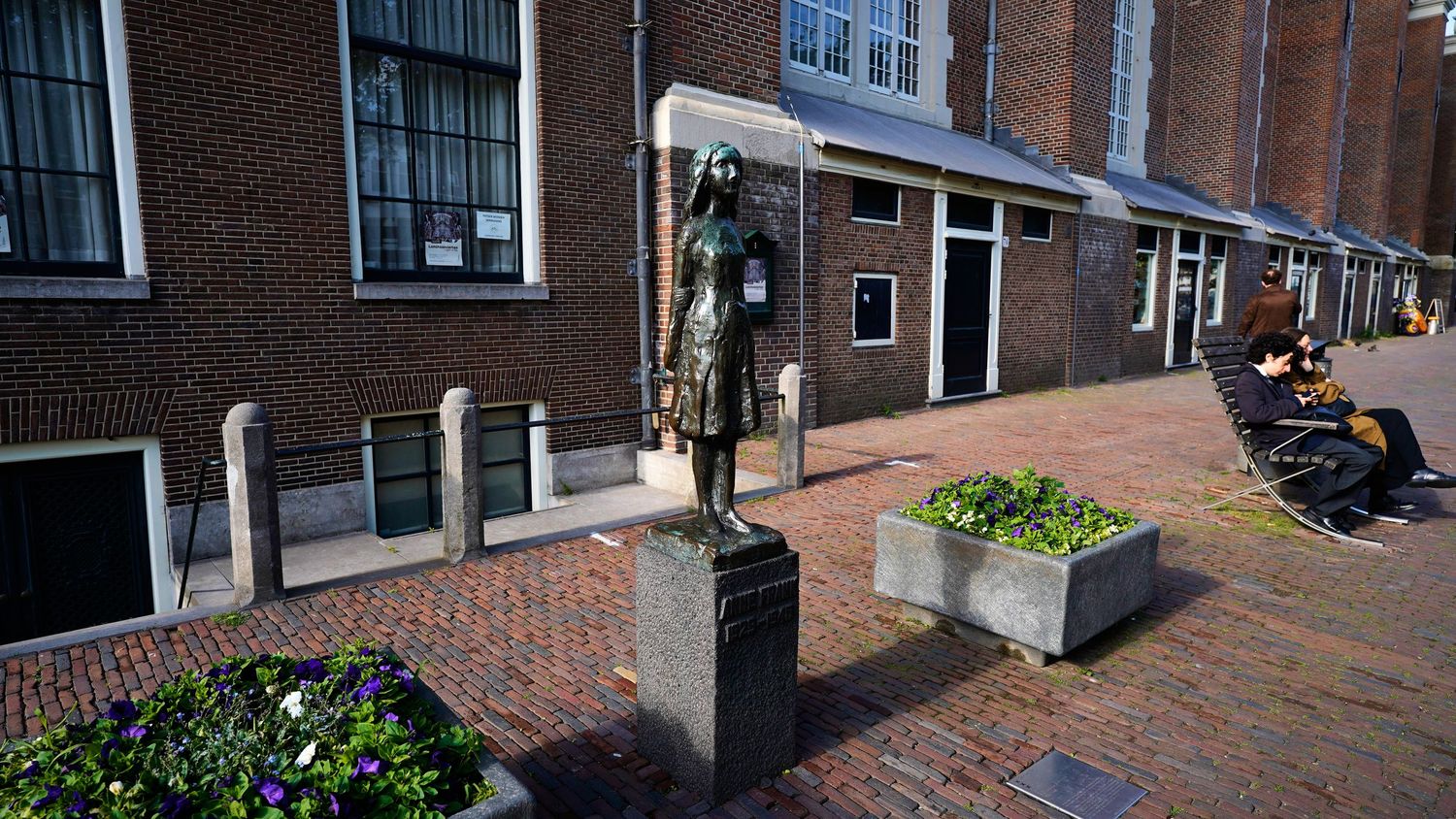
Anne Frank statue near the Anne Frank House in Amsterdam, The Netherlands.
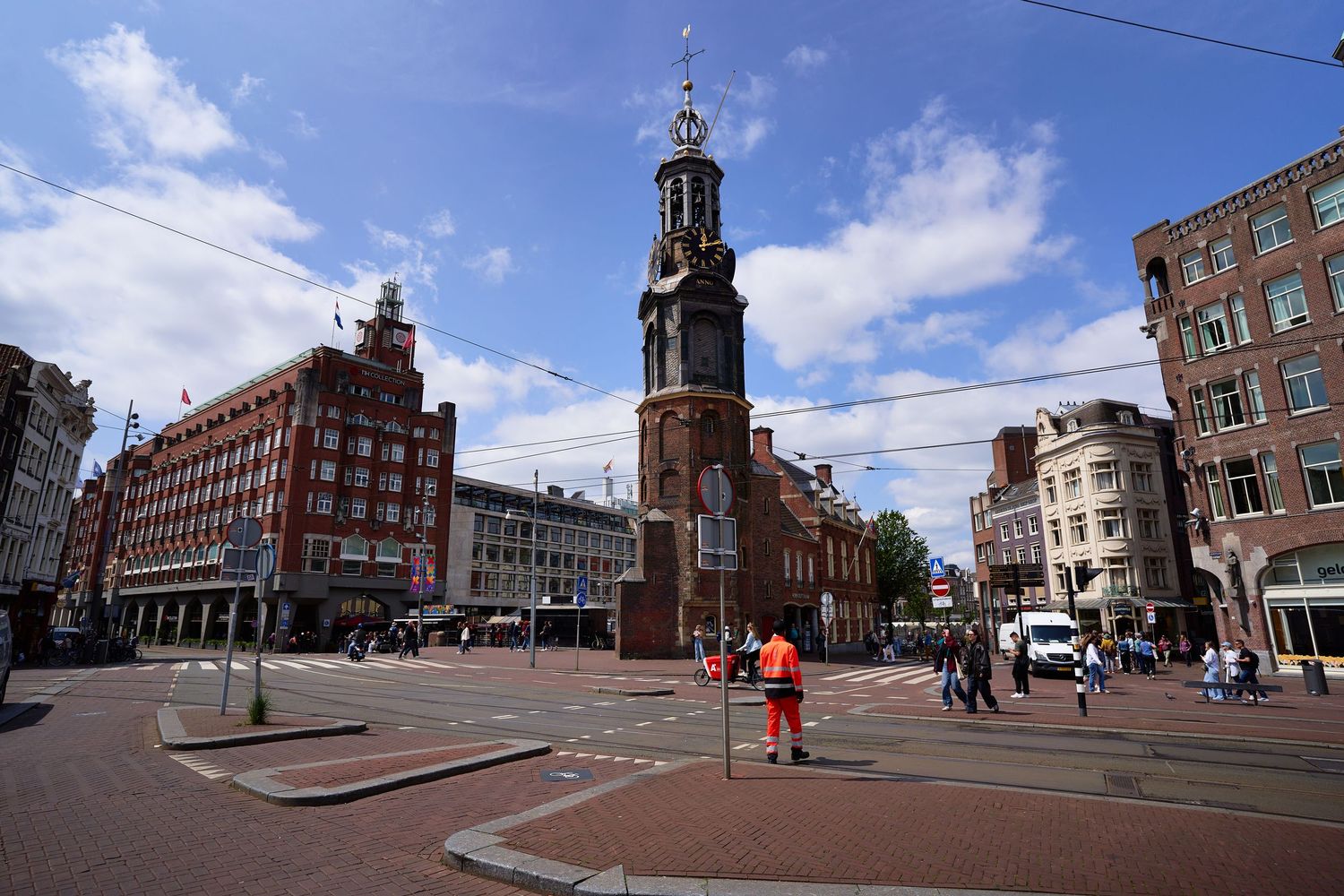
The Heinen Delfts Blauw in Amsterdam, The Netherlands.
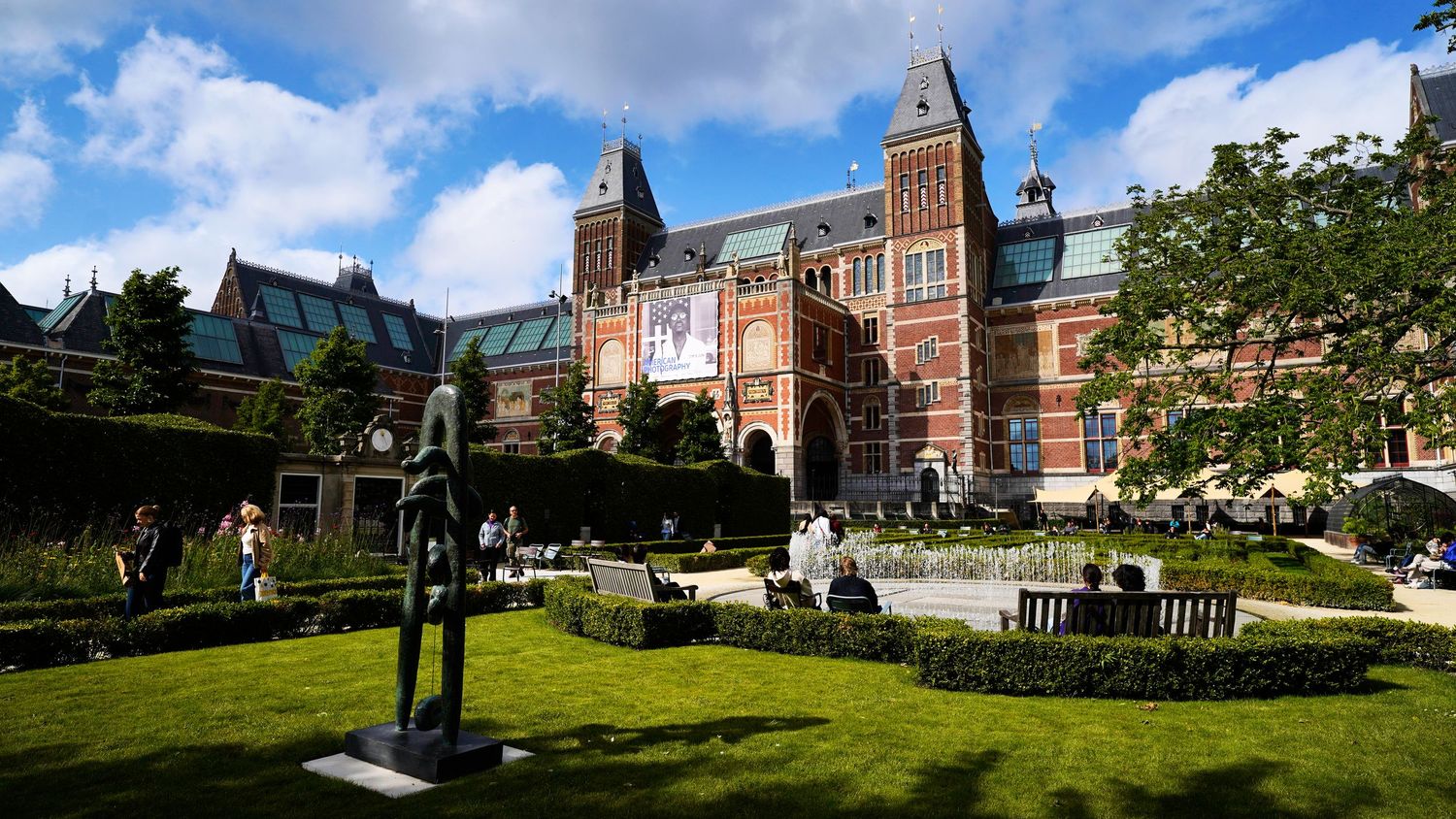
The Rijksmuseum in Amsterdam, The Netherlands.
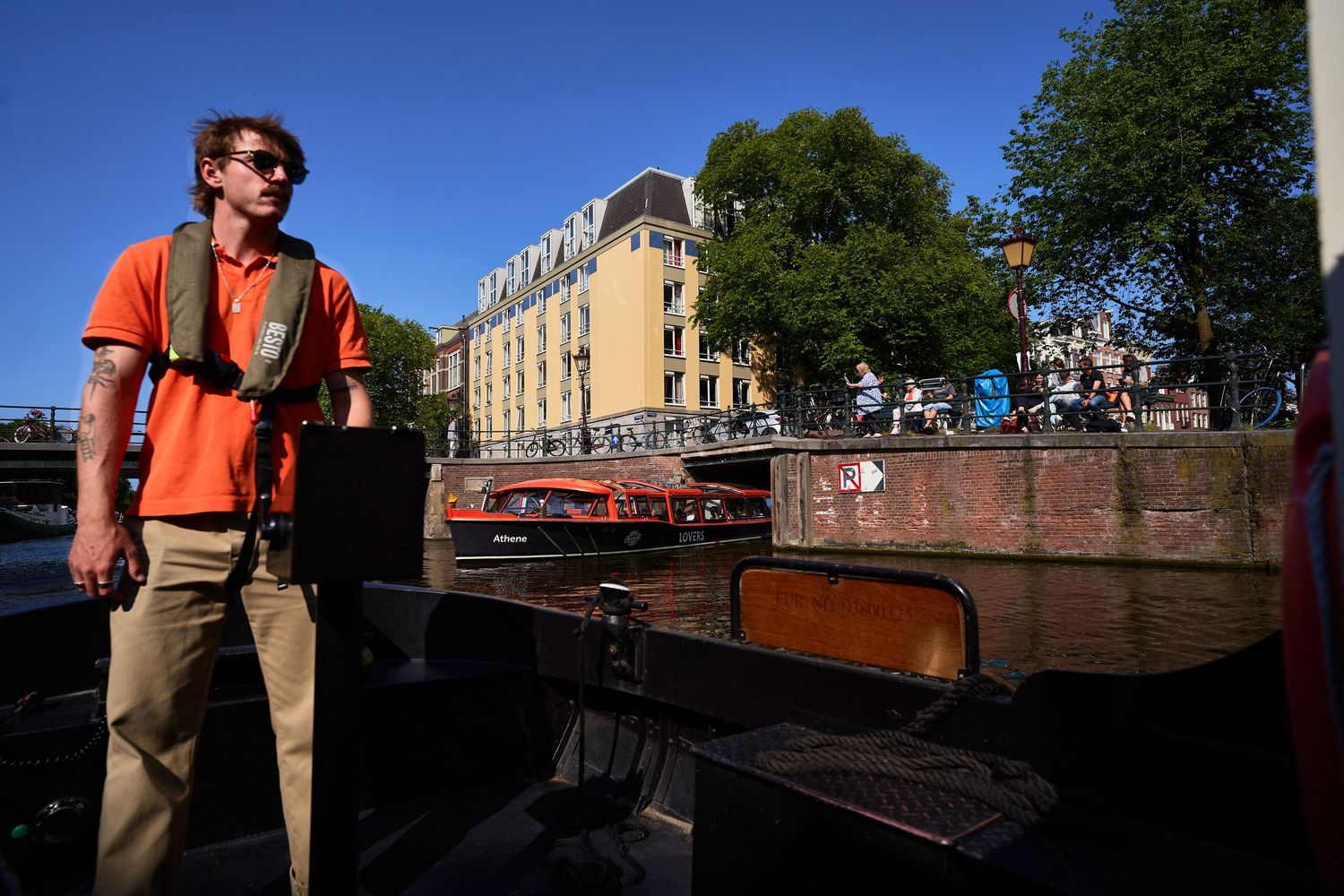
On a Flagship Amsterdam canal cruise in Amsterdam, The Netherlands.
Day 3 (12th June):
My last day in Amsterdam started with us checking out of the hotel and heading to the Van Gogh Museum near the Rijksmuseum for our 10:30 am booking, which had a long queue outside its entrance. After gaining entry inside the building, we locked our belongings in two lockers and proceeded down the escalator towards a large reception and locked our belongings in two lockers. We then took another escalator, which took us to the first room of the exhibition. Inside, we went to the first room and saw a lot of Van Gogh paintings and self-portraits of himself on display as well as a timeline of Van Gogh's life. The paintings were intricately detailed and full of life, from the expressive bright colours the artist used. The room was busy with a large crowd of people, which sometimes progressed at a slow pace from painting to painting. On the second and third floors were larger rooms full of the artist's masterpieces and other resources, such as his sketches. The paintings were mesmerising and I particularly liked the Sunflowers (Van Gogh, 1887), the Self Portrait with Grey Felt Hat (Van Gogh, 1887) and the Potato Eaters (Van Gogh, 1885). From the overall experience, I learned about the beauty that Van Gogh saw in the world, but also what a conflicted person he was. We then walked down to the gift shop, browsed the items on display, didn't buy anything, retrieved our bags and promptly exited the museum.
After finishing our visit at the Van Gogh Museum, we passed the Rijksmuseum and headed towards Amsterdam Centraal Station. Along the way, we explored the streets of Amsterdam some more as we ventured back to Dam Square to look at the Royal Palace, the New Church, & The Beurs van Berlage one last time. In front of the Beurs Van Berlage building were several brightly covered elephants, each one decorated in its unique design. The Beurs van Belrage building is a large building with a red exterior designed by Hendrik Petrus Berlage in a modernist style between 1896 & 1903, with a tower that ascends into the sky. We then walked through the Red Light District as well as Chinatown. I am not going to go into much detail about the Red Light District, but it's just full of a few bars, cafes, sex shops and women behind glass awaiting customers. I'll say, though, that walking through that part of Amsterdam, I just wanted to get out of there as soon as possible, and for me, it made me sorry for the type of people who participate in that particular lifestyle. Anyway, after navigating through the streets of the Red Light District and a part of Chinatown, we came to an opening where I saw a tram proceed along the tracks in front of Amsterdam Centraal Station. The railway building is massive and has a red brick exterior. The building was created by Pierre Cuypers in 1881, in a Gothic Revival and Renaissance Revival Architectural style, which is very impressive to look at. On my right was the Basilica of Saint Nicolas, and on my left were some river boats parked in a small section of water with shops and houses behind them. As we proceeded down the pathway, we crossed the road and headed towards the station. I noticed on both sides of me were two different boat tour operators offering canal cruises with a few boats in the water. Inside the station, it was very busy, and we looked at the monitors to make sure there were trains to Schiphol Airport, which was great to see that they were running as last time, the train drivers were on strike. We next exited the station and headed down a small dark tunnel next to the station, which consisted of a foot path for pedestrians and a side road for vehicles. As we got to the end of the tunnel, I noticed the light, and in the distance, I could see people hurrying to get a ferry, whilst others walked up and down the sidewalk. Behind the train station was a small terminal of a few ferries going to various destinations, we tried figuring out which ferry would take us to the Straat Museum and after a few minutes, we figured out we needed to get the NSDM ferry but we had just missed that boat, so we had some snacks and waited patiently inside the station for the next one to arrive.
When the next ferry arrived, it was busy with mostly people and their cyclists, so we waited for them to get off and walked onto the ferry. As the ferry pulled out of the terminal, most people waited inside the ferry. I waited on the open deck of the ferry and captured excellent views of the surrounding landscape and buildings, such as the Eye Filmmuseum and the A'DAM Lookout, with my camera. The Eye Filmmuseum was amazing to look at as it resembled a spaceship, whereas the A'DAM Lookout is a very tower building which is great to look at, I imagine it has an amazing viewpoint of the city, but the swing at the top of the building puts me off because of my fear of heights. After twenty minutes, the boat arrived at the NSDM terminal, and we slowly disembarked and walked straight to the Straat Museum. The Straat Museum is located in the NSDM neighbourhood of Amsterdam. It features around 180 pieces of modern artwork, and the museum was opened in 2020 after it was converted from an old warehouse into an art gallery. The structure adheres to an industrial adaptive reuse architectural style. We entered the museum, placed our bags in the lockers and looked around a large warehouse with a lot of massive canvases of modernist art, some of which hung from the air, others on the wall, and the other pieces stood on the ground. The artwork and murals are innovative, beautiful, thought-provoking and full of life, I liked several of the piece of the artwork such as The Theft of Love (Rueda, 2018) & the Young Girl with the Pearl (SETH, 2024) to Red Hiding Hood (Insane21, 2016), which was amazing to see how perspective changes when looking through the two large blue and red filters. Some murals included references to pop culture, and others were just mesmerising in their detail and the craftsmanship which went into the artwork. I felt so mesmerised by the exhibition and had to go around again just to make sure I got a good glance of every single piece of art and visit the gift shop, of course. After a considerable amount of time in the museum, we retrieved our backpacks, hurried to the terminal and managed to get the next ferry back to Amsterdam Centraal Station. The boat was fairly busy, mostly with the occasional tourists and the locals with their bikes. Within a few minutes of getting on the ferry, we reached our destination.
We next proceeded to walk towards the OBA Oosterdok - Public Library to see Amsterdam from its viewpoint, but not before we got to see a massive P&O Cruise ship in port and then walked to the library, which was positioned near the NEMO Science Museum with the Sea Palace and in the background I saw the Basilica of St Nicholas. We then walked up the stairs to the library, asked the security guard where to go for the viewpoint, and he said to take the elevator to the seventh floor. We entered the elevator, selected the button, and the doors opened up onto an elegant restaurant and outside was the terrace, which provided a slightly obscured but immense and beautiful view of Amsterdam. After spending a considerable amount of time watching the boats in the canal and looking at both the VOC Ship 'Amsterdam Replica' and the Basilica of Saint Nicholas in the opposite direction, we left and headed across the Mr. J.J. van der Veldebrug (a bridge) and passed the NEMO Science Museum. The NEMO Science Museum, which was designed in 1997 by Renzo Piani, is a science centre that consists of multiple science exhibitions. It's striking, copper green-based structure rises out of the Amsterdam Docks and adheres to a modern, contextual architectural style. From the library viewpoint, it resembles a gem that's just been discovered from the ocean floor or a ship rising from the depths of the ocean. The harbour near the bridge and the NEMO Science Museum provided an excellent view of the boats in the port and the distinct surroundings. Within a few minutes, we came across the magnificent VOC Ship 'Amsterdam' Replica, along with a few other smaller historical boats in the harbour and in the background is the National Maritime Museum. This ship is a replica of the 18th-century Dutch cargo ship, which was destroyed during a violent storm on its voyage to the Far East in 1749. The replica was created in 1991 as an employment project targeted at young people when unemployment was high in the country and people were interested in learning about the VOC (The Dutch East India Company). The ship is spectacular to look and when looking at it, I felt like I had been transported to that period. As we headed back to the Centraal Station, I saw the steep incline of steps to the roof of the NEMO Science Museum, which went upwards towards the sky, and I imagine it must have given an excellent view of the city. Unfortunately, we had no time to check it out, so we headed back pass the NEMO Science Museum, the MR J.J. van der Velderbrug bridge and the OBA Oosterdok - Public Library and the Sea Palace and behind that I could see the Basilica of St Nicholas, which was enormous and stood out from the other surroundings, as it ascended into the clouds. The Basilica was erected towards the end of the 19th century and resembles a very Romanesque church, which is influenced by a neo-baroque and neo-renaissance architectural style. Whereas the Sea Palace, which is a Chinese restaurant that resides near the library, is grand and is decorated in the design of an Emperor's imperial Palace. I guess it's designed in that particular manner to give people the impression they are stepping back into Chinese history and to get a feel of Chinese culture. We then walked to the Amsterdam Centraal Station to get some dinner at Wagamamas, which was delicious, browsed the products inside the I am Amsterdam store and after buying our train tickets, we decided to have one last venture around Amsterdam mainly down the Singel canal before we promptly returned to get the train to Schiphol airport. The train was fairly sparse, and the train ride was very quick. When we arrived at the airport, we immediately checked in, browsed the stores and bought a few souvenirs before we proceeded towards the gate for the flight back to the UK.
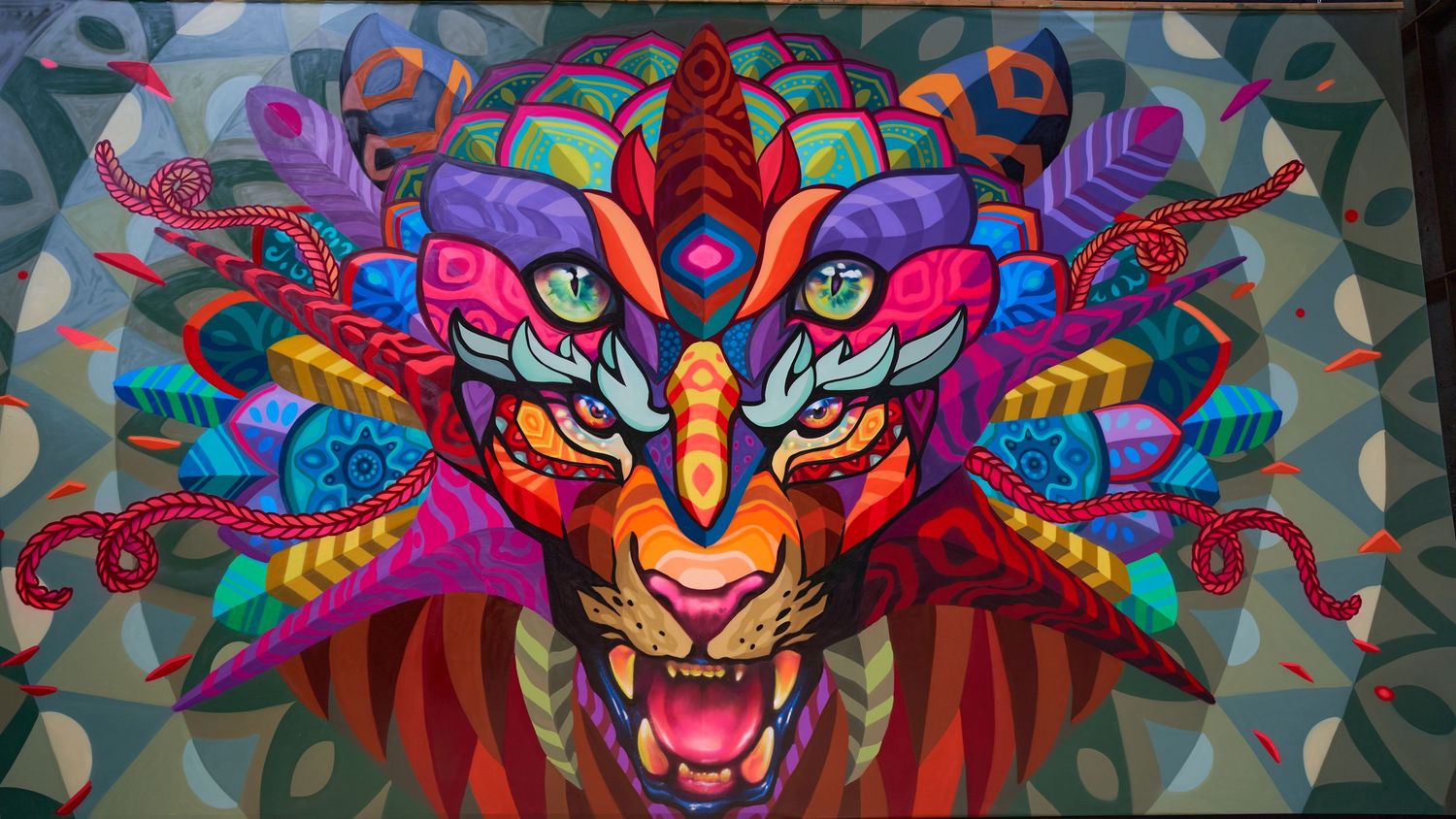
Theft and Love (Rueda, 2018) housed in the Straat Museum in Amsterdam, The Netherlands.
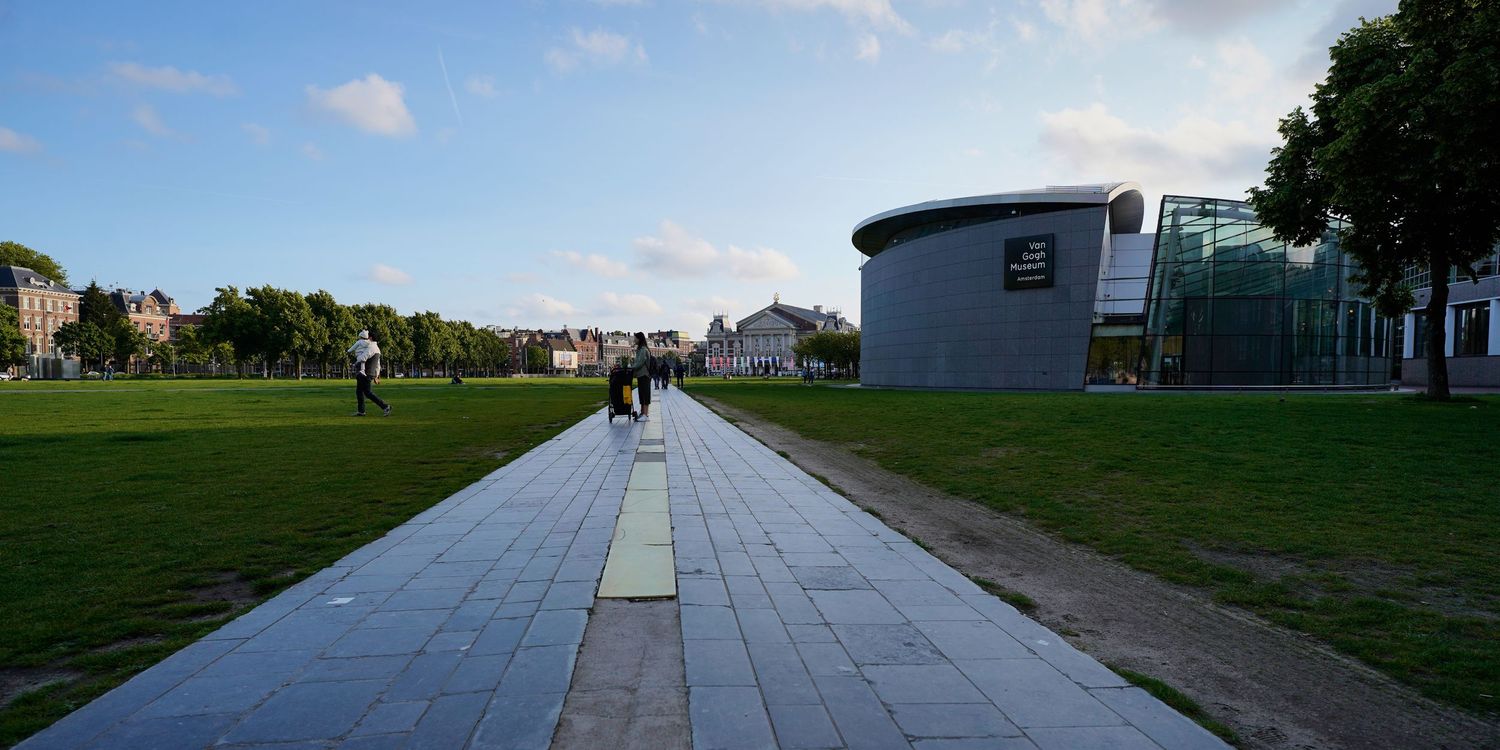
The Van Gogh Museum (Right, mid-ground) in Amsterdam, The Netherlands.
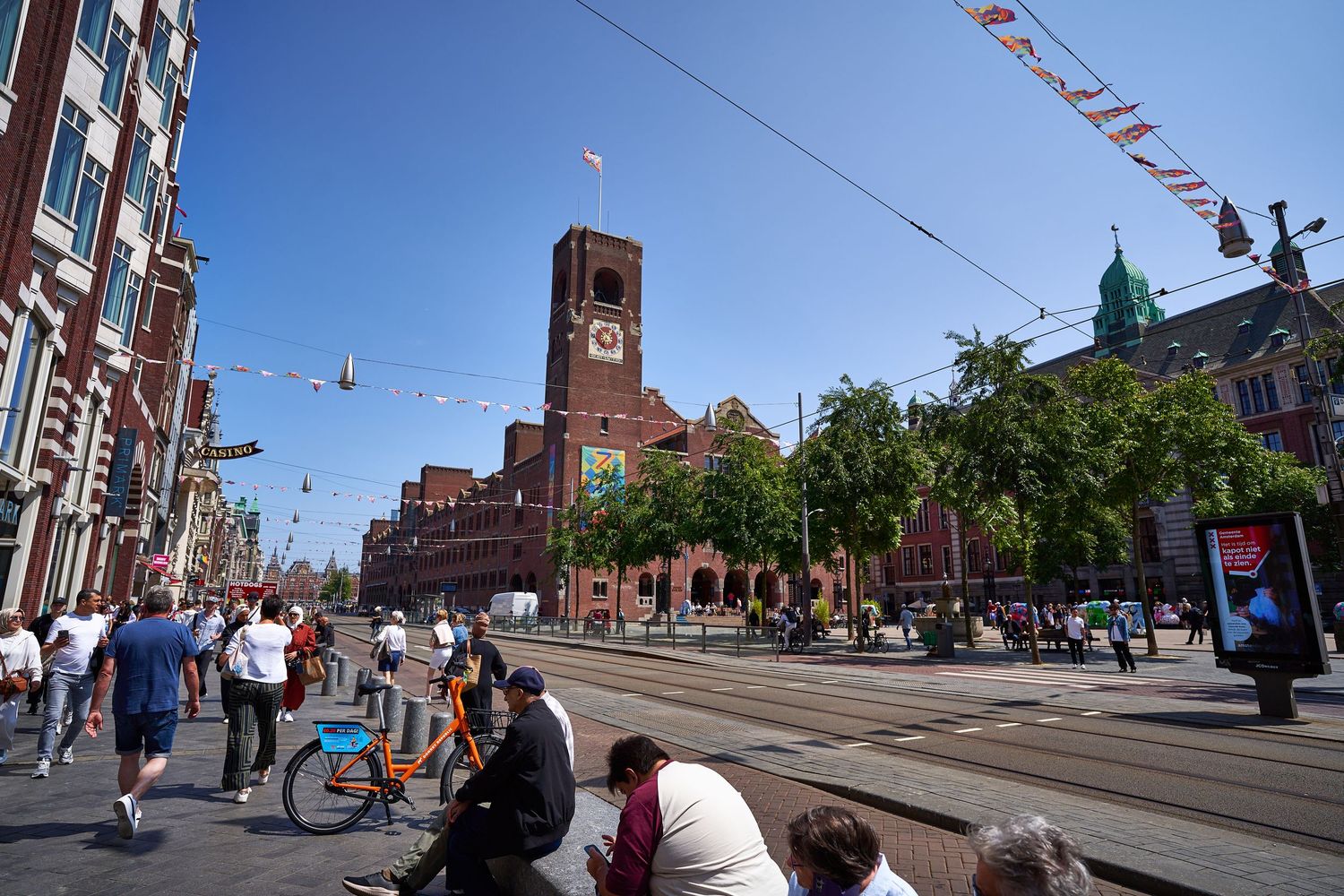
Pedestrians on the left pathway walk pass the Beurs van Berlage (Centre) in Amsterdam, The Netherlands.
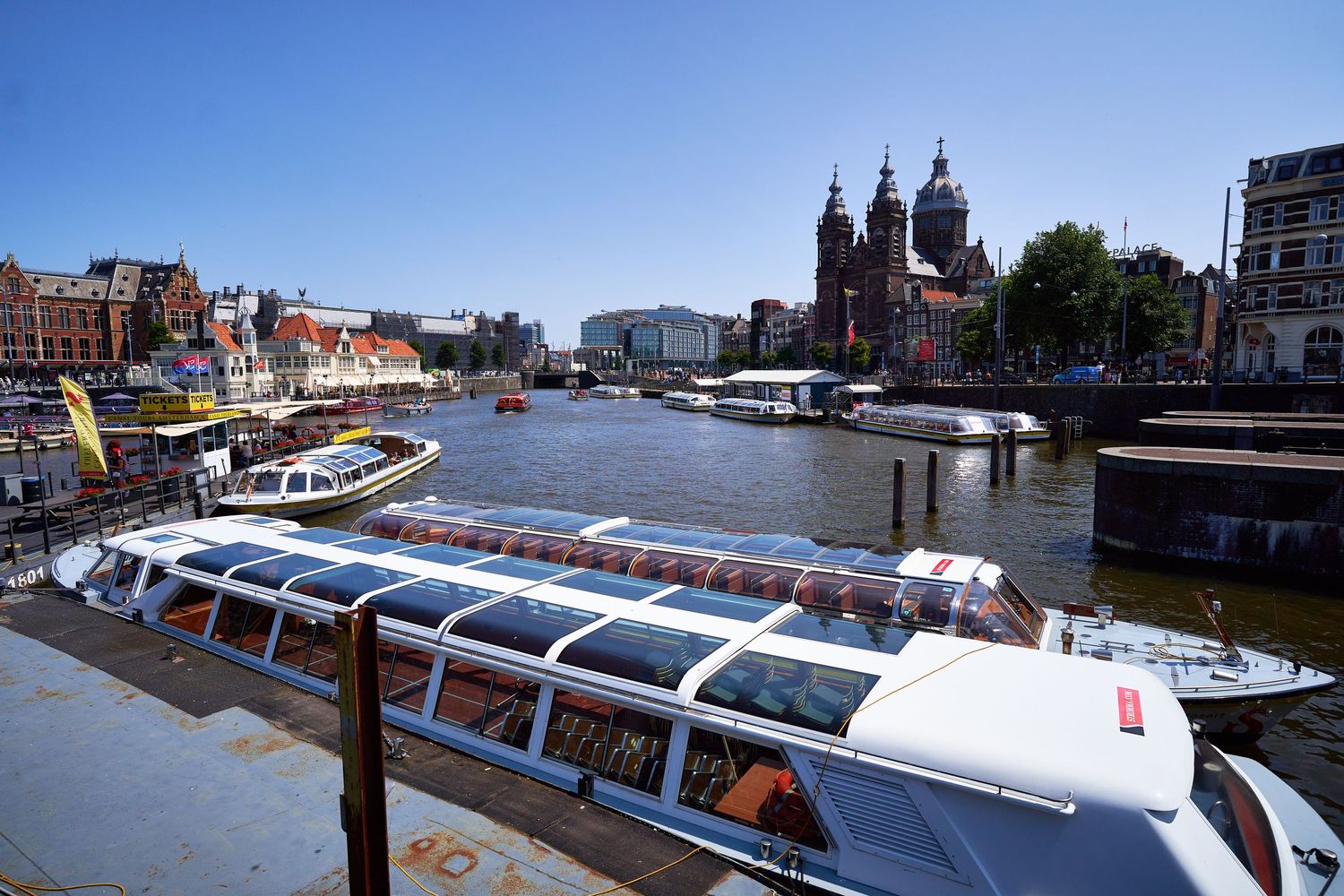
Boats on the Oudezijds Kolk Canal (Below) with the Basilica of St Nicholas (Centre right, background) in Amsterdam, The Netherlands.
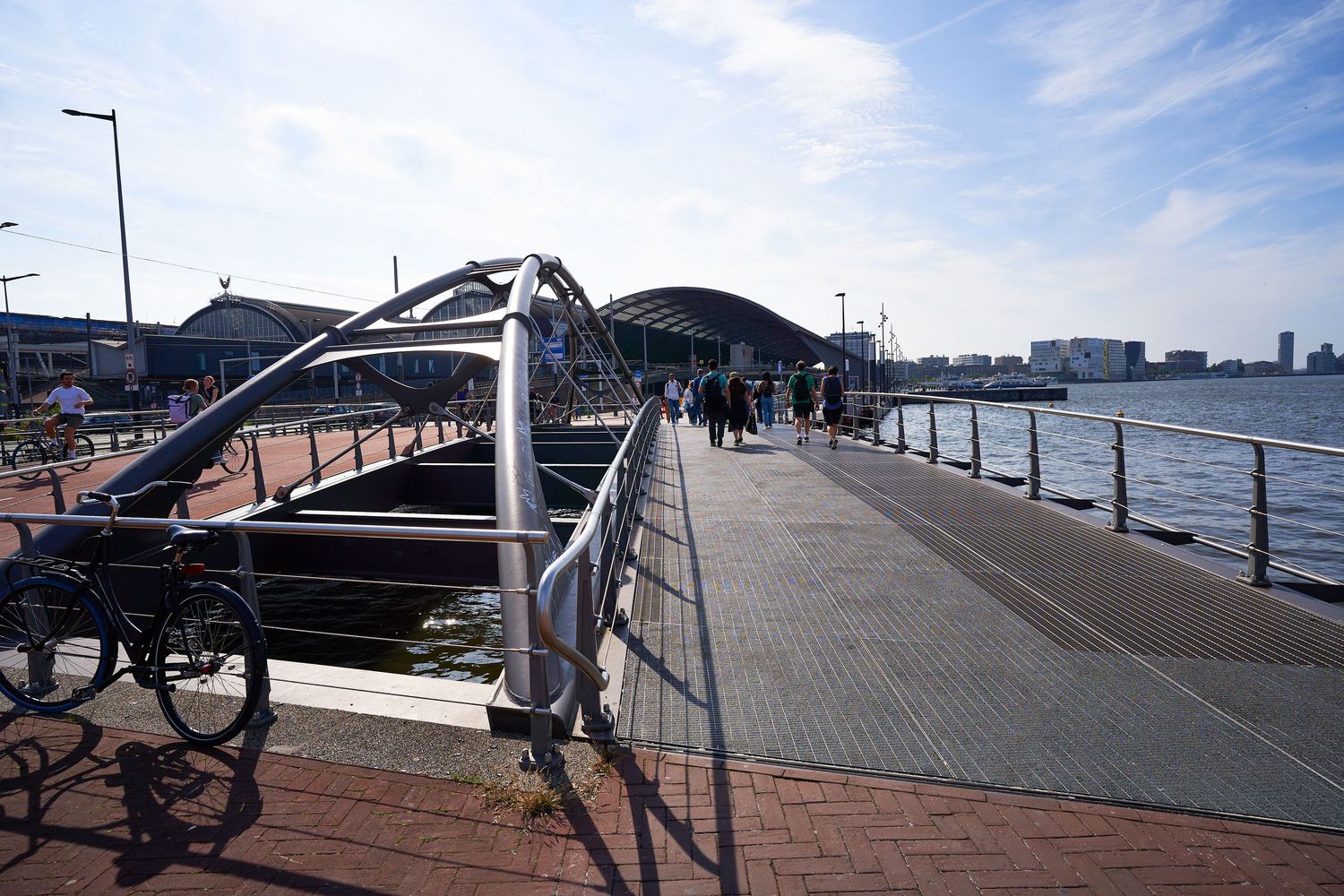
People walk over a bridge towards Amsterdam Centraal Station (Background) which has a ferry terminal connected to it. Located in Amsterdam, The Netherlands.
Recommendations/Tips for Amsterdam:
From my travel experience in Amsterdam, here are some recommendations or tips I would recommend, if you do get the chance to travel to this vibrant city.
- Bring a mixture of cash and cards, as most Dutch stores don't accept cash and only accept card payment.
- Eating out in Amsterdam can be very expensive, so research your restaurants beforehand so you are familiar with their choices and prices.
- Typical delicacies associated with Dutch cuisine range from the herring, the Pannenkoeken, to the Bitterballen. I didn't get to try them all, but I would recommend that if you're in Amsterdam, try some Stroopwaffles, which are a Dutch cookie which comes in various flavours. However, be warned, like the Greeks' pastries, they are very sweet.
- I would recommend booking a canal cruise of the city, and these can be booked near tourist sites such as The Anne Frank House, The Rijksmuseum, to Amsterdam Centraal Station. This mode of transport will transport you to other areas of Amsterdam, which you may not have seen and enable you to see the city in a different atmosphere and light.
- Before travelling to Amsterdam, please purchase tickets to tourist sites beforehand, as tickets to popular tourist destinations like the Anne Frank House usually sell out fast.
- One good thing about this city is not only that it has friendly and welcoming inhabitants, but most of the historic landmarks or tourist sites are within walking distance, so you won't be spending too much time on public transport.
- Always bring a portable charger for your phone, as you will definitely need to rely on your phone to navigate the streets of the city, so you don't get lost, as after a while, many neighbourhoods, especially near the canals, look very similar.
- Don't miss the chance to visit the Anne Frank House, you will have a profound experience once inside and contribute to the selfless cause of the museum as it tries to improve the wider world's attitudes towards antisemitism.
- There is far more to Amsterdam than the Red Light District. Amsterdam is a vibrant and welcoming city known for its artistic legacy, unique canal system and puzzling narrow houses.
- Also, watch out for cyclists as Amsterdam locals love their bicycles.
- Ferries behind the Amsterdam Central Station are free to travel on, so if given the chance, use them to travel to sites such as the Straat Museum, Eye Filmmuseum and the A'DAM Lookout. I promise you that you won't be disappointed.
- Rent a bicycle and experience the city via that mode of transport.
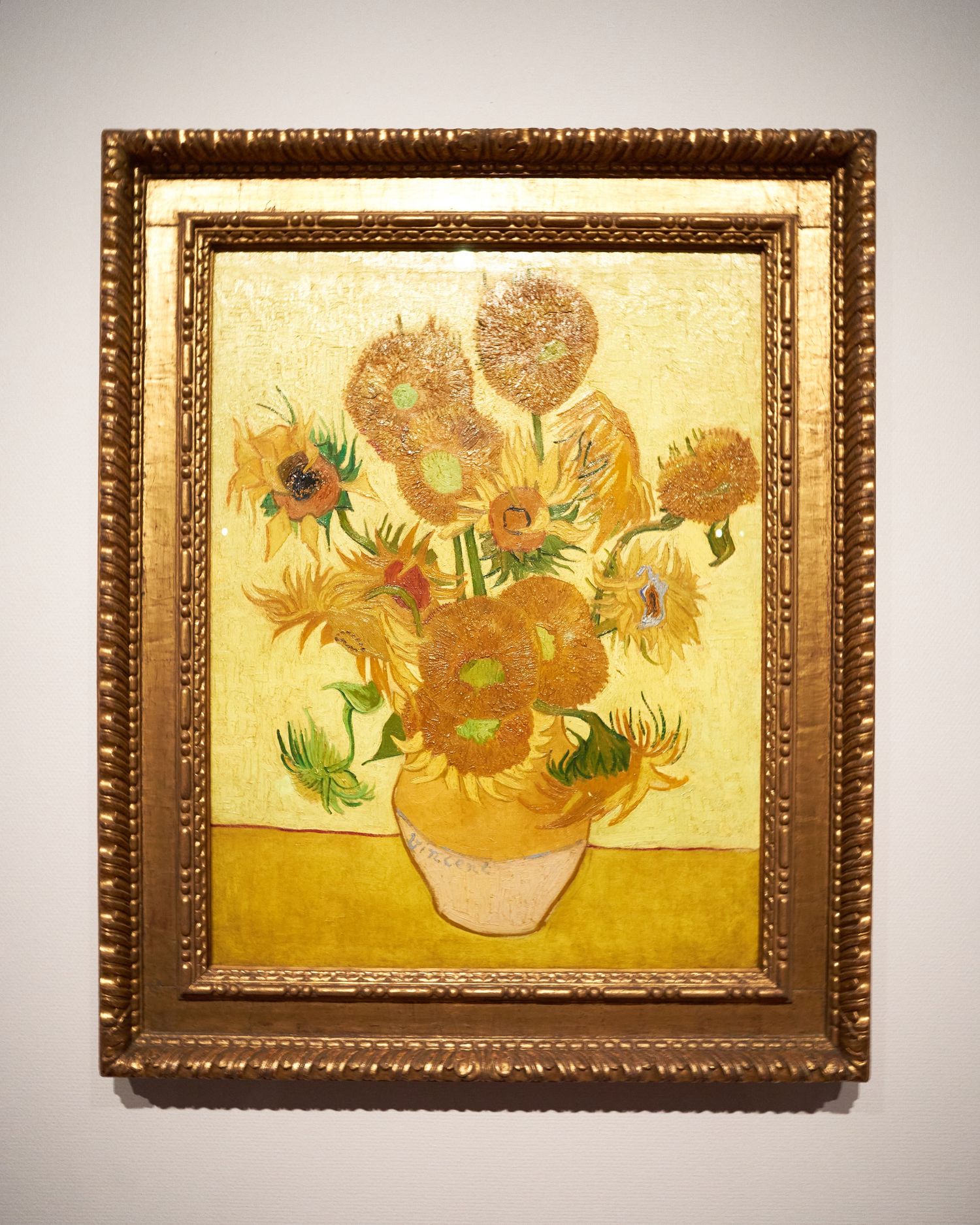
Sunflowers (Van Gogh, 1887) painting housed in The Van Gogh Museum in Amsterdam, The Netherlands.
"Waar je ook gaat, ga met heel je hart." ( "Wherever you go, go with all your heart.")
What struck me most about Amsterdam was how effortlessly it balances history, creativity, and everyday charm. The winding canals, crooked old houses, and endless bikes give it a character unlike anywhere else I’ve visited. It’s a city built for wandering—compact, easy to explore, and full of hidden gems around every corner. Whether I was cycling past tree-lined waterways, relaxing in a quiet park, or getting lost in a museum, there was always a sense of calm and inspiration. Amsterdam doesn’t shout for attention—it wins you over slowly, with atmosphere, beauty, and a rhythm all its own. Amsterdam left me inspired, from its rich history and bold architecture to the creativity that spills onto every street corner. Exploring its museums, canals, and cultural contrasts has been unforgettable. I leave with new perspectives, countless stories, and a camera roll full of colour. Tot ziens, Amsterdam—until next time!"