Introduction:
Throughout this travel blog, I will be focusing on discussing the key aspects/highlights from my recent adventure in the capital of Lisbon, Portugal. I will start this blog by stating what drew my attention to this particular destination and what incentivised me to choose to travel to this historic, sub-drenched and vibrant city. Once that is covered, I will refer to some key relevant facts about the city of Lisbon, and I'll delve into my recent expedition to Lisbon.
Located in the western portion of the Iberian Peninsula, which is the River Tagus' northern point. Lisbon is a city full of vibrant atmosphere and energy, with a wide range of delicacies, rich historical roots and a unique cultural identity. The reason why I decided to travel to Lisbon is because as someone deeply passionate about history I have always reatined an interest in the country's historical events such as the country's connection to the religious and military order of the Knight's Templar which was instrumental in the founding of the country, Portugal being Britain's oldest ally that was establsihed due to signing of the Anglo-Portuguese Treaty of 1373 and perhaps its also during WW2, although Portugal was neutral during the conflict, the capital became a hub for spies, royalty and refugees, that it was referred to as the "Capital of Espinage". However, it was the coastal region of Cascais and Estoril, otherwise known as the Portuguese Riviera, which is said to have inspired Ian Fleming in creating the iconic character of James Bond. Apart from my interest in history, my fascination with the country grew mainly from word of mouth about how beautiful the country is, but also from a reasonably priced holiday and from hearing good things about the country.
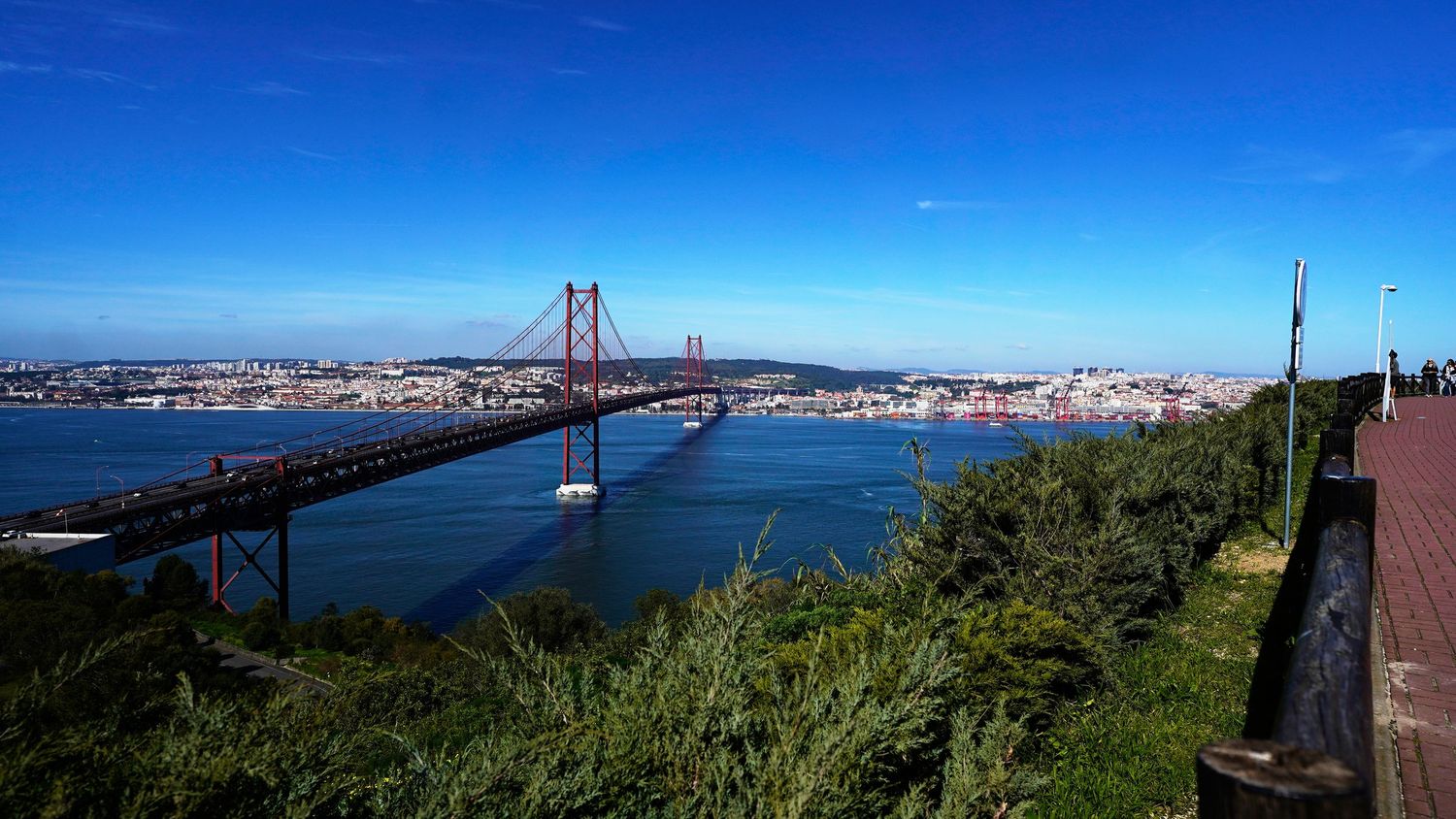
The Ponte 25 de Abril suspension bridge which stands over the Tagus River, connects the Almada region to Lisbon.
10 Interesting Facts about Lisbon:
- The Portuguese Egg Tart: Lisbon is celebrated for its rich culinary tradition, from sardinhas grelhadas (Grilled sardines) and arroz de marisco (seafood rice) to polvo à lagareiro (octopus 'a lagareiro) and the iconic pastel de nata (Portuguese custard tarts). Originating in the 18th century at Jerónimos Monastery, the custard tart was created by monks seeking to use surplus egg yolks left over from starching garments with egg whites. Following the 1882 Liberal Revolution and the closure of monasteries, the recipe was sold to a nearby sugar refinery, leading to the opening of Pastéis de Belém in 1837, where it is still produced today. The dessert has since become a defining symbol of Portuguese cuisine, enjoyed globally from Brazil to Macau and the United Kingdom.
- Sports: Lisbon has a long historical record with sports, from hosting the 1983 European Fencing Championship, some matches, including the final of the 2004 UEFA Euro Championship, it was the starting point of the Dakar Rally from 2006 to 2008 and has hosted other events such as the Volvo Ocean Race, the Portuguese Half Marathon and the Lisbon Half Marathon.
- Football Rivalry: Lisbon is home to three Primeira Liga clubs — S.L. Benfica, Sporting CP, and C.F. Os Belenenses — but it is Benfica and Sporting who define the city’s fierce football rivalry. Between them, they have won 58 league titles and developed global icons such as Eusébio and Cristiano Ronaldo, cementing Lisbon’s status as a powerhouse of Portuguese football.
- The Age of Discovery: Located in Belém along the River Tagus, the Monument to the Discoveries honours the explorers, navigators and cartographers of Portugal’s Age of Discovery, including Vasco da Gama, who opened the sea route to India in 1498. Designed by sculptor Leopoldo de Almeida and architect Cottinelli Telmo, it was first built as a temporary structure for the 1940 Portuguese World Exhibition and permanently reconstructed in 1960 to mark 500 years since the death of Prince Henry the Navigator. The interior was later remodelled in 1985 by Fernando Ramalho, adding exhibition spaces, an auditorium and a panoramic viewpoint.
- Historic Transport: While Lisboners use the metro, buses, ferries, and cars, nothing captures the city’s spirit like its trams. Introduced in 1873, the first tram system replaced horse-drawn carriages known as americanos, which struggled with Lisbon’s steep hills and bumpy streets. By 1900, electric trams had modernised the city’s transport, reliably carrying passengers up and down its inclines. Today, the historic Tram 28 — painted in bright yellow for visibility — still navigates narrow, twisting streets with vintage 1930s cars, preserving a piece of Lisbon’s heritage while offering both locals and visitors a charming, practical way to explore the city.
- Architecture: Lisbon boasts a rich architectural heritage, blending styles from Manueline (Portuguese Late Gothic) and Pombaline to Baroque, Neo-Manueline, and contemporary designs. A prime example is the 16th-century Belém Tower, a Manueline fortress with Moorish influences. Originally commissioned by King John II as part of Lisbon’s coastal defence, it was completed in 1520 under King Manuel I during the Portuguese Renaissance. Today, Belém Tower stands as a cultural icon, symbolising Portugal’s maritime prowess and colonial influence in early Europe.
- Literature: Lisbon is home to wide range of literature nuance such as The Last Kabbalist of Lisbon (Zimler, 1996), A Small Death in Lisbon (Wilson, 1999) and was once home to the Nobel-Prize writer Jose Saramago who was responsible for writing the 1980 novel of Levantado do Chão (Raised from the Ground), which utilised his signature narrative style of minimal punctuation, long sentences and oral cadence. His work mainly tackled themes such as questioning authority, religion to human blindness, as well as exploring Portuguese history and identity.
- The Founding of Lisbon: Lisbon, mainland Europe’s westernmost capital, sits on the River Tagus and stretches to Cabo da Roca, Continental Europe’s westernmost point. One of Europe’s oldest cities, it was — according to legend — founded by Ulysses (Odysseus) and originally called Olissipo. Archaeological evidence shows it was first inhabited in the Neolithic period, with Phoenician and Roman settlements turning it into a thriving port connecting the Iberian Peninsula to the Mediterranean. Later ruled by Visigoths and Moors, Lisbon absorbed layers of architecture, urban design, and culture before being captured in 1147 by Afonso I during the Reconquista, cementing its place in the Portuguese kingdom. Today, these layers of history are still visible in its streets, architecture, and vibrant cultural identity.
- Contemporary Art & Azulejos: Lisbon is a living canvas, from museum treasures at the National Museum of Art, the Calouste Gulbenkian Foundation, and the Lisbon Tile Museum to vibrant street murals and Underdogs Gallery exhibitions. The city is also famous for azulejos — intricate, colourful ceramic tiles adorning façades and streets. Introduced to Portugal in the 15th century, their techniques and geometric designs were influenced by the Moors, before evolving into a uniquely Portuguese art form. While some locals jokingly link them to the arrival of Ganda, the Indian rhinoceros gifted to King Manuel I in 1515, their widespread use actually stems from the city’s rebuilding after the 1755 Lisbon Earthquake, turning practical protection into a signature art form that defines Lisbon’s streetscape.
- Music: Lisbon gave birth to Fado, the soulful music of saudade, rooted in the historic neighbourhoods of Mouraria and Alfama. This UNESCO-recognised tradition of longing captured hearts worldwide, thanks to legendary voices like Amália Rodrigues.
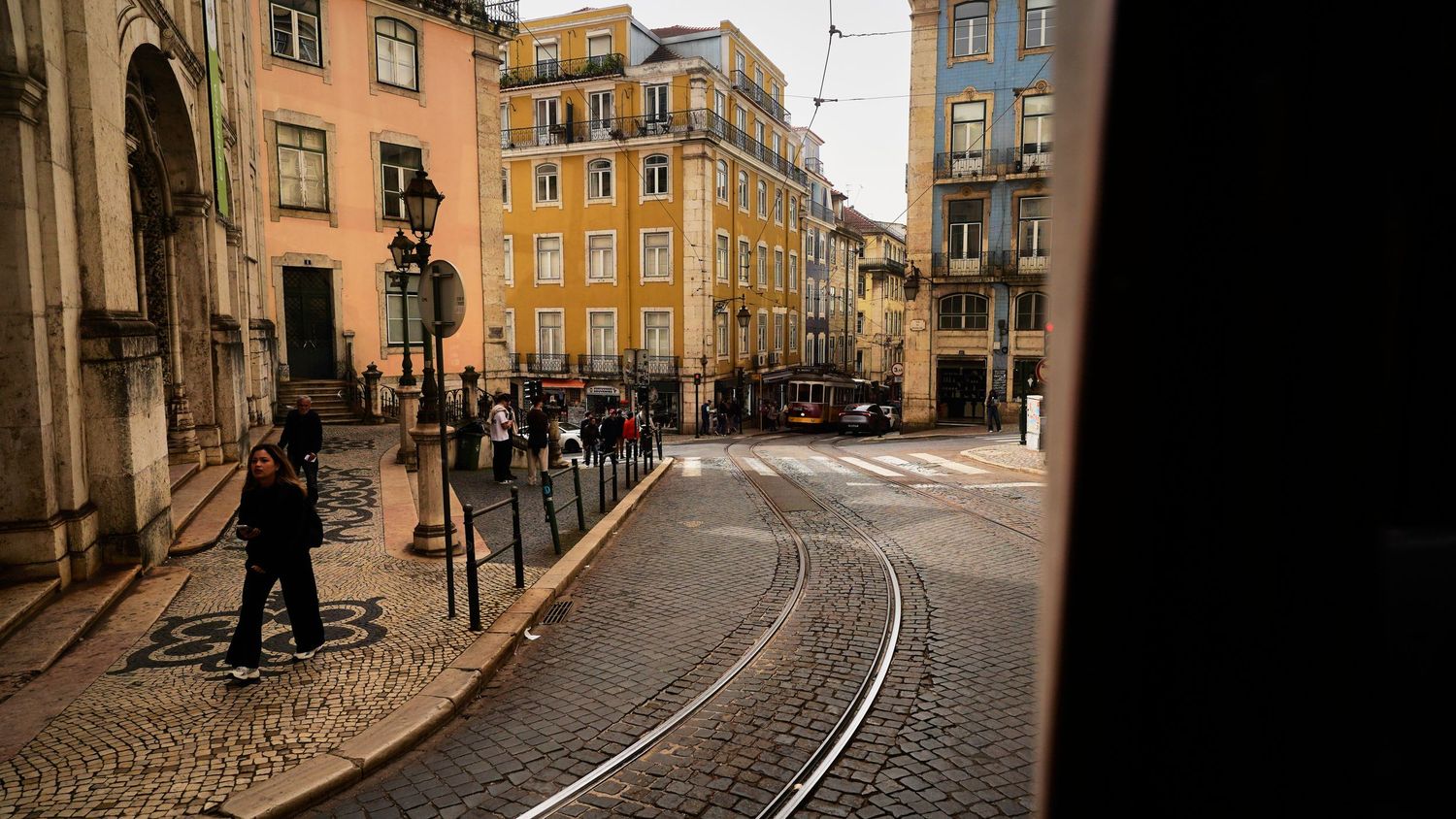
Trams such as the iconic 28 tram are a great way to navigate the Lisbon and also notice the Azulejos on the ground. A reminder of Lisbon's historical roots and rebirth after the devastating 1755 earthquake, which led to the collapse of buildings, a tsunami and fires that engulfed the city and led to a massive reconstruction project of the city, referred to as The Pombaline Reconstruction that started in 1770s.
1st March 2026:
My first day of travel to Portugal started very much like any of my previous holidays, with getting up very early in the morning to take a car ride to Stanstead Airport to catch a very early flight, which was a very cold, breezy and eerily quiet night with dark streets lit by street lamps and bright car lights shining on streets. Once at the drop-off point, we thanked our driver and rushed out of the car to walk immediately to customs. The line for security and customs was long, a throng of people hurrying through customs. Once through that checkpoint, we proceeded to fill up our water bottles and ate some food before boarding our flight. A flight which proved to be very fast and provided many beautiful and picturesque views of Portugal.
After our two-hour flight and some turbulence, our plane finally touched down and came to a halt at Humberto Delgado Airport. As soon as the sign came on to let passengers know that it was safe to unbuckle their seatbelts and disembark from the aeroplane, passengers immediately rushed from their seats and took their hand luggage from the overhead compartment, whilst some passengers just waited patiently in their seats to collect their luggage. After collecting my luggage, I headed down the stairs to the awaiting shuttle to take us to the airport. Walking down the stairs, I was met with sunny and breezy weather conditions. The airport shuttle was extremely crowded and busy with tourists, most of whom were intent on getting through customs as soon as possible to enjoy the sun. The airport shuttle arrived at the airport, and we all walked down a corridor towards the customs gate queue, which wasn't particularly fast but slow as there were many people in the queue. With only two security staff on duty, it took us almost two hours to get into Portugal. passing that checkpoint. We acquired both our Lisboa passes and train tickets and headed down to the metro to get a train. We accidentally ended up getting the wrong train, which took us another route, but that was okay, as it was close to our destination. We then left the metro underground of Sao Sebastiao and walked past the Gulbenkian Museum to a nearby bus stop and got onto abus near the motorway to take us towards Cristo de Rei (The Sanctuary of Christ the King) and went over the massive red decorated Ponte 25 de Abril suspension bridge which was amazing, and on the left handside was the Sanctuary of Christ the King. The Ponte 25 de Abril was built in 1966 by the American Bridge Company, under the orders of Portuguese dictator Antonio de Oliveira Salazar, to connect Lisbon to the Municipality of Almada, and its features of smooth curves and modern engineering characteristics associated with a streamlined art deco design that correspond to an streamline Moderne architectural style that is similar to the Golden Gate bridge found in San Francisco. It certainly was an excellent experience to behold. However, this led us to accidentally miss our stop and have to get off at the wrong bus stop. This meant that we had to traverse through some neighbourhoods and narrow streets for 30 minutes before we came to our final destination, the Cristo De Rei. As we got closer to the destination, I could notice the landmark from afar, positioned above or between some buildings. Our route led us through a car park to the historic landmark. On one side of the landmark was a ticket office and machines to purchase tickets to enter and see the view from atop the statue, and on the other side were olive trees with a viewpoint facing Lisbon. Instead of going to see the statue first, we first walked towards the viewpoint that provided an excellent view of not only the Ponte 25 de Abril suspension bridge and the boats on the Tagus River, but also the whole of Lisbon. The viewpoint was superb and out of this world, and not overcrowded, which was excellent to see and experience. Behind the long viewpoint were two statues, one on either side of the Virgin Mary or another female saint and in front of that was a Christian cross tilted a few feet above the ground, pointing towards the Sanctuary of Christ the King statue. Behind those figurines was the Sanctuary of Christ the King, which was a massive figure that dominated the overall landscape with both of its arms out wide and a reference to Christ's sacred heart on its chest, standing on a very tall tower. Standing at 360 ft high and 92 ft wide, the historic religious landmark was constructed in 1959 on a vow made by Portuguese bishops during WW2, that if the country was spared the destruction associated with the conflict, a national monument to Christ would be built. The monument adheres to a modernist monumental religious architectural style and is heavily influenced by the Christ the Redeemer statue in Rio de Janeiro, Brazil. On the statue is a reference to the Sacred Heart, with the heart covered by thorns, radiating flames, and the statue symbolises a gratitude of peace as well as Christ's sacrifice, protection and guidance of humanity. The statue stands with its open arms and facing Lisbon, which emphasises its blessing and protection over both the city of Lisbon and the country. As we walked further towards it, I noticed a massive circular structure above the entrance which resembled a coin, and below was a long queue that would eventually take about 1 hour and 30 minutes to get inside. As we got closer to the entrance, I looked once again at the circular structure above the entrance and noticed some engravings, but I was unable to work out what they said as it was too dark to read. We eventually passed the turnstile and made our way to the elevator, which took us to the designated floor and from there we walked a few stairs to get to the top vantage point on the Sanctuary of Christ the King. As soon as I stepped onto the platform, I was immediately met with a overwhelming bright light and a light breeze, which didn't matter as it paled in comparison to the three hundred and sixty panoramic views that it offered, of the Almada region, the Alfama region, Central Lisbon, the suspension bridge as well as the Tagus River and the Belem area. That viewpoint was excellent because using my telephoto lens, I was able to make out landmarks such as Lisbon Square, Belem Tower and the Convento da Graça (The Church of Our Lady of Grace), which was amazing to see and experience. Before descending to the next floor, we went around the landmark one last time to make sure to check out all the viewpoints on the statue before we left. We then descended to the next floor, browsed through a gift shop and checked out a little chapel before we took the elevator to the ground floor. This time we travelled a different route, which meant going through a few streets to reach and wait for the bus on the motorway. Minus the traffic, it was a somewhat quick journey across the suspension bridge and a quick train ride to a metro underground station. From there, we traversed a steep hill and passed by a few restaurants and convenience stores to reach our destination, the Botanico Hotel.
Inside the hotel, we were met by a friendly, helpful and welcoming receptionist, who answered our questions and provided us with two maps to explore the city with, as well as provided us with key cards to our room. Once we took the elevator, we stepped out of the lift, walked to our room, and unlocked the door. We proceeded to unpack our rucksacks and relax for a bit before heading out again. Before sunset, we headed to the Miradouro de São Pedro de Alcântara viewpoint, which provided an excellent view of the Alfama region of Lisbon and in the distance, I noticed both the Castelo de São Jorge (Saint George's Castle) and the Greja de São Vicente de Fora (Church of St. Vincent de Fora). Both of which were situated on hills and stood out in the landscape. Both those structures look extraordinary in the evening and really tower over the surrounding landscape.
We then strolled towards Commerce Square to do some street and night photography. The square was massive, only moderately busy and reminded me of St Mark's Square in Venice. It has a very similar atmosphere and energy, and the square was surrounded by a few restaurants lit by bright fluorescent lights. The square was created in the 1760s in a reconstruction led by the Baixa district after the 1755 earthquake. The square eventually replaced the royal palace, which was destroyed during the earthquake and with its neoclassical government buildings and open space allowed people access to the River Tagus. However, the square retains an infamous connection to the 1908 assassination of two Portuguese monarchs, King Carlos I and his heir, Luis Felipe, by members of an anti-monarchist group. The crown would be inherited by King Manuel II of Portugal, the last monarch to rule before the monarchy was abolished in 1910. In the middle of the square stood the statue of King Joseph I (Macado de Castro, 1775) on a horse, symbolically crushing snakes on the pathway and behind that statue was the massive and enveloping Rua Augusta Arch. The arch was created by Verissimo Jose da Costa between 1873 and 1875, after the 1775 earthquake. The tall, imposing arch was built in response to the 1755 earthquake as part of a rebuilding project which had destroyed most of the city and on its arch are several sculptures by Anatole and Bastos, some of which represent key historic figures from Portuguese history, such as Vasco de Gama and the Marquis of Pombal. In addition, there is a Latin inscription that reads "VIRTVTIBVS MAIORVM UT SIT OMNIBVS DOCVMENTO" which means "May the virtues of the ancestors be a lesson to all", that represents the virtues and achievements of past Portuguese heroes. The arch corresponds to a neoclassical triumphal arch and represents Lisbon's rebirth after the 1755 earthquake and the resilience of the Portuguese people. In front of the square was a beach full of large rocks and boats passing up and down the Tagus River. In the background, I also noticed the Ponte 25 de Abril suspension bridge, and beside that bridge on a hilltop was the Sanctuary of Christ the King, which stood looking over the entire landscape and to my left, I could faintly make out Saint George's Castle. After taking in the whole scenery, we walked up the coastline where it became busier as more people passed by, restaurants were getting fuller, and near there was a small bridge, which took tourists and locals to a ferry destined for what I presume to be Almada to go and to see the Christ statue. During the walk, I noticed an open enclosure. I couldn't tell exactly what animal it was due to how dark it was, but to me it seemed like bats flying, flapping their wings and catching prey. Thinking we wouldn't have another chance to do this, we went further into the city and headed towards a street called Pink Street. As I walked down Pink Street, I noticed the pink pathway; to either side of me, people were engaged in conversation and enjoying themselves at a wide variety of restaurants and bars, one was a Liverpool bar and above me was a net full of suspended umbrellas, which resembled Umbrella Alley near Covent Garden in London. Walking down the path seemed very mysterious to me, but ultimately it made me feel like I was walking down the yellow brick road from The Wizard of Oz (Baum, 1900). Before heading back to our hotel, we explored a few more streets within Lisbon, passed by a few high-end brand shops, and eventually returned to our room, completely exhausted.
Arriving in Lisbon wasn't exactly a walk in the park at first; in fact, we were met with a few challenges, such as having to adapt to navigate the Lisbon Metro, etc, which we eventually managed to overcome. Once we were able to achieve that, we were able to navigate through the heart of the city and not only get a taste of Portuguese life but also the experiences we would accumulate during our adventure. Getting a taste and sense of the city had definitely awoken my curiosity to further explore the authentic, golden-lit and vibrant city.
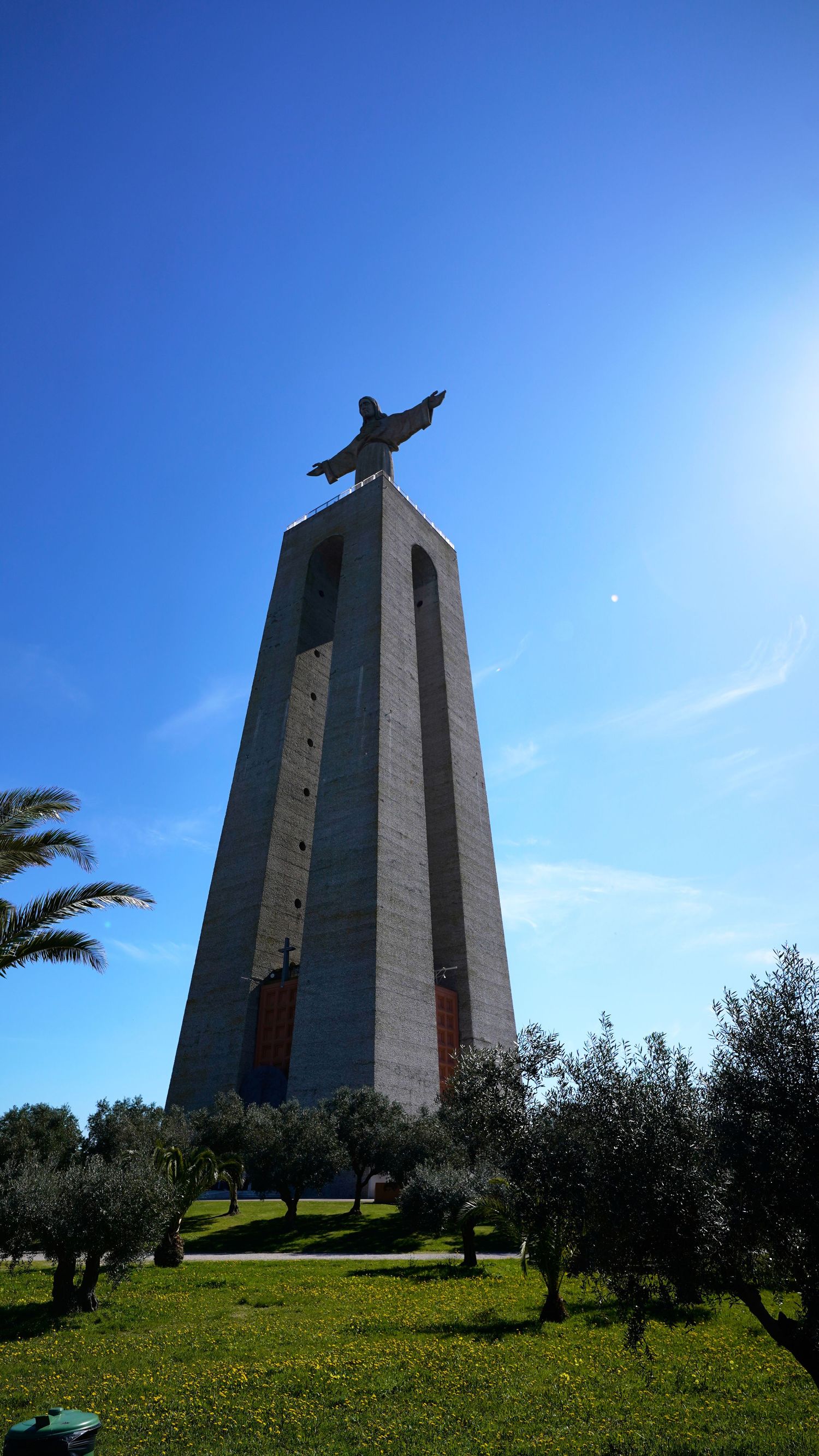
The Sanctuary of Christ the King towers into the sky, surrounded on one by olive trees is situated in the Almada region of Portugal.
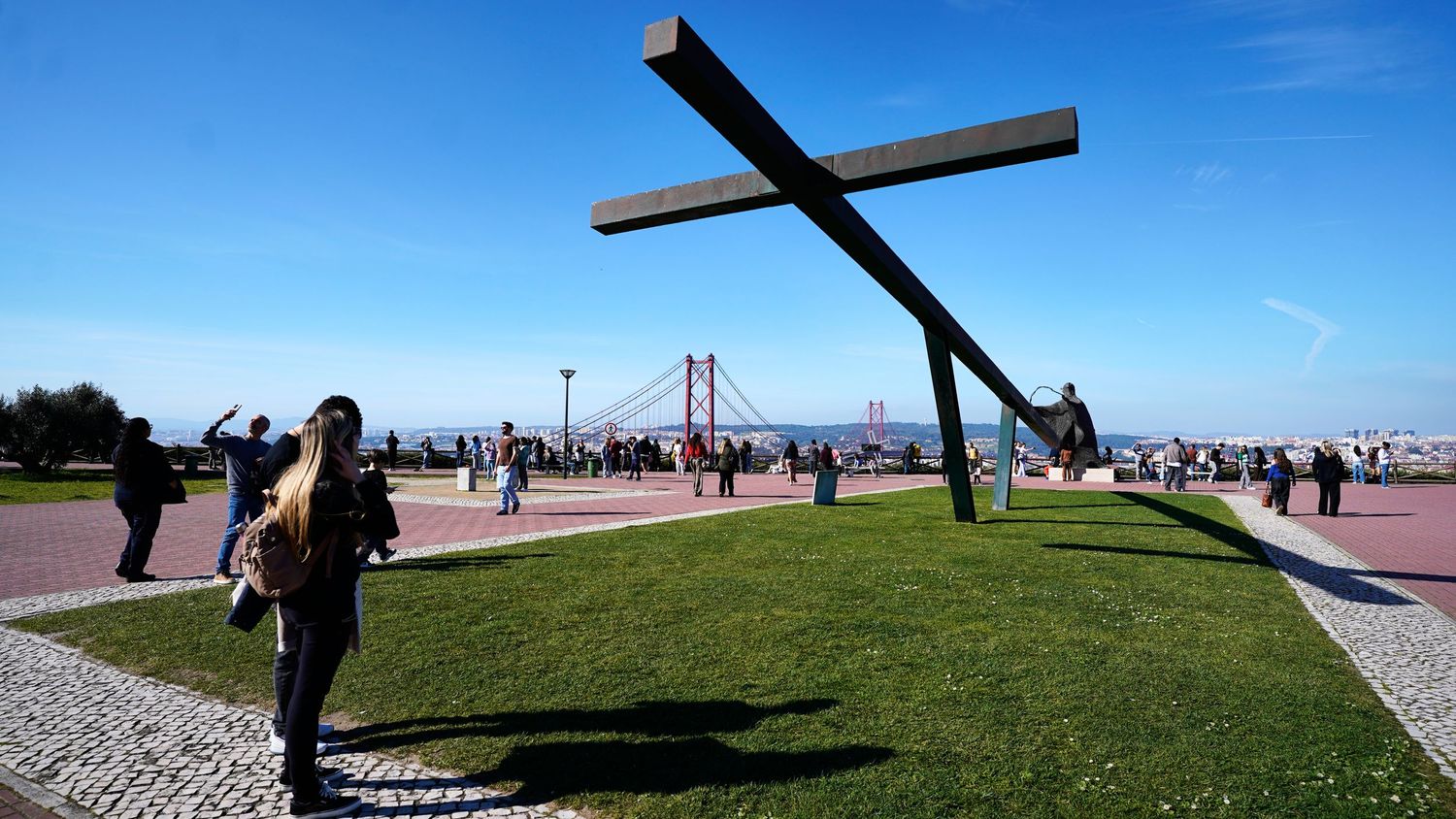
Beneath the towering Sanctuary of Christ the King, a saint statue stands with a cross lifted just above the ground—framed by the sweeping span of the 25 de Abril Bridge across the Tagus River, while the skyline of Lisbon stretches quietly in the distance. A moment where faith, engineering, and city life converge on the edge of the river.
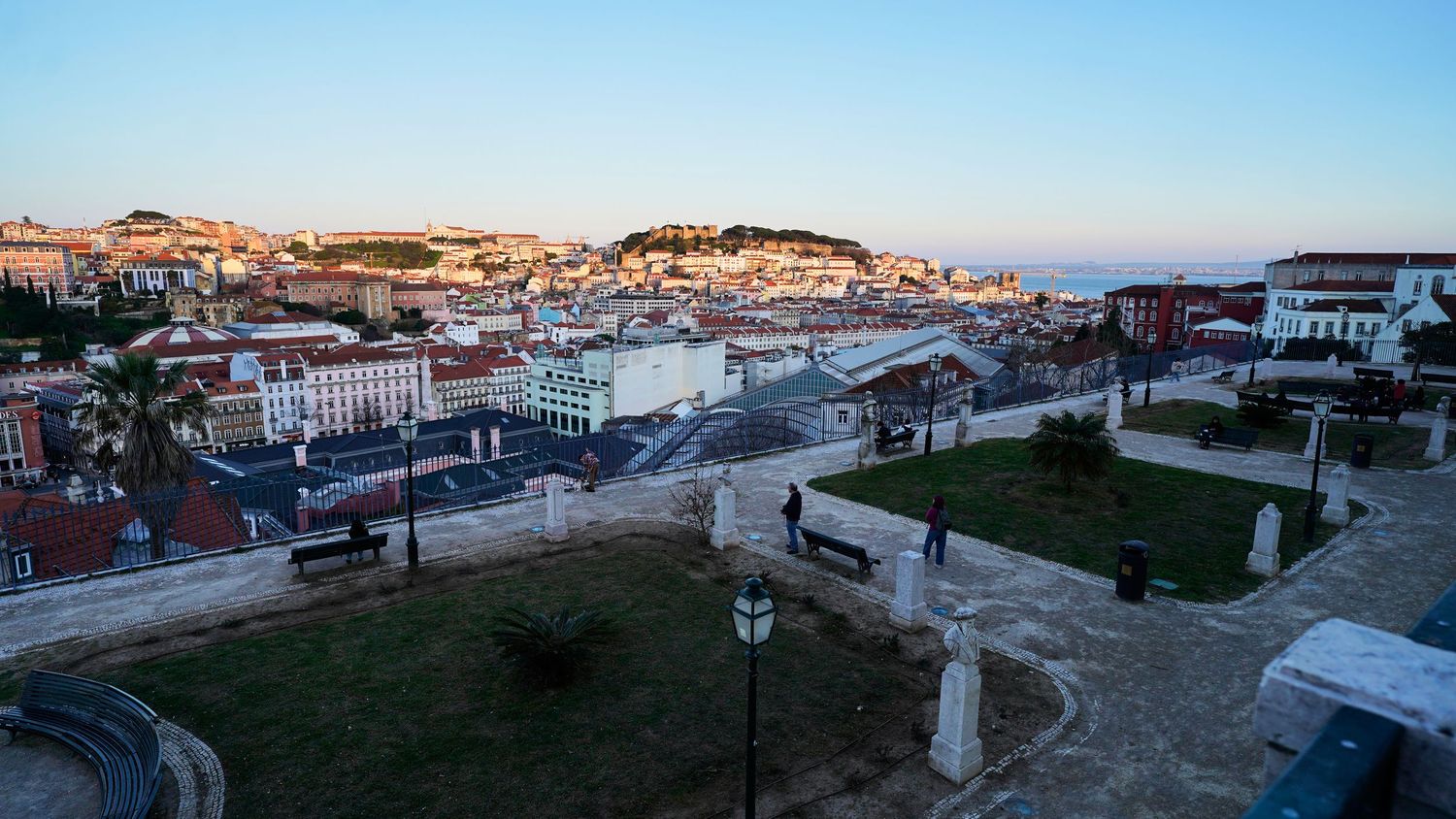
The terrace at Miradouro de São Pedro de Alcântara, with its elegant fountain, offers picturesque views across central Lisbon—stretching over the historic Alfama district, the Tagus River, and iconic landmarks including Castelo de São Jorge and the Igreja da Graça.
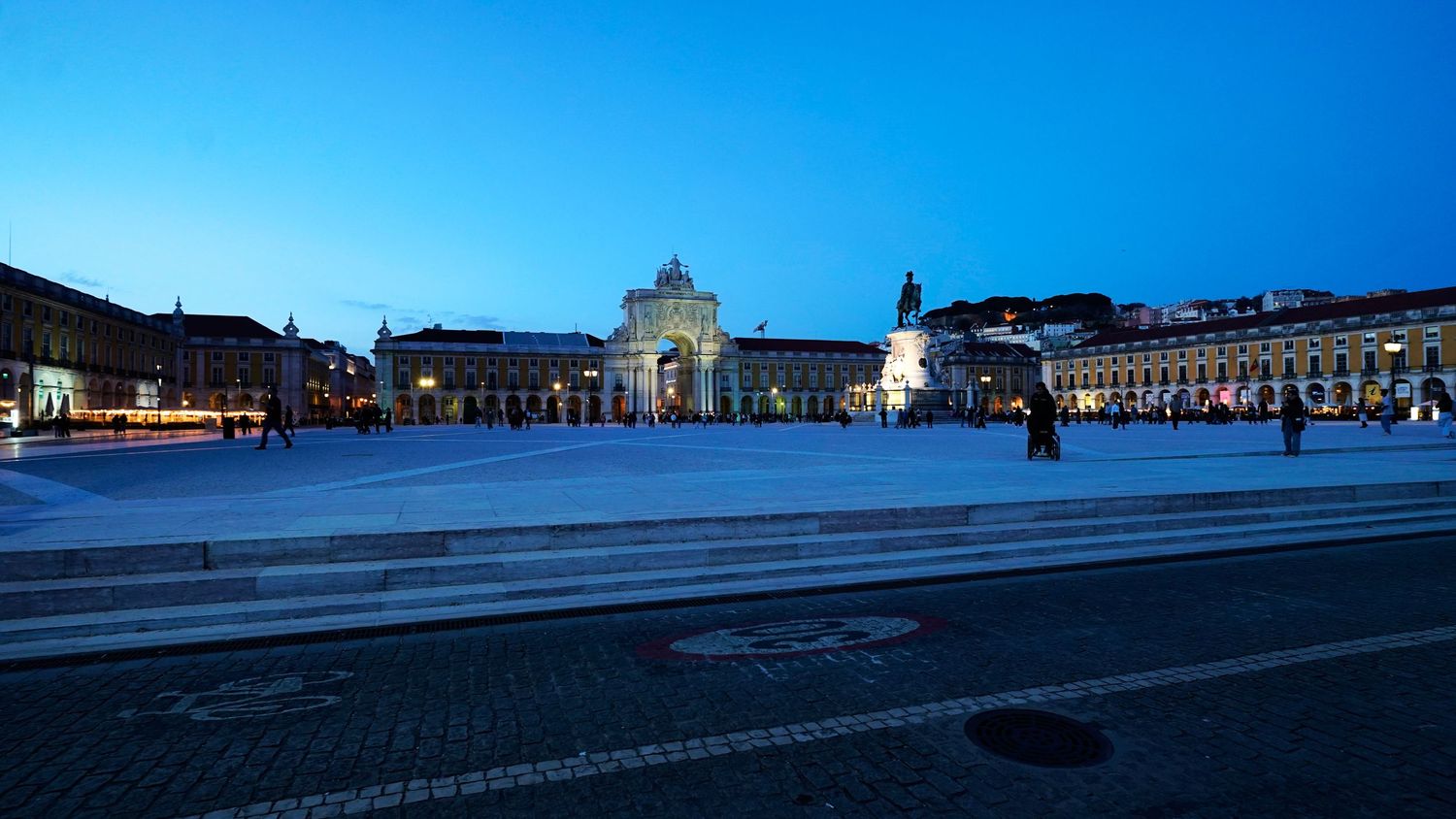
Night photography of iconic yellow painted Commerce Square is majestic. In the main square is the Rua Augusta Arch (Background) and the Equestrian statue of King Joseph I, located in Lisbon, Portugal.
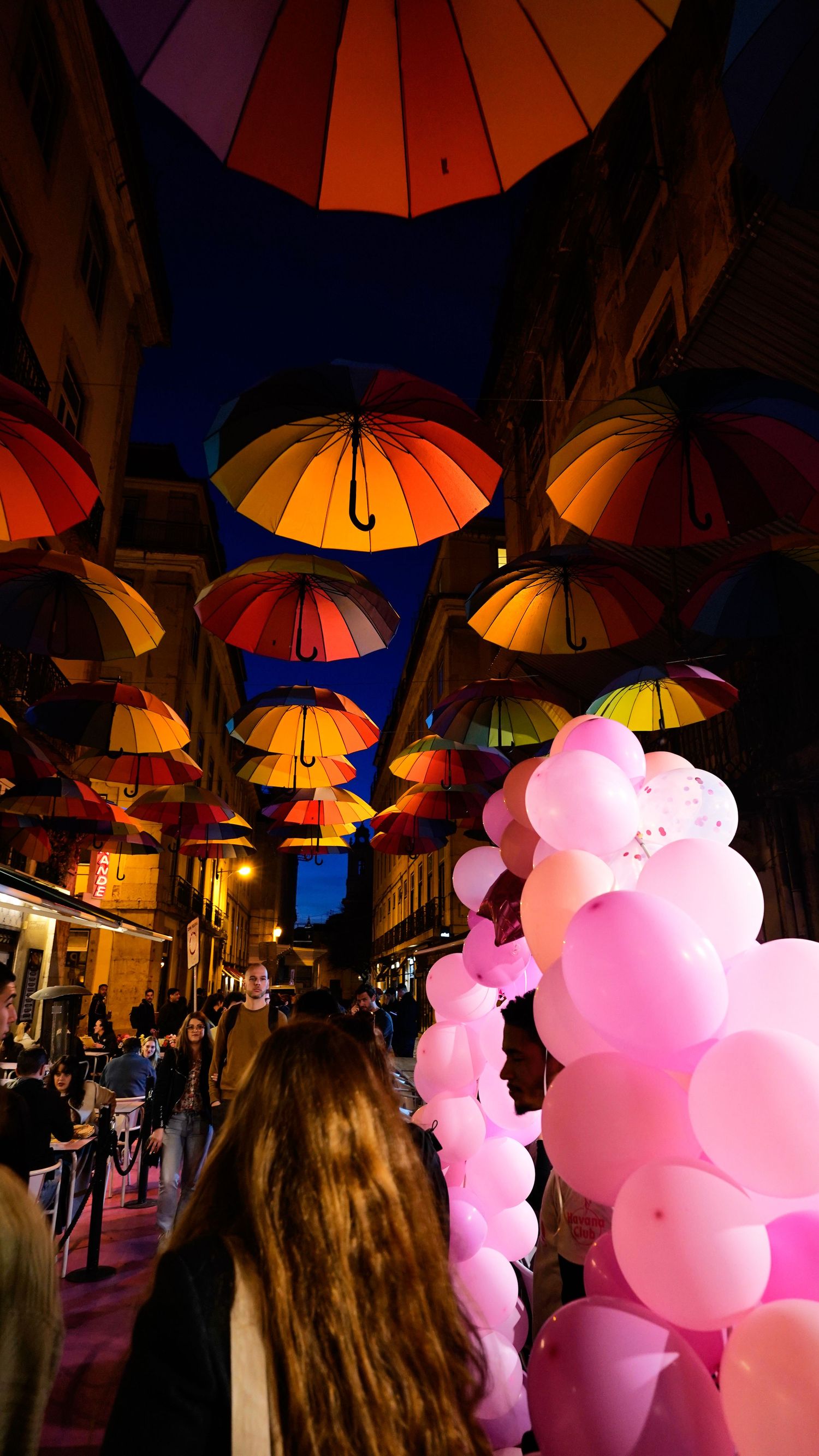
A night stroll under some suspended umbrellas on the lively and busy Pink Street in Lisbon, Portugal.
2nd March 2026:
My second day in Portugal began with an 8 am tour from Lisbon to Cascais, Cabo de Roca, Sintra, Regaleiia and to Pena Palace. On that particular day, I had rushed to get to the meeting point at Praça dos Restauradores 24 (Restauradores Square 24), and, of course, to make sure that I got on the correct coach for the tour next to the bright yellow banner strapped to the bus stop. On the coach, I was phoned by someone from LaneTours to make sure I was on the correct coach, even though they had taken down my attendance beforehand, and as usual, some guests just didn't turn up to the meeting point for the tour. After the guides made sure everyone was there and on the right coach, we set out for our first destination of Cascais, which is a town located in the municipality of the Estoril coast. To get to the seaside town of Cascais, we passed the Estoril Casino, hotels and through some of the Estoril coast, which was influential in inspiring Ian Fleming to write the James Bond books and be featured in On Her Majesty's Secret Service (Hunt, 1969). Being told that by the tour guide was very insightful and engaging. We then travelled to the seaside town of Cascais, and were let off the coach and taken towards the marina. As expected with any seaside town, there was a slight breeze in the air and bits of drizzle. The town was unlike any seaside town that I had ever encountered before; it was quiet, not flooded wth tourists, and it seemed people kept to themselves. After being told where our meeting point was and the time to get back on the coach, we were left to our own devices to go and explore the town. Like a few tourists, I walked by the marina, which provided an excellent view of the marina, buildings in the distance, the sea and boats that were stationary in the water. Along the main road were rows of colourful flowers, and on the other side were colourful homes. Further up the road was an enormous fortification called the Citadel of Cascais, and I was curious to go inside and check it out. The construction of the fortress was first started in the 15th century during the reign of King Manuel I of Portugal, but later expansions and renovations would mean the fortress wouldn't be completed under other monarchs after the reign of King Philip I of Portugal during the Iberian Union. The citadel was created to guard the Estoril coast from pirates, privateers and naval attacks and was imperative to Lisbon's protection. In modern times, the fortress has been used as a military fort, a royal residence and even a prison. The fortification includes features such as bastions to combat cannon fire, gun emplacements and moats to Renaissance-style towers that correspond to characteristics associated with a medieval Renaissance military architectural style. Inside, the fortress is the Portuguese National Flag and the Presidential Standard of Portugal. In addition to that is also a big square with a cafe/restaurant and artwork, as well as two large sculptures, one of a human head and the other of a human holding onto a circular bar that resembled the logo of the Westworld TV series (2016-2022). Outside the front entrance is a monument to the 19th Infantry Regiment. Built in 1921, it was built by the Cascais Municipality to celebrate the regiment's role in historical conflicts that shaped the nation, such as the Napoleonic Wars and the traditions of the military. Across the road was a small park, a roundabout and another statue under a tree. I next walked back to the town centre, passed the Village Museum and a Bronze Monument to the Portuguese Discoveries, which overlooks Ribeira Beach, and was constructed to celebrate the country's Age of Discoveries. In the meantime, I explored some shops and the narrow streets before heading back to the meeting point to board the coach.
I then got back onto the coach, and we headed to our next destination of Cabo de Roca, which is a cliffside location. During our travel to this location, the tour guide explained to us why this location, centuries ago, was considered the end of the world. Once I disembarked from the coach, we walked down a dirt track, which took us towards a monument with a Christian Cross on top of it. The Cabo de Roca Monument was erected in 1979 by the municipality of Sintra to mark the westernmost point of mainland Europe. Once considered the end of the world because Cabo de Roca was designated as the westernmost point of mainland Europe, many people in medieval times didn't know what exactly was across the sea. Its open sea and towering cliffs came to symbolise the edge of the known world. This idea was immortalised by Luis de Camoes, who stated it is where the land ends and the sea begins. Opposite the monument was the sea, below I could hear the waves thrashing into the boulders below, and to get a better view of the Atlantic Ocean and the lighthouse meant tackling some slippery and rocky terrain and a strong breeze. The wind was so strong that I had to hold onto my hat. The viewpoint of the sea and the cliff, combined with the lighthouse, was amazing, and I definitely spent as much time as I could there getting as many photos as possible and just taking in the view before heading to the gift shop, where I purchased a miniature glass Portugal mug and boarded the coach.
Being ahead of schedule, we immediately proceeded to the town of Sintra, which is located in central-west Portugal. The town is a very historic, beautiful and storybook nestled in the hills of Sintra. Once we arrived in Sintra, we got off the bus and walked to the main square and were again divided into two groups and given our times and meeting points to go to. As I walked towards Sintra, I could notice two unusual-looking towers, coloured white, attached to the National Palace of Sintra. Afterwards, we were given the freedom to explore the town. I at first ended up exploring around the National Palace of Sintra, but I chose not to go inside as I thought that would take too much time away from exploring the town. So as you can guess, I went and explored the town and amongst the town was an old church, restaurants, cafes and a lot of tourist and ceramic shops. There were a few shops around the town that I ended up browsing. Inside the stores, there were many authentic pieces of artwork, which were so colourful, insightful and engaging to the eye. In addition, most of the time, the shopkeepers spoke English and were very friendly. I also left those shops and explored the streets some more. The streets were fairly clean, sparsely populated and painted in a white coat, much like the narrow streets of Santorini. Sometimes, they would also lead to great views of the town. I remember walking down the main road and entering a tourist shop called Toranja. The store was full of beautiful, engaging and awe-inspiring artwork from colourful posters to beautifully decorated tiles. Whilst in the shop, I was welcomed by a shop assistant and told that many of the products housed in the store were created by local artists. During my stint in the store, we chatted about our passion for video editing and photography. He mentioned how he would love to travel to the UK and ask me what locations I would recommend to see in the UK, and I gave him an answer. Whilst talking to him, I exchanged Instagram handles with him so that we could keep in touch, and during that chat, I ended up buying a colourful tile. I then proceeded back to the meeting point and waited for the others to join at the designated meeting point. Across from the meeting point was a clothing store, which had a terrace with a mannequin and occasionally the store owner would fix the clothes on the mannequin and on the side of the wall of that store were three items of elegant clothing displayed in small glass cases. As we waited for the others to join us, I ended up engaging in conversation with our tour guide, Guillermo, about the Castle of the Moors located above the town in the hills. The tour guide told me it was built during the 6th to the 7th century and that the National Palace of Sintra dates back to the 8th century. The Castle of the Moors was amazing to see from the main town square and had a very dominant appearance and presence on the surrounding environment. As I stood at the meeting point, I noticed two American tourists really enjoying some type of Portuguese delicacy. Once the group was all back at the meeting point, we pressed ahead towards Quinta da Regelaiera. On the pathway, we passed a house with a large tile or mural on its side and further up the road, we passed a small water fountain that was surrounded by colourful and intricate patterns.
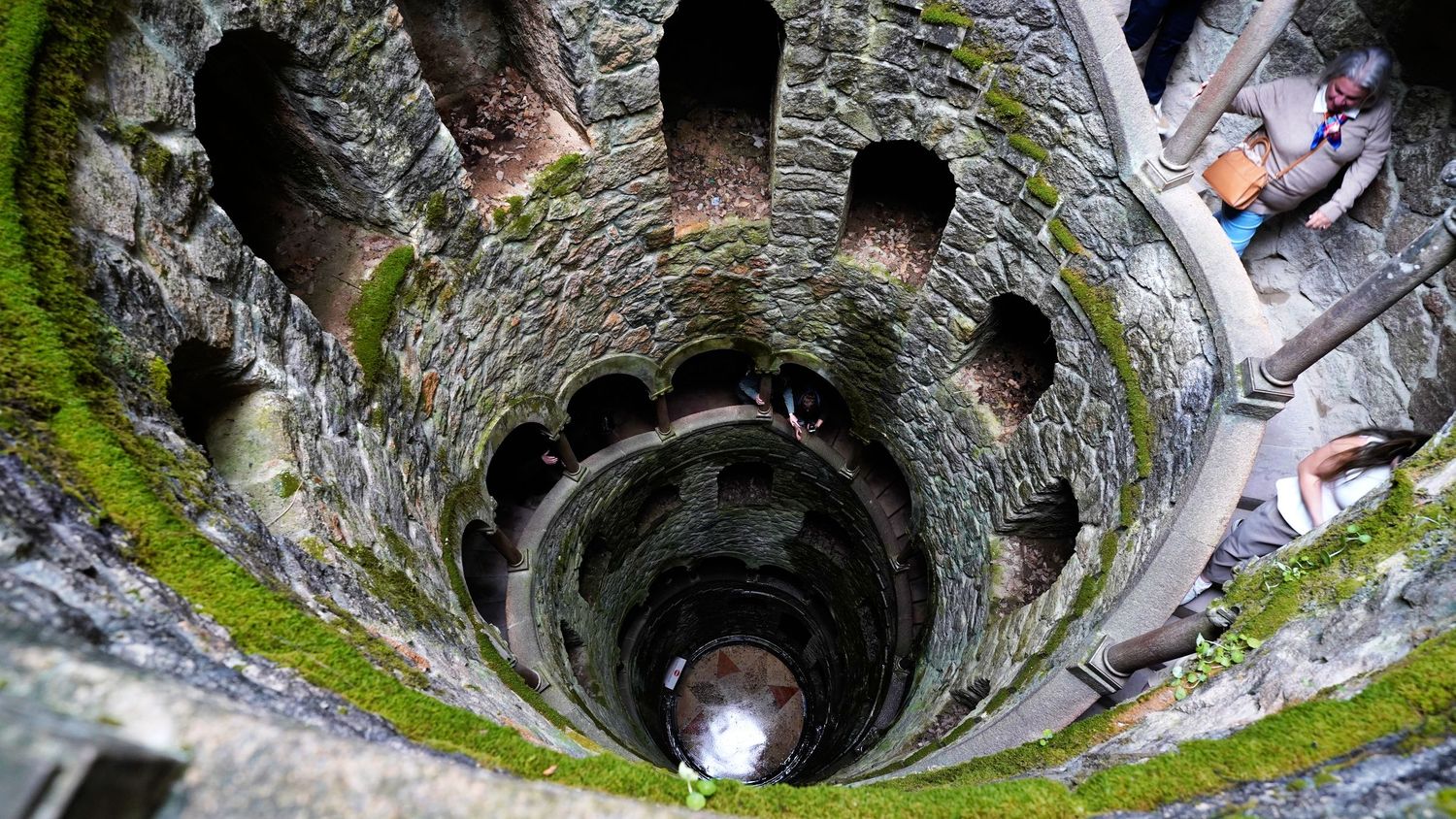
As I walked further up the street, I not only saw a water fountain, but I also noticed the Quinta da Regaleira in the distance. As the rest of the tour group passed by a massive gate onto the property, I could notice how gothic-like and mysterious the structure seemed to be uphill. We then came up to the Regaleira next to a gate that was closed, as you can imagine, all of us tourists admired the building from behind the closed gate and took pictures. When we walked past the gate, we came to a large open square and entered past the old stables onto the grounds of the Quinta da Regaleira. The property was enormous and was surrounded by luscious greenery, old buildings and ruins. We walked up a dark decorated pathway and passed some interesting sights from the Regaleira Tower, which provided an excellent view of the property, a quaint, a small waterfall surrounded by plants and a small pond, which the ducks enjoyed and we reached a tower like structure which featured below two reptilian guardians holding a shell and inside the tower was a small, dark cave with a few benches. Along the pathway, I engaged in conversation with another traveller from Kenya and ended up sharing our passion for photography. The whole group joined the tour guide behind the sea creature figurine, and he explained how this monument represents the start of entering the underworld, which is heavily influenced by Greek mythology. After we went outside, I informed the tour guide that it sounded very similar to Dante's Inferno and the various stages of hell that awaited humanity, which he acknowledged. We later came to the entrance of the eagerly awaited Initiation Well. From what I remember, there is a big spiralling staircase with columns that takes you down nine levels to the ground of the well, which is a stone well with a compass design and a Knights Templar cross in the centre. The symbol reflects themes of secret societies of the Knights Templars and Freemasons, and is regarded as the coat of arms of Antonio Augusta Carvalho Monteiro, the estate's owner, who was said to be a member of the Templars. Steeped in mystery in its connection to the Knights Templars, the initiation well, built in the early 20th century by Manini, goes deep into the earth with its inverted towers. The well has never been used to collect water but is linked to a Knights Templar tradition, where a blindfolded candidate would enter one of the wells, holding a sword close to their heart and walk down nine levels, which corresponds to the nine Templar leaders of the order. The candidate would then have to walk through the dark labyrinth, symbolically and literally, to reach the light. If they were able to accomplish this, they would be welcomed into the brotherhood. As I recall, tourists were taking photos and taking their time walking down the steep and slippery stairs. When I did reach the bottom, I looked to the top of the well and noticed light pouring into the area and felt droplets of water hitting my face. At the bottom of the staircase was a large underground network of cave tunnels. The underground cave system, which was lit up, presented many avenues. For instance, one cave tunnel led behind the small waterfall, which I had previously mentioned, and another cave tunnel took me to another well, which looked older and more decadent. However, there was another tunnel which led us out to where we met our tour guide, and he ended up taking us to the Fountain of Abundance and the Regaleira Chapel. According to legend, the Fountain of Abundance, and from what I recall, the tour guide was telling us, you have to correctly pour the water onto your hands, so as not to break the tradition. Like the tour guide and some other travellers, I ended up drinking the water, which was clear and pure; it was refreshing. We next reached the Regaleira Chapel, which is a small and decorated building that features ornate stone carvings and pointed arches on its exterior. Inside the interior of the small chapel, there is religious iconography, with detailed and colourful stainless steel glass, with an illuminati sign on the entrance ceiling. This Roman Catholic chapel was commissioned by Antonio Monteiro and designed by Luigi Manini, an Italian architect, between 1904 and 1910. It was created as a private chapel, with mysterious religious symbolism that connected to the estate's initiation wells and secret tunnels.
Afterwards, we walked up a path and entered the Quinta da Regaleira, which included a few artefacts, paintings, sculptures, and, I remember, on the ceiling, small paintings of past royal monarchs of Portugal. Quinta da Regaleira was commissioned by Antonio Augusta Carvalho Monteiro, the owner of the estate, who hired Luigi Manini to build it between 1904 and 1910. The building was created to reflect Moneiro's interest in spiritual beliefs, symbolism and intellectual ideas. For instance, the property's wide usage of symbolism is often linked to secret societies such as the Knights Templars, the freemasons to alchemy. The structure mainly corresponds to a Neo-Manueline architectural style, but throughout the house combines other styles such as Renaissance, Gothic, Romanesque and medieval symbolism. In one particular room, there was a massive table, antique furniture, the coats of arms of major cities like Braga, Lisbon, Coimbra and Porto and a decorative brand around the ceiling of twenty-four small portraits of past monarchs. After walking through the rooms inside the building, I walked out to the balcony, which gave a beautiful view of the garden around the property, browsed the gift shop and then I walked out onto the Gazebo on the ornate bridge over the lower gate. The gazebo itself was just marvellous to look at and, as you can guess, was a spot for a lot of photos. Down below the ornate bridge, we met our tour guide and headed back to the coach to head to our final destination of Pena Palace.
After we visited Quinta da Regaleira, we boarded the coach, which took us further up the hill towards our last destination of Pena Palace. Stepping off the coach, I was immediately greeted by my brother, and he went to explore the palace, whilst I stayed with my tour group. We then walked up the trail to the palace, which was surrounded by a forest. The atmosphere was quiet; it was cold and breezy. It was mid-afternoon, and there was a mist that lingered and enveloped the outlandish and colourful palace. We walked further up the pathway through the entrance and came to a square, where we were given time to relax and a quick history lesson. Regarded as an outlandish and elaborate expression of 19th-century Romanticism combined with Manueline, Gothic, Bavarian and Moorish Architecture. The construction of Pena Palace was supervised by Baron Wilhelm von Eschwege on the orders of King Ferdinand II after he acquired the surrounding land. The palace would later become a summer residence of the monarchy, passed down to his second wife after his death. After being purchased in 1889 by the state and the 1910 Republican Revolution, it was transformed into a museum, and the last Queen of Portugal stayed there before fleeing Portugal in exile. Before entering the castle, we were divided into two groups, one for the gardens of the palace and the other for inside the palace. For that particular day, I had purchased a ticket to see inside the castle. After initially being sorted into our groups, we found that some areas of the palace we couldn't see as they were under refurbishment. This was a shame as I wanted to see as much of the palace as I could, but unfortunately, I was unable to do so. Throughout the rest of the day, I looked around various rooms within the castle, looking at beautiful artefacts such as porcelain, statues, and paintings, etc., and then afterwards, I went outside and looked around the immediate grounds of the palace. Around the structure, I looked out from the different viewpoints and could faintly see the town of Sintra in the distance as well as the surrounding forest in whatever direction I looked, but I wasn't able to see further than that due to the thickness of the fog. Looking at the palace I was mystified how ingenious, grand and beautiful it was but also how seculuded it was surrounded by a massive forrest and far away from Sintra, After exploring the castle twice, I managed to make my way down the rocky pathway towards the entrance to the grounds of the palace and the pathway was surrounded by luscious trees and greenery and the trees were so tall, it made me feel very small in comparison, like an insect in the garden. Along the pathway were trails that led to different parts of the palace gardens, but I thought I didn't explore them, as I figured I might get lost. With some time on my hands, I explored a nearby small garden, which had a lot of trees, bushes, etc., and when I was done exploring that, I exited the premises and waited for the rest of the group to board our coach. After everyone was back on the coach, we arrived in Lisbon around 5 pm and from my stop, I walked back to my hotel, walked to the Miradouro de São Pedro de Alcântara viewpoint, took in the view, took a few photos of the landscape and got a pizza and garlic bread before I returned to my hotel room, exhausted and hungry. I would later find out that I got to the hotel before my brother, who travelled to Sintra via public transport, because he decided to see the Castle of the Moors. From what he tells me, it was an excellent sight to see, but it was a long and tiring walk to get there.
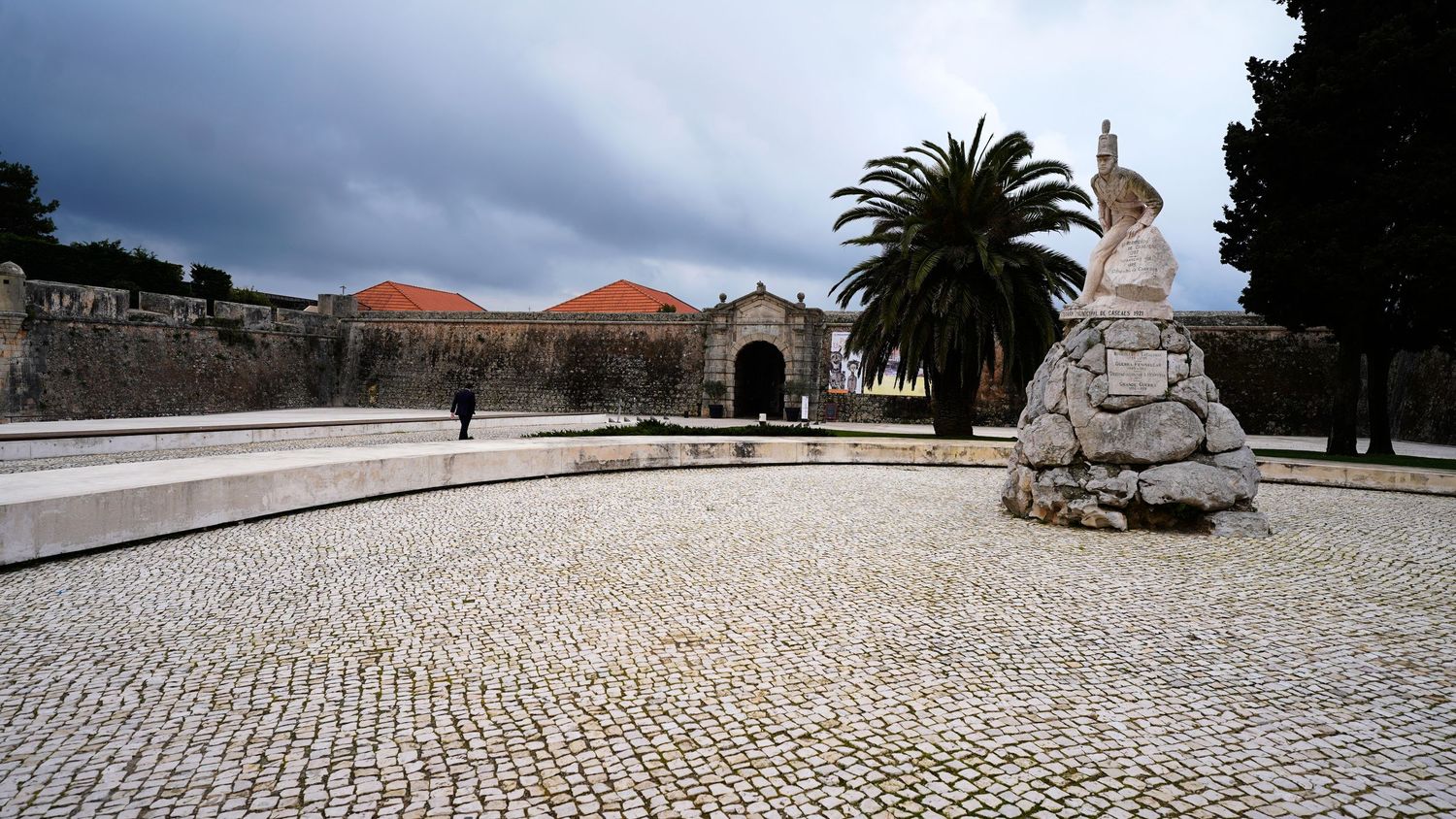
Outside the entrance of the Citadel of Cascais is a monument to the 19th Infantry Regiment, situated in Cascais, the Estoril Coast, Portugal.
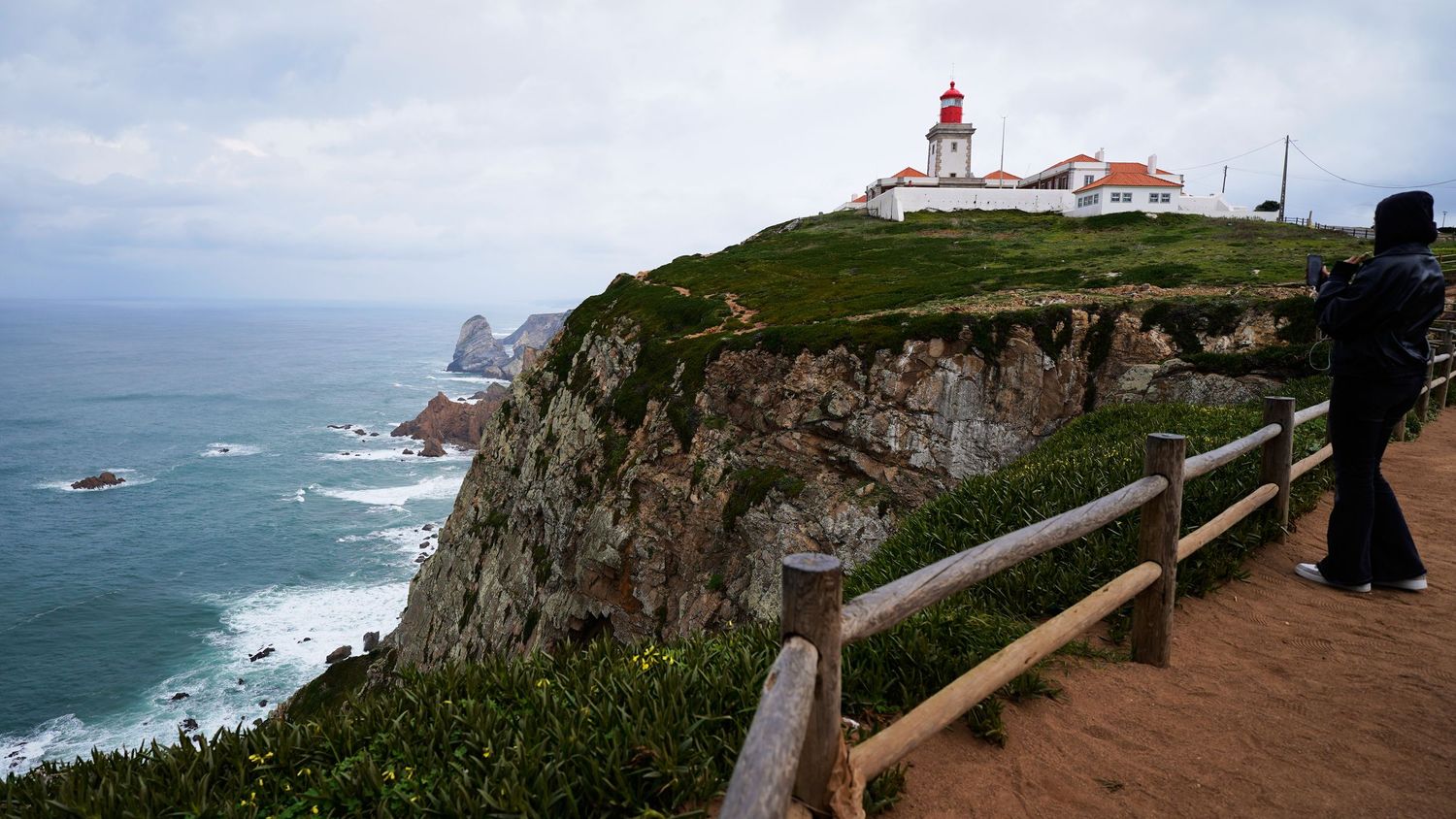
A lighthouse looks out towards the Atlantic Ocean on Cabo de Roca, which is the westernmost point of the Sintra Mountain Range, Sintra, Portugal.
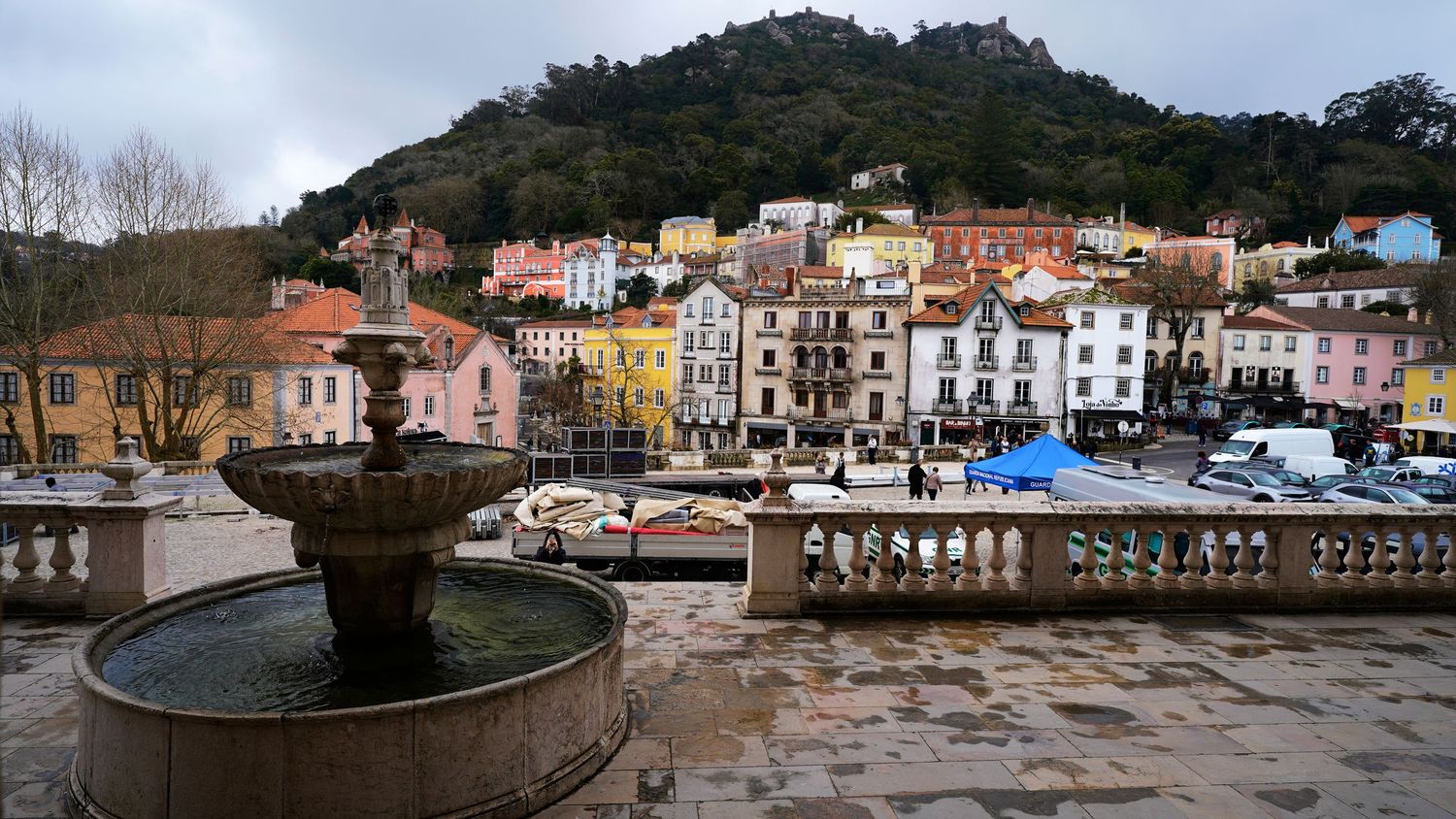
Taken from the steps of the National Pena Palace is non functioning water fountain (left foreground), the main square (below), next to colourful buildings from the town. High up in the hill in the Moorish Castle, which overlooks the town of Sintra, Portugal.
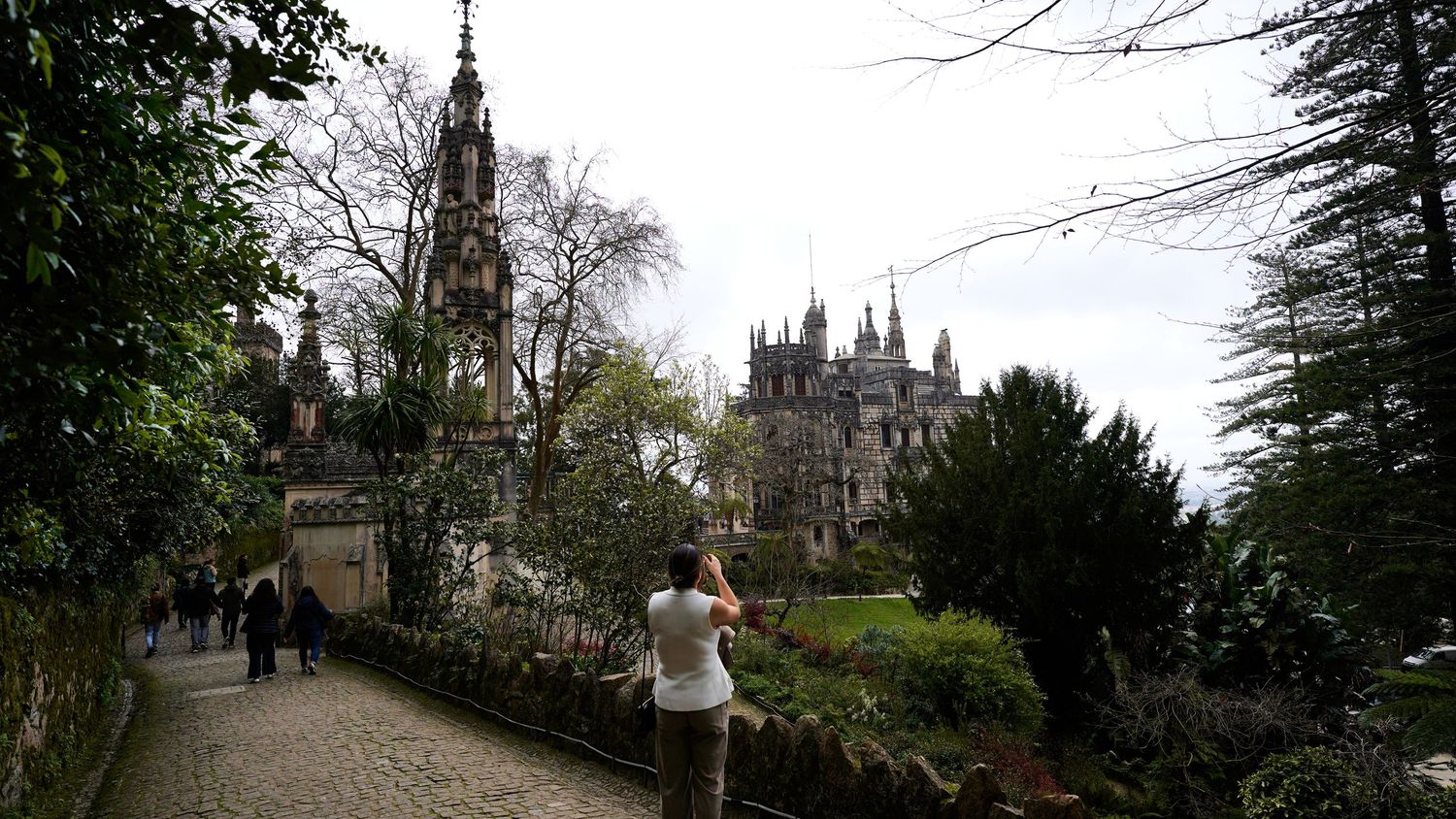
The gothic mansion of Quinta da Regaleira (mid background) & the Regaleira Chapel (left) located in Sintra, Portugal.
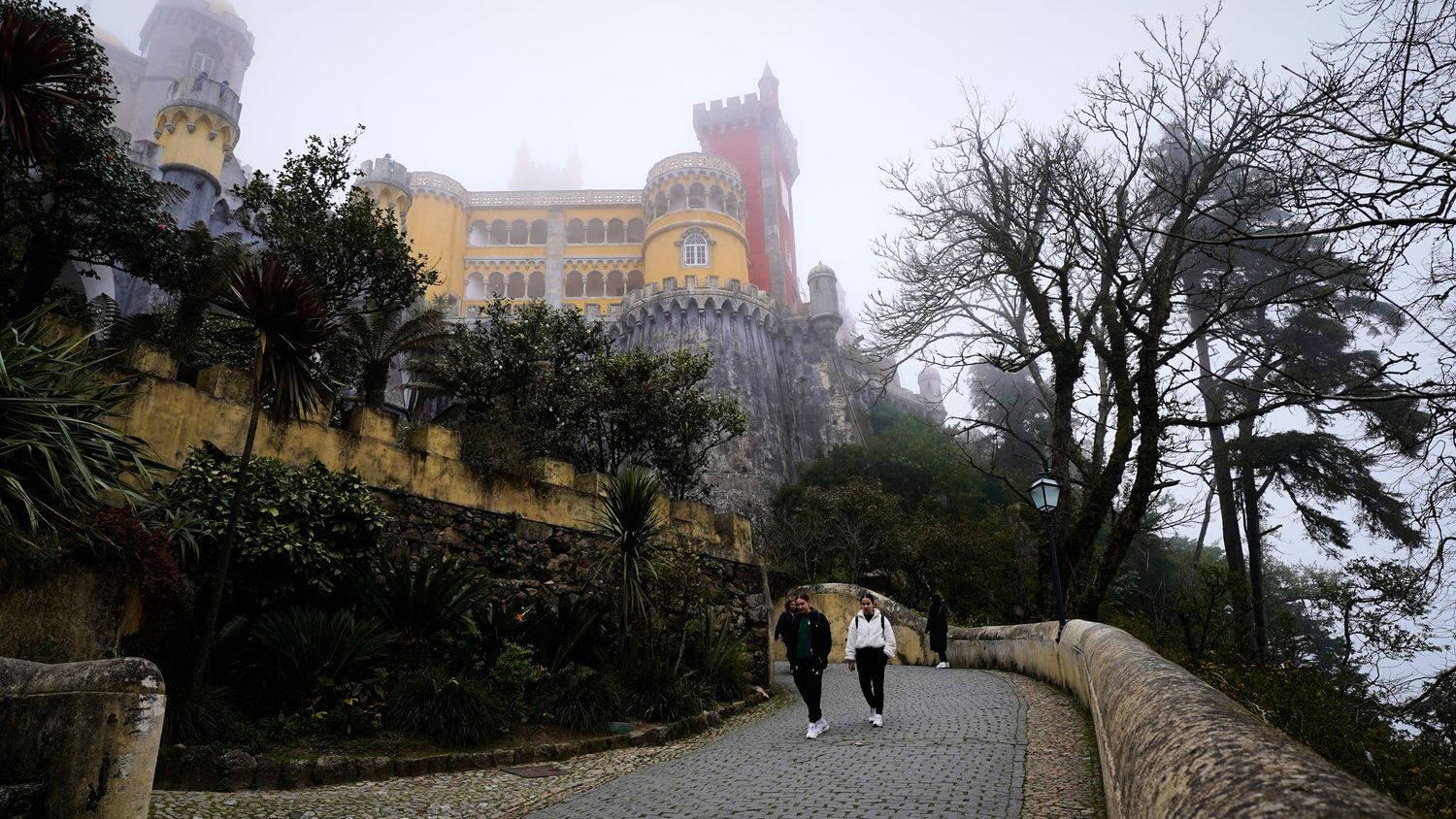
A mist surrounds Pena Palace in Sintra, Portugal.
3rd March 2026:
My third day in Portugal started with us leaving the hotel very early in the morning and getting the 759 train from Restauradores to Estacao Sta Apolina. Due to some issues with the train, we ended up being delayed and having to wait longer than usual to get the R 4405 Tomar train from Estaco Apolina, which ended up arriving at Tomar around 9:20 am. During that train ride, I saw various towns, villages and many fields along the way. Once we arrived at Tomar station, we headed straight to the Convent of Christ, which was approximately a nineteen-minute hike to the historical landmark. My first impression of Tomar after stepping off the train was that it was a very secluded, small and quiet city with a close association with the Knights Templar. Along our walk towards the Convent of Christ, we passed by the Museu dos Fósforos - Aquiles da Mota Lima (Match Museum Aquiles da Mota Lima) and a large but decadent-looking church called the Igreja do Convento de São Francisco (The Church of the Convent of Francis). Both buildings had a white exterior which looked run-down, and the first building contained pieces of artwork. We also passed through a neighbourhood, a statue called Monumento en Homenaje al Infante Dom Henríque (Monument in Homage to Prince Henry the Navigator), which was sculpted by Lagao Henriques and designed by Luis Cristino da Silva around the 1950s in a modernist monumental style, which was created to commerate Prince Henry the Navigator and the prominent role he played in Portuguese Maritime history and age of exploration. Anyway, the road led us onto a brick road that led us up a hill, past the town of Tomar, to the Convent of Christ on the hill.
The trail was surrounded by overgrown plants and bushes, but when I looked to my right, I could see through the bushes to the town. As you can imagine, the hike was very tiring but worth it once I got to see the Convent of Christ in my sight, which is a massive fortress which can be seen from the city of Tomar. The large fortification covers a large area of land and remains a mystery as it lies behind its high, thick walls. The structure dates back to the 12th Century and was founded by the Knights Templar. The structure utilises a combination of Romanesque, Baroque elements, Renaissance and Manueline architectural styles. The structure's most unique features are its 12th-century rotunda, Oratory of the Templars, which was heavily influenced by the Holy Sepulchre Rotunda from Jerusalem. I first saw the Oratory of the Templars after checking out a few rooms, one of which I vaguely remember had an Order of the Christ emblem on the floor, and I walked through two courtyards. The Oratory of the Templars is massive in size, and above its entrance is an arch with Christian iconography. It houses a wide range of paintings depicting Christian saints and instrumental scenes from the Bible, as well as a statue of Christ on the cross. In the middle of the room is the massive column, which goes straight to the roof, that is similar to the Holy Sepulchre in Jerusalem and close by is a small room, decorated with eye-piercing patterns and another room. Other features within the Convent of Christ include the Famous Manueline Window, several cloisters and cisterns, as well as another statue of Christ kneeling down behind bars, which is located in the Sacristy Corridor connected to the Charola, is symbolic of humility, reflection and prayer. Once you step into each room and walk down the corridor of this supreme fortress, to me it feels like getting a sense of how those Templar Knights lived, how they dedicated their lives to both Christ and God, as well as their dedication to their mission. It's ultimately like stepping back into history, and you gain a better understanding of the town's close connection with the Knights Templar and the Order of Christ.
After spending a large amount of time in the Convent of Christ, we had some time to spare, so we checked out the two viewpoints of Miradouro da Colina do Castello and another viewpoint, which provided excellent views of the city. We then casually walked through the city and saw the Igreja de São João Baptista (Church of St John the Baptist ). A big Catholic church, which was situated in a square covered in very black and white triangular patterns, and in the middle of the square was a large statue called the Statue of Gualdim Pais holding a shield and sword and behind that was a large building with a white exterior. The Statue of Gualdim Pais was sculpted by Micario Dinis in 1935, but wasn't erected in the square until 1940. The statue represents Gualdim Pais, a Commander and Templar Knight for King Afonso Henriques, the Fourth Grand Master of the Templar Knights, and he is also credited with being the founder and organiser of Tomar, the city, which became the headquarters of the order in the country. We then walked to the Ponte Velha (bridge) and looked at the Nabao River, which ran through the city and before heading back to the train station, we made one last stop at the Synagogue of Tomar. Although we briefly passed the synagogue and had no time to explore it, the synagogue is considered one of Portugal's best preserved synagogues, and it can be traced back to the 15th century. On the way back to Santa Apolina, the train was becoming more and more crowded, but eventually we arrived at our destination. We next took two trains to Belem and saw the tourist sight of Jeronimo's Monastery, which was massive and breathtaking to see. When we arrived at the monastery, I noticed that half of the monastery was under refurbishment or construction as it was surrounded by cranes and building paths. The monastery was constructed during the reign of King Manuel I in the 16th century, and its construction coincides with the country's Age of Discovery - a period known for its maritime exploration. The monastery was constructed for several reasons, such as Royal patronage, commemoration of Vasco de Gama's voyage to India and a place of religious dedication to honour our Lady of Bethlehem and a place of worship where monks from the Order of Saint Jerome prayed for both the King and navigators. Jerónimos Monastery is renowned for its ornate Manueline façade, adorned with intricate maritime carvings and grand stone arches reflecting Portugal’s Age of Discovery. Inside, its elegant cloisters feature finely carved columns and vaulted walkways, while the monastery also houses the tomb of Portuguese explorer Vasco da Gama. Due to us being the last group of people allowed into the monastery, that meant we had to sometimes rush to see things inside the landmark before we were ushered out of the building.
Opposite the monastery was the large Vasco de Gama Garden, which is very impressive, and a few feet behind that was the Monument to the Discoveries. The garden was filled with vast areas of greenery, stone-carved statues, a massive water fountain and the Empire Square Garden. Whereas the Monument to the Discoveries was situated close to the Tagus River, the landmark made out of concrete and limestone is situated on a square with beautiful and elaborate patterns. Featured on both sides are many prominent figures from Portugal's age of discovery, and the landmark was built in the shape of a boat. The landmark's creation can be traced back to 1940, when it was first temporarily constructed and permanently in the 1960s by Continelli Telmo and Leopoldo de Almedia. The landmark was created in remembrance of historic figures from Portugal's Age of Discoveries, maritime trade and exploration, and represents the country's identity and national pride. Behind the monument, over and across the Tagus River, I also noticed the massive red coloured suspension bridge and the Sanctuary of Christ the King on the hilltop. Unfortunately, on arrival, the Monument to the Age of Discoveries was closed, which is unfortunate as I would've liked to have seen inside of it, but that wasn't meant to be. Around the monument, the atmosphere was fairly relaxed, as people just sat and admired the landmark, a sailboat progressed down the river, and others walked down the coastline.
Further down the coastline was Belem Tower, which is a small, stone-paled limestone fortification-like structure next to the Tagus River. To me, it was striking and intriguing in its appearance, particularly with its assortment of tourets and cannons, battlements, rhineros sculpture and carved symbols such as the cross of the Order of Christ. The fortress looks like a castle rising from the water, which is outstanding and resembles the shape of a Christmas Stocking. Unfortunately, at that time, we were unable to go inside the building due to ongoing maintenance work. The sea surrounded the building on one side, and on the other side was a beach below and above that, steps sparsely filled with people, just staring in amazement at the structure, taking photos or sitting down. The landmark was sublime and excellent to see. Construction of the Belem Tower was started in 1514 but wouldn't be completed until 1519 by Francisco de Arruda during the reign of King Manuel I of Portugal. The tower corresponds to a Manueline (ornate late Gothic with maritime motifs) architectural style and was created for the multiple purposes of Lisbon's defence, customs control and as a ceremonial gateway. The structure represents Portugal's Age of Discoveries, maritime power and national pride. After spending some considerable amount of time looking at the fortification from afar, we traversed back past the iconic Pastéis de Belém, to the train station to catch our train and journey back to Hotel Botanico for some much-needed rest and to pack our rucksacks for our afternoon flight tomorrow.
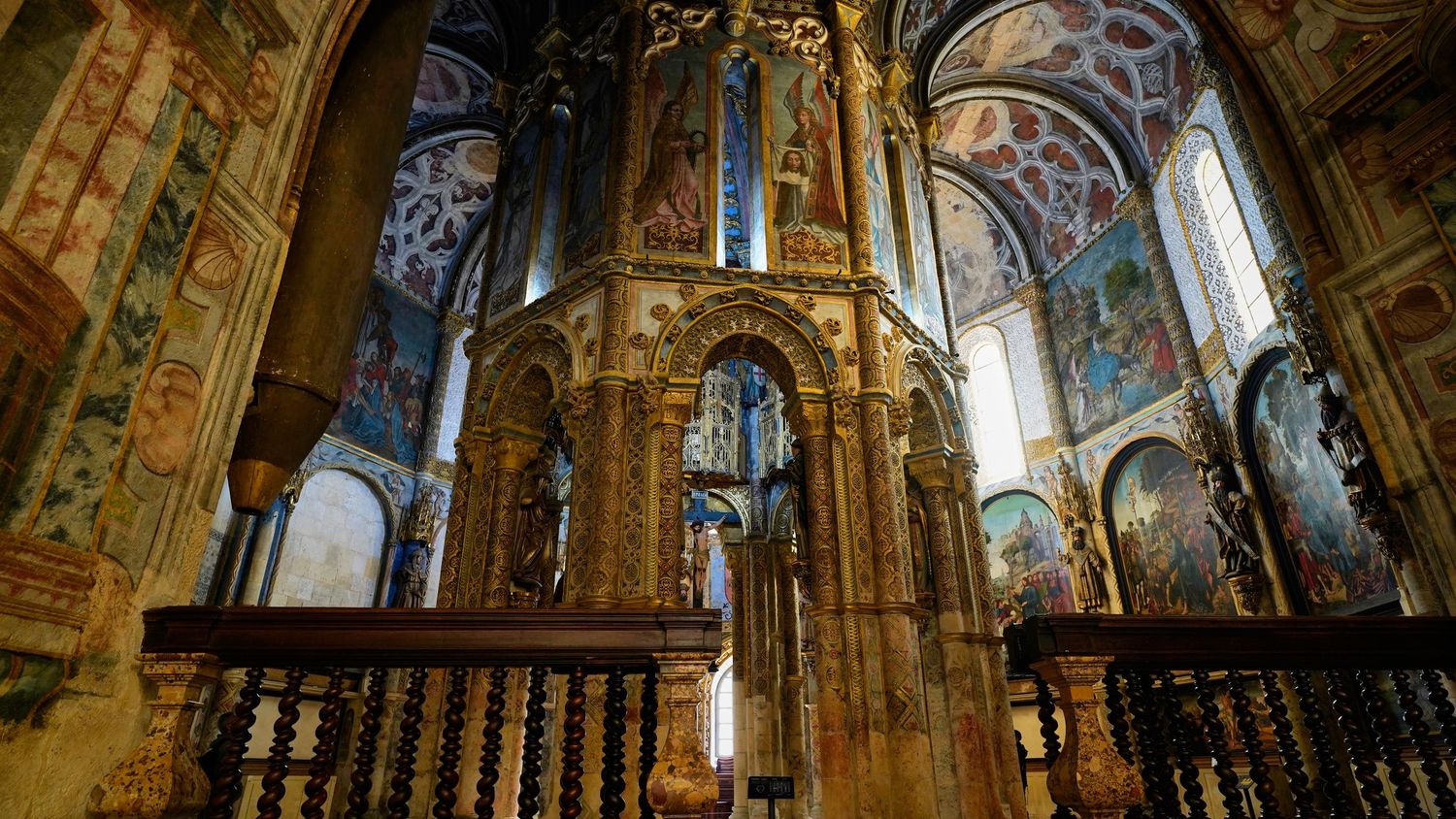
The Oratory of Christ or the Charola from the Convent of Christ situated in Tomar, Portugal.
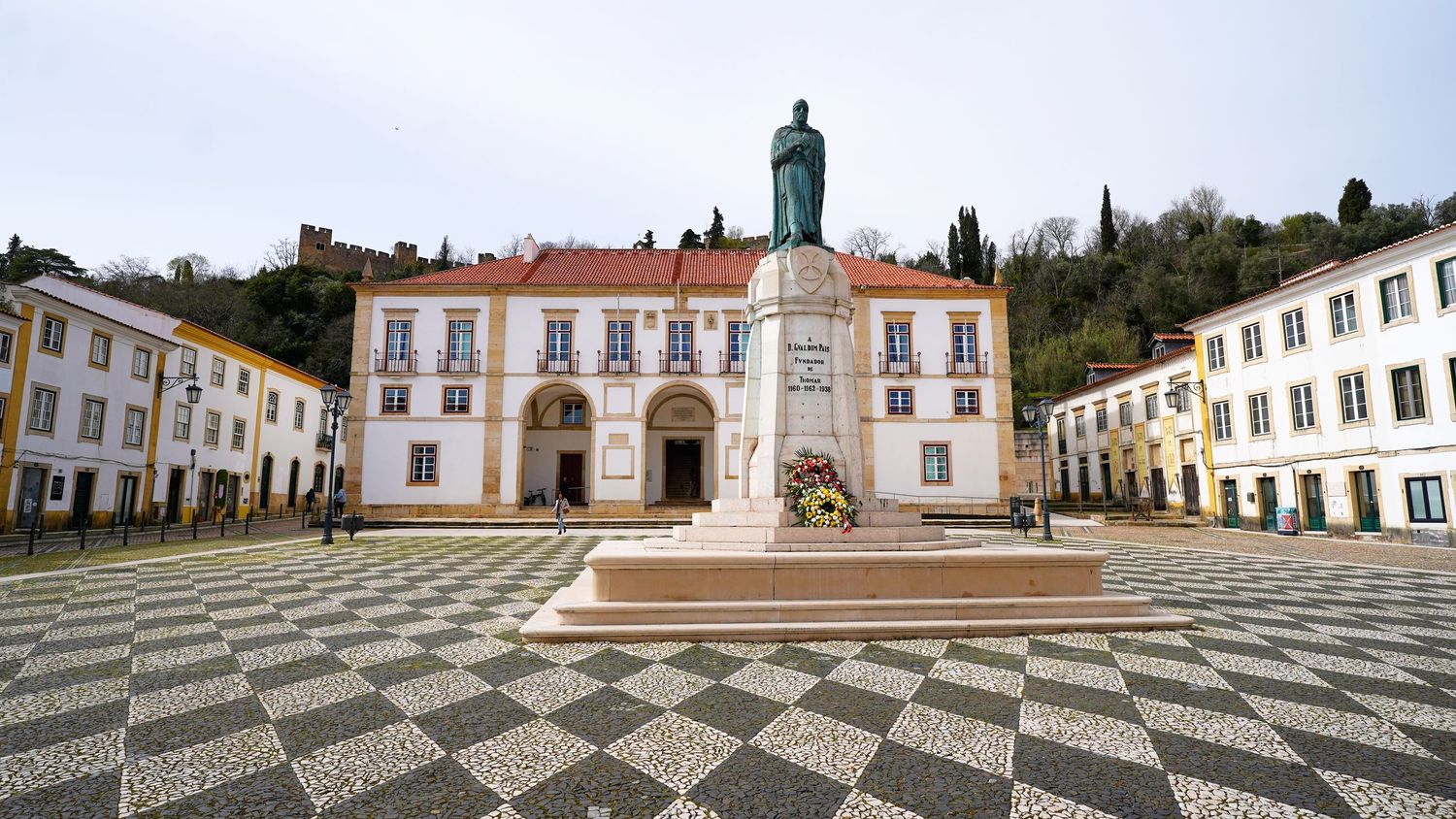
Beautiful decorated tiles in the main square, which features a Statue of Gualdim Pais holding a sword and shield (Foreground), the town hall (midground) and the Convent of Christ on the hill (Background) overlooking the town of Tomar in Portugal.
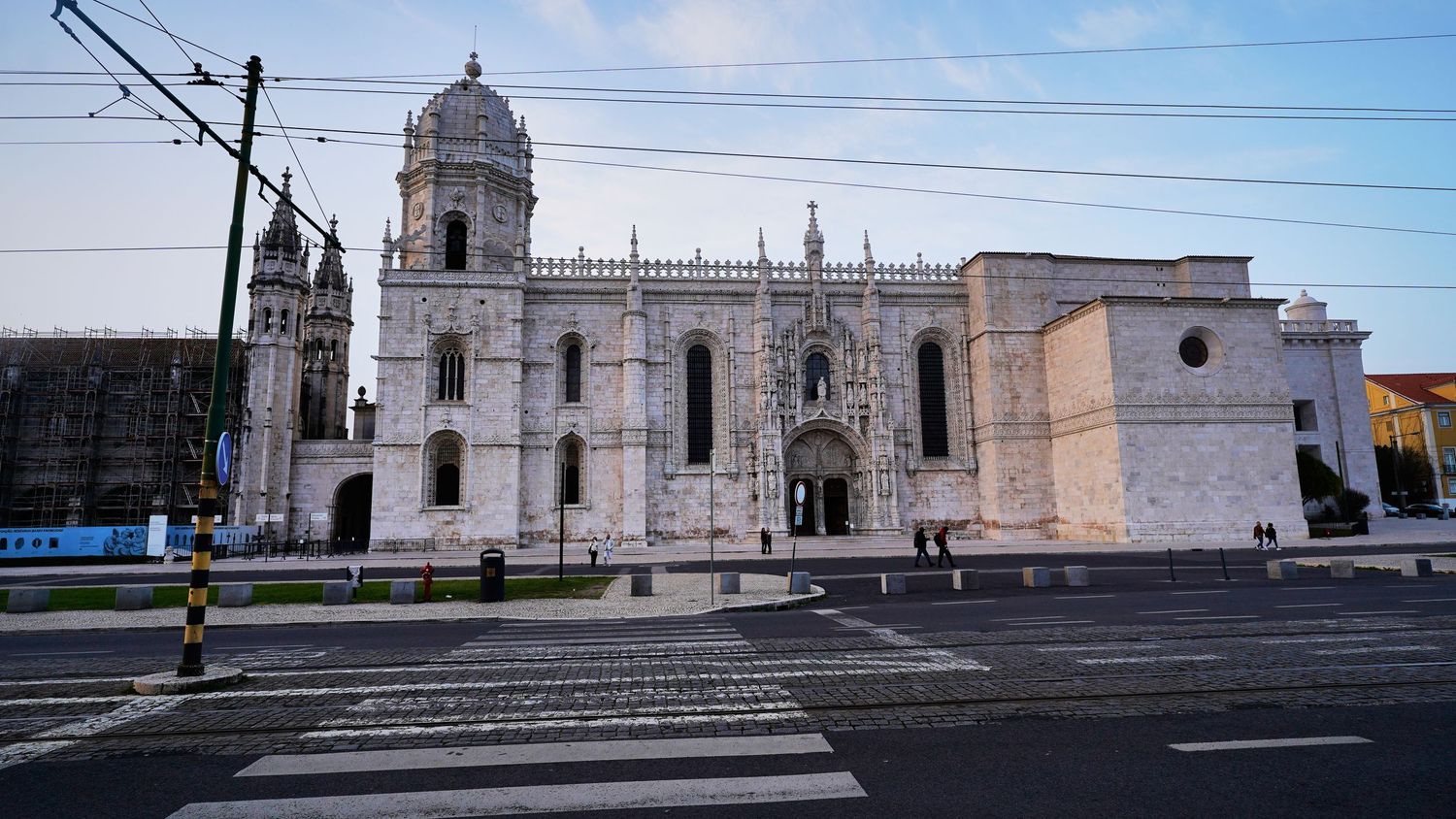
Jeronimo's Monastery in the Belem region of Lisbon, Portugal.
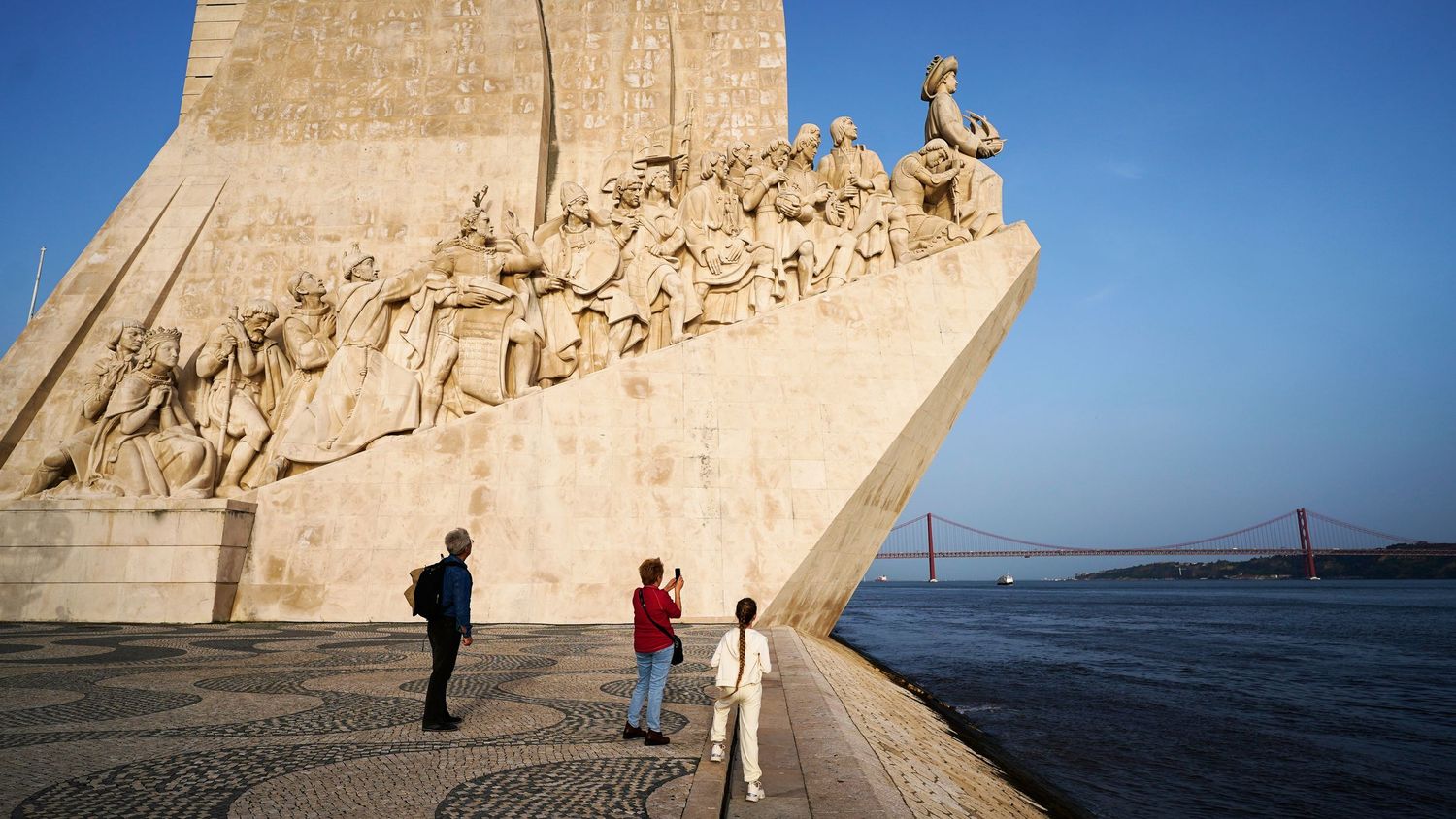
The Monument to the Age of Discoveries (Left) next to Tagus River with the Ponte 25 de Abril suspension bridge in the background in Lisbon, Portugal.
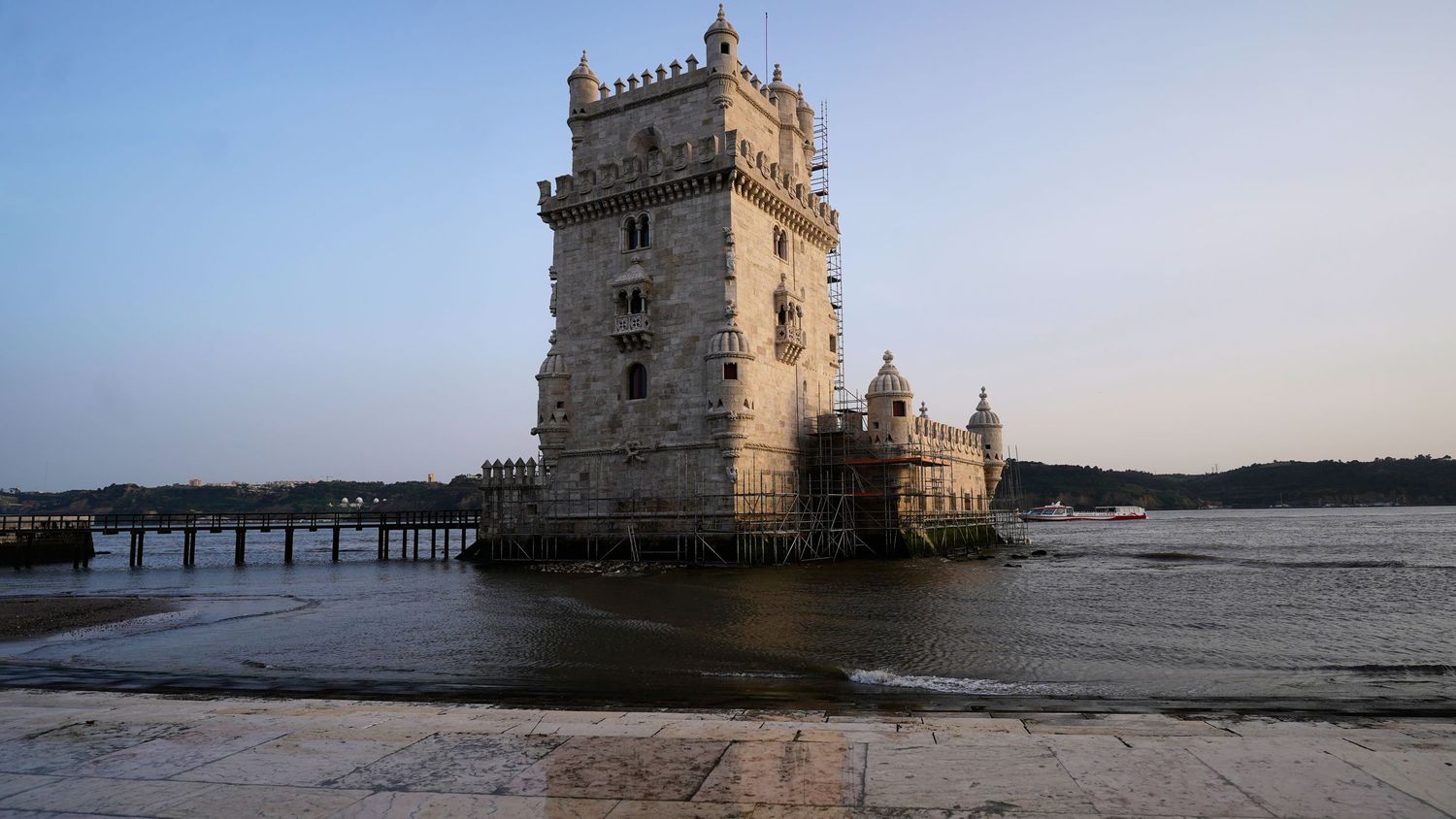
Belem Tower, situated in Belem, Lisbon, Portugal.
4th March 2026:
The last day of my adventure in Portugal was drawing to a close. The last day started with us having our breakfast before having to check out, and during this time, we chose to leave our luggage at the hotel, as we figured it would be easier to travel around Lisbon without having to hold it. Once we sorted out our checkout and left our luggage to be stored at the hotel, we walked towards Rossio Square to get a bus, and then we undertook a long and arduous hike through a few narrow streets and neighbourhoods towards Lisbon Cathedral. As we approached the cathedral, we found the area to be somewhat quiet and devoid of many tourists, as we would later find out that the cathedral wouldn't open until 10 am.
Lisbon Cathedral is a beautifully constructed building, with a white marble exterior constructed around the late 12th century during the reign of King Afonso Henriques, in which he captured the city from Muslim rule after the Siege of Lisbon (1147), which was part of the wider Reconquista. However, during events after that period, such as the great earthquake of 1755, the Cathedral was badly damaged and had to be rebuilt. It was originally constructed for the purpose of replacing the mosque and to symbolise Christian rule. In modern times, the cathedral has come to represent Lisbon's centuries-long history and identity. The building adheres to a Romanesque style due to features such as the rounded arches and its fortress-like appearance. The cathedral is very outstanding in terms of both its architectural style and domineering presence. Nearby the cathedral are street vendors, tuk-tuk drivers waiting for tourists to arrive to guide them around the city and tram tracks, which is an iconic and traditional manner to explore the city, as well as stationary cars that look like they were from the 1920s or 30s. After seeing that the cathedral was still closed, we made our way towards Saint George's Castle after passing under the Arco do Castello (Castle Arch).
During our walk to the castle, I could hear some loud noises coming from the castle, but I couldn't understand what they were. A few minutes after that, we came upon the entrance to the castle grounds. Behind the entrance was a massive square, and alongside that were the large outer walls of the castle fortifications, which provided multiple viewpoints of Lisbon. This included regions such as Alfama, Central Lisbon and Belem. I was also able to see marvellous tourist landmarks such as the Ponte 25 de Abril suspension bridge, the Sanctuary to Christ the King, Belem Tower, the Praça Luís de Camões (Luis de Camoes Square) and the Carmo Archaeological Museum. It wasn't until we manoeuvred throughout the outer ward towards some trees and the castle, that I was able to understand that the noise was coming from a few colourful peacocks, which were using their mating calls high up in the trees above me to communicate to each other, whilst other peacocks slowly strolled effortlessly across the grounds, showing off their blue coloured feathers as tourists photographed them. Like any other tourist, I was entranced by these magnificent creatures and walked up some stairs to get a better view of the birds on the tree branches, as they jumped from one branch to another. After taking numerous pictures of the birds, I found myself asking how those birds got onto the branches, as I thought they were flightless birds. That question would immediately be answered when I headed towards the staircase, and I saw a peacock at the end of the staircase, coming up the staircase. I backed off and gave it enough room to walk up to the roof and watched it as it just strolled past some tourists, jumped on the building wall and onto the branches. It was very surreal to see. We then proceeded past a naked woman statue in front of Saint George's Castle. The statue, which is referred to as the Female Nude, was created by Portuguese sculptor Antonio Duarte in 1948. The sculpture corresponds to a modern figurative sculpture with classical influences and represents the beauty of the human form. The statue was very authentic and life-like. From there, we proceeded across the bridge to the magnificent, towering Saint George's Castle. The hill where the castle stands was fortified between the 6th and 7th centuries, but the main castle structure wasn't developed until the 11th century during Muslim rule. The strong fortress was primarily constructed by the Moors, but it wouldn't be until the Siege of Lisbon in 1147 that the castle would become a primary residence for Portuguese Kings. The castle was originally built as a military fortress to safeguard the city from attack, and the structure adheres to Medieval Moorish fortress architecture. Today, the castle represents Portuguese heritage, the Reconquista and Lisbon's origins. At first, the first section of the castle is average in size but opens up into different areas of the castle, especially the main square of the castle, which includes trees and has many passageways and nearby stairways that were steeped which led to rampart walkways and towers that overlooked various areas of Lisbon. In one section of the castle was also a small wall and a well. The walkways aren't exactly for the faint-hearted or those afraid of heights, it's very steep and sometimes narrow, so I definitely took my time manoeuvring around the ramparts walkway, didn't look down if I could and you definitely have to be careful when passing people, as they aren't exactly very safe, as there aren't exactly any guard rails to stop you from falling. Maybe I am exaggerating here, but walking across those walkways almost felt like walking a tightrope or walking on the staircase of Khazad-dum from The Lord of the Rings: The Fellowship of the Ring (Jackson, 2001). The best view I saw from the castle was from its back, where I got to look at the rooftops of Alfama, Graca and the surrounding hills, Lisbon's eastern district, but I was very fascinated by the large grounds of the Convento da Graça monastery (Church of Our Lady of Grace).
After exploring every area of the castle, we next walked to the nearby archaeological site and the museum. The archaeological site contains ancient ruins that date back centuries, and the museum contains a lot of ancient relics, from coins to pottery. Our time on the castle grounds came to an end, and we entered the nearby Igreja de Santa Cruz do Castello (Church of Santa Cruz do Castelo), which was a small and quiet church that housed some Christian items behind bars and various paintings. The modern church was built in the 18th century and occupies the grounds of the original temple that was constructed in the 12th century. According to tradition, the church stands on the ground of a mosque that was purified and consecrated by a Portuguese archbishop and four suffragan bishops. Inside the church are galleries and three chapels with various Christian items. The church espouses a combination of neoclassical, baroque and Pombaline architectural styles. The altarpiece in the church is also connected to the cult of Saint George, who was the saint who represented the defeat of the Moors during the Reconquista. It is thought that the altarpiece was brought by the English, who helped the Portuguese defeat the Moors in battle. Outside was a musician playing the musical instrument of the Hang drum, which was bizarre to me as I had never seen one before, but due to how well she played it, I gave her a few euros. After leaving the church, we made it downhill to a bakery called Pastelaria Santo António (Santo Antonio Pastry Shop), which we decided to stop at and grab a bite. Outside on its exterior were blue and white tiles featuring Saint Anthony. Inside the bakery, I tried the Pastel de Nata, which is a traditional Portuguese custard tart. The desert was creamy and delicious, so I decided to purchase another one, this time sprinkled with cinnamon, which took the baked good to another level. It was exquisite. We exited the bakery and reached Lisbon Cathedral, which was this time busier than when we first encountered it. The street outside the building was filled with street vendors, old-fashioned 1920s-30s cars, drivers calling to tourists to use their tuk-tuks and the 28 tram passing by us up the hill.
When we made it inside the cathedral, I heard someone playing the pipe organ from the cathedral, which echoed throughout the building. We made our way upstairs to a museum exhibit which housed religious relics, treasures, vestments and ceremonial clothing, manuscripts and a small-scale model of the cathedral, as well as a large painting of saints/religious scenes from the bible on the ceiling and opposite that room was a passageway, which led to an outside balcony. Above the balcony was an enormous stained coloured circular glass, which provided an excellent view of that area of Lisbon and next to that balcony was a room, where I looked at the large stainless artwork from inside as light poured in through it and opposite that was a view of the main area of the cathedral. As people walked around the nave of the cathedral, taking photos, others prayed on their knees, and others walked towards the high altar, which housed many religious items, and of course, a large statue of Christ on the Cross above the altar. As I walked around the high altar, I noticed several small chapels dedicated to saints, religious paintings, candles and statues of saints, some of which a TV crew was exploring and filming at the time. Nearby the main altar was a closed of room which housed religious ceremonial wear for the bishop or pope to wear, and a few feet from that was a display behind glass and bars which included a statue dedicated to St Francis of Asis or Saint Anthony and mosaics/paintings of religious scenes from the Bible, which was great to see after waiting for the tour group to disperse.
After leaving the cathedral, we made our way to the nearby viewpoints of Miradouro Santa Luiza and Miradouro das Portas do Sol, which provided excellent and breathtaking views of the Tagus River, the Alfama district, to the Sao Vicente area. The only issue was that both viewpoints were overcrowded, so I didn't get the chance to enjoy the viewpoints as much as I would have liked to. There were also street vendors trying to sell items to the locals and tourists. During that time, I also made my way down some steps and came across the colourful and fascinating mural referred to as the History of Lisbon by Nuno Saraiva under a tunnel. The mural was created between 2013 and 2016 and is designed in the format of a comic book strip to showcase key events from Lisbon's history. With some time on our hands, we immediately jumped on the iconic 28 tram, which took us up a hill near Lisbon Square. We traversed down the hill until we reached Arco da Rua Augusta (Augusta Street Arch) and walked down R. Augusta, browsed the Toranja store before buying some Portuguese biscuits from a nearby shop. We must have then walked for thirty to forty minutes until we reached the restaurant of Vegan Junkies, where I ordered a Notorious B.I.G Burger, fries and a Fritz Kola. My brother had some tacos and fries. My meal was delightful, memorable and well worth the wait. We later hurried back to our hotel, passing some brand stores and the tourist landmark of the Praca Marques de Pombal (Marques de Pombal Square), to collect our luggage. Whilst collecting our luggage, the receptionist engaged in conversation with me about photography, and we shared both our passion for the craft. Before proceeding to the airport, I decided to give him my photography business card, to stay in contact with each other and then exited the hotel to head to the underground to get our two trains to the Humbaldo Delgado Airport. Around that time, the trains weren't crowded, but they were getting busier, and I also noticed people clutching their suitcases as they were also heading to the airport. I remember one funny scenario that occurred when a man got off the train and forgot his item, so he rushed back onto the train to get the item. Looking through the window, he was certainly glad that he got off the train with the nappies that he had previously forgotten; he was clutching for his kid. Other passengers and I found it both very funny and peculiar. This airport was full of people, as we went through security and after passing that, we bought some Portuguese gifts from a duty-free store and relaxed with some time to spare before proceeding to the gate to get our flight back to Stanstead Airport.
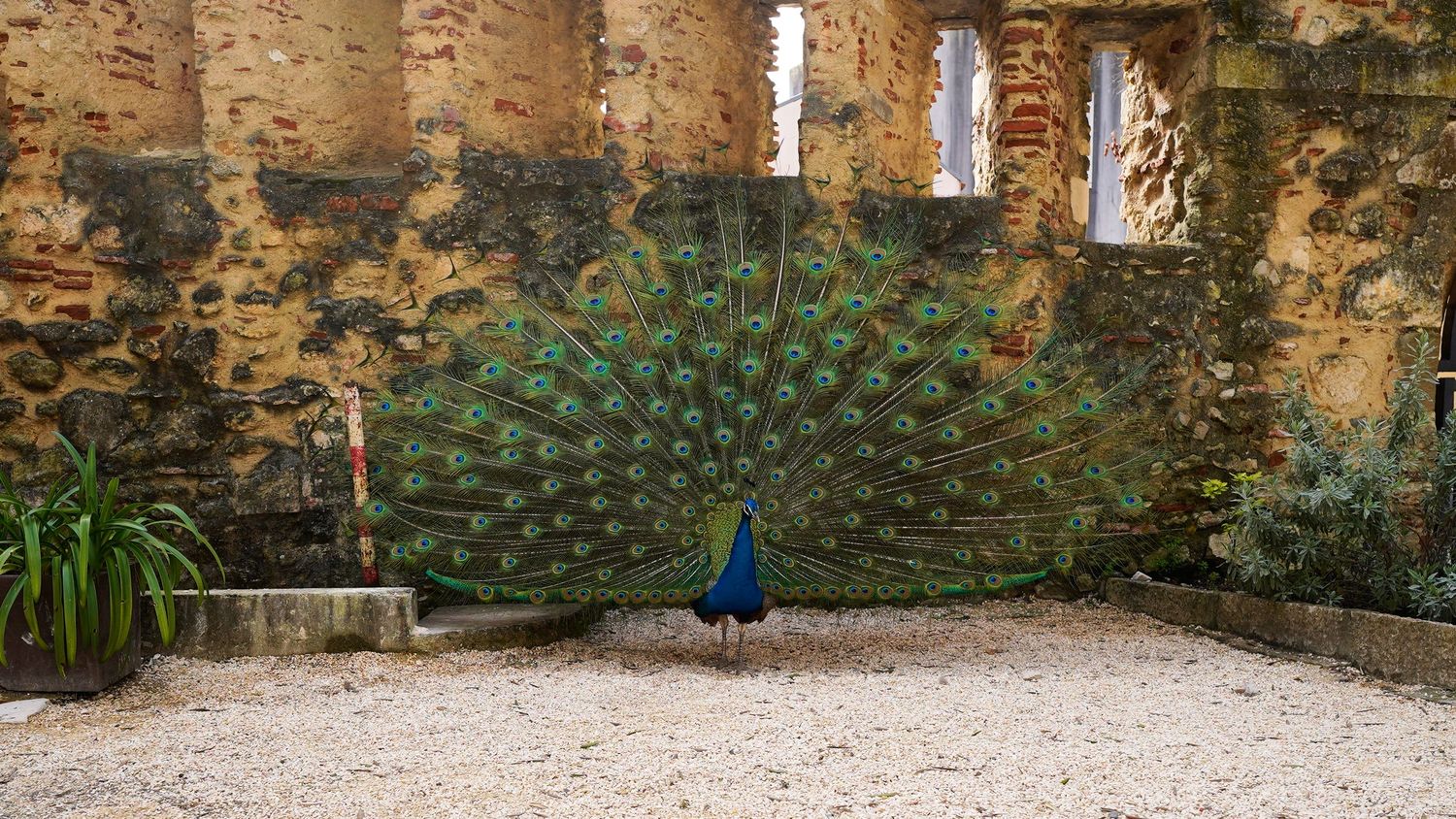
A peacock shows of it colourful and beautiful feathers near St George's Castle in Lisbon, Portugal.
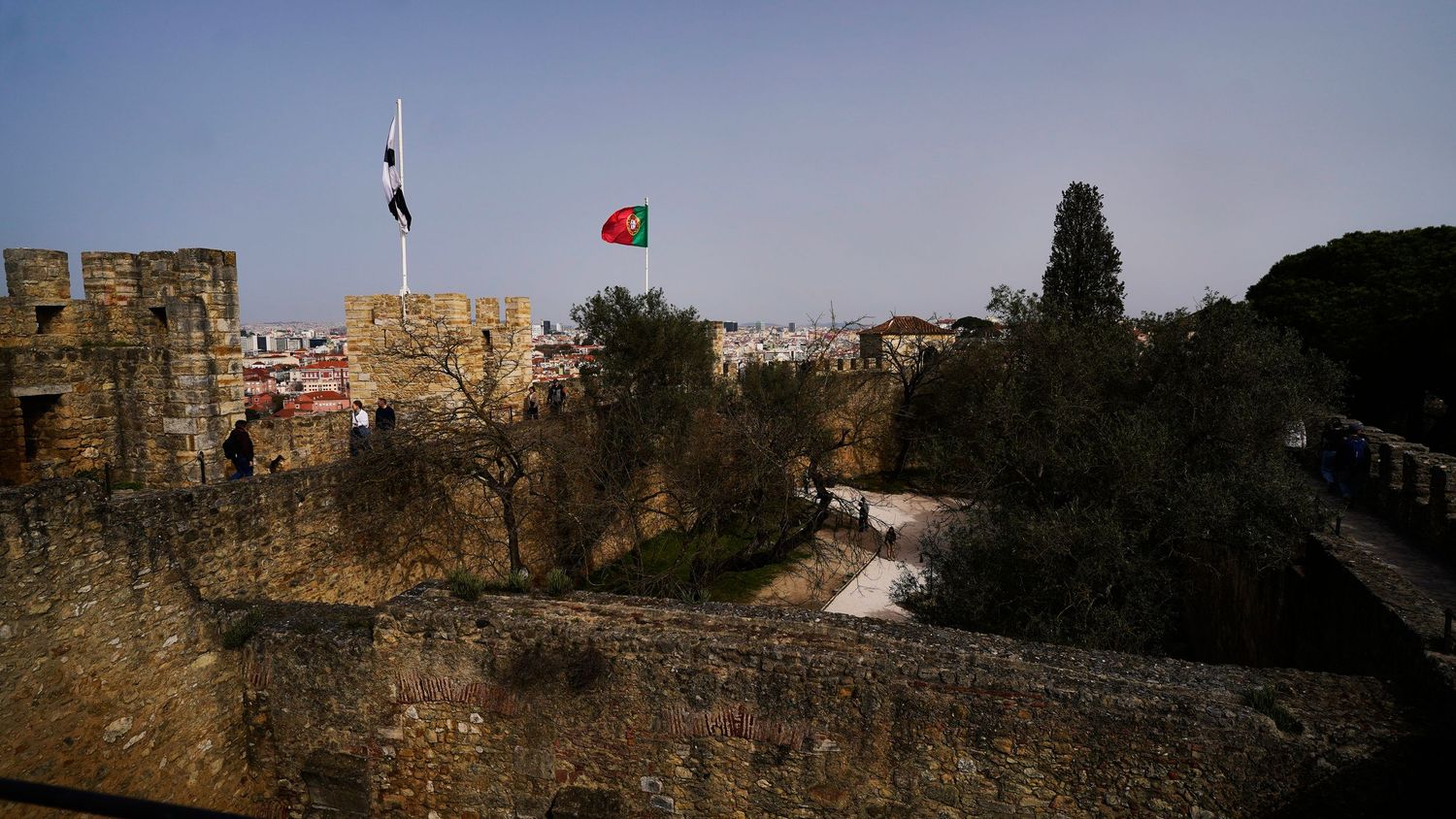
Tourists walk along the walkways of Saint George's Castle passing both the national flag of Portugal and the flag of Lisbon in Lisbon, Portugal.
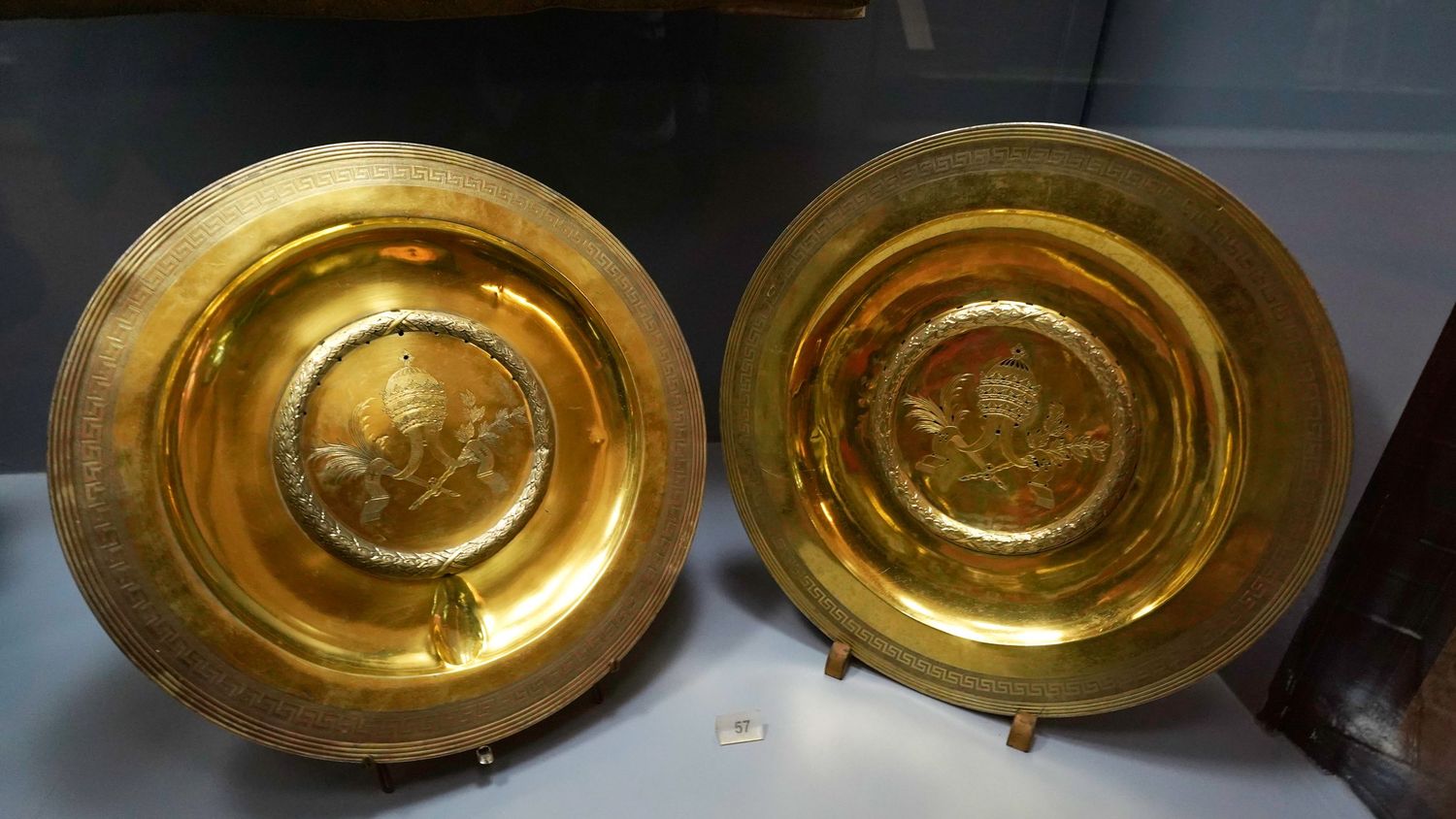
The bronze platted reliquaries of Saint Vincent, on display behind glass in the museum of Lisbon Cathedral in Lisbon, Portugal.
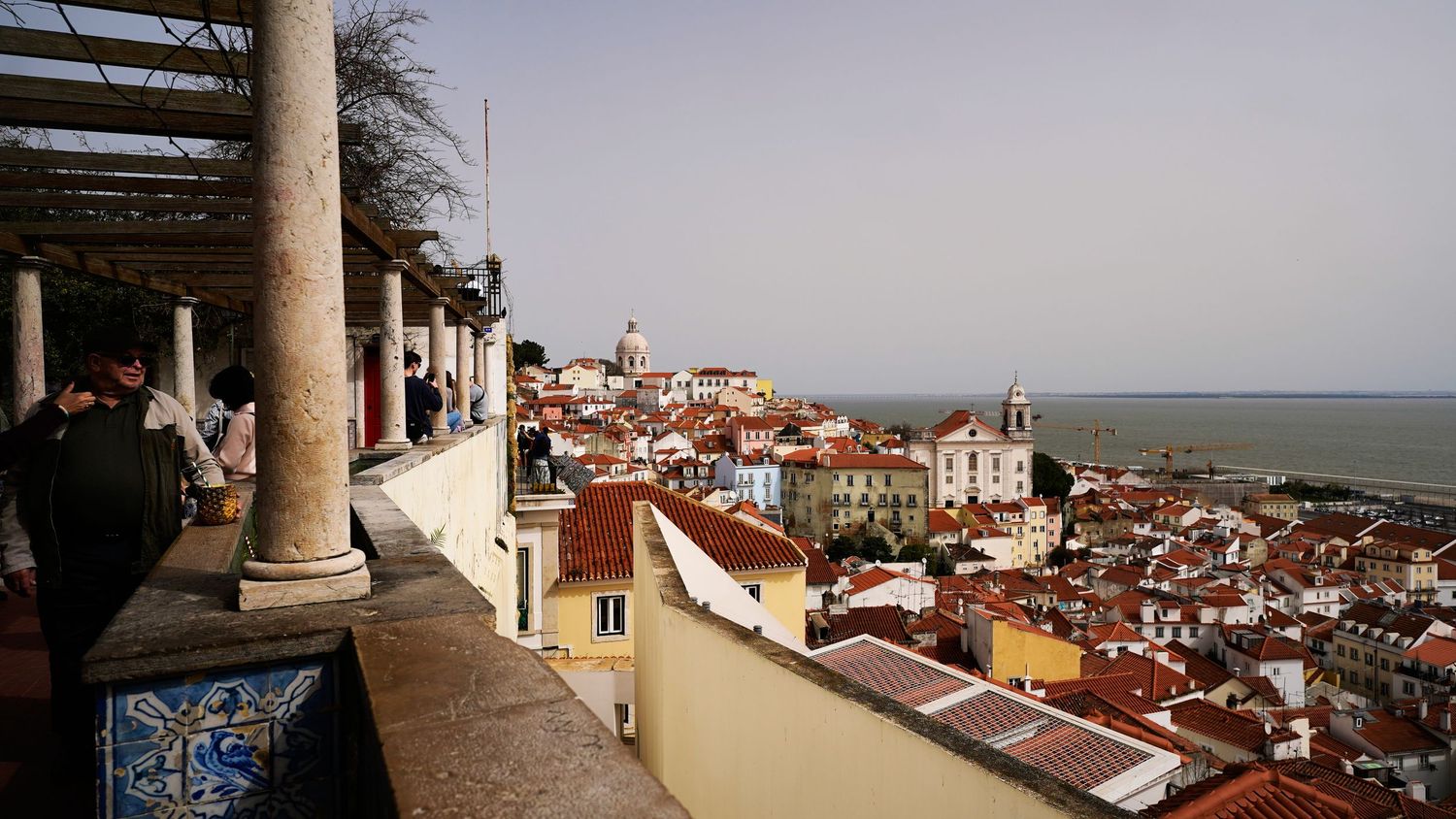
Another excellent view of Lisbon from the observation deck of Miradouro de Santa Luzia in Lisbon, Portugal.
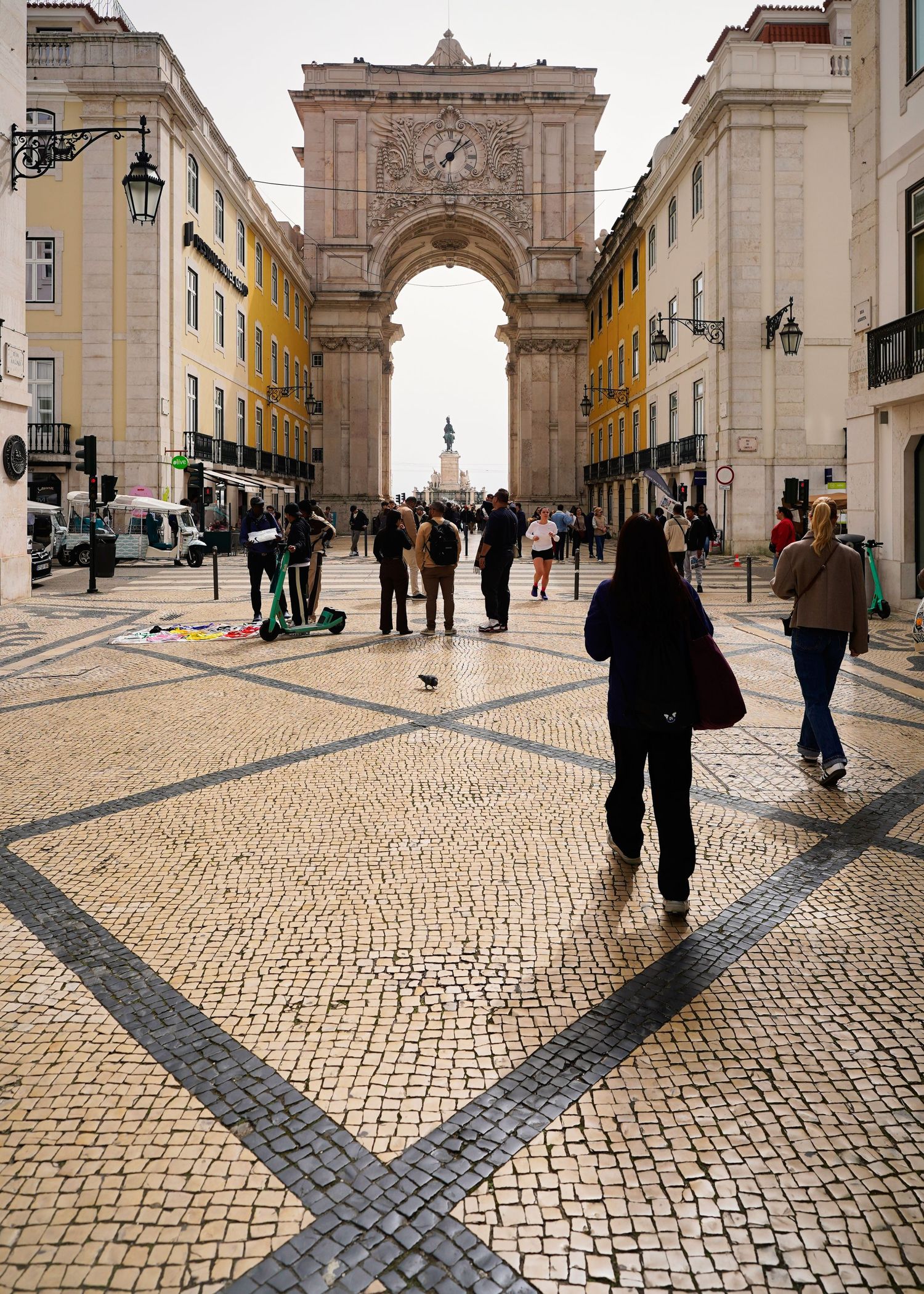
From the Rua Augusta road, the Equestrian Statue of King Jospeh I (Centre, background) from Commerce Square is seen below the Rua Augusta Arch (Above, midground) in Lisbon, Portugal.
Recommendations and Tips For Lisbon:
-From my experience in Portugal, my recommendations and tips would be to plan out your itinerary in advance, as sometimes, tickets to tourist attractions can get sold out. Tourist sights I would recommend going to see would include Saint George's Castle, Lisbon Cathedral (E.g. definitely go to the Crypt if you have the chance), Jeronimo's Monastery, Belem Tower, the Monument to the Discoveries, the Castle of the Moors, Quinta da Regaleira and Pena Palace. If possible, purchase a Lisboa pass in advance for either 24, 42 or 72 hours, as that pass won't just allow you entry into most tourist attractions, but it will definitely save you money and give you access to public transport for whatever time with the card you purchase.
-Be prepared for a long queue at the customs gate to get into the country, so I definitely recommend getting an early flight as soon as possible to give yourselves enough time to explore the city and to get to your hotel.
-In advance, find restaurants that aren't expensive and supermarkets near your hotel, as you may not have time to find these during your travel schedule.
-I also recommend going on tours with a reputable tour guide from Get Your Guide or Viator, such as the Sintra Tour with LaneTours in Lisbon, a tour to Fatima or the Templar Tour, which takes travellers to Batalha Monastery, Alcobaca Monastery, to Obiodos Castle, especially if you retain a historic interest in the Knights Templars or the Crusades as well. These tours are exceptional. The reason I mention this is that many Portuguese trains aren't always on time or reliable and experience delays, which will, of course, affect your travel plans. Plus, these tours will take take alot of your mind in terms of planning the journey to the sights and just allow you to relax and explore the landmarks in a good amount of time, peace and in addition, you usually get an informed history lesson from the guides during the tour.
-Work out how to navigate the Lisbon metro as soon as possible, so as not to get lost.
-Some tourist sights I would recommend visiting that I didn't get the opportunity to include are the Carmo Archaeological Museum, the Church of Our Lady of Grace, the National Pantheon, the Castle of the Moors and the Monastery of Sao Vicente da Fora. Also, if you get the chance, jump on a tram, ideally the iconic 28 tram, which will give you a different understanding of how to explore the city.
-Lastly, I would definitely recommend trying as much Portuguese cuisine as you can, such as the Ginja, Caldo Verde or the Portuguese custard tarts.
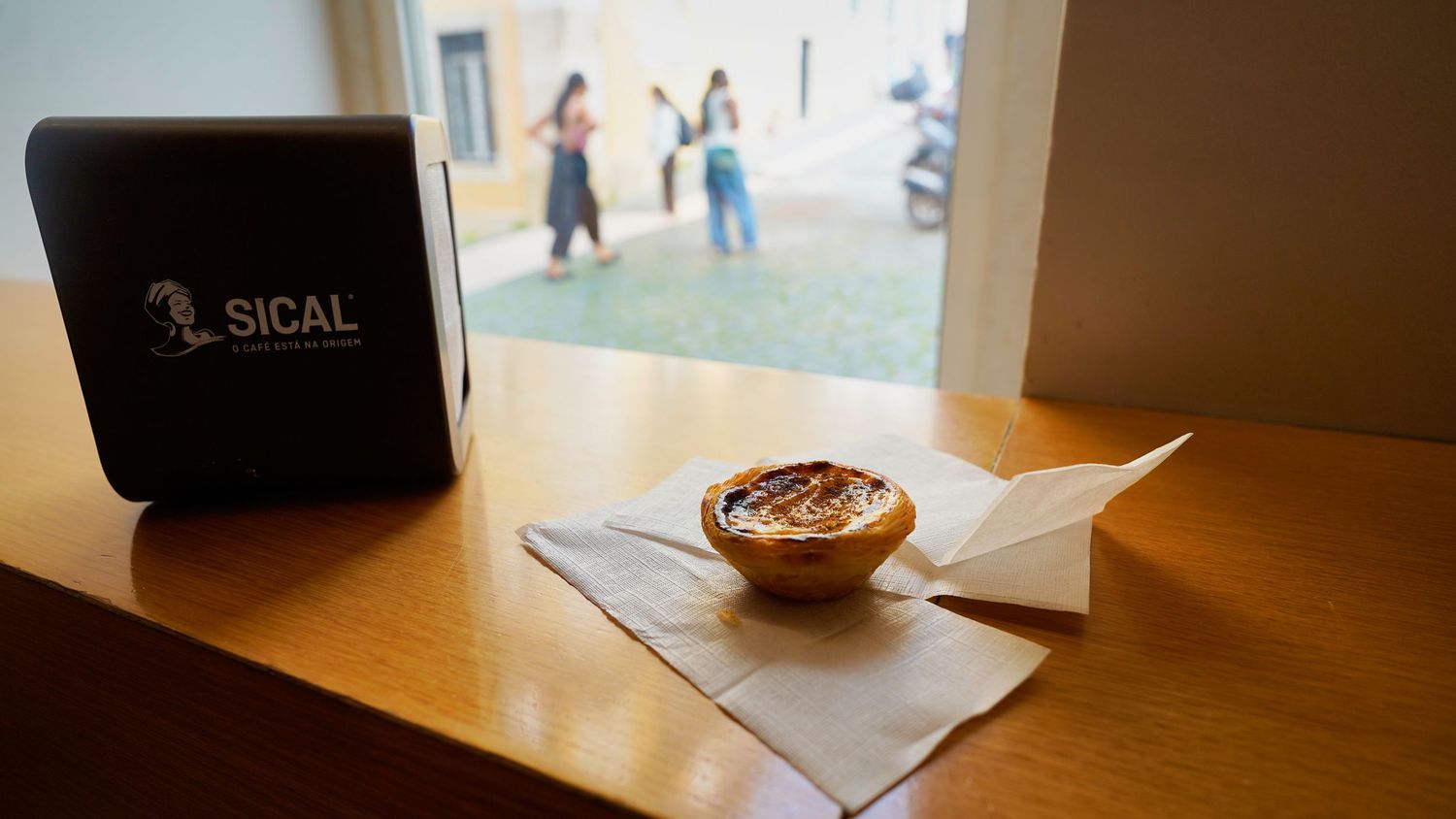
The iconic Portuguese delicacy of the custard tart purchase from Santo Antonio Pastry Shop, is a must try. The baked good is delicious and full of flavour, especially when sprinkled with cinnamon will awaken your taste buds. This pastry goes back centuries and various bakeries around the city have their own take on the delicacy.
“Lisboa não se encontra, descobre-se.” – “Lisbon isn’t found, it’s discovered":
Exploring the vibrant and authentic city of Lisbon as well as its surroundings provides a surprising mixture of rich-filled history, mesmerising landscapes and beautiful coastline. Beyond the capital lies the historic city of Tomar, home to the Convent of Christ, the charming seaside escape of Cascais, and the striking cliffs at Cabo de Roca. The fairytale-like hills of Sintra are home to the mystical Quinta da Regaleira and the outlandish Pena Palace, which makes a region compact but composed of a mixture of history, culture and scenic beauty. It is landmarks like these that make it unique, but Lisbon isn't simply found on a map - it's slowly discovered through the various people, places and landscapes that you encounter. Even though I experienced Portugal across four days, I often reflect on what else I might have explored, and there is undoubtedly more to see and experience. From my journey, I thoroughly enjoyed every moment and would recommend Portugal to other travellers. I would return to Portugal in a heartbeat - it is truly a beautiful, majestic, mystical, and picturesque place.