Interesting Facts About Venice:
- Venice is located in the northeastern Italian region of Veneto, it comprises of 118 small islands separated by large expanses of open water and canals. It is also estimated that 258 thousand people live in the city.
- Over the centuries Venice has accumulated a variety of nicknames from La Dominate, the Queen of the Adriatic, La Serenissima, the City of Masks, the City of Canals, the City of Bridges, and the Floating City.
- Venice is named after the Veneti people, who inhabited the region in the 10th Century.
- Venice's emblem is the Lion of Saint Mark, which represents Mark the Evangelist pictured in the form of a winged lion, part of the Tetramorph.
- On his return from his travels from Constantinople, the Middle East, and Asia, Venetian explorer Marco Polo was taken as a prisoner of war by the Genoese in 1296 after commanding a gallery against them. In prison, he collaborated with fellow inmate Rustichello on his famous travelogue "The Travels of Marco Polo", which described his travels throughout Asia from 1217 to 1295 and his experiences in the court of Mongolian leader Kublai Khan.
- From the millennium of 810 to 1897, Venice was regarded as the capital city of the Venice Republic.
- During the Middle Ages and the Renaissance Period, Venice became a major financial hub, maritime power, and international trade post for trade in silk, spices, and grain from the 13th to the 17th century. It is also regarded by historians as a significant staging post for events like the Battle of Lepanto and The Crusades.
- Venice emerged as the first recognized financial center in Europe in the 9th century and would later find its prominence in the 14th century.
- In 1756 Casanova, was imprisoned for 5 years in solitary confinement in ''The Leads'' the Doge's Palace's prison portion.
- The Venetian Arsenal is considered to be the first factory recognized in history and the basis of Venice's naval power. However, Venice's sovereignty came to an end in 1797 under the rule of Napoleon, and later became a part of the Italian Kingdom in 1889.
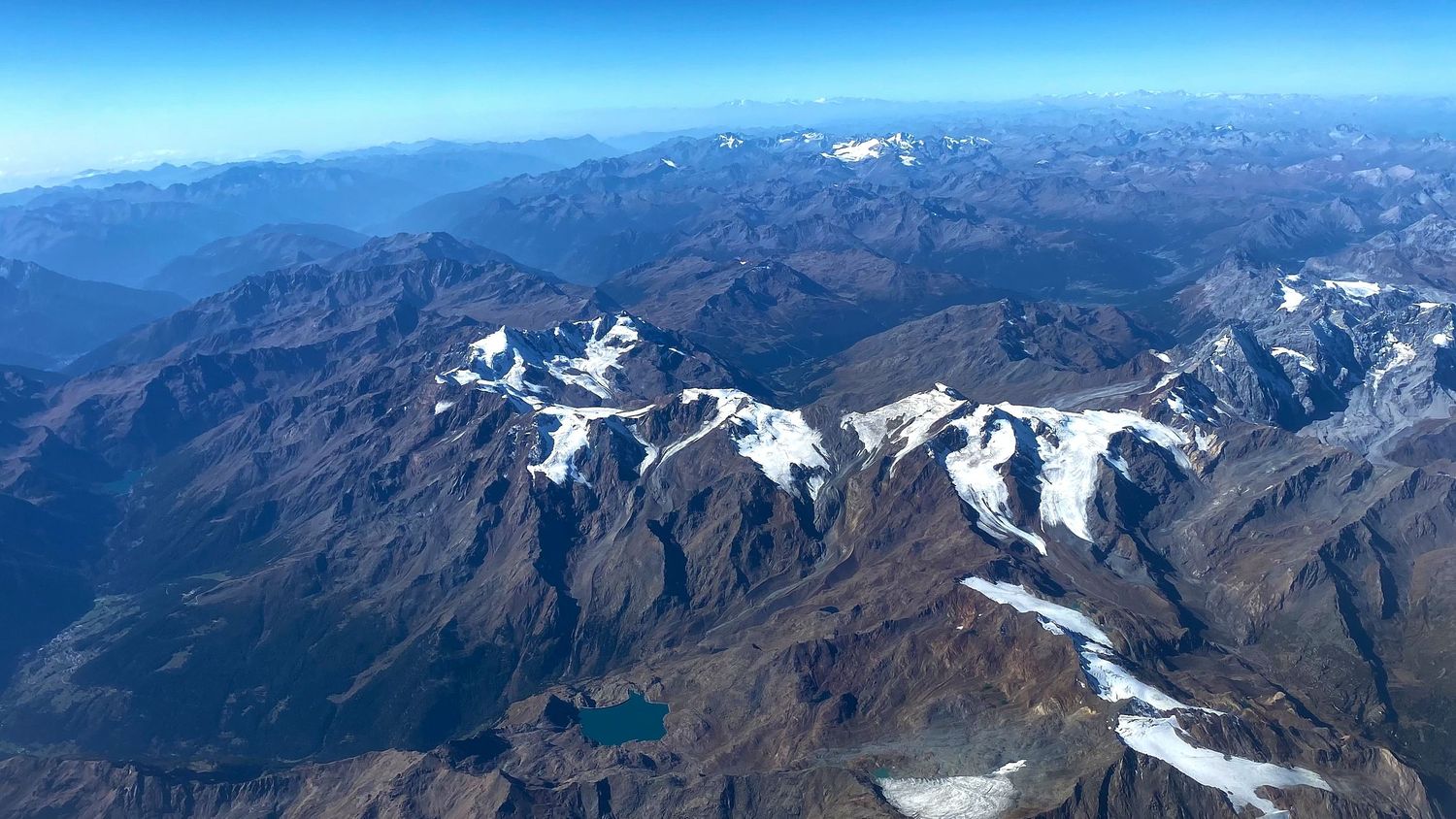
Aerial Photo of The Dolomite Mountains, Italy
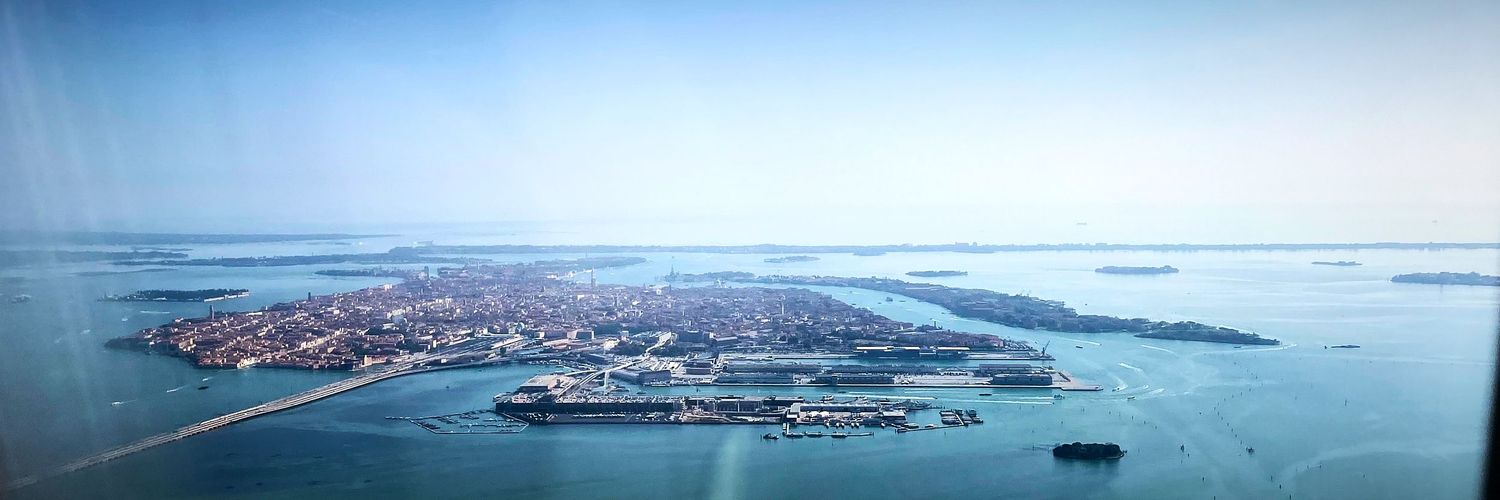
Aerial Photo of Venice, Italy.
First Day in Venice (11/10/2023):
My journey to Venice started with getting two trains to Stanstead station, in the morning it was very dark and slightly breezy, the light glared from nearby street lamps and the streets were very quiet. Our plane took off from Stanstead airport at around 10:45 pm, to entertain myself on the flight I read a National Geographic Traveller Magazine, and after reading an article in the magazine, I turned my attention to look outside the window and saw what I could make out as villages below the partially snow-covered Dolomites, which I was fascinated to see. Soon after, I saw an aerial view of Venice from the comfort of my plane seat, it was amazing to see the floating city from that perspective and the plane touched down at Marco Polo Airport at 12:45. As I began my descent down the stairs, I was immediately hit by the sunlight and proceeded to put my sunglasses before heading to the shuttle that took us to the airport. At that moment, I knew I had finally stepped into paradise.
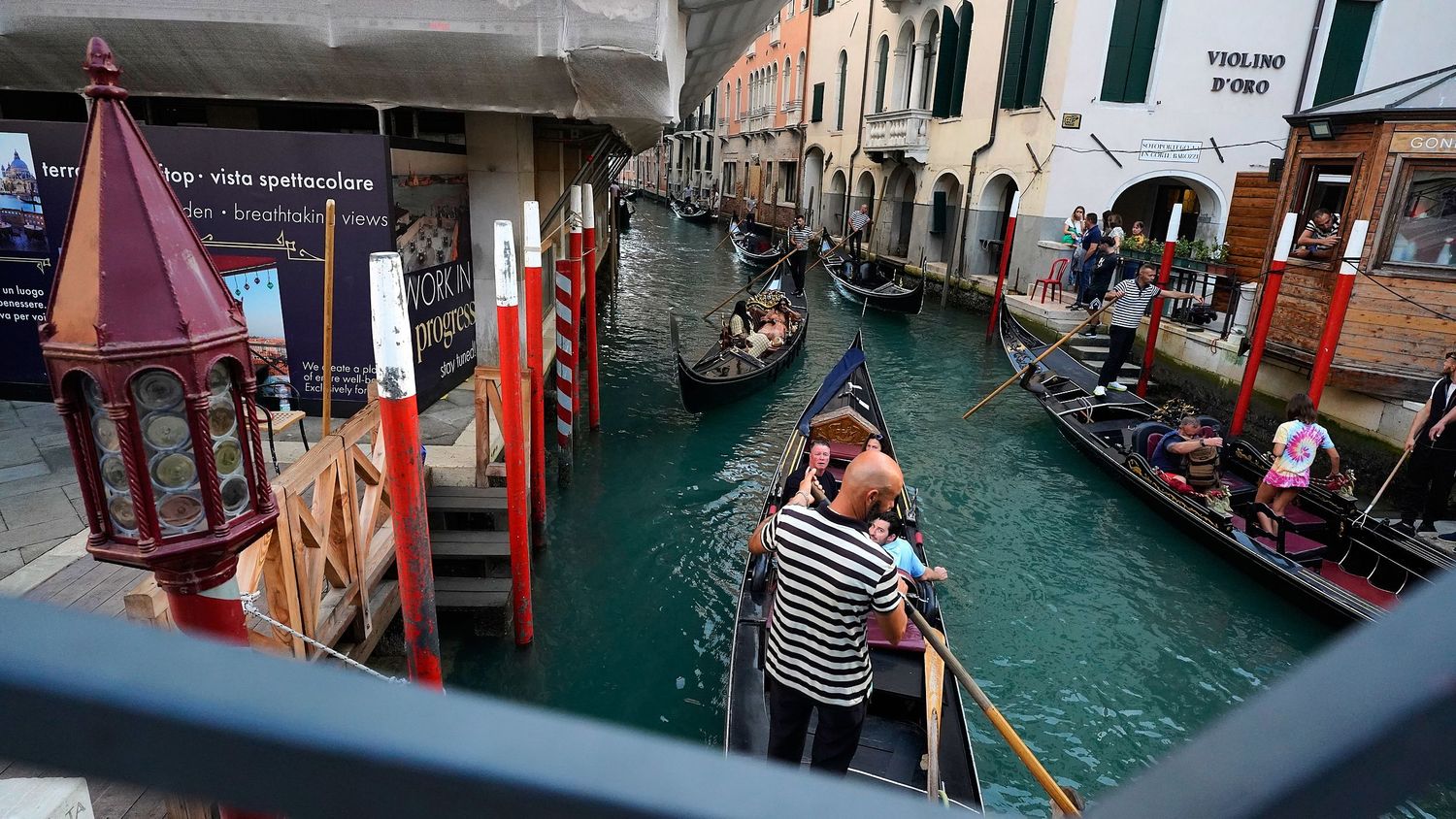
After going through customs, we purchased tickets for the Vaporetto at a nearby ticket machine and proceeded towards the Marina under the airport, we got on to the Vaporetto, which started its voyage towards Venice. On the way, seagulls flew in the air, I could make out the details of a few buildings in the distance via my lens and we passed by the Venetian Island of Murano. I could see people eating at nearby cafes, tourists getting onto water buses and walking over a bridge, an old abandoned dockyard, houses, and a couple relaxing drinking wine on a water taxi, that passed us quickly. After the 75-minute journey, we got off at a ferry terminal and headed towards our hotel navigating the various narrow streets, alleyways, and canals. I remember walking on a bridge over a canal where some gondolas were positioned, which left us at the foot of an old church called Chiesa di San Zaccaria which was great to see but what struck me was a woman stood outside the entrance of the church dressed in 18th-century Venetian attire with a mask, it was like a character had stepped out of an old period movie. It was unusual to see at that moment. We headed through some other narrow streets, came across market stores selling paintings, and later as I walked over another bridge, I heard a gondolier singing the birthday song in Italian, Later on, we walked down the Regi degli Schiavoni on the Venetian coastline, a large number of tourists had amassed, and there were stores & restaurants on my right-hand side and on the left-hand side, market store vendors trying to sell items from masks, small sculptures, and modern paintings to tourists. Across the sea in the distance on a separate island, I could see the Church of San Giorgio Maggiore and straight ahead the Doge's Palace. On the Ponte della Paglia bridge, which dates back to the 14th century, I could see the gondoliers standing at the stern of the vessel, rowing slowly upstream, and boats passing under the iconic Bridge of Sighs. Approaching the Piazza San Marco, I looked up towards the sky and noticed two enormous columns that featured the Saints Marco & Teodora as well as the emblem of Venice. The Doge's Palace next to me was designed in a Venetian Gothic style in 1424, it is grand, jaw-dropping in its intricate design, and elegant as it towers over the Piazzetta S. Marco. As we passed through a busy St Mark's Square filled with people from different walks of life, with stores and cafes located on both sides, the layout reminded me of Covent Garden but on a much larger scale. Walking past the square and a few streets, we came to our hotel, it looked like any other house in Venice apart from its distinguishing lion-shaped door handle. Our room was small but we didn't care as we wouldn't be spending much time there anyway. We unpacked our luggage from our rucksacks and headed back out towards St Mark's Basilica.
St Mark's Basilica was small in comparison to the Doge's Palace, however, it was designed in a mixture of Gothic and Byzantine architectural styles, and above its entrances were beautifully illustrated biblical motifs and on the balcony are positioned the Horses of Saint Mark which overlook the adjacent St Mark's Square and other prominent statues. Saint Mark's Basilica was built in 1094 to guard St Mark's relics, which were stolen in Alexandria, Egypt, and is considered a renowned symbol of Venice. However, the interior was completely covered in gold, and biblical motifs & stories covered the walls, ceilings, and arches and a myriad of mosaics were also on display on the floor tiles. It was like walking back in time to when Constantinople and the Byzantine Empire still existed. Inside was very dark, with pieces of daylight piercing through the windows. Stepping behind the main altar and looking up, I saw more biblical illustrations, and straight ahead of me was the Pala d'Oro (the Golden Cloth). The high altar retable is a golden sheet that features around 250 enamels of different sizes and epochs as well as apostles, angels to prophets but the bordering panel includes episodes from Christ and St Mark's lives. The Pala d'Oro is truly magnificent in craftmanship and is considered a Byzantine masterpiece. The object was first authorized by Doge Pietro Orseolo in 976 and later by Doge Ordelaffo Falier in the 12th century with the purpose of embellishing St Mark's Basilica. After spending around 45 minutes on the lower floor of the basilica being awestruck by the intricate design and craftsmanship on the marble floors, golden arches, and colorful illustrations of biblical stories, mosaics, and figures we left and walked towards St Mark's Campanile. Standing at a staggering 99 metres high, the tower was constructed in the 12th century and in the 16th century was used as an observatory tower by Galileo for his telescope. However, that tower collapsed in 1902 and was later rebuilt in 1912 in the same Renaissance style. An elevator took us to the top floor, everywhere I looked it was crowded by tourists looking out of various windows, which provided spectacular views of Venice. It was truly enlightening to see and gaze upon as I looked through the windows and the lenses of my camera at the Venetian cityscape. Looking out of one particular window, I was mesmerized by a view of the Santa Maria Della Salute church across the Grand Canal.
After leaving the tower, it was getting very dark in the evening and we decided to go and see one last tourist site, the Basilica S.Maria Gloriosa dei Frari, before heading back to our hotel. During that time we went to a nearby cafe called Caffe Florian, the oldest cafe in Italy with its roots stretching back to the 17th century and a lot of celebs have visited over the years. From the indoor store, I purchased the Venetian biscuits of Esse, Zaeti, and Venetian Hot Cocoa in a Tin, which featured Marco Polo's face on the back. As we proceeded towards the Frari, Google Maps had a mind of its own, maybe it kept on getting confused by the geographical layout of Venice, I don't know. Anyway, it kept giving us the wrong directions to the church, which was frustrating but it wasn't until we reached the Rialto Bridge and Grand Canal, that we turned back to our hotel as we realized we wouldn't get there in time. Back at our hotel, we went to a nearby pizza restaurant called 1000 Gourmet Venezia, purchased two pizzas of a Margherita Colbari and the Marinara, which took half an hour to cook, and a bottle of coke. During that time, we explored Venice some more, passing by a few stores with different flavors of gelato on display, and other stores, we later returned to collect our order from the restaurant. Got back to the hotel and ate the pizzas on a balcony in front of the Campanile. The Margherita Colbari pizza was delicious, with not too much sauce and the cheese came off effortlessly, whereas the Marinara was cheeseless but still tasted good. Both pizzas were scrumptious but I definitely preferred the Margherita Colbari more. Afterward, we went back to our room, readjusted our travel schedule, and found a storage facility called Viase to store our luggage for tomorrow as we had an early checkout. At around midnight, we left the hotel to do some night photography, we stayed close to St Mark's Square and went down the Regi degli Riva. As you can imagine, the streets were almost empty, music emanated from the nearby cafes that people sat at. St Mark's Square, the Basilica, Campanile, and even the Doge's Palace were lit up at night and the gondolas at the nearby marina swayed from side to side, creating a slushing noise as the strong waves hit the vessels. It was truly an excellent sight to see the city at that moment in time with my own eyes and see the different perspectives of Venice.
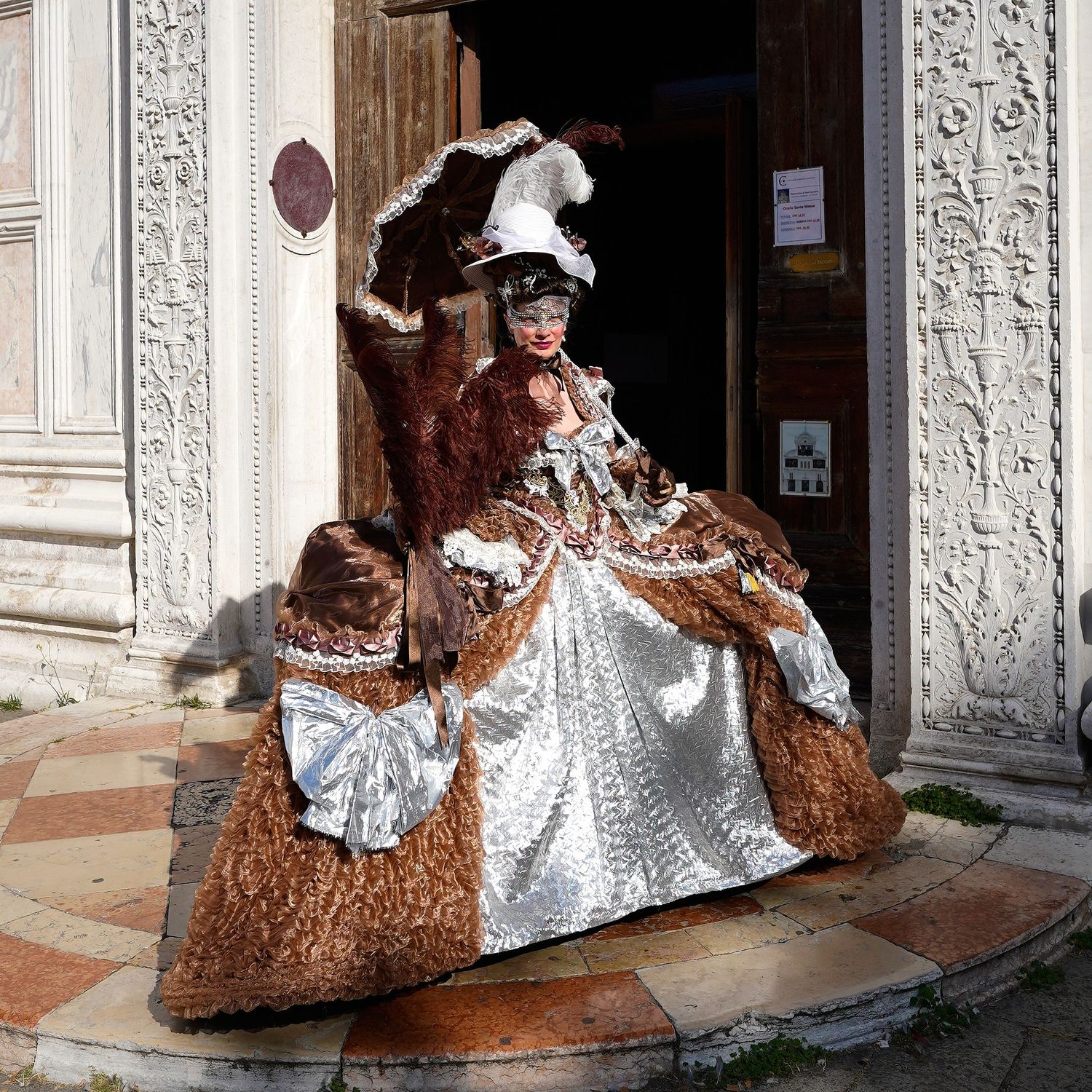
Stranger dressed in 18th Venetian attire outside the Chiesa di San Zaccaria church in Venice, Italy.
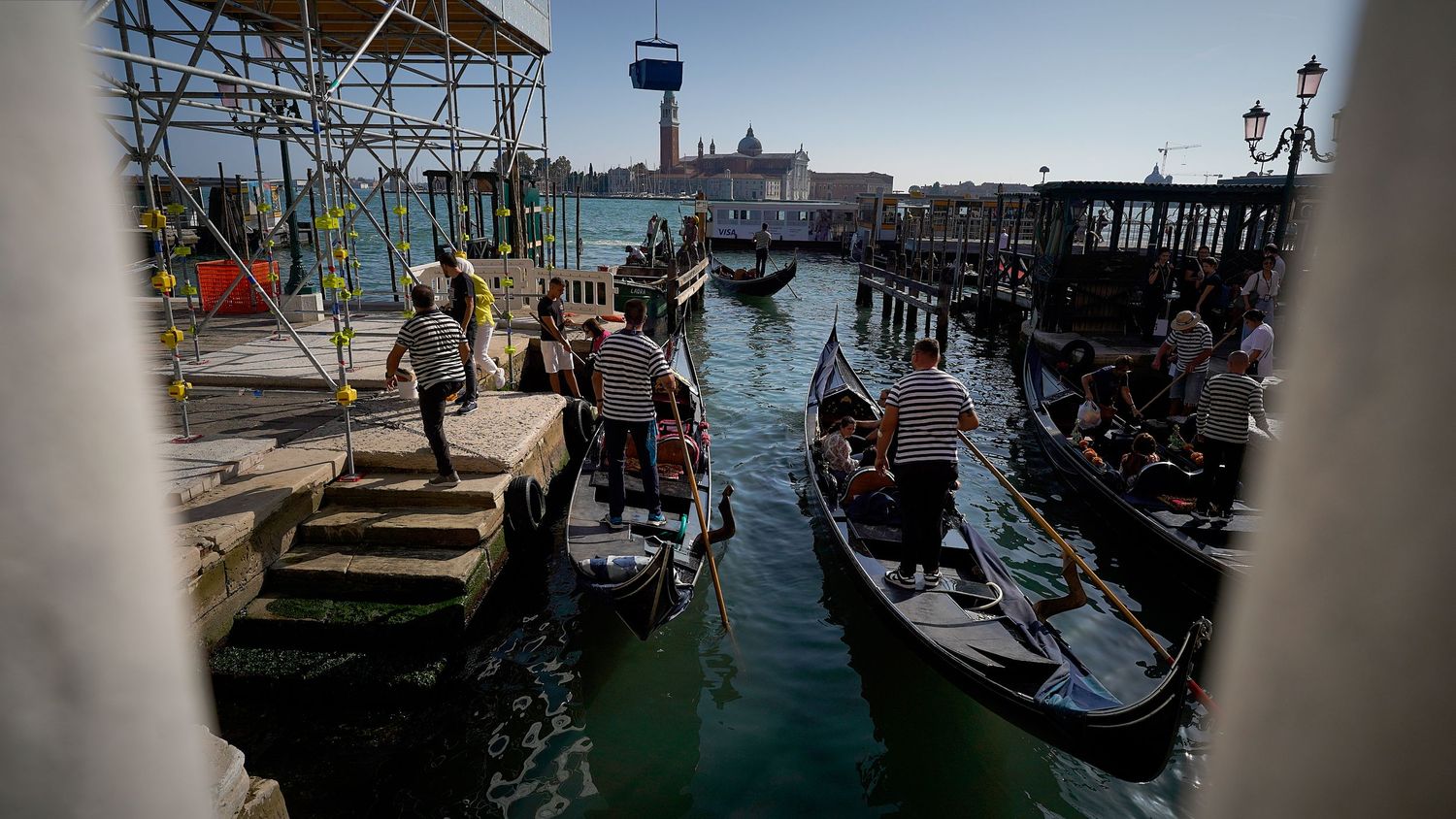
Gondolas in canal with Church of San Giorgio Maggiore & S. George Bell Tower in the background, Venice, Italy.
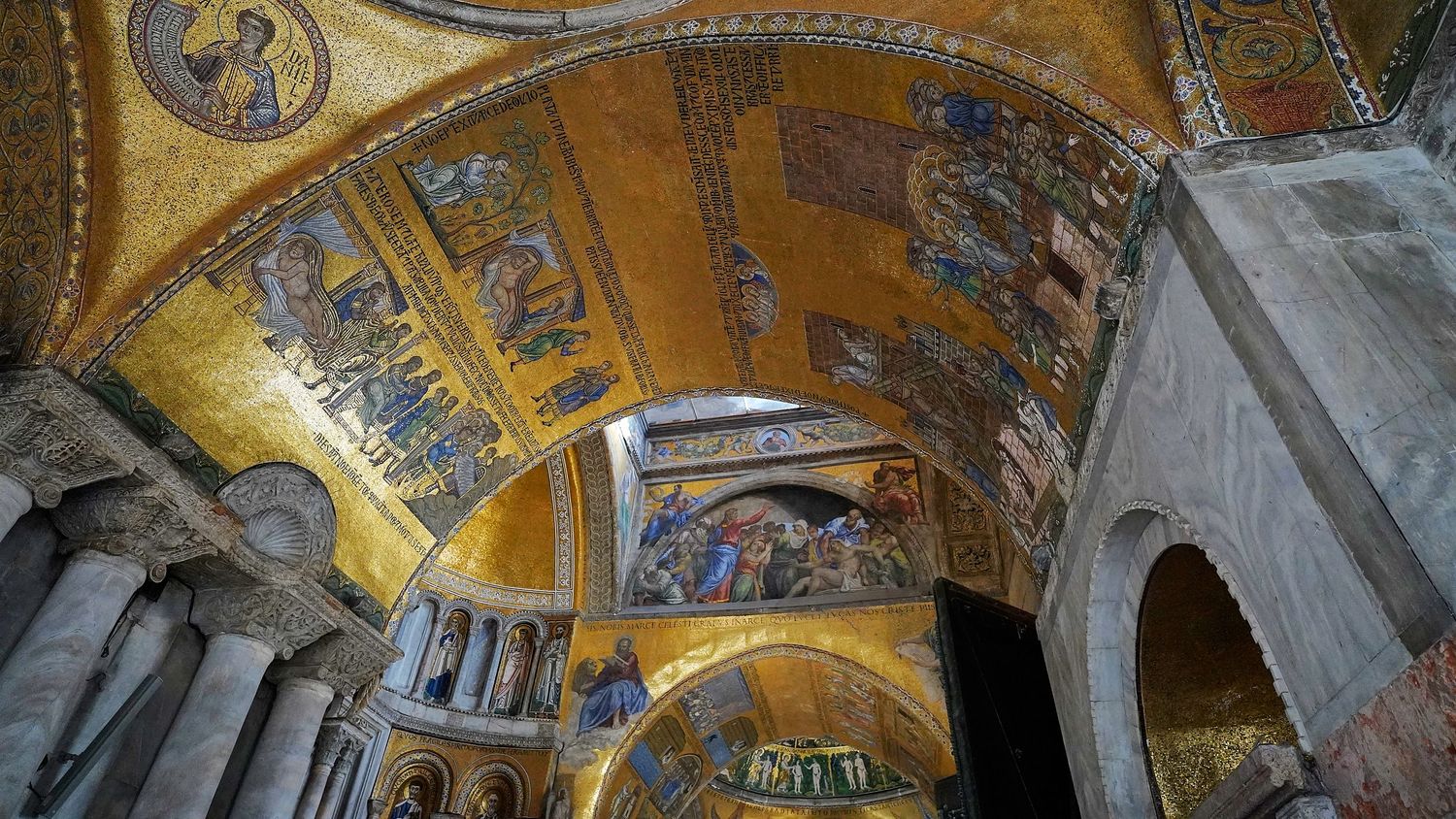
Inside St Mark's Basilica, Venice, Italy.
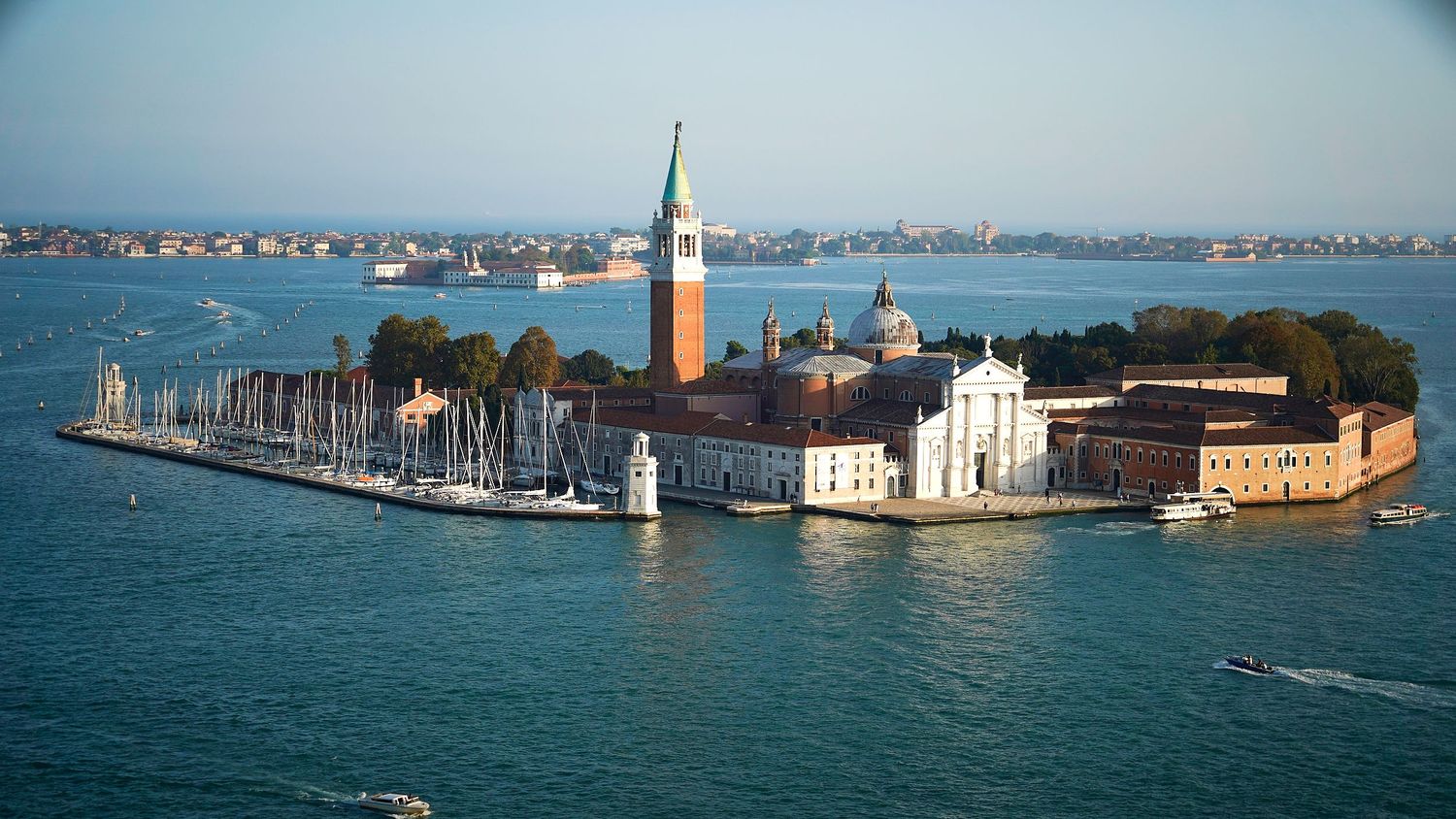
Church of San Giorgio Maggiore & S. George Bell Tower taken from St Mark's Campanile, Venice, Italy.
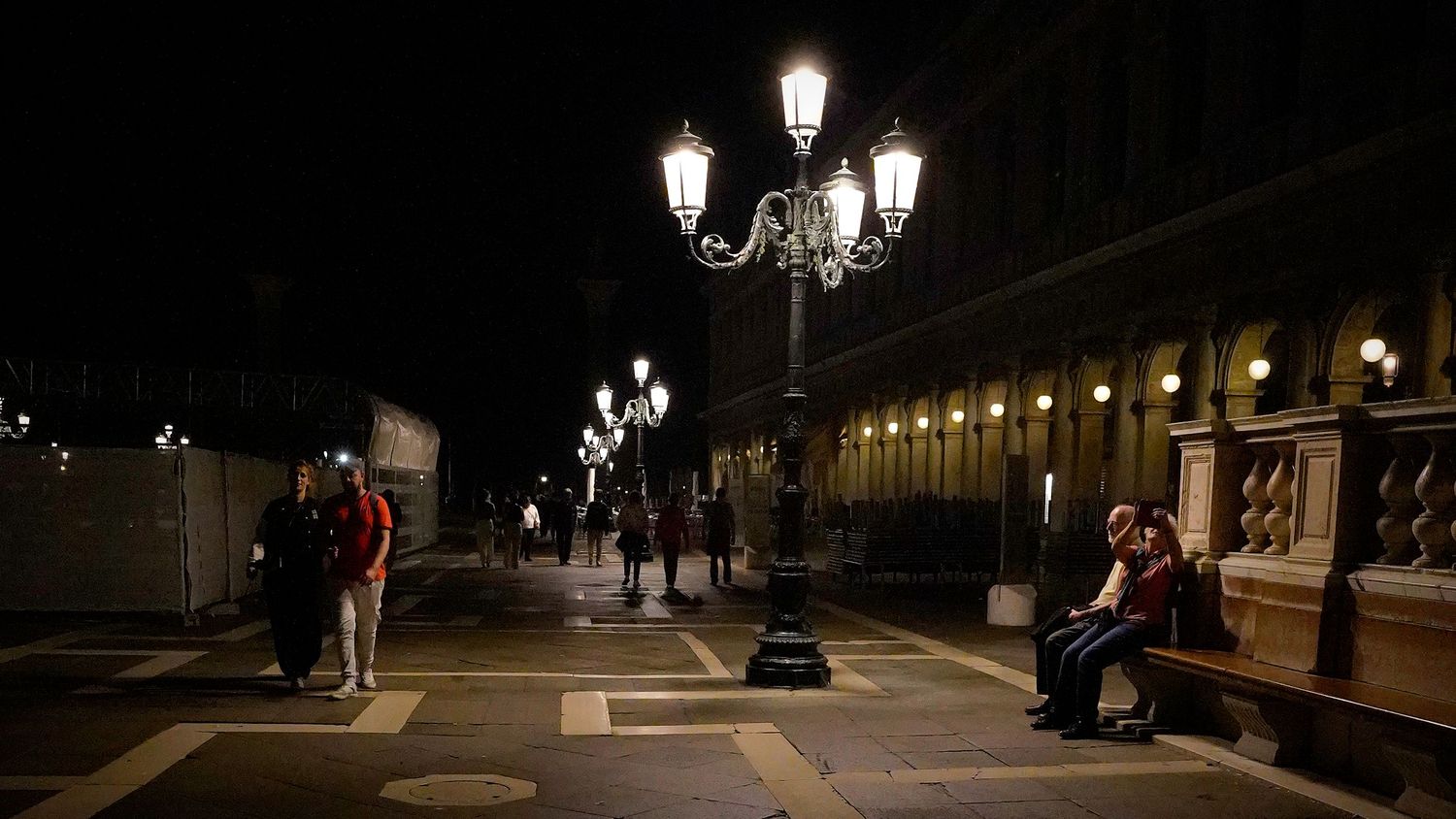
Night photography in Piazzetta S. Marco, Venice, Italy.
Second and Last Day in Venice (12/10/2023):
Got up early in the morning, checked out of the hotel, walked towards the Vaise store, and dropped off rucksacks at the storage facility near San Marco. Our journey started with a 20-minute walk from St Mark's Square to the Basilica S.Maria Gloriosa dei Frari, a church located in Campo de Frari in the heart of the San Polo district in Venice and dates back to the 14th century. The church is situated on the other side of a bridge and a canal. It stands as a very imposing building in comparison to the rest of the buildings around it, attached is a bell tower that towers over the main building, and its outside gothic architectural style is seen reflected in the canal. As I stepped over the bridge, I was immediately drawn to its outside facade, as it seemed like any other traditional church but this church houses some work by the Italian Renaissance artist Titian as well as his tomb. As I immediately entered the church, the inside was very spacious, massive, and overwhelming, which made me feel very small. Some walls were covered by various paintings such as the Assumption of the Virgin (Titian,1516-1518), and other pieces of artwork like the marble sculptures and monuments dedicated to various artists. In a separate room lie candles, and seats for people to pray, and in a separate room lie a few other pieces of artwork, which like Titian's artwork, left me mesmerized.
After spending some time at Frari, we went on our way to the Rialto Bridge and the Grand Canal. After finding our way through a few streets and alleyways, we came across them both, the Grand Canal was beautiful to see as boats and gondolas went up and down the canal and it was great to see Venetians getting on with their daily lives. However, the Rialto Bridge was unlike any other bridge that I had ever seen in my lifetime. The facade is white and designed in a Renaissance architectural style, the bridge stands above the Grand Canal and has in fact been rebuilt several times since its first construction in 1173 with this bridge being opened in 1591. After walking up the various stairs on the bridge, I stayed there for a few minutes watching the boats and gondolas pass down the canal and awestruck by the view and got a few photos. Sadly weren't able to linger there anymore, as we had other destinations on our minds, so we had to leave, which was probably for the best as the bridge started to get overcrowded with tourists. We then walked down a few stairs that led to an open passageway, which was filled with a tourist group but I saw the other side of the bridge.
We then walked past a few stores, outdoor markets, and cafes on our way to the Basilica di Santa Maria della Salute. On our walk towards the Roman church, we became mixed up with a school group and other tourists, which slowed our walking pace but in the end, it didn't matter as it didn't affect our time schedule, as we passed over several bridges connected to various small islands of Venice. I think this method of transport is a great way to see another side of Venice, which you probably wouldn't see in travel brochures. On the walk, we passed the Leonardo Da Vinci Museum and the Peggy Guggenheim Collection before seeing the Salute from a distance on a bridge and arriving at it. The Roman church with its Baroque style was very grand, had a white and grey colored exterior, and attached to the top of the church was a massive dome. The interior of the church was filled with theatrical paintings, the center was somewhat similar to an Italian courtyard and red fabric flowed down from the upper floor in front of the Romanesque columns. Towards the front of the building was also a very large wooden door/gate, which is somewhat reminiscent of a draw bridge or at least the wooden gate from Minas Tirith. After visiting the various sections of the church like the museum and The Works of the Sacristy, we waited for our tour guide Luca to open the door to the stairs that lead to the top of the building. We waited a few minutes for any other accompanying tourists, but none showed up so we ascended up the steep spiraling stairs to the roof with little daylight. Along the way, we chatted with the guide he mentioned that he loves working at this place but dislikes going up the stairs every weekday. At the top, our guide opened another door, that took us straight to the top of the church, the light hit us and a fog could be seen in the distance. At the top of the church, I saw statues of angels stationed on the building and I could hardly believe my eyes when I got to the vantage point. The views of Venice and its attractions from the vantage point are both something to be admired and left me speechless. I am glad to come to this destination, as it was on my bucket list for Venice that I wished to see. We of course asked Luca to take a photo of us and before we descended the stairs, he told us that if you come in the summertime, when it's not so foggy, you'll be able to see the Dolomites in the distance. After accomplishing that, we went to a nearby Private Art Museum called the Punta della Dogana next to the Salute, it housed a private collection of paintings and sculptures, we weren't allowed to take any photos but it was an enjoyable experience. Outside the building was a pathway with a nearby ferry terminal, parked gondolas, and river taxis, and up ahead was the historical landmark of the Trabaccolo "Il Nuovo Trionfo". A shipping vessel that has been restored and dates back to the 1920s, which includes an Italian Flag, that hung from the rafters. From that point, on my left-hand side, I could see the Doge's Palace, and St Mark's Campanile in the distance as well as boats and gondolas progressing fast on the water. Behind me were two columns that drew my eyesight to a golden globe statue with a figure on top but across the water laid another island, with some impressive buildings like the Church of San Giorgio Maggiore, Giorgio Cini Foundation, and the S. George Bell Tower.
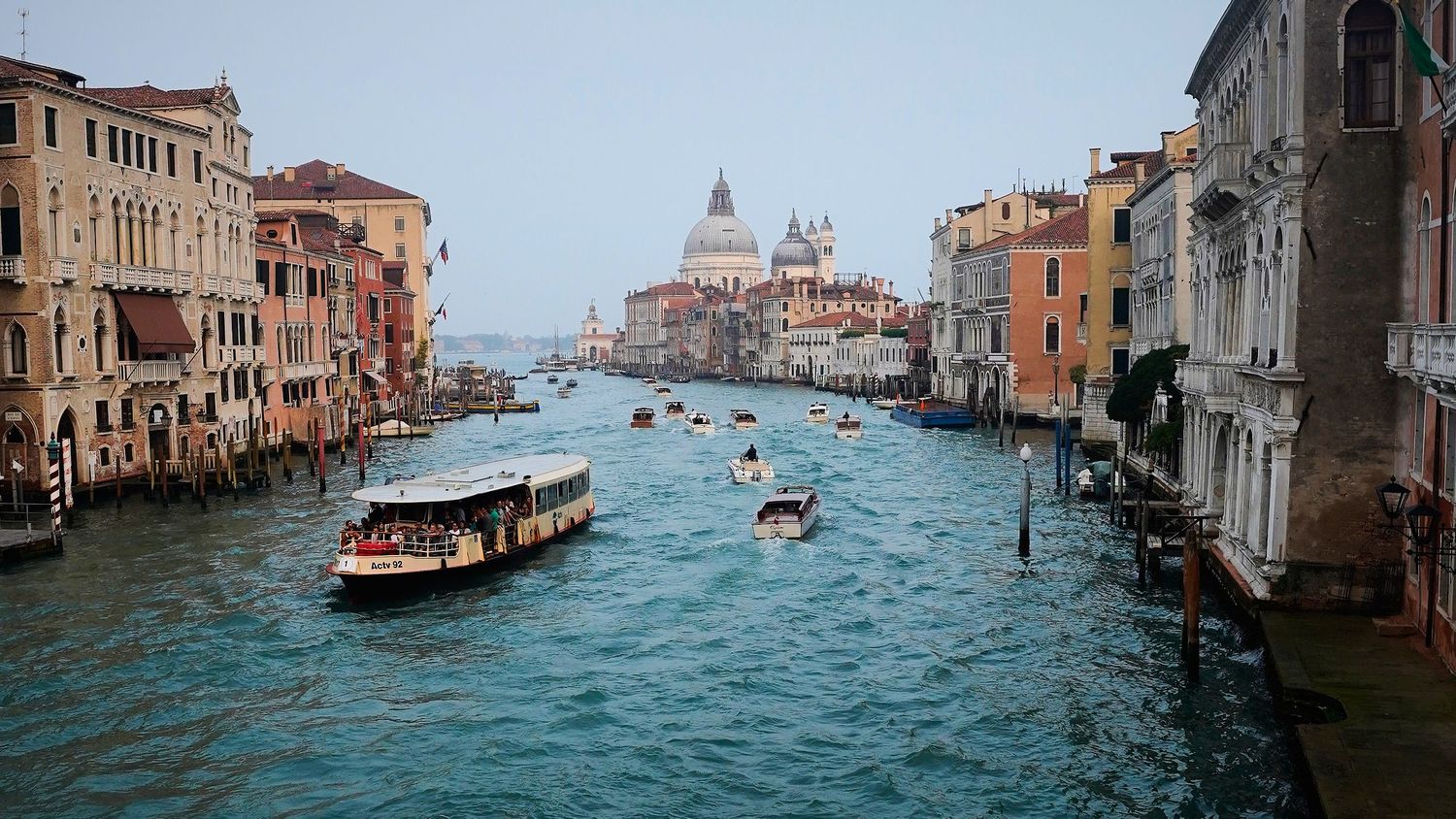
Taken from the Rialto Bridge, boats progress up & down the Grand Canal with the Santa Maria della Salute Church (Straight ahead in the background). Venice, Italy.
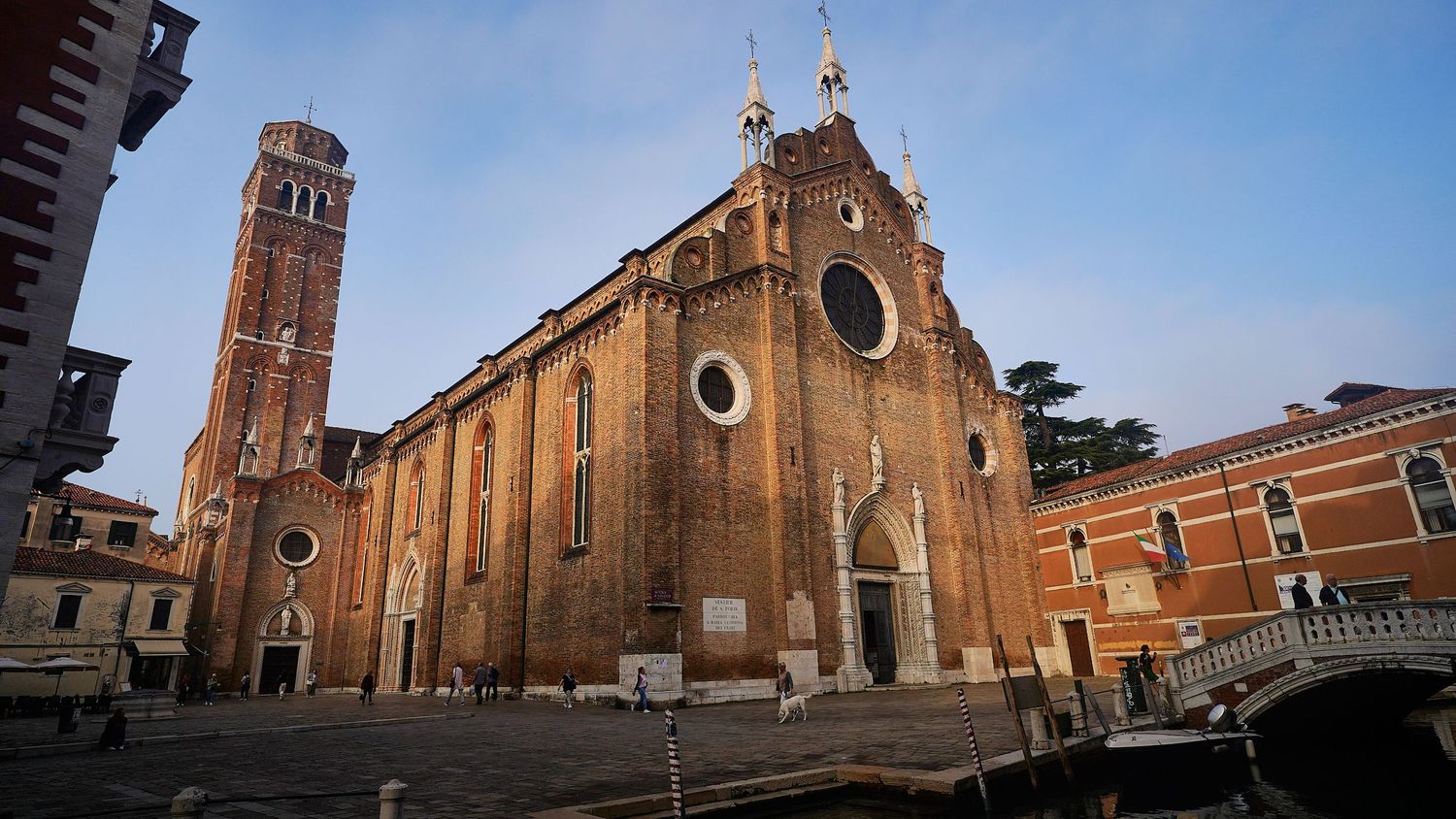
Basilica S.Maria Gloriosa dei Frari Church, Venice, Italy.
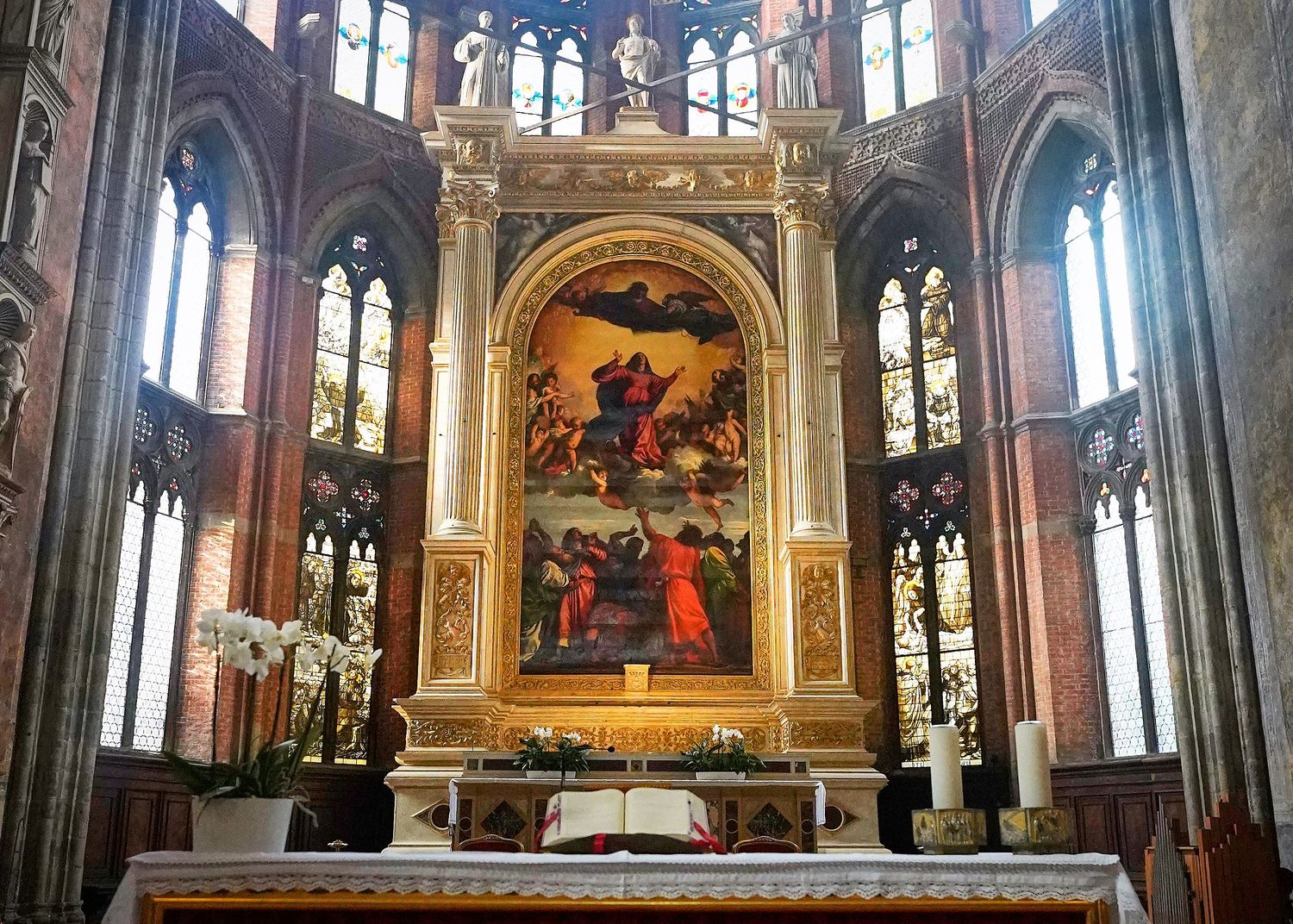
The Assumption of the Virgin (Titian,1516-1518). The Basilica de Frari, Venice, Italy.
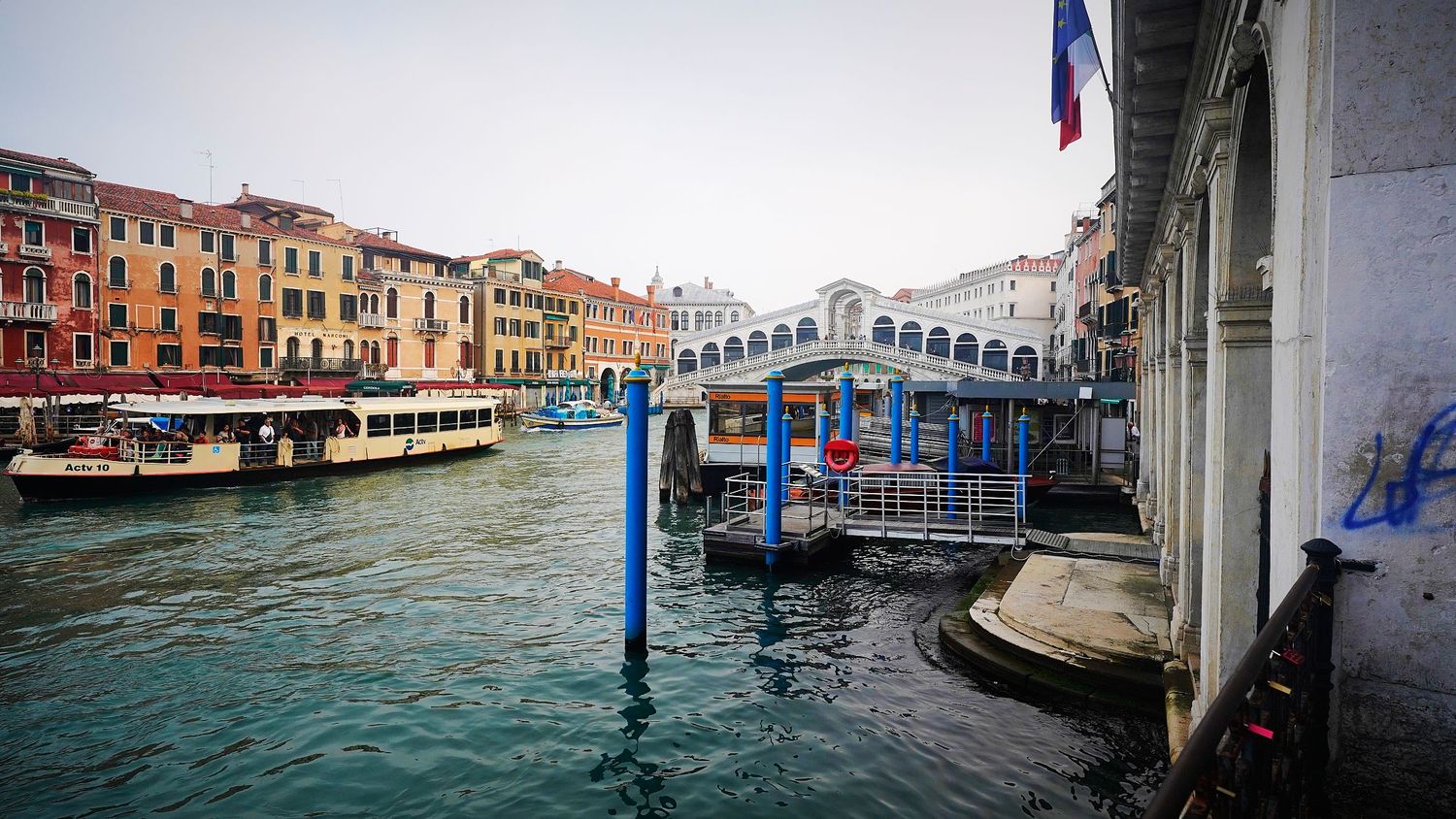
The Rialto Bridge stands over the Grand Canal, Venice, Italy.
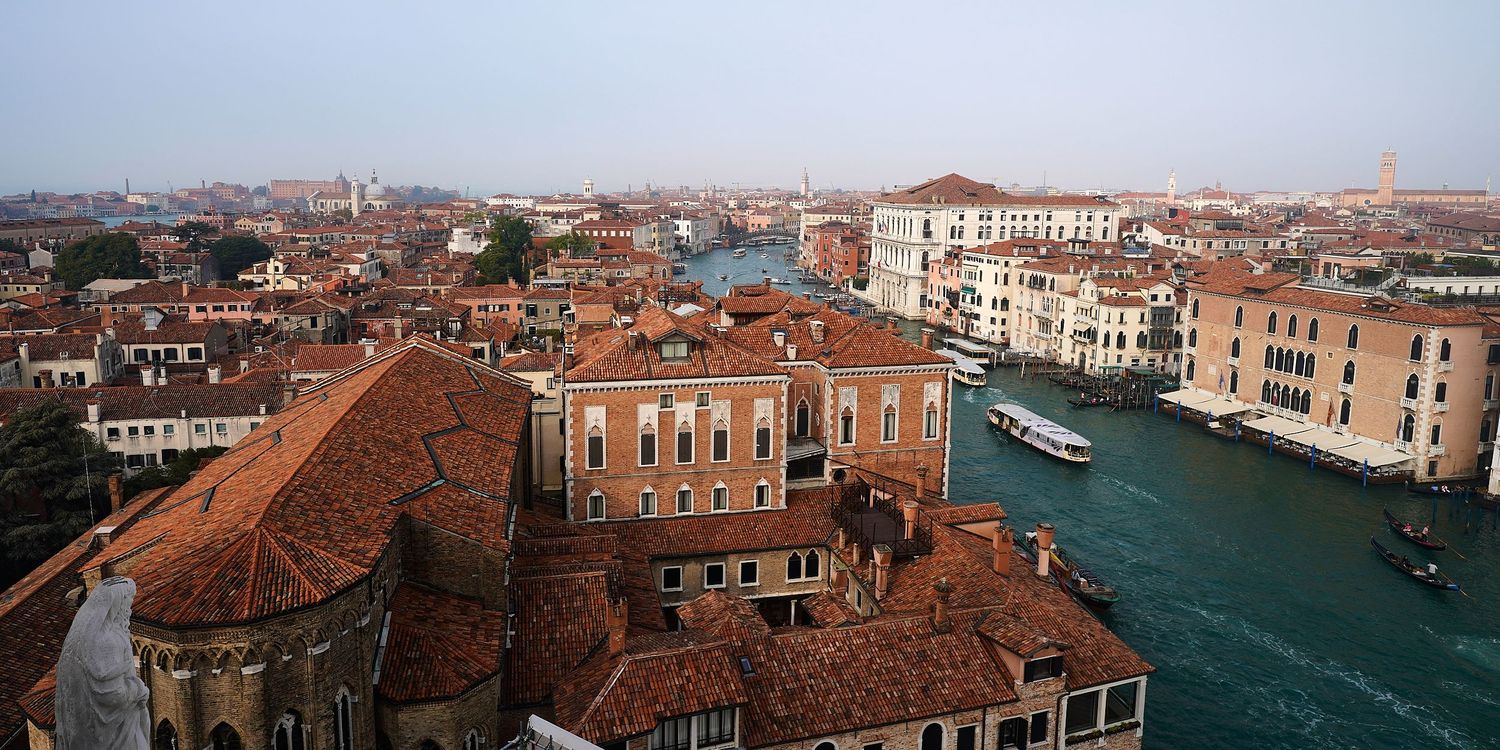
Aerial view of Venice Cityscape, Italy.
We then got on a gondola which took us across the water to San Marco Ferry Terminal, which only took a few minutes. Apart from the gondola swishing from side to side, as the water hit the vessel, it was an enjoyable experience that cost 2 euros each and I looked back at the Salute as the gondoliers rowed us gradually away from the church to the ferry terminal. Ahead of time, we passed by a few souvenir stores, relaxed at the nearby Giardini Reali community gardens, and had a snack. Although filled with tourists, it was very quiet, a light breeze was in the air and birds could be heard chirping in the background. We refilled our water bottles at a nearby water fountain and at the back was an old twisted tree and a canal, with some gondolas.
After our well-deserved rest, we walked down the street toward the Doge's Palace, inside it had an outdoor courtyard with an old well and a staircase that contained two statues from the Scala dei Giganti monument. As you go up a series of staircases, each room housed various paintings from renowned artists like Bosch, and Titian, Greek/Roman sculptures, and other pieces of memorabilia from Venetian history, as I went through it no matter where I looked I felt fascinated and overloaded by all the information and relics from Venice's past. For a history buff like myself, I enjoyed seeing paintings by artists like Hieronymous Bosch, busts of Roman Emperors like Vespasian, and statues. We also got to see the prison under the palace, where prisoners like Cassanova were imprisoned and we also passed through the Bridge of Sighs, which was pretty amazing, as well as getting to peer through gaps in the bridge to see gondolas and boats coming in from the Mediterranean Sea and tourists on the Ponte della Paglia bridge. Overall, I would say that the Doge's Palace contains remarkable pieces of artwork, which give you a real insight into Venetian culture, politics, history, and previous dukes. After spending two hours there, we walked across St Mark's Square to the Museo Correr, an art Museum that displayed other magnificent pieces of art.
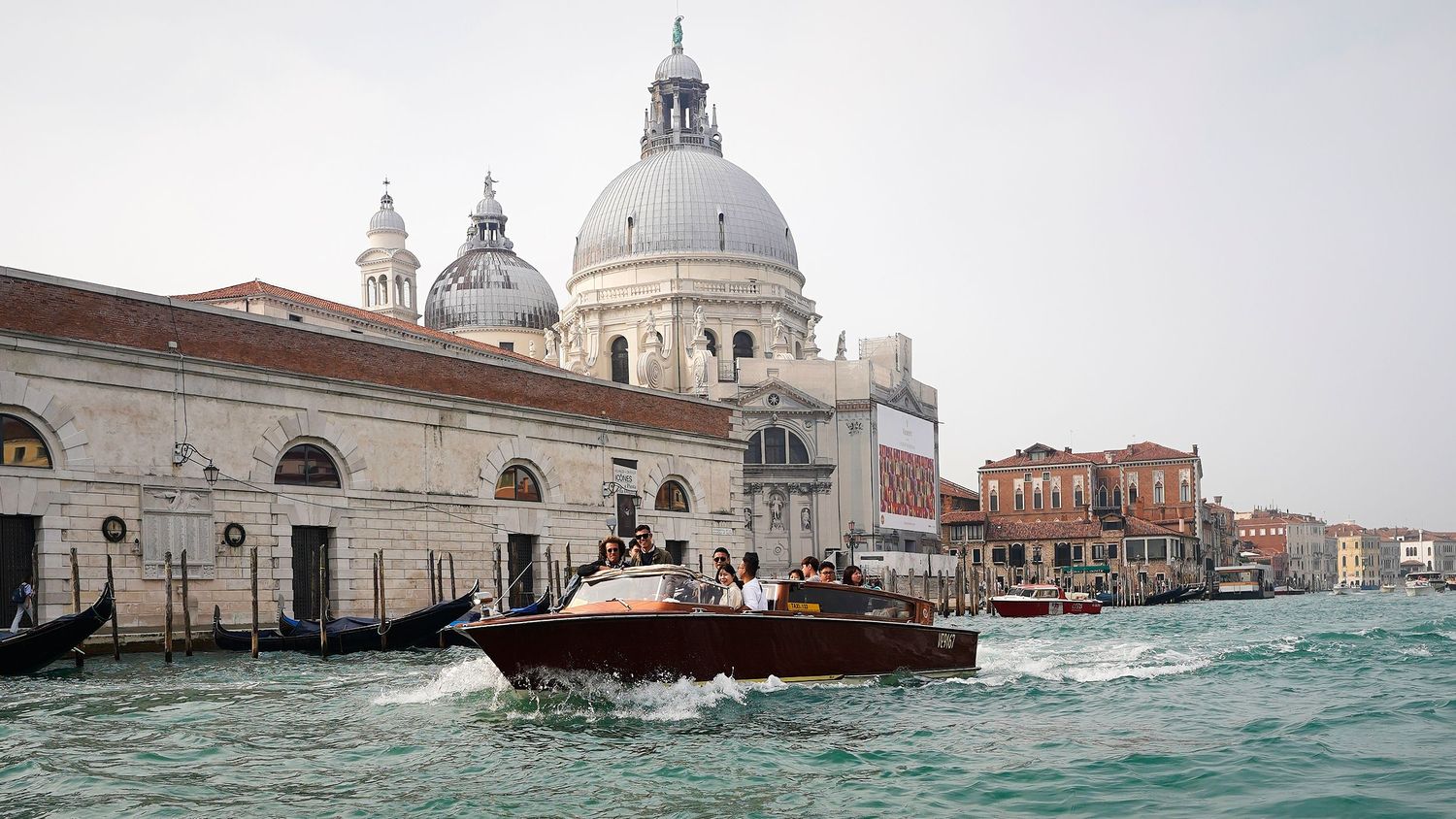
Gondola ride in the Grand Canal with the Santa Maria della Salute in the background, Venice, Italy.
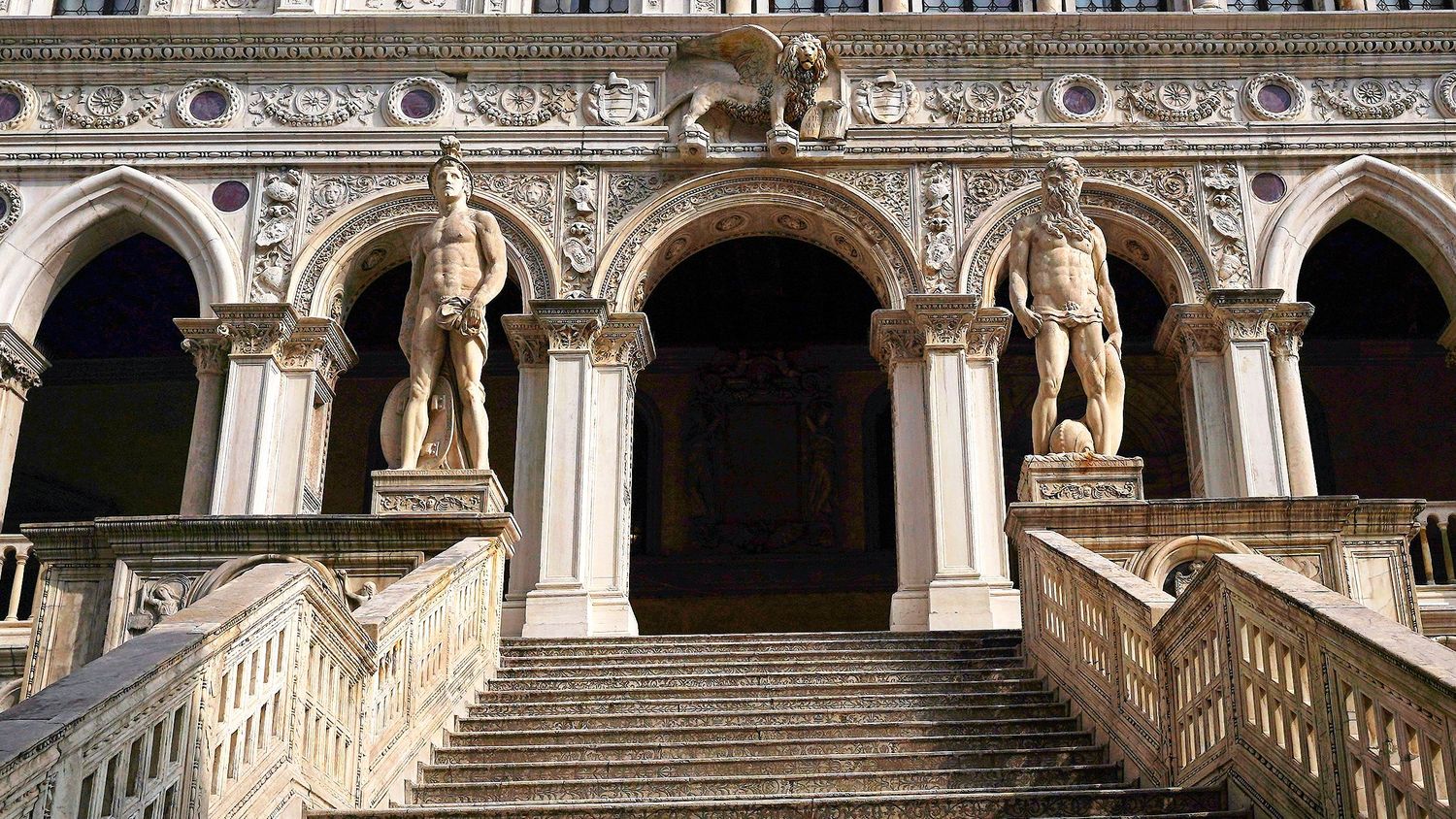
Scala dei Giganti, The Doge's Palace, Venice, Italy.
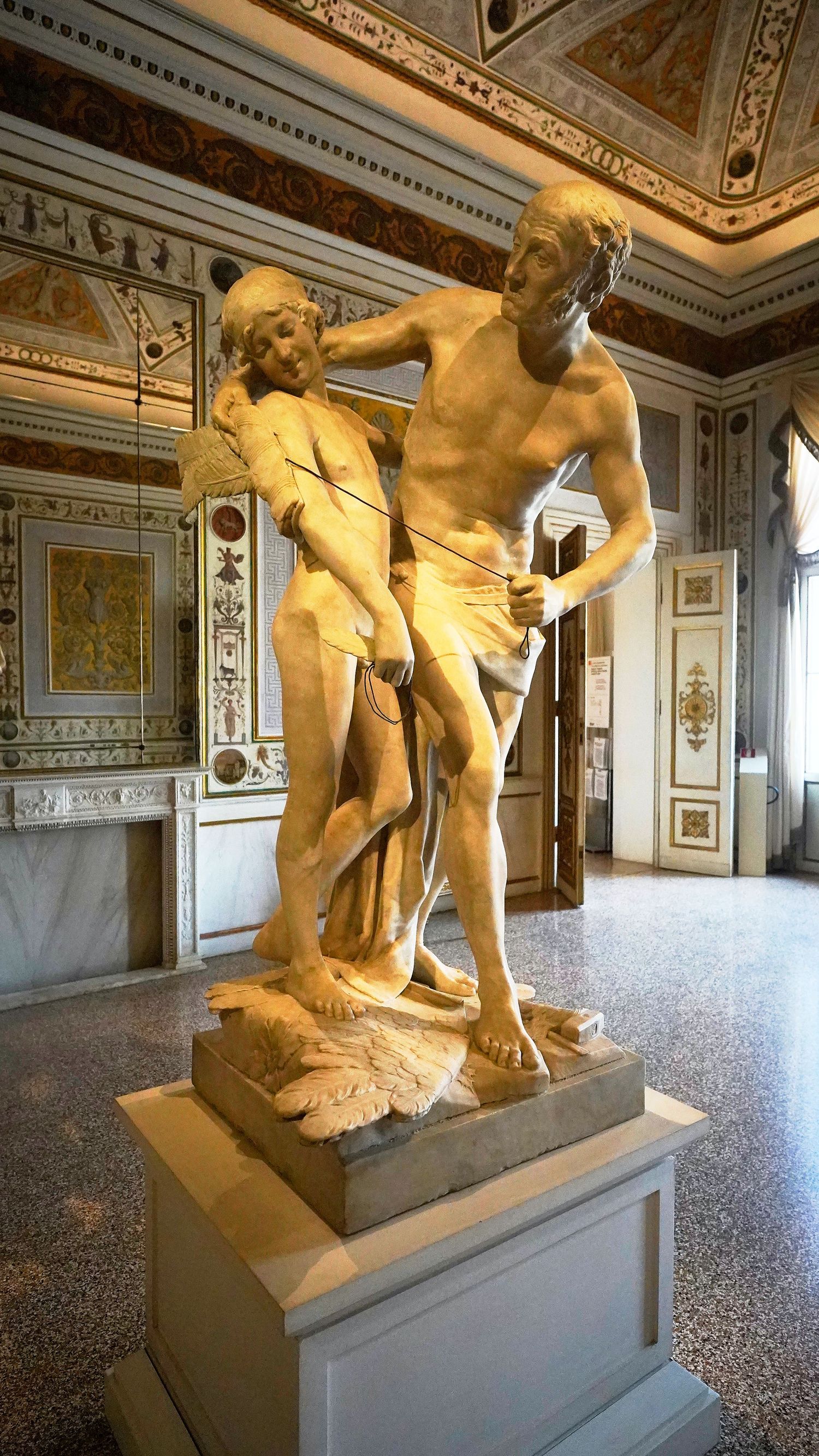
Deadulus & Icarius statue (Canova, 1778-79) in the Museum Corrier, Venice, Italy.
At around 1 p.m. we entered Saint Mark's Basilica, for the second time, looked again at the intricate details of the myriad of mosaics, that featured biblical motifs, gasped at its combination of both Gothic and Byzantine architectural styles, and looked at the Golden Cloth one last time. We then proceeded to the museum on the second floor and saw amazing pieces of artwork such as various mosaics of past Byzantine Emperors and of course, The Triumphal Quadriga (The Horses of St Mark) which are four bronze horses, believed to have been looted from the Hippodrome of Constantinople during the sack and looting of Constantinople in 1204. These bronze statues were astonishing to look at and around the corner from the sculptures laid an enclosed scale model of the cathedral but there was also an excellent vantage point to see the the cathedral from high above. I later went outside onto the balcony and saw the replicas of the bronze horses, above it was the winged lion, the emblem of Venice. As soon as I walked out onto the balcony I saw two spectacular views of St Mark's Square and The Piazza San Marco and its adjacent buildings and statues.
We later got a gondola from the nearby ferry terminal got off at the Salute ferry terminal and headed towards Gallerie dell'Accademia, an art museum. Along the way, we stumbled across the Squero di San Trovaso a 17th-century shipyard, it was amazing to see how the gondolas were built and that historical profession was still ongoing. After undertaking a 15-minute walk, I finally reached my destination. The art gallery contained several rooms of artwork from iconic artists such as Drurer, Tiziano, Bellini, and Giordano. It was really great to see different pieces of pre-19th-century artwork from so many renowned artists.
After leaving the art museum, I went to the nearby Ponte dell'Accademia bridge, which overlooked the southwestern part of the canal, the wooden bridge had fewer tourists but the railing contained an assortment of padlocks. It supposedly symbolizes the eternal love between couples. Anyway, the wooden bridge is named for the Accademia di Bella Arte di Venezia and was created by Euginio Mozzi in 1933 to replace a previous steel bridge constructed in 1854. Afterward, we went back to the Salute ferry terminal to get a gondola back to the ferry terminal but after waiting a while we realized that the gondolas weren't doing any more voyages for that day. This left us with the only option of high-tailing it back to St Mark's Square via the Ponte dell'Accademia bridge. We later collected our rucksacks from Viase and hurried to get a Vaporetto at the nearby marina but had just missed it. The next one wouldn't be until 45 minutes later, so we went to another ferry terminal across the Rialto Bridge and missed that one. Finally got a Vaporetto at another ferry terminal, there weren't a lot of people on the ferry, it was pitched dark outside but I could see various buildings from Venice in the distance as well as ships and boats that passed by that were lit up. I later found out on the Vaporetto that our flight which was supposed to have taken off at 10 pm had been delayed until 11:30 which wasn't so great it left me somewhat annoyed and a bit frustrated because I could've had more time in Venice without the added late-evening rush to get a ferry due to airline incompetence which was exhausting. However, looking back on my time in Venice, I thoroughly enjoyed it and wouldn't have changed any moment within that experience. I later got off at the Alilaguna Ticket Offices Marina located under the airport. After going through customs at the airport, I brought some Cantinucci biscuits which were good but not as good as the ones I brought in Florence, last year. Arrived back in the UK after midnight, got a coach from Stanstead to Stratford, and then a bus home.
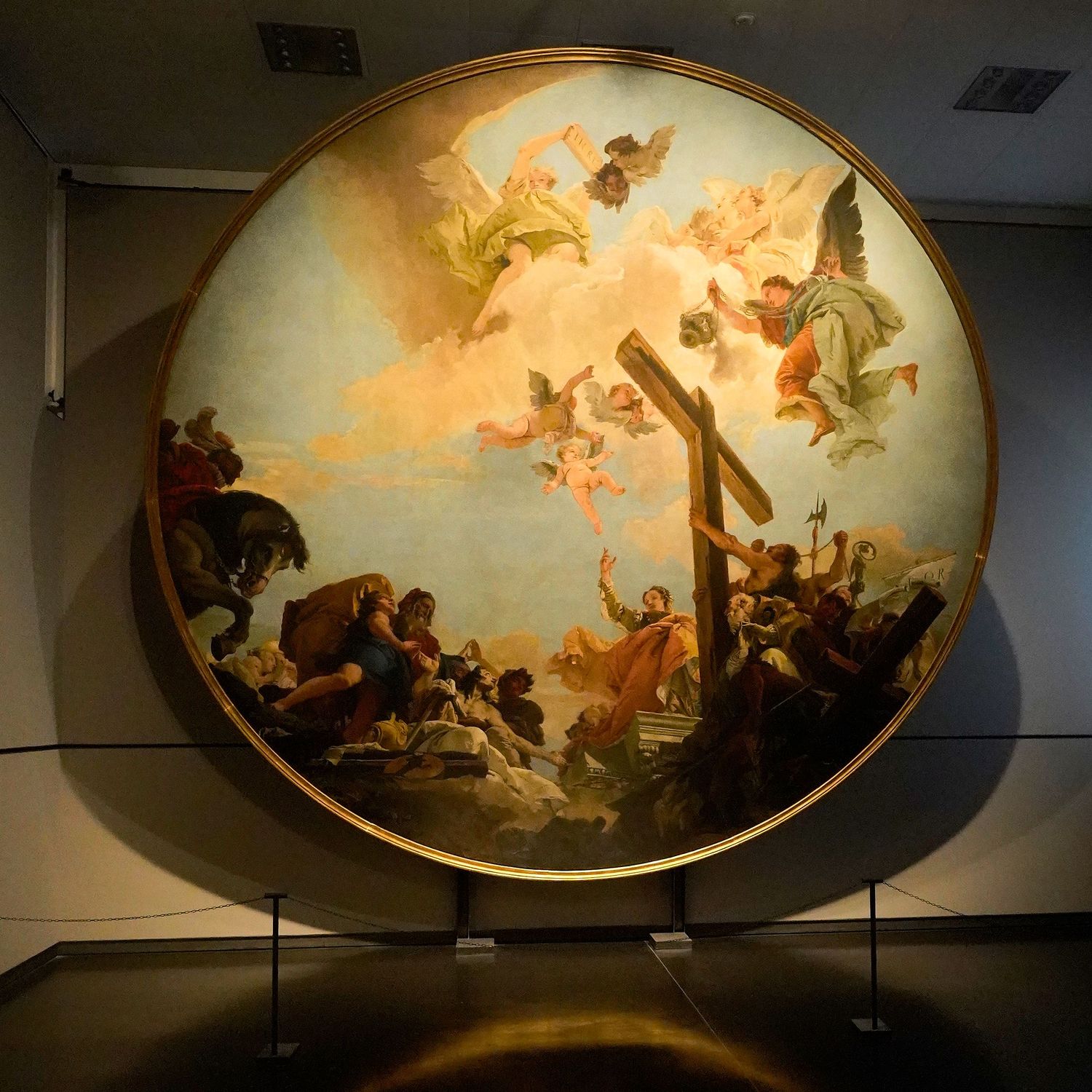
The Discovery of the True Cross (Tiepolo, 1745). Gallerie dell'Accademia, Venice, Italy.
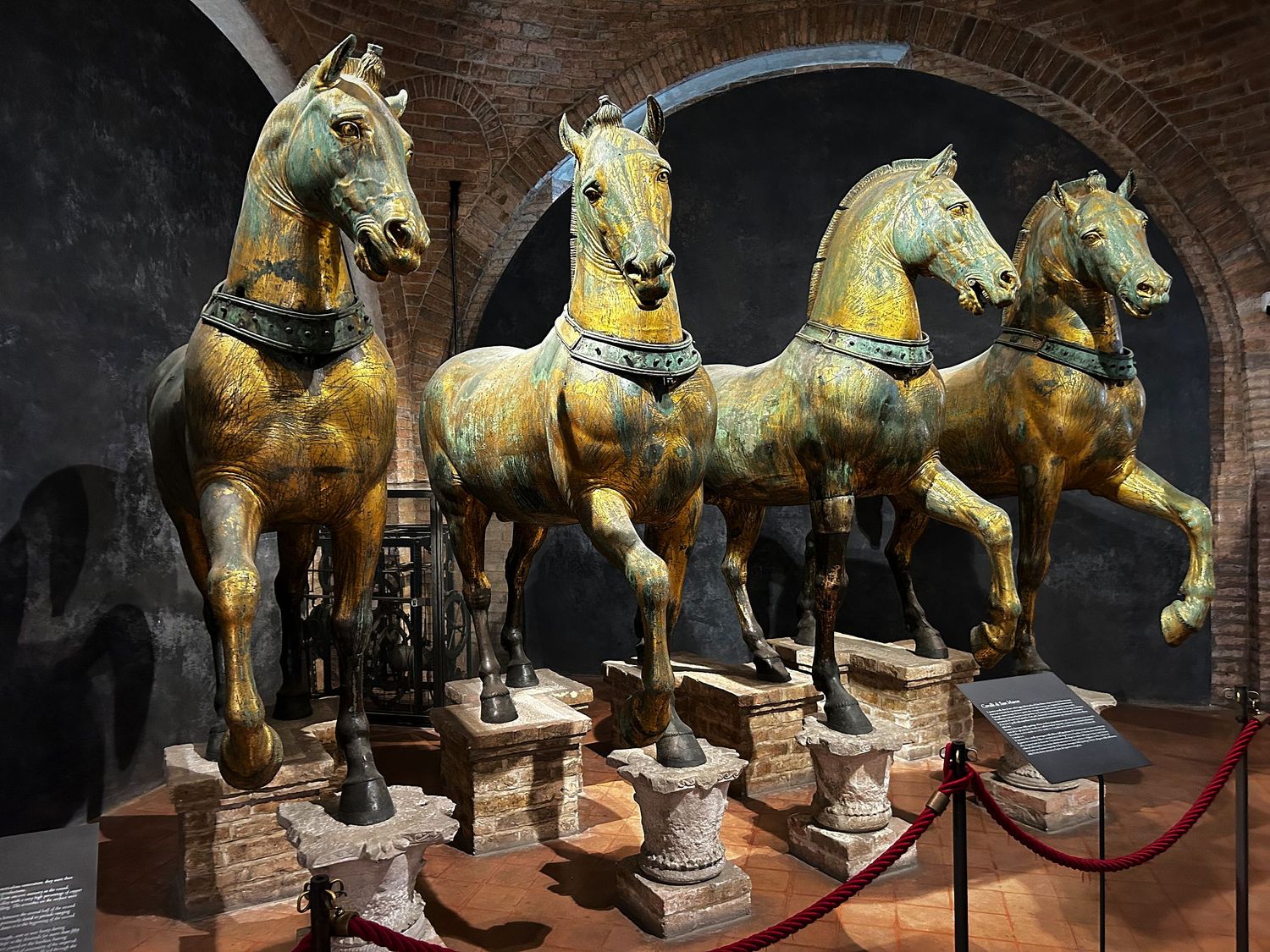
The Triumphal Quadriga (The Horses of St Mark)-St Mark's Museum, Venice, Italy.
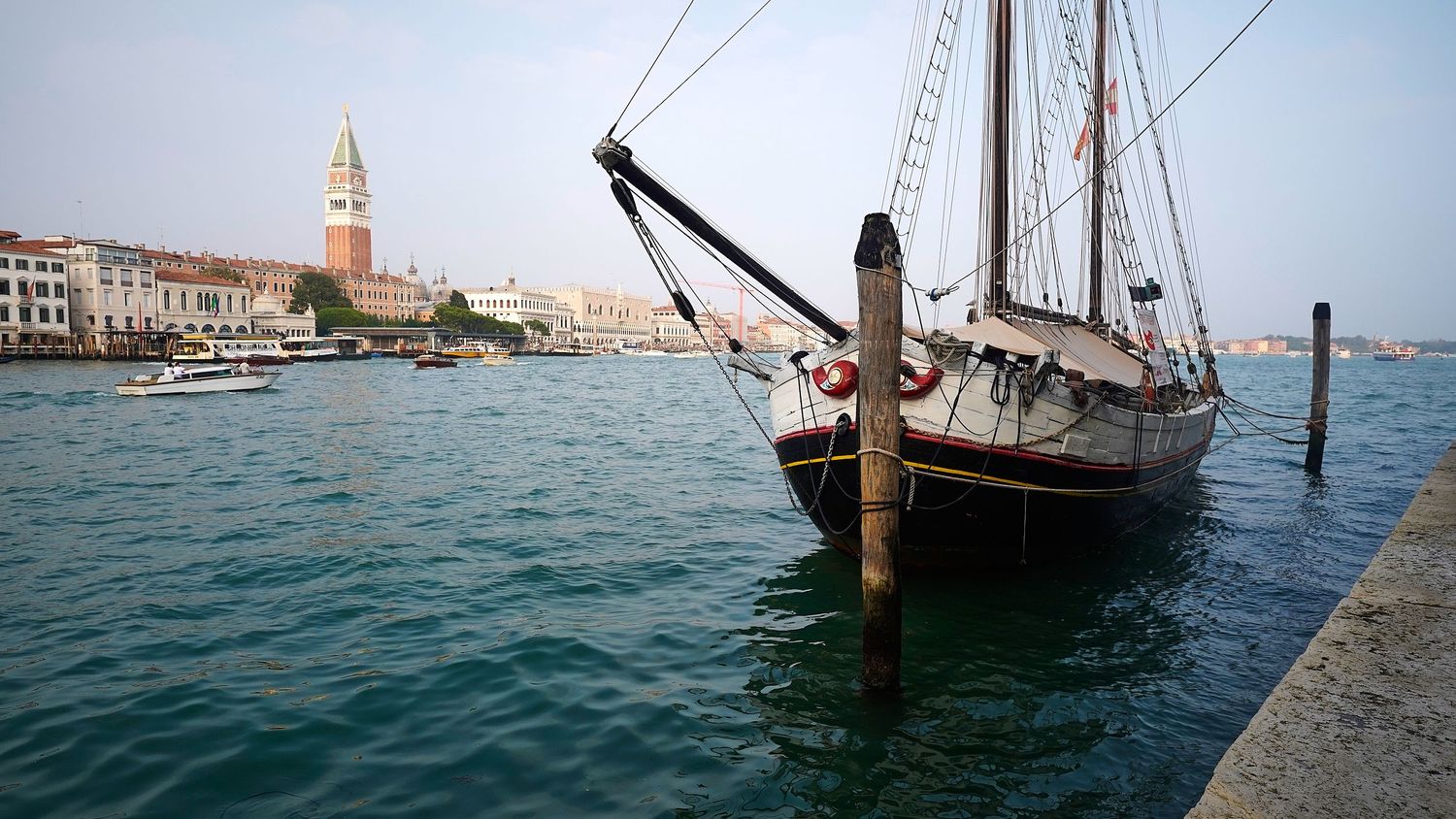
Trabaccolo "Il Nuovo Trionfo", a 1920s cargo ship, Venice, Italy.
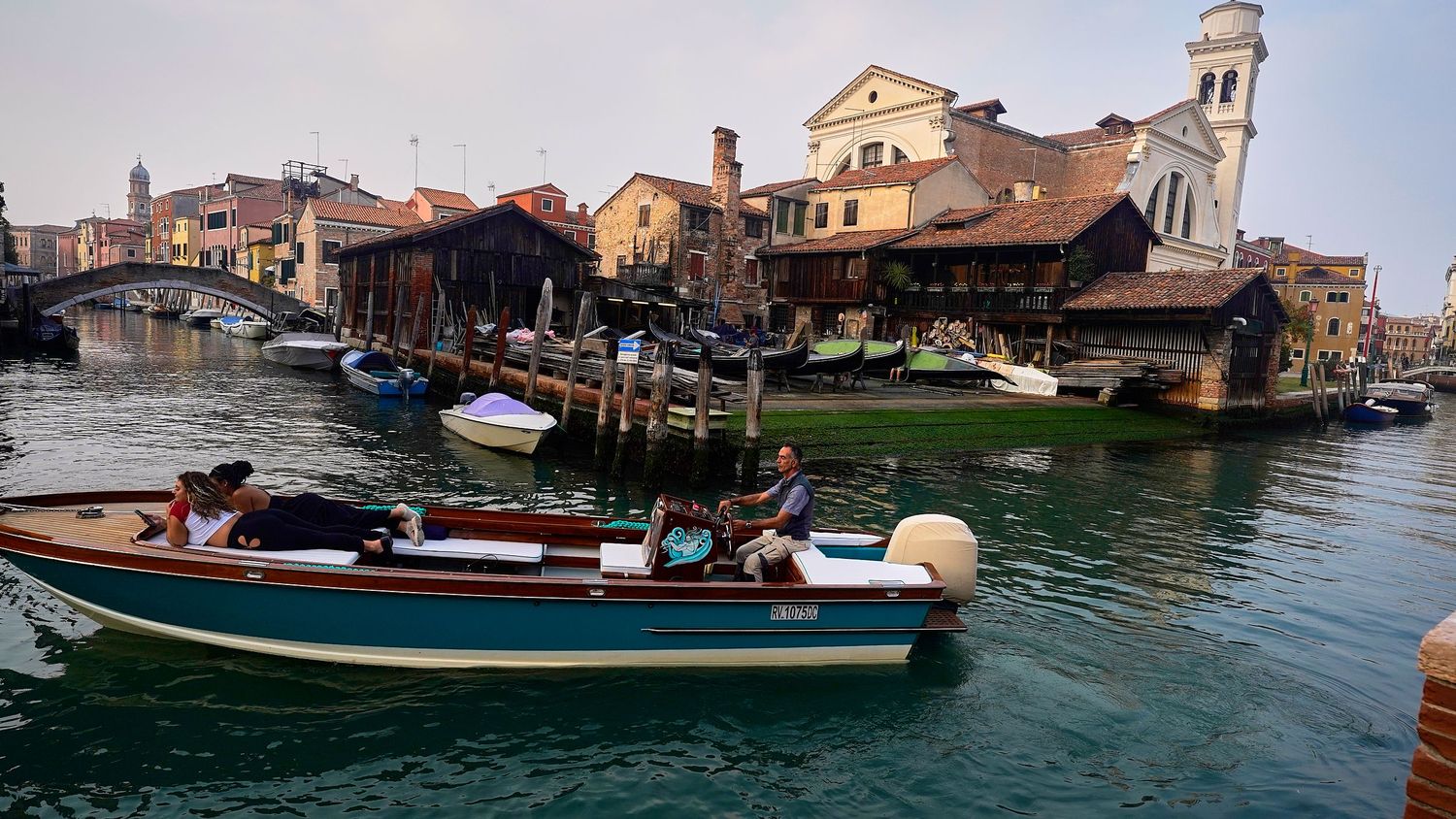
The Squero di San Trovaso shipyard, Venice, Italy.
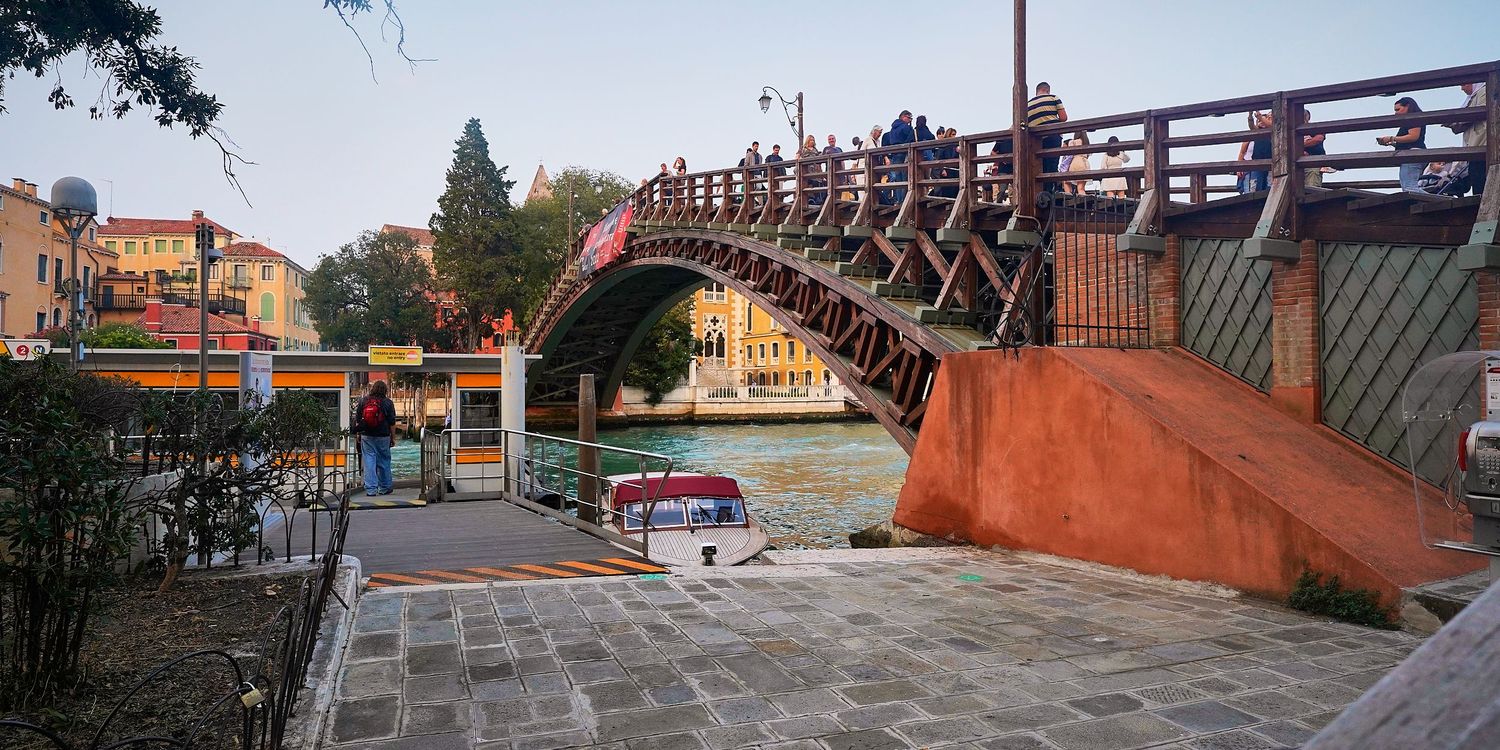
Ponte dell'Accademia bridge, Venice, Italy.
Recommendations/Tips for Venice:
- Prepare a travel itinerary ahead of the visit and purchase tickets for sites online in advance, especially for popular tourist sites such as the St Mark's Basilica, The Campanile, and The Doge's Palace. If not done, your time schedule will be disrupted as you'll end up queueing for one tourist site for a few hours.
- Don't forget to exchange your currency for euros ahead of time, as there aren't many places in Venice to do that.
- If possible take a map of Venice in case you get lost, as in Venice the mobile connection is not always the best and you may get lost as Venice is very much like a maze.
- Some tourist sites like The Santa Maria Della Salute open very early compared to other sites, which is a great way to prepare your travel for the day.
- Some tourist sites like Saint Mark's Basilica don't allow people to enter with luggage. I recommend storing your luggage at a storage facility like Viase which is nearby and reasonably priced.
- You can get a ride in a gondola for 2 euros each to the Salute ferry terminal. Beware of private gondolas or water taxis as they are very expensive to use. Just be aware by not walking through Venice, you may miss seeing different perspectives of Venetian culture.
- Make sure you get the right Vaporetto from the marina under the airport, as many of the Vaporetto stop at different ferry terminals, which may not be located near your hotel or tourist attractions.
- There are numerous water fountains that can be located throughout the city to refill your water bottles via mobile apps.
- Various Italian restaurants in Venice stay open until 11 p.m., which is great if you've been busy and tired traveling to different tourist landmarks & sites but some of them are expensive. If you're looking for a nearby restaurant, I would recommend 1000 Gourmet Venezia, they make delicious pizzas for meat-eaters, vegetarians, or even vegans.
- If you've time to relax, I would sit down at the oldest cafe in Italy, Caffe Florian, it's steeped in Italian culture, with a small orchestra band playing music outside and over the years a range of celebrities have visited it. Plus they also have an indoor store to purchase Venetian biscuits, coffee, chocolates, fruit delicacies to wines.
- If given the chance, don't forget to indulge in some gelato, Venice has a lot of flavors on display throughout the city for tourists to try.
- Outside the Giardini Reali community gardens lie some market stores to buy souvenirs like small sculptures, caps, masks, and artwork but just be aware of tourist traps.
- If also possible, explore Venice at night it is very beautiful lit up, great for night photography but be safe by traveling in a group or with someone.
- If you've some time to kill, I recommend traveling to one of the other Venetian islands of Burano or Murano for the day. Supposedly, they offer a different understanding of Venetian identity.
- Remember to check the time schedules of the Vaporetto's arrival at ferry terminals and their locations within the city, so as to not affect your journey back to the airport.
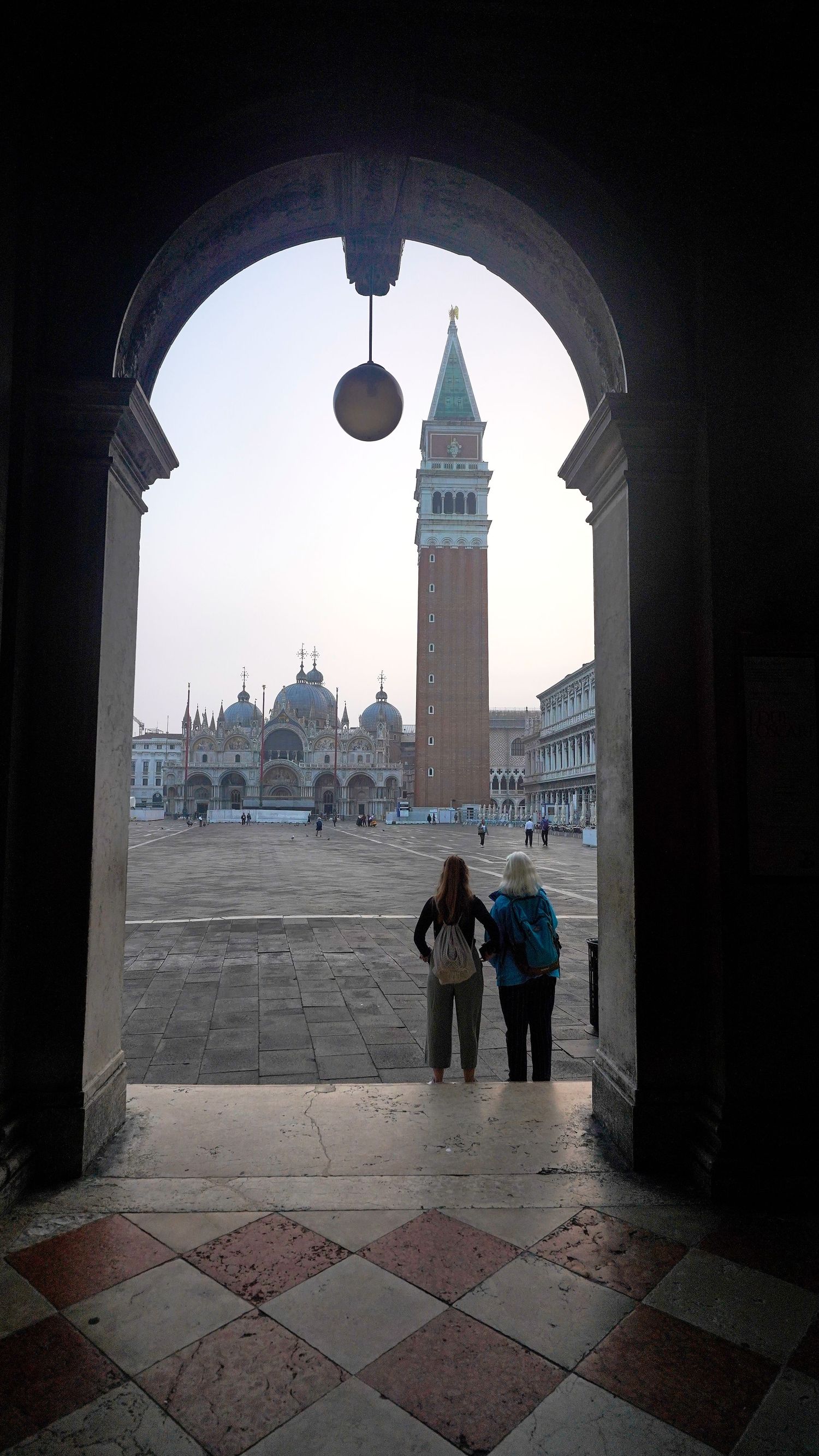
St Mark's Basilica & Campanile photographed via column archway in St Mark's Square. Venice, Italy.
Arrivederci Venezia, Ciao, la nostra prossome destinazione...
See if you can guess the answer to either one of these riddles to unravel my next location.
- I fought in the Trojan War, mentioned in Homer's Iliad, and my descendants founded a city. Who am I and what historical city did they establish?
- I was a prominent general, I came to be emperor after a notable historian predicted my ascension to the throne, I started a new dynasty and I was responsible for building one of this civilization's most famous monuments but died before its completion. Who am I, what monument was I responsible for building and what civilization did I rule over?
There are no words that I can think of that could accurately describe the enchanting beauty, identity, or even my travel experience within the City of Masks. However, I let me leave you with this Italian phrase-“The surface of Venice is constantly metamorphosing [and] painting Venice is almost like being a restorer, peeling off the layers to find the picture after picture underneath.” Arbit Blatas