About:
This travel blog provides an in-depth insight into my travel exploits in mainland Greece over eight days. Before the post starts with my arrival in the classic city, I share 12 interesting facts about Greece. My travels in Hellas starts with my journey and experiences within locations such as the historic monasteries located near the hillside town of Meteora, as well as other locations like Delphi Archaeological site, The Acropolis, Corinth, Mycenae, Cape Sounion to Lycabettus Hill. As well as mentioning the tourist destinations, I had the opportunity to travel to. 'I'll also mention the towns that we stopped along the way on our travels such as Arachova, recommending restaurants or cafes, hotels and food recommendations. I also intend to provide excellent tips that will help my fellow traveller, perhaps for their own experience within the birthplace of democracy. I'll also provide interesting relevant facts about Greece, refer to Greek mythology and state my opinions on various subjects. So put your feet up, make yourself a cool beverage and make yourself comfortable. This travel post will provide you with a descriptive step-by-step visceral experience in Greece, and make you think that you're with me sharing this epic adventure in the heartland of mainland Greece.
12 Interesting Facts About Greece:
Here are some interesting facts about Greece, you should know:
1. Located in the Aegean Sea, Greece gained its independence from the Ottoman Empire in 1832 after the Greek Revolution of 1821 to 1829. However, 4000 years ago, the country was composed of over 1500 territories that acted as sovereign nations, with their rulers and fought each other.
2. The Ancient Greeks were renowned for their military might and power, which contributed to expanding the Greek Empire, by establishing oversea colonies and protecting the homeland. When threatened with invasion by their foes, city-states like Sparta and Athens united to protect their country in wars like the Greco-Persian Wars (499-449 BC).
3. Many Ancient Greeks took immense pride in their military victories and individual stores of heroism, especially in Sparta regarded soldiers or Kings like King Leonidas of Sparta and his troops, who fought against the Persians at the Battle of Thermopylae in 480 BC died as heroes. These events inspired renowned literary works such as Homer's Illiad in 762 BC and the Olympic Games.
4. The modern-day Marathon was inspired by a Greek soldier called Pheidippedies, who ran from Marathon to Athens to notify the citizens of the Persian's defeat in 490 BC at the Battle of Marathon.
5. Named after the patron Goddess Athena, Athens is regarded as the birthplace of modern-day democracy in around 500 BC. The democratic process enabled people political power and representation.
6. Around 360 BC, many wars left many Greek states weak and disorganized, the city-state of Macedonia rose to prominence under the rule of King Philip II, who was intent on expanding the Greek/Macedonian Empire. Assassinated in 336 BC, his twenty-year-old son, Alexander the Great became King and expanded the empire to India until he died in 323 BC. Known as the Hellenistic period, the Greek empire united and its influences spread to vast parts of the world, the empire that started in 323 BC lasted until 31 BC when Roman troops conquered the last territories previously ruled by the Macedonian king.
7. According to Greek mythology, the Twelve Olympian Gods weren't the first gods to rule Mount Olympus. The first was Gaia (The Earth), who birthed various deities like Ouranos (The Sky). Ouranos's twelve children known as the Titan overthrew him and Cronos became ruler of the Gods. Zeus along with the twelve Olympians seized power from Cronos (Father) and Rhea (Mother) during the 10-year conflict called the Titanomachy, thus fulfilling a prophecy. Greek myths have influenced the spiritual beliefs of cultures like the Etruscans and the Romans.
8. The Greeks don't refer to Greece as Greece, they call it either Hellas, Hellada or the Hellenic Republic. This dates back to the Hellenistic Greek period between the death of Alexander the Great in 356-323 BC and The Battle of Corinth in 146 BC. The word derives from the word Hellas, which means Greece.
9. Located on the island of Crete, is The Palace of Knossos otherwise known as the Labyrinth, is full of passageways, religious shrines and a throne room at King Minos's home which dates back to 2000-1350 BC. The structure is also affiliated with being the main hub of Minoan civilisation and the Greek tale of Theseus and the Minotaur.
10. During the Siege of Syracuse (213-212 BC), the Roman army besieged the fortifications of the Hellenistic city in Sicily. Renowned mathematician Archimedes devised weapons like the Claw of Archimedes to protect the city, which frustrated Roman efforts to invade the city. However, the Syracusians' success in protecting the city made them overconfident. The Romans learned of an upcoming Greek festival celebrating the goddess Artemis. Under the cover of darkness, the Romans scaled the walls, entered the city and began looting and sacking the city. A Roman soldier called Marcus Claudius Marcellus ordered that Archimedes be captured and not killed. A Roman soldier interrupted Archimedes as he worked, the mathematician told him to leave, but he refused and not knowing who he was, the soldier killed him. Thus making sure that the Carthaginians couldn't establish a stronghold in Sicily, enabled the Romans to wage wars in Italy and Spain and a decade later proved to be a significant step in future conflicts in Greece & Africa.
11. Greek architecture has influenced many architectural styles across the world from the Renaissance Movement to the Neoclassical style. Ancient Greek features of Classical architecture include the Ionic, Doric & Corinthian Order pillars that feature in global masterpieces around the world like the Hagia Sophia, Gare d'Orsay and the Parthenon.
12. Greek cuisine is well-known globally and considered delicious. Renowned Greek foods include Gyros, Tzatziki, Soluvlaki, the Greek salad and lukumades.
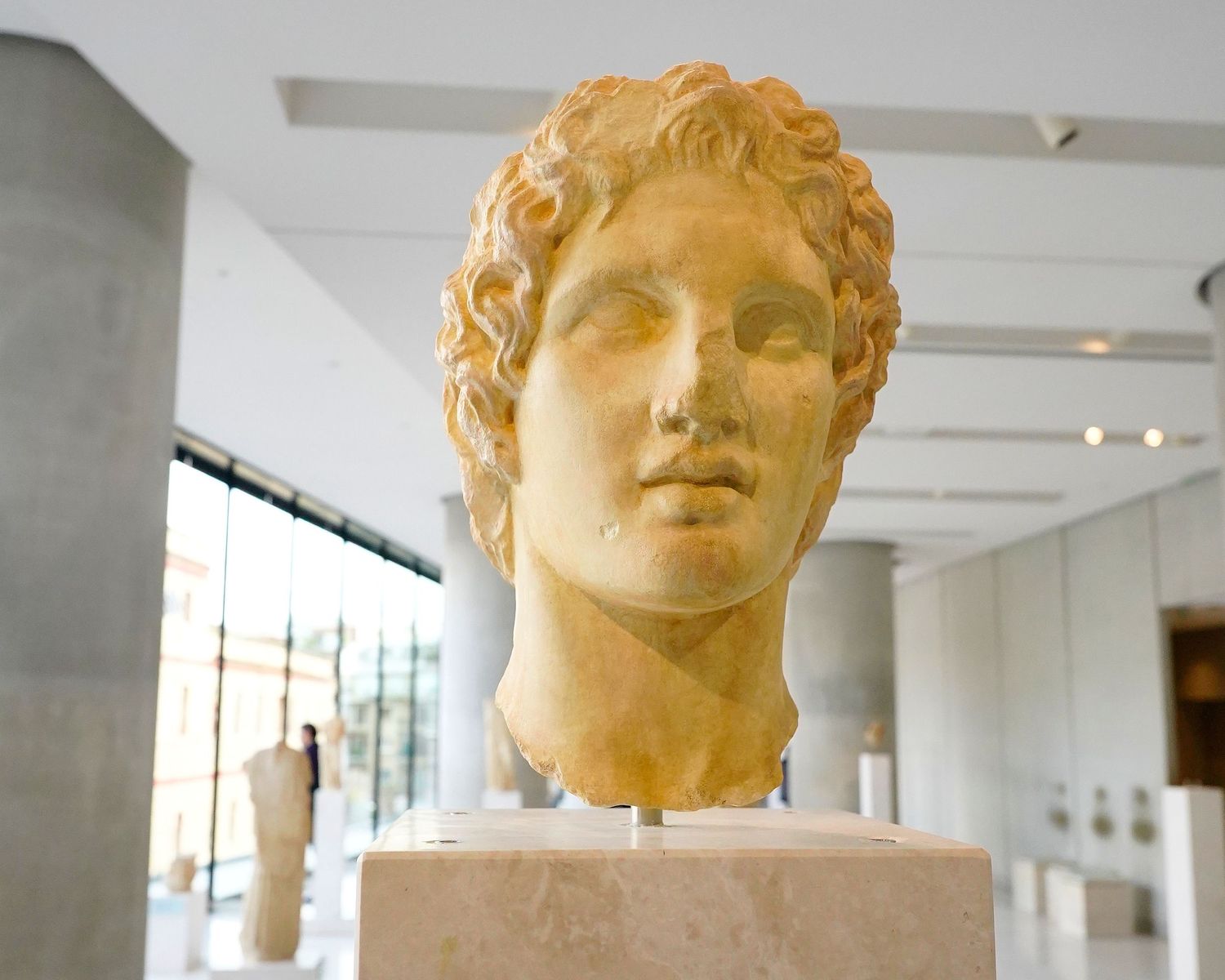
Bust of Alexander the Great at the Acropolis Museum in Athens, Greece.
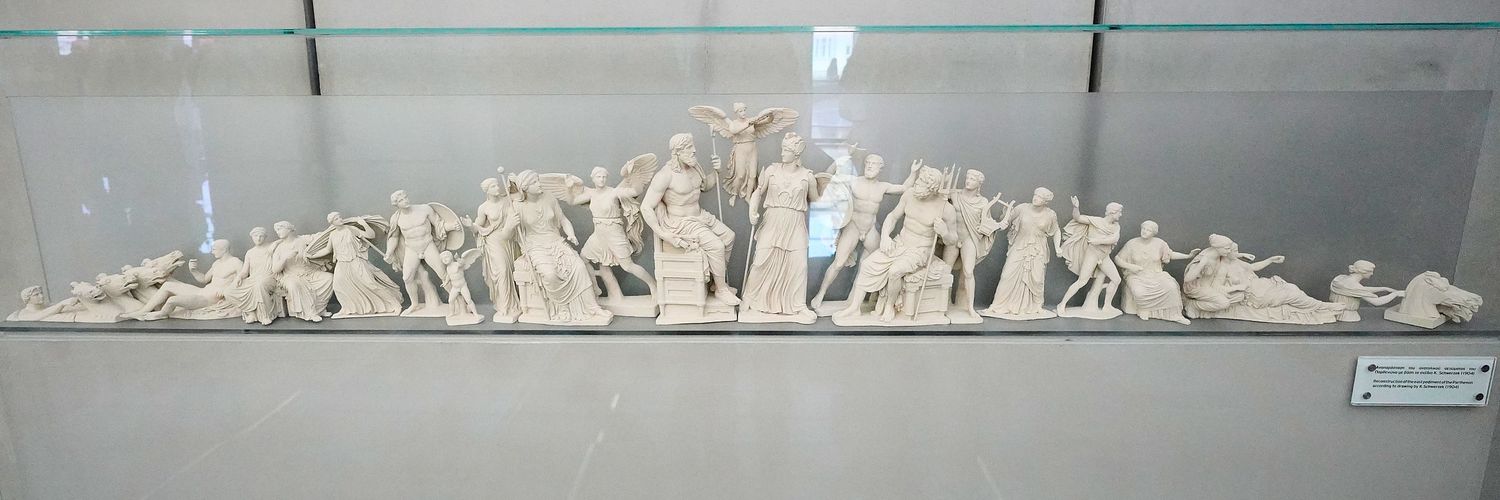
Reconstruction of the East Pediment from the Parthenon in The Acropolis Museum, Athens, Greece.
1st Day-29/02/2024-Arrival in Athens:
Today marks the start of my Greek adventure, something I've eagerly looked forward to for months. Our journey commenced with a bus ride to London Bridge Station, which was followed by a train to London Gatwick Airport. As expected, the airport bustled with activity; some tourists sprawled amidst their luggage, others awaiting pickups, and the security check queues were much shorter and quicker than expected, taking only a few minutes to navigate. Post-security, we then grabbed a bite to eat before heading towards the South Terminal for our 3:15 pm flight to Athens. Arriving in Athens around 9:15 pm, as the night progressed we disembarked and caught a train to Neratziotissa station. From there, we boarded another train straight to Omonoia station, which is conveniently located near the Brown Lighthouse Athens Hotel. After checking in, we took the elevator to our floor. We unlocked the hotel room door and found it to be very spacious and amazing. We ventured onto the balcony, which provided a remarkable view of the water fountain in Omonoia Square. Exhausted, we promptly retired for some much-needed sleep, after preparing our rucksacks for the adventures awaiting us on our Greek itinerary for the following morning.
2nd Day-01/03/2024-Meteora Monasteries & Hermit Caves:
Our first adventure in Greece started with us getting up at 6 am to prepare for the day trip ahead of us. This included getting our breakfast buffet at around 7 am, which was great, as it provided a good range of options, not just catered towards meat-eaters but also vegetarians and vegans, which was great to see. After sitting in the dining hall I quickly ate my breakfast, immediately headed to my room to grab my rucksack and quickly walked towards our meeting point opposite St. Larissis Station. As we cut through a few streets, we realised we would be late, so we hailed a taxi, which dropped us off at the meeting point with a few minutes to spare. We immediately headed to the coach, the tour guide checked our passes and we entered a sparsely filled bus. After waiting around 10 minutes for any late travellers the coach took us on our journey towards the historical monasteries located near Meteora at around 8:10 am. We later reached a town called Meteora to grab some food. As other passengers grabbed some food from a nearby cafe, we instead explored some of the town, which was made up of many tourist shops, a council building and small businesses, we later came upon a small modern church and in the distance, I noticed two monasteries on the distant mountain tops, which overlooked the town. The positioning of the monasteries to me defied logic being at a higher altitude than the town itself. We then walked to the bus, waited for the others to board the coach and headed towards Meteora.
Before entering the ancient monasteries, our tour guide provided us with some history of the buildings, the secluded monk way of life and of course great areas for photos as well as pointed out some hermit caves used by monks since the 10th century. A few nearby cliff faces included human-made structures and paintings, which were very distinctive and beautiful but very hard to make out, as they blended into the scenery. We later entered the monasteries, which were amazingly decorated and designed in an Athonite style that dates back to the 8th century, which were remarkable to see. Dating back to the 16th century, out of the 24 monasteries established, only 6 remain. The monks who live(d) in these monasteries follow(ed) a strict, secluded life, observing orthodox Christian teachings that can be traced back to the. Byzantium Empire, to get closer to God. The monks lived very strict, challenging, non-materialistic and secluded lives, which meant they rarely interacted with the locals but relied on them for water, food and sometimes in dire cases medicine. The monks underwent this religious passage to not stray from God's path and not give into temptation, which resulted in women not being allowed into the monasteries until the 20th century. According to our tour guide, these were iconic places that people travelled to for spiritual reasons. One of the monasteries we travelled, provided us with a long and arduous route through the cliffside, which was exhausting but offered great vantage points of the town below. After exploring the monastery and its gardens and seeing some cats, we entered the nearby museum and of course, entered the gift shop and purchased two handpainted icons from a nun.
Afterwards, our tour guide took us to a few amazing vantage points, one was so high up and rocky, that I initially refused to walk on it to get some photos but after some convincing, I relented and took some photos. I was so grateful I did that as this would be only the opportunity to capture pics of these monasteries from that location. After, photographing the monasteries from afar, I walked and cautiously climbed down the rockface. The group and I were immediately surrounded by a herd of goats and dogs, which we photographed before they followed the farmer down the road. We re-entered the coach and ended up having a quick stop at a truck stop, which had a wide range of Greek food delicacies before we progressed back on our journey back to Athens. The trip to Meteora and its surrounding monasteries was an amazing experience. I would recommend to anyone thinking of going to Greece to undertake the Meteora tour via GetYourGuide, especially if you retain an interest in history and theology and see a different part of Greece. Let me not forget to say the tour guide was very insightful, passionate and knowledgeable about those tourist landmarks, he also provided a great insight into Greek culture and answered any questions, that we had.
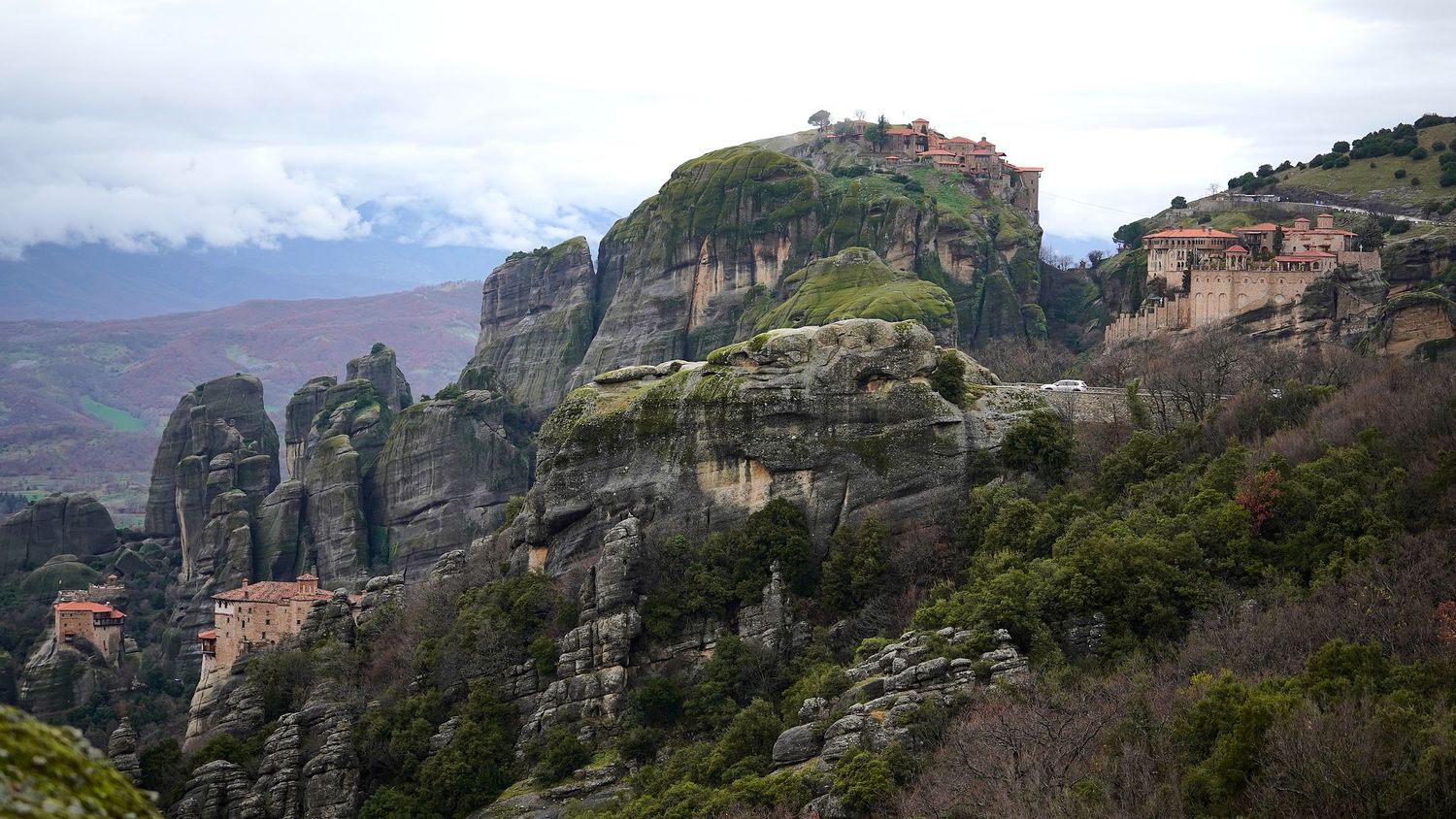
Two ancient monasteries (Bottom Left),Holy Monastery Great Meteoron -Transfiguration of the Saviour (Top Centre) and the Monastery of Varlaam (Top Right) in Meteora, Greece.
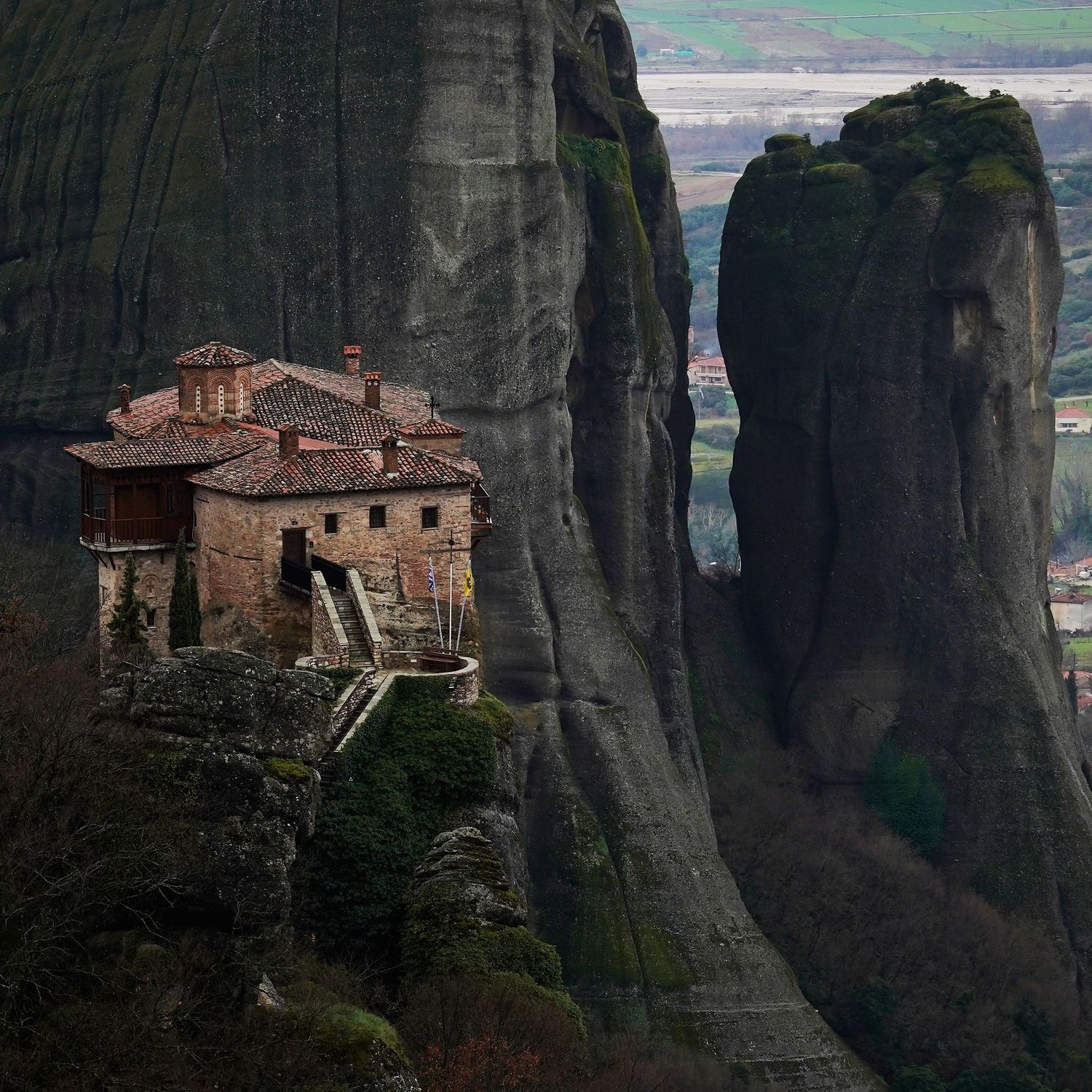
Holy Monastery of Roussanou in Meteora, Greece.
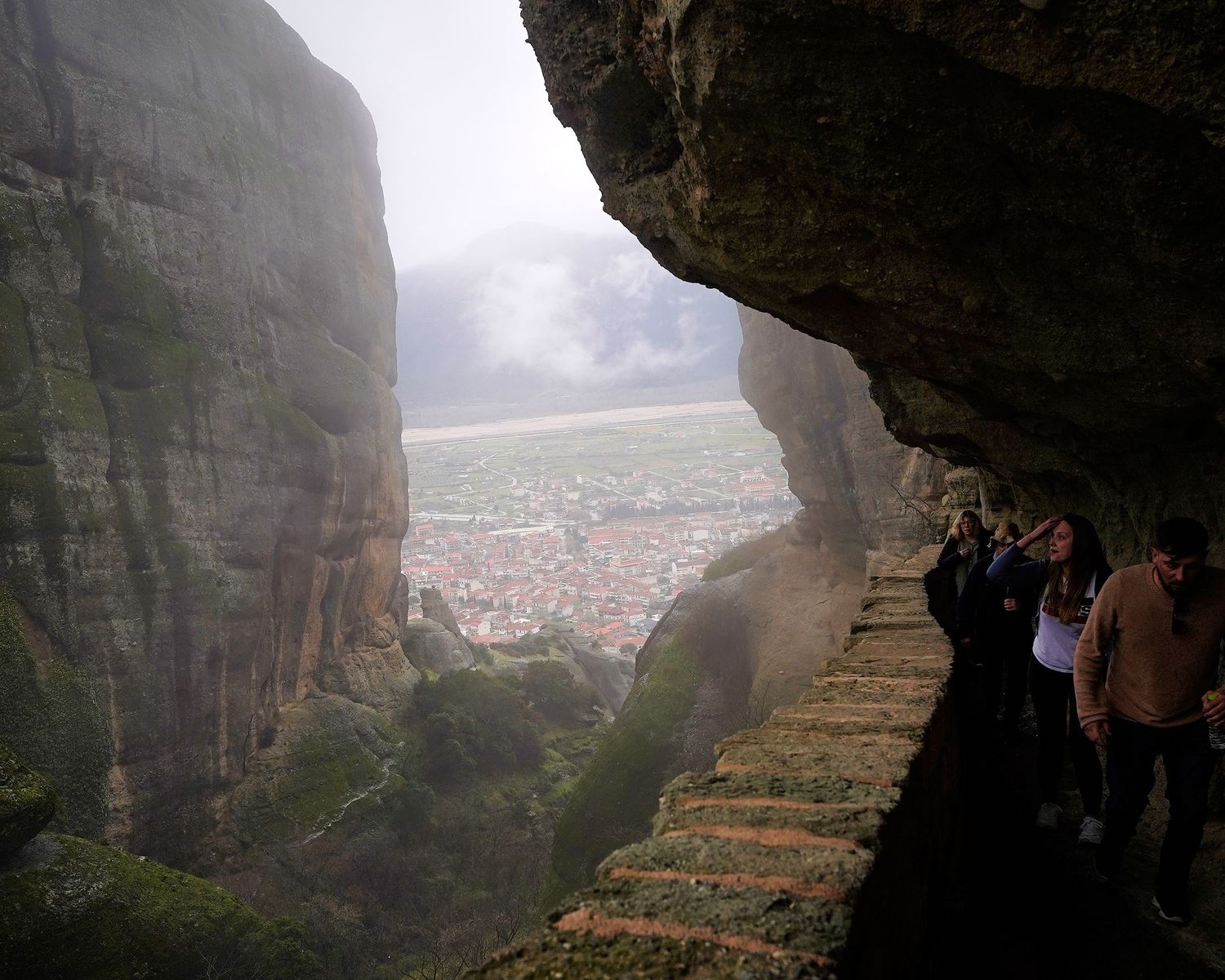
Route upwards towards the Monastery of the Holy Trinity with the Greek town of Kalambaka (Background) in Meteora, Greece.
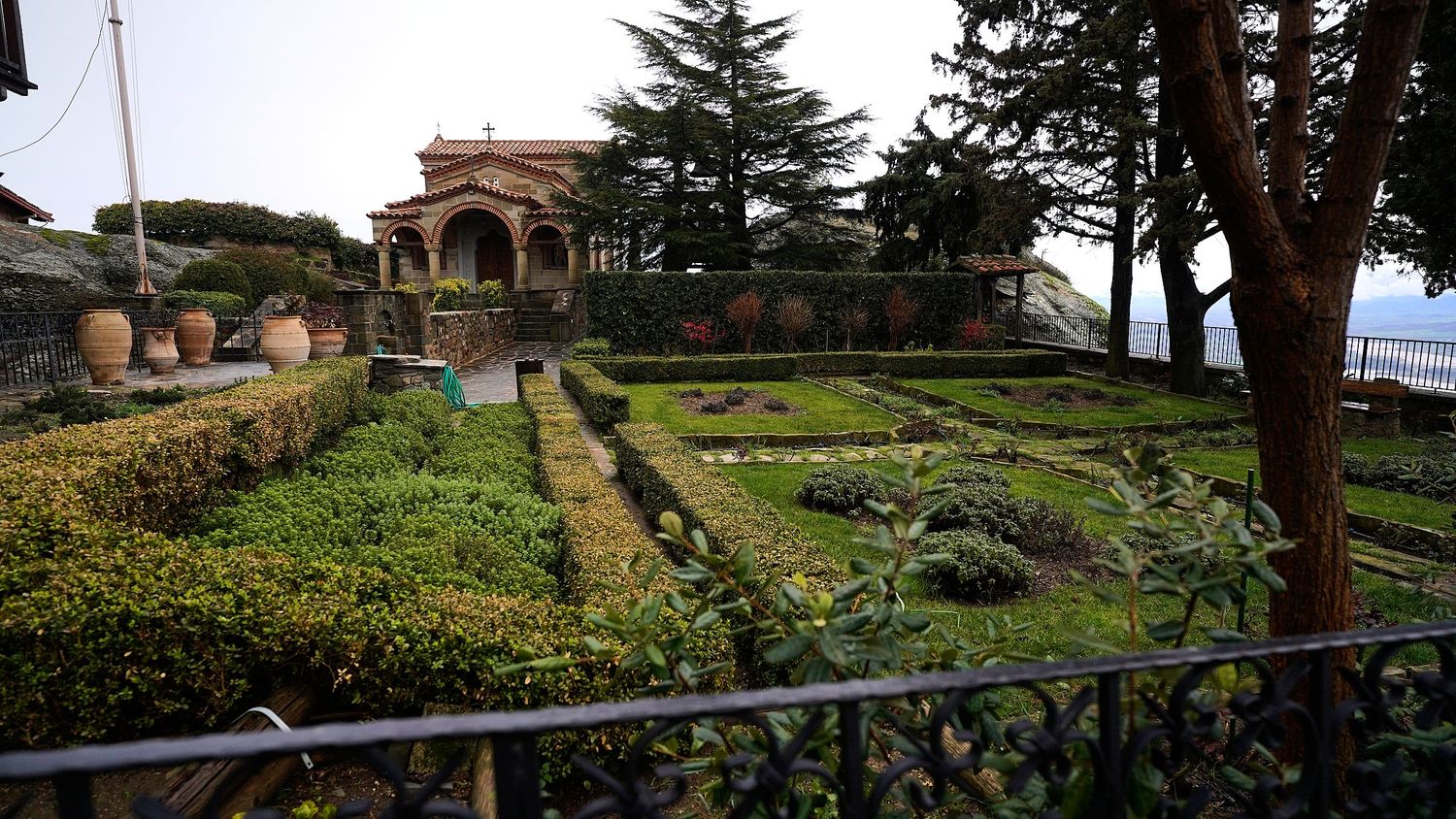
Rose Garden at the Holy Monastery of St. Stephen, Meteora, Greece.
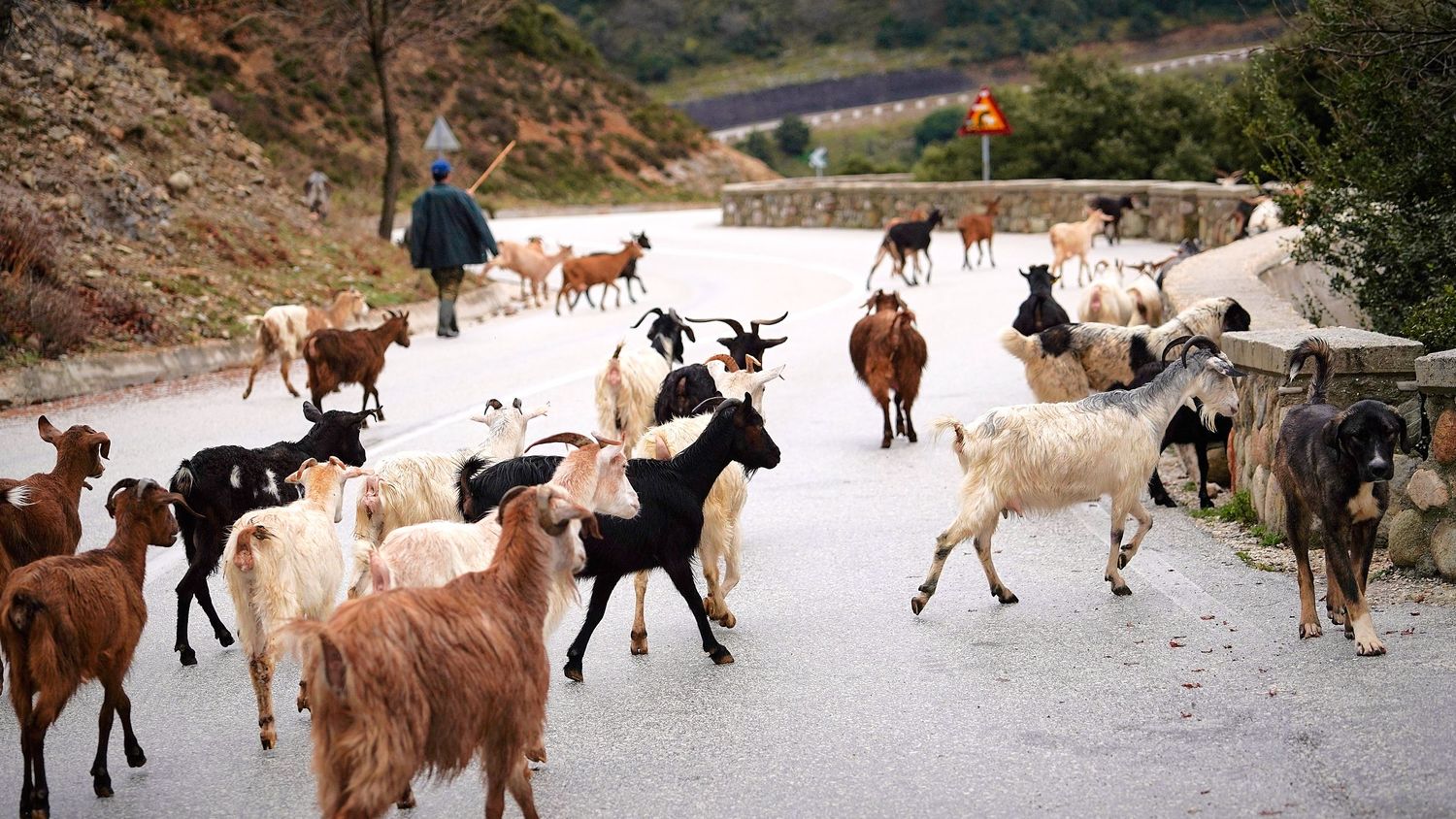
Herd of goats flock down a road in Meteora, Greece.
3rd Day-02/03/2024-Delphi Archaeological Museum, Delphi Archaeological Site & Arachova:
For today's itinerary, we planned to visit the archaeological site of Delphi, the Delphi Archaeological Museum, and the mountain town of Arachova. This meant meeting our guide at the corner of 21 Chatzichristou Street and Makrigianni Street in Athens located 50 yards (45 metres) away from the Acropolis Metro Station. From what I recall of that day, we woke up quite early to prepare for our trip ahead of us, grabbed some breakfast, and immediately exited the hotel, walking through narrow streets and alleyways towards our meeting point. The weather on that particular day was sunny and misty. As we hurried to our meeting point to ensure we didn't miss our coach, we finally arrived, only to find that some people were running late, which delayed our departure from 8 am until 8:30 am. Nonetheless, I appreciated the exercise.
Whilst on the coach, our tour guide provided us with endless historical facts about Delphi, including the mythology surrounding the place, such as peasants to kings consulting the Oracle on various matters, the story of Oedipus, and the presence of mountain lions in Greece, which sadly went extinct after the Romans conquered Greece and transported the animals to Rome for their events/games like the Venatio held at venues such as the Colosseum. For those unfamiliar with the significance of the Oracle in Ancient times, the Oracle of Delphi, otherwise known as the Pythia, was a high priestess located at the Temple of Apollo in Delphi. Overall, the Oracle acted as a medium between humanity and the gods. Although the oracle provided various interpretations, prophecies and cryptic answers, they played a part in determining the outcome of future events such as the Battle of Salamis to an empire declaring war or even determining the best time for a farmer to plant their seeds. During the coach ride, I observed enormous mountains in the distance, ancient relic cars, and people going about their everyday lives as the climate transitioned from clear to misty. According to our tour guide, the ascending fog signified entering a different part of Greece, a new world.
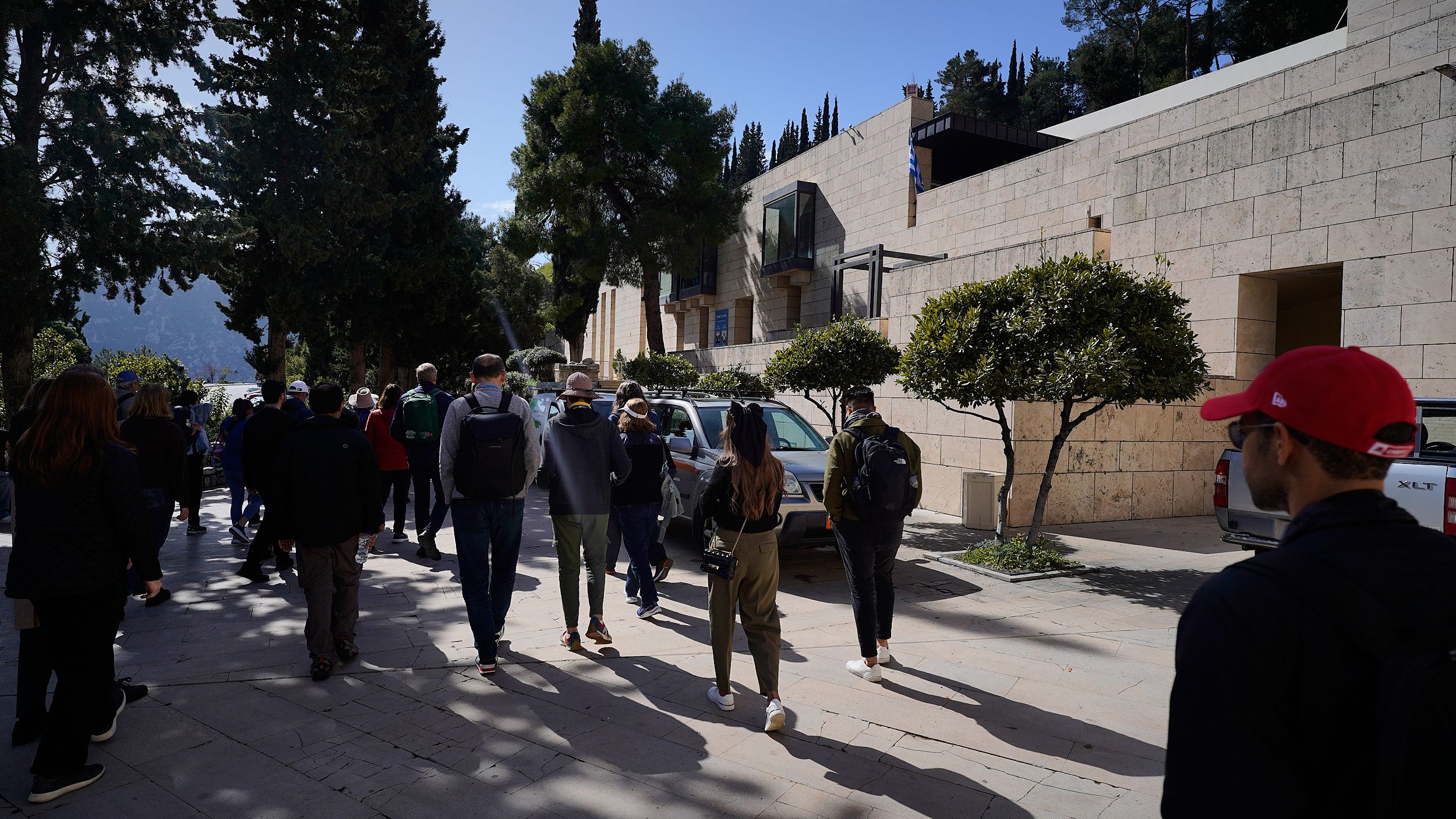
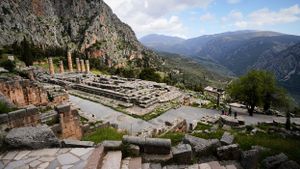
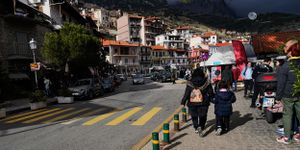
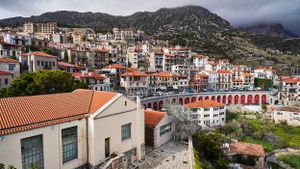
After a few hours, we passed through the bustling mountainside town of Arachova, which included some tourist shops, cafes and restaurants. It exuded both a small-town charm and luxury. I spotted an ancient bell tower atop a church on my left-hand side and the town gives a touristy ski resort feel akin to those seen in travel brochures. The town also resembled something you'd find in the south of France rather than Greece. We traversed the town's narrow streets and arrived at our destination, the Archaeological Museum of Delphi. As I disembarked the coach, the weather had changed to sunny, a welcome sight, with other tourist groups heading towards the museum's entrance. We were surrounded by mountains covered in greenery, and in the distance, one of the archaeological sites of Delphi I noticed other group tours, the site featured ancient Greek columns and ruins scattered around the premises. There was also a staircase leading up the mountainside nearby but that was closed off due to a German traveller injuring himself a few years ago.
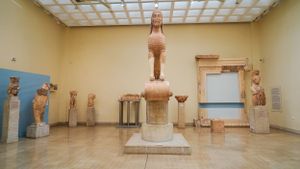
After waiting for some of our fellow passengers to refill their water bottles from a nearby water fountain and use the toilets, we entered the museum. Our tour guide provided an informal audio talk about the items on display. The first item we examined was a map reconstructing the ancient city of Delphi, featuring a temple dedicated to Apollo, based on the writings of the first-ever recorded travel blogger/writer in history, Pausanias. During the Battle of Platea in 479 BC, he commanded a Greek allied force that defeated the Persians and he was instrumental in capturing Byzantium in 478 BC. He is also credited with providing detailed descriptions and observations of Ancient Greece, which is crucial for understanding classical literature and modern-day archaeologists. Anyway, the map offered insight into life within 2nd Century Ancient Greece and the layout of buildings within the ancient city. The museum housed many prominent artefacts from various cultures and periods within Ancient Greek history, such as helmets, pottery, weapons, busts, and statues. Among them, the Charioteer of Delphi (At the bottom of the page), particularly captured my attention. The intricate detail of the charioteer in motion, wearing his clothing and holding the reins, along with his lifelike facial expression, was striking. His piercing gaze seemed to follow me wherever I walked in the room, reminiscent of when I saw the Mona Lisa (DaVinci, 1503) last year at the Louvre. The overall design and features of the statue were so lifelike that it felt as though it would spring into life at any moment and speak. The Charioteer of Delphi origins can be traced back to around 474 BC during the early Classical period, the bronze statue is dedicated to the Greek God Apollo and commemorates the victory of tyrant Polyzalos, King of Gela in Sicily after a race during the Pythian Games.
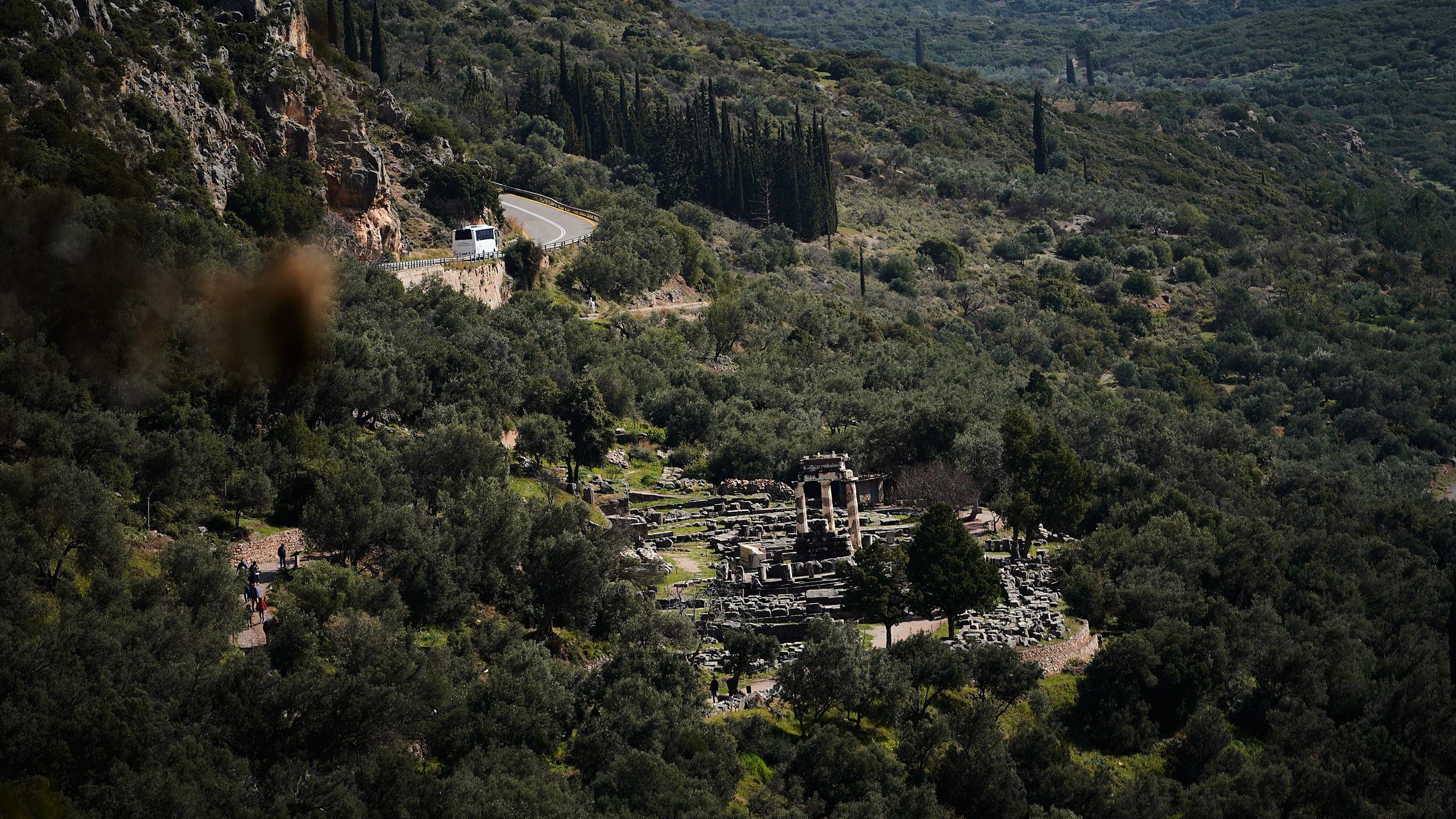
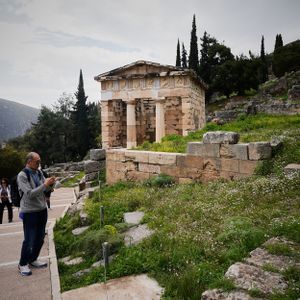
After one last walk around the museum, I reunited with the tourist group and proceeded to the archaeological site of Delphi. Many foundations of roads, walls, and old ruins remained, including the reconstructed Athenian treasury. However, the iconic Temple of Apollo, once the spiritual centre of the ancient Greek town, now stood as a mere shadow of its former self, with only the walkway, parts of buildings and a few Ancient Greek columns remaining. Situated on a higher part of the ancient city, I can only imagine what it looked like centuries ago with its Doric architectural style and Parian marble before it was destroyed in 39O C.E. on the orders of King Theodosius I. Another notable structure in a different part of the city was the Ancient Theatre of Delphi, dating back to the 4th Century BC. The location offered excellent views of the mountainside and another part of Delphi—the Athena Pronaia Sanctuary. Unfortunately, we missed the opportunity to visit the Ancient Gymnasium and the Mountain-top stadium at Delphi, a disappointment as I had been looking forward to seeing those sites but those sites at the time were closed to the public. However, as you know, life doesn't always go according to plan so you just have to make the best of the given situation.
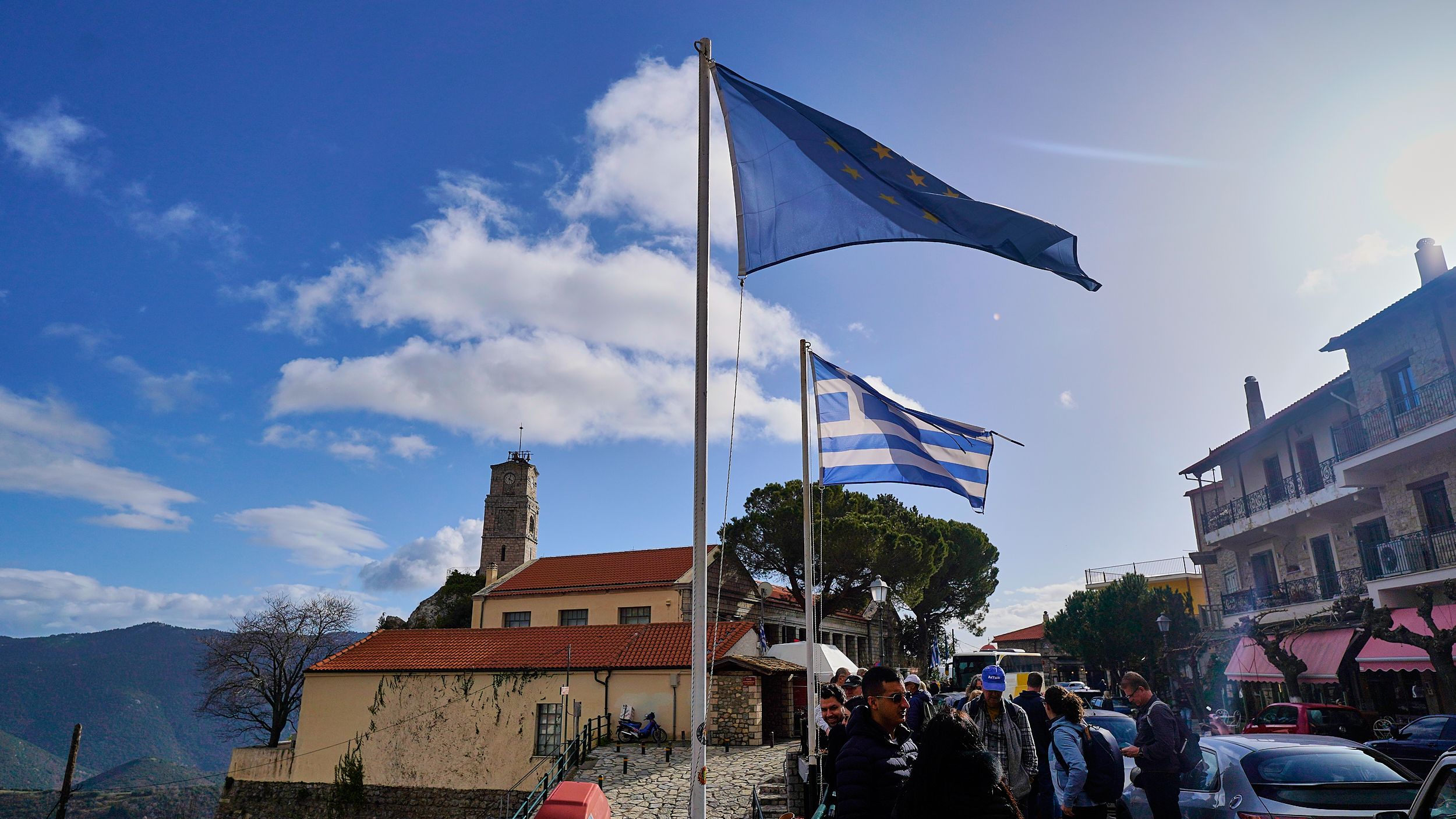
After exploring the ruins of Ancient Delphi, we were dropped off at the mountainside town of Arachova. Some people decided to go shopping or grab something to eat from nearby restaurants or cafes, we decided to explore the city. We first entered a few antique shops, where some locals tried to sell us items, but we politely declined and continued to explore the town. After walking for a few minutes, we walked up some stairs, which led up to a church, where two decommissioned guns from either World War II or the Greek Civil War were positioned outside, overlooking the town behind a small wall and near a bell tower. The hilltop provided a good view of the mountainside, although the view of the town was obscured by many of its buildings. We spent 20 to 30 minutes relaxing and refuelling. Behind us were some mountains almost completely covered in mist. As we explored Aarachova, we visited two nearby churches and rushed to the top of a bell tower before hurrying back down to join our tour group and return to our coach. After reboarding the coach, we passed by Olympiacos FC's Stadium with its red arches stood out and Piraeus Port. We arrived back in Athens at 7:45 pm, the city was busy with traffic, vibrant with people and street lights dimly lit the city. After disembarking from the coach, we travelled back to our hotel and entered our room. We prepared our gear for the following day, ate some food and promptly went to sleep exhausted from the day.
4th Day-03/03/2024-Athens:
Our first day exploring Athens started with leaving the hotel early to do some street photography in the early hours of the morning as we proceeded to the Acropolis as it would be free that day. On our way to the Acropolis, I noticed people opening their businesses, an old church and Moniastiraki Square, usually a busy place was fairly empty. Along the way, we entered the tourist site of Hadrian's Library. As I entered the tourist site, I noticed a few tall Greek columns and we proceeded around the site, looking at various areas which were very interesting to look at and of course, I noticed a few cats. I later entered the Roman Agora, ventured through the Museum of Ancient Agora, strode through the park, looking at various ruins and lastly saw the Temple of Hephaestus, which is the best intact temple in Athens. With the ruins around the site, it was like walking St James Park in London and coming across ancient ruins. Created in the 5th century, The Temple of Hephaestus is dedicated to the Greek God of blacksmiths and fire, Hephaestus. The temple is designed in a Doric style, above the columns are the frieze and architraves, the frieze consists of triglyphs, the eastern side consists of the 12 labours of Heracles and on each end of the landmark is the triangular pediments. According to Pausanias, the temple also contained statues of Athena and Hephaestus and it is believed that the remains of the heroic king Theseus were buried there. In the Roman Agora, I also saw a turtle which was very unexpected. We then walked to the Acropolis, as you can imagine, there was a big queue due to the tickets on that particular day being free. We eventually got into the Acropolis, walking through the column entrance of the Acropolis, I felt like I had been transported back in time and I wondered how Roman Emperors must have felt when they saw the Parthenon and the Erechton for the first time. Like many centuries ago, the sites just left me truly amazed and speechless. Designed in a Doric and classic architectural style, the Parthenon was commenced by Pericles in the 5 century BC. The building used to feature the Elgin Marbles but also includes iconic moments from Greek mythology such as the Amazon Warriors fighting the Ancient Greeks in the Amazonmachy to the mythical battle between the centaurs and the metopes in the Centaurmachy during the Trojan War. The temple also functioned as a treasury and a place of worship for the Greek goddess Athena. The Erechtheion is located on the north side of the Acropolis and was designed in a Classical architectural style by Mneskiles in the 5th century. The temple was dedicated to the Greek deity Athena and became synonymous with many myths, the cult of Poseidon and the Greek king Erechtheus. The iconic women's columns called the Laryatides were also by inspired by the women of Kayres in Lakonia. Both tourist sites were amazing to see, even though the buildings were surrounded by people and behind the Parthenon lies the ruins of the Temple of Augustus. The ground was fairly rocky and uneven, which made it very challenging to traverse at first. I then headed to the viewpoint, where a Greek flag was situated. The viewpoint provided excellent views of downtown Athens and tourist sites such as Hadrian's Arch, the Temple of Olympian Zeus, the Benaki Museum and Lycettbus Hill.
After spending a considerable amount of time in the Acropolis we headed to Monastiraki Square and walked through the market district, which was full of mainly antique shops. We then headed to Vegan Beats to get some food, which we ate at our hotel and had some much-needed rest. We then headed back out to see the Theatre of Dionysius and The Acropolis Museum. However, all the free tickets for the Theatre of Dionysius were sold out and the tickets for the museum on this day weren't free, so we scheduled both tourist sites for another day. We next hiked to Syntagma Square where we saw the changing of the guard which was surrounded by a large group of people. After watching that, we grabbed some red, yellow, green and white gyros from Cookomella Grill. We later ate the food back at the hotel, the food was scrumptious and we then hit the hay.
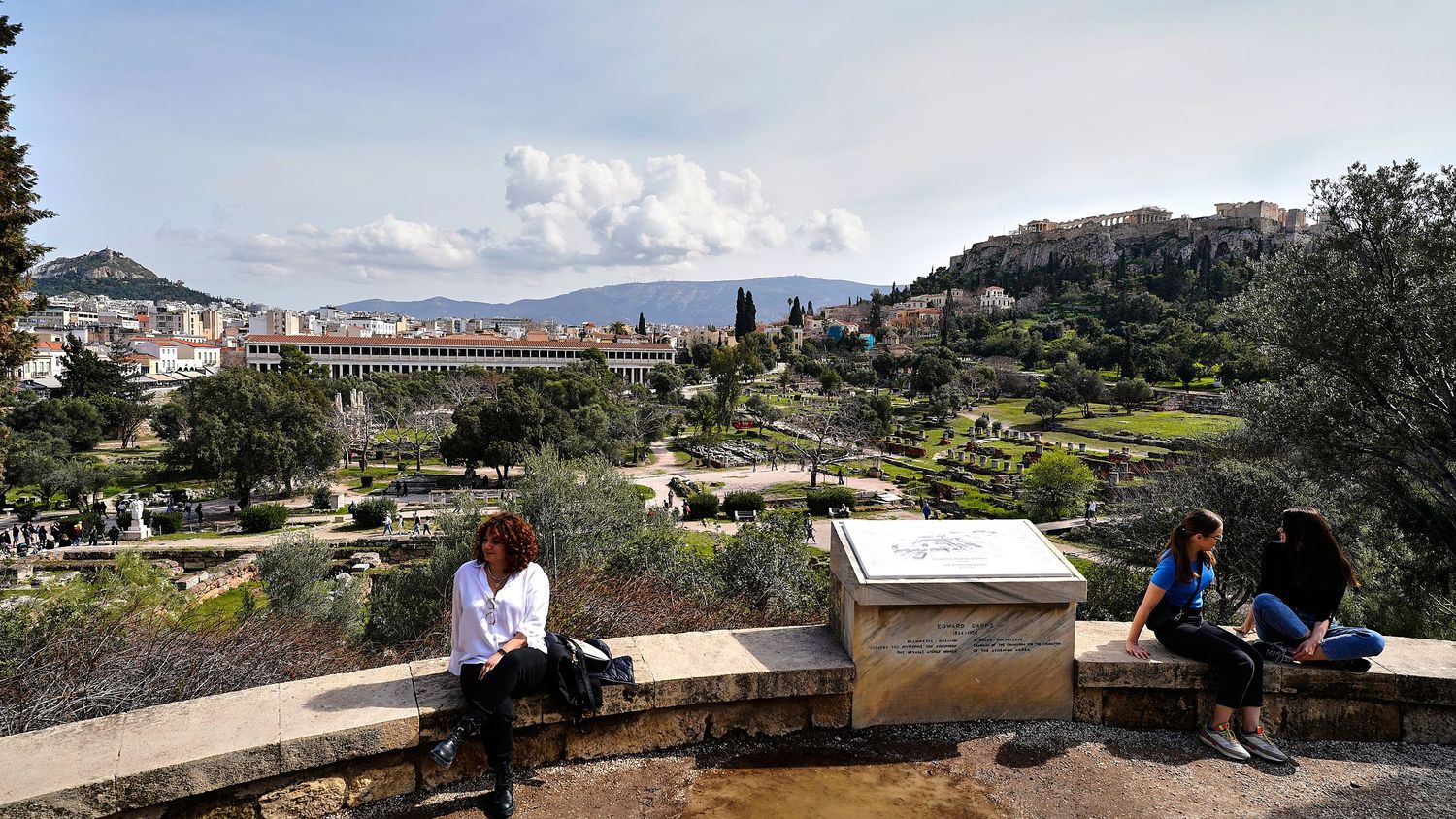
Lycettbus Hill (Top Left), Roman Agora Museum (Bottom Left), Roman Agora (Centre) & The Acropolis (Top Right).
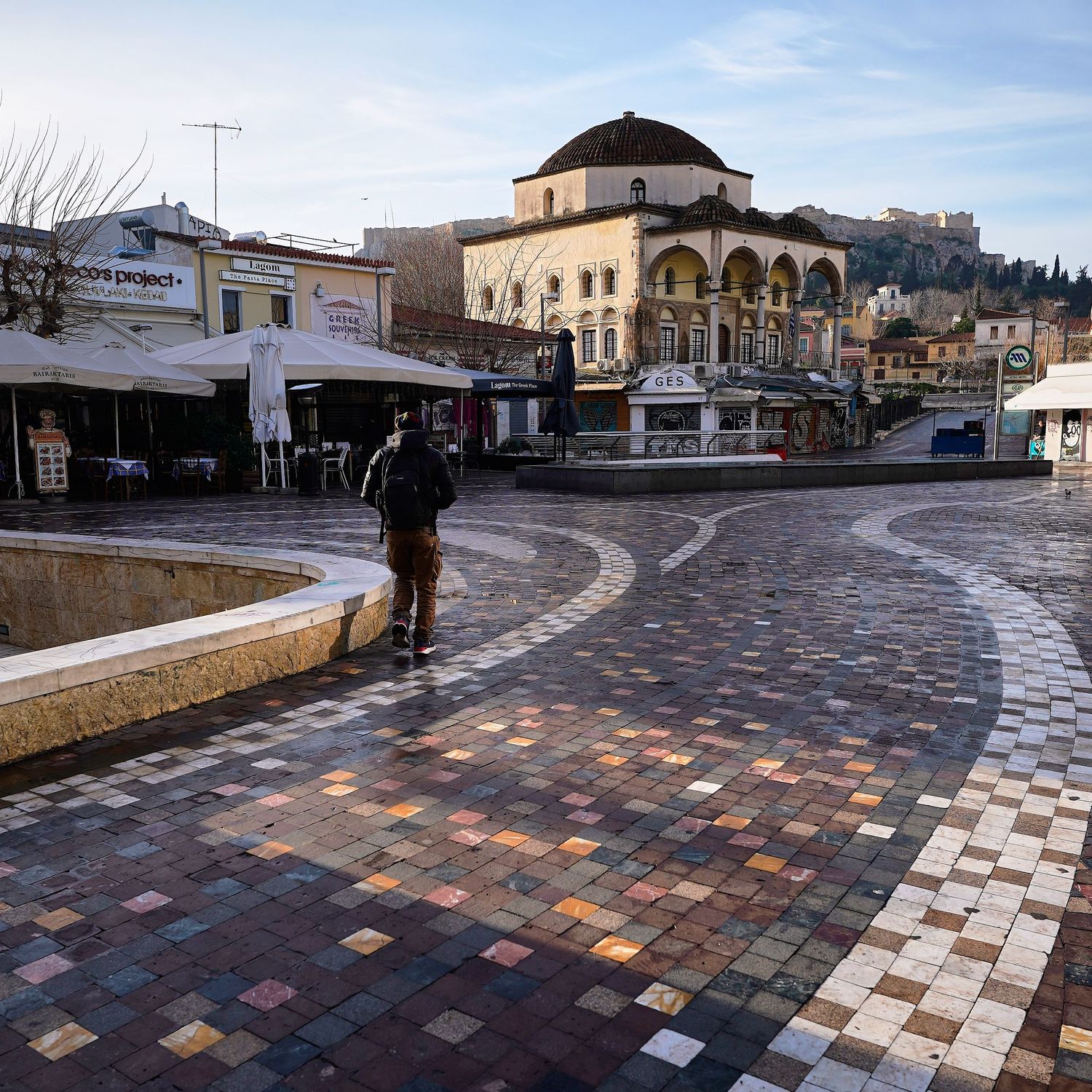
Monastiraki Square in Althens, Greece,
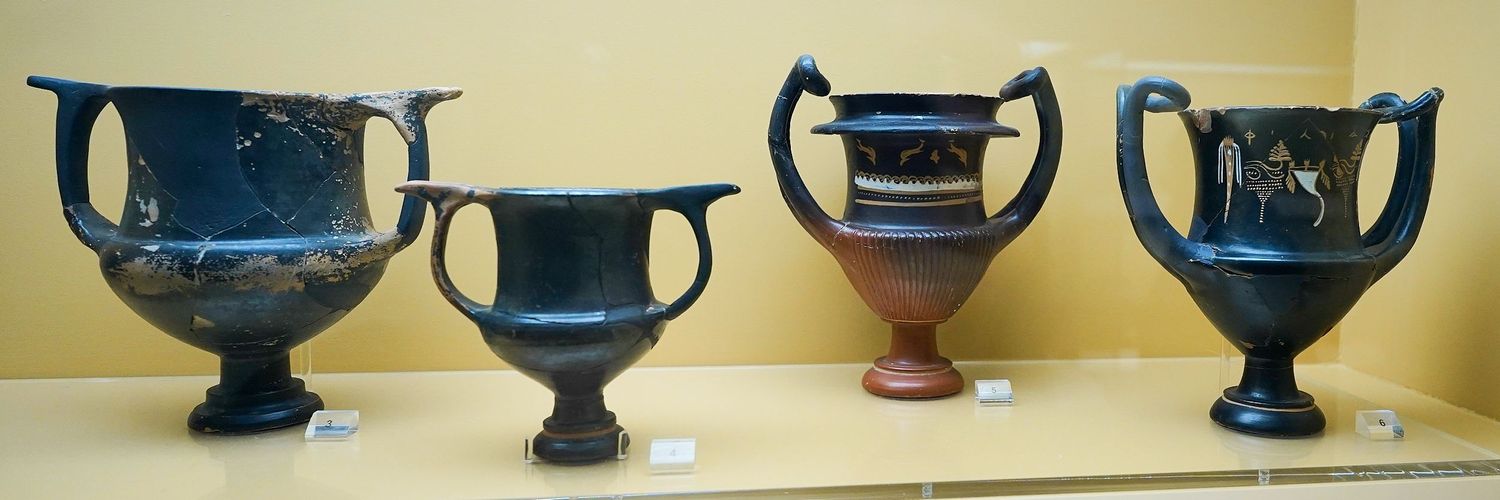
Two Ancient Greek Kantharoi vessels designed in a "Western Slope Ware Style". Originates between 275 and 260 BC, in the Ancient Agora Museum in Athens, Greece.
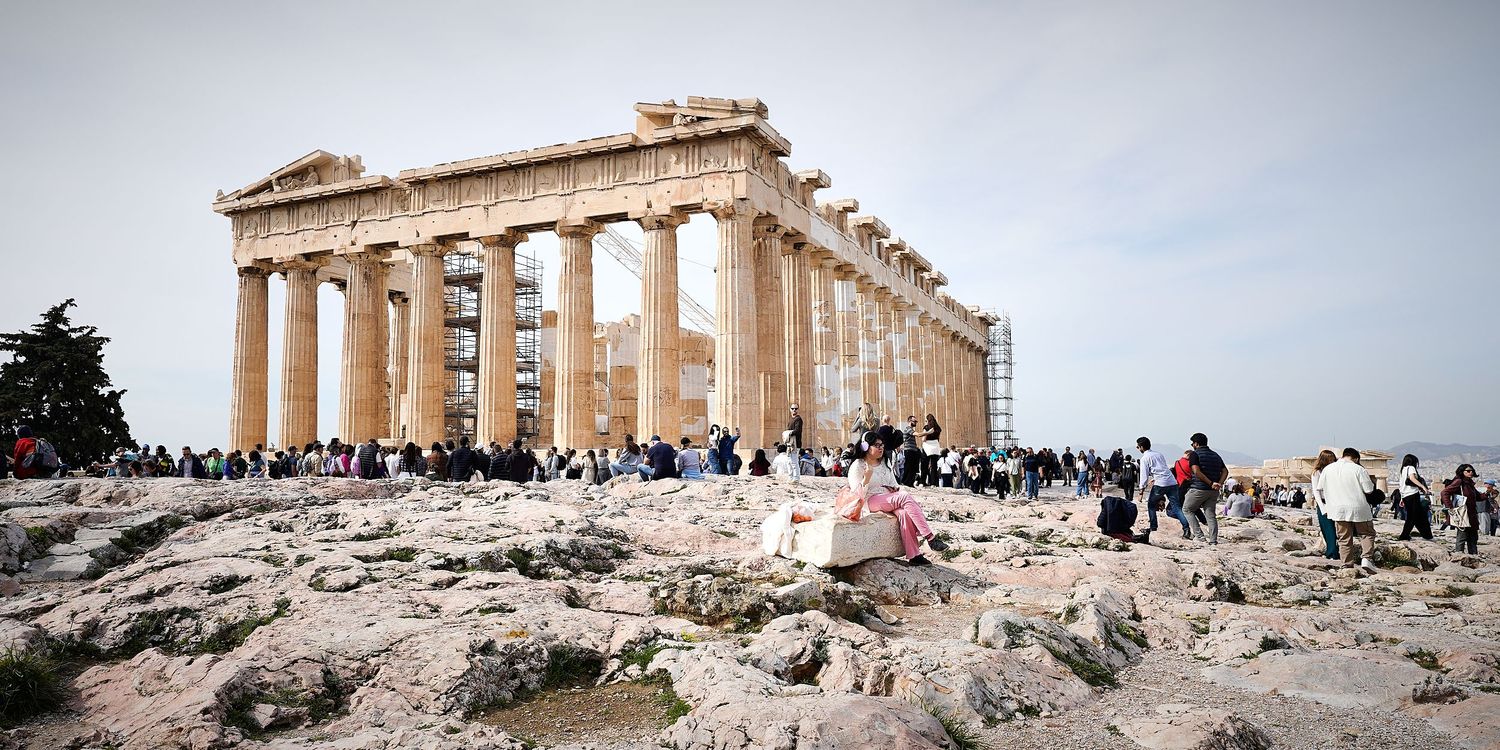
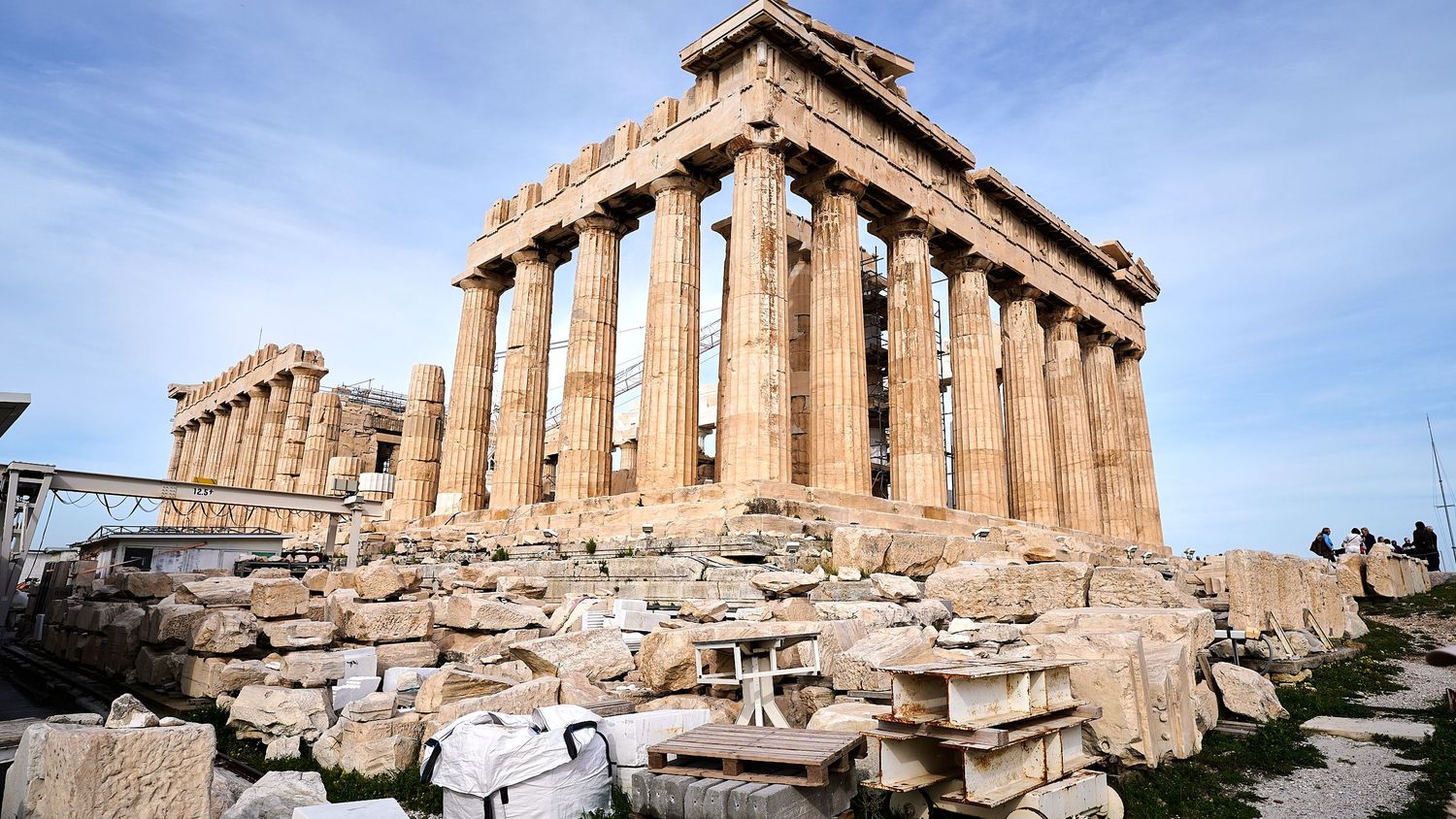
The Parthenon in the Acropolis in Athens, Greece.
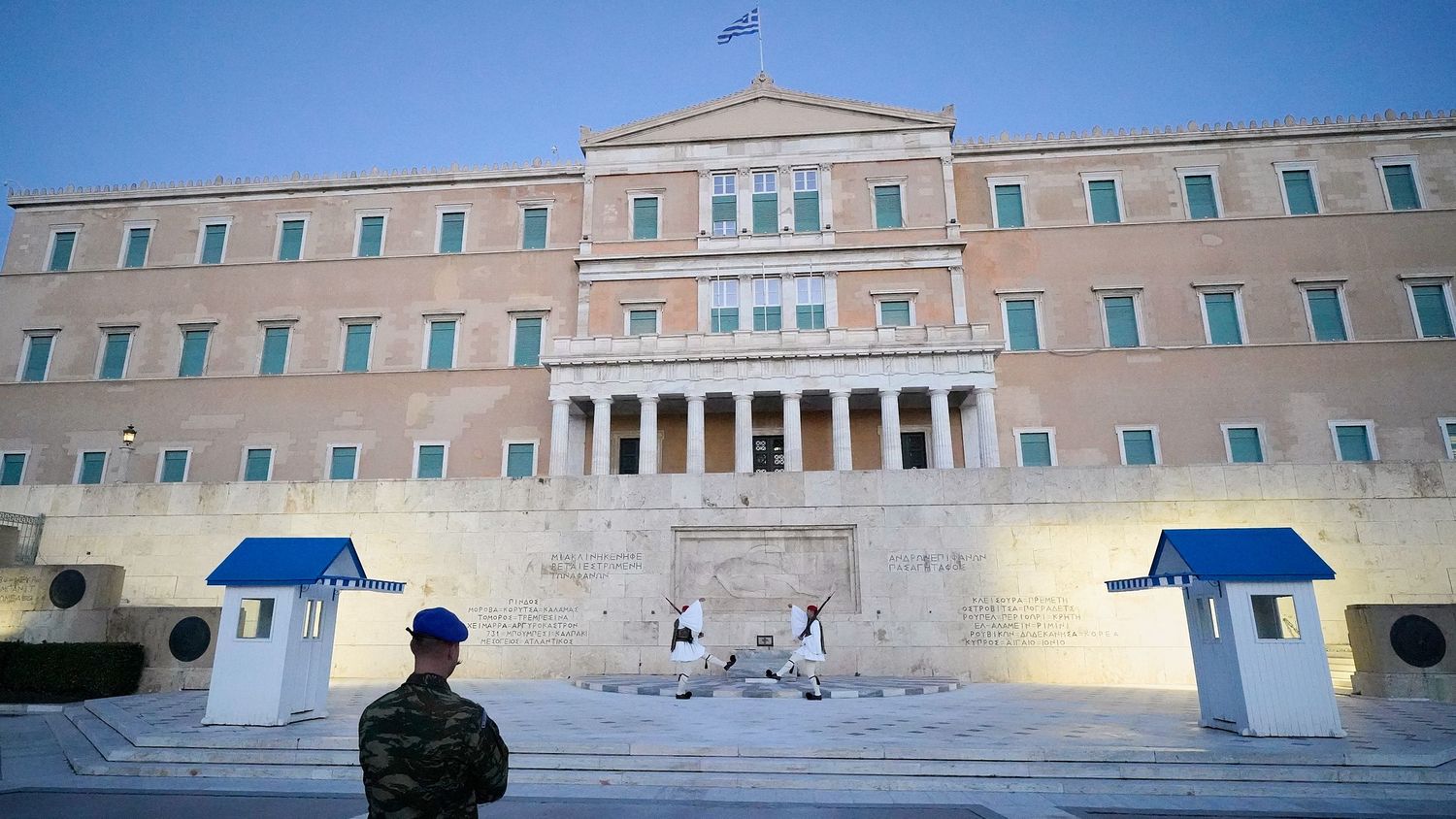
The Changing of the Guard in Syntagma Square, Athens, Greece.
5th Day-04/03/2024-Corinth, Mycenae, Epidaurus & Nafplio:
We started today, by getting a train via the red line from Ominoa station to Syntagma Square station and walked towards the meeting point near Halandri Station for our coach trip to Corinth, Mycenae, Epdaurus & Nafplio, which we arrived at 7:38 am. The coach was almost full and it didn't leave until 8:07 am. On our coach ride, I saw Piraeus Port and Salamis Island, where an important battle took place, centuries ago. I learned from our tour guide, that the government doesn't allow excavations on the island, as that's where the Greek military is based. We stopped at a nearby truck stop before we again disembarked from the coach later on to see the Corinth Canal, which was amazing to see. Created in 1893, the Corinth Canal connects the Central Mediterranean Sea to the Aegean Sea and was created to stop boats from undertaking a dangerous 700 km voyage around the Peninsula's coastline. The idea of a canal was first proposed by King Periander of Corinth almost twenty-six hundred years ago. Nowadays, the canal is regarded as a tourist attraction, which is only used by tourist boats and the motorway which goes across it. I then entered a gift shop, browsed their items and got back onto the coach. We later arrived at Mycenae, where we were told that the Mycenae were considered the first Greeks before we ventured around the Mycenae archaeological site which was massive and saw the artefacts in the museum and the treasury which were both amazing. I got to see a lot of artefacts as well as a copy of the Mask of Agamemnon. Considered by many archaeologists and historians to be the first Greeks, Mycenae was the capital of the Mycenean civilisation which lasted from 1600-1100 B.C and is thought to have been inhabited since the Neolithic period. As we waited for a few tourists on the coach, I discussed with my tour guide about the possible location of Alexander the Great's Tomb, we both agreed that along with his body, it's probably still in Alexandria, Egypt and would've been demolished by grave robbers through the ages.
Afterwards, we travelled to the seaside town of Nafplio, which is somewhat reminiscent of Venice minus the canals and was the first capital of Greece. During our time in the town, we travelled to a church called the Church of Panaghia, which has extremely detailed Byzantium artwork, it also housed an image of God on the ceiling, which was surprising to see. We then hiked to the Castello di Akronafplia, which wasn't intact as it looked abandoned and as if nature was reclaiming the land back. The Castello di Akronafplia's origins can be traced back to the Roman occupation during the 4th century with the polygonal wall. The walls were later reinforced during the Byzantine era by Leon Sgouros and Akronafplia would later become a big commercial centre. Over the centuries, the castle's design has been influenced by the Franks and the Venetians. Nearby, was a bell tower which looked out to the sea, where I saw the Bourtz. Located on Agios Theodoros islet, in the Nafplio harbour. Bourtzi is a Renaissance-styled castle which first consisted of a single tower created by Antonio Gambello in 1477. In 1686, the Venetians recaptured the town and added a bastion and a second tower. After the Greek War of Independence (1821-29), the castle became a prison and after 1865 the residents of the town's executioners. Behind me on the other side of the fortress was the sea, below a white sandy beach called Tolo and opposite the fortress was the Fortress of Palamidi, which was enormous and looked as though a small army could be stationed there. Built in the 18th century by the Venetians, during their second occupation of the area, the structure consists of a baroque style and 999 steps. The structure was created to fortify the strategic hilltop that overlooks Nafplio and Argolic in the Greek Pelopennoese area. After exploring the fortress, we had one last exploration of the streets, and a nearby church before we headed back to our coach. Our last destination was the tourist site of Epidaurus. I also saw an enormous reconstructed amphitheatre, which was just mesmerising to behold, the museum housed ancient pottery, statues, busts and lastly some ancient ruins, and there were a lot. Designed by Polykkletios the Younger in the 4th Century in an Ancient Greek architectural style, the Ancient Theatre at the Asclepieion of Epidaurus is located on the south side of Cynortion Mountain. The structure was created in what was once considered a therapeutic and religious area and is dedicated to the Greek healing god Asklepios. Before going back to the coach, to commence our trip I hurried back to the amphitheatre and walked to the top of it for a second time and hurried back to the coach. Arriving back at the coach, was tiresome and almost out of breath, but it was worth it. On the coach ride, our tour guide mentioned the reason why many Greek monuments aren't fully restored is because they don't want to damage the monuments. For instance between the 60s and 70s, some parts of the Parthenon were being restored and lead was poured into some of the columns to make the foundation more sturdy. This instead had the opposite effect of being corrosive to the landmark's building materials and some of its materials had to be replaced by fakes. So if you look at the Parthenon closely, you'll notice the two distinctive colours on the historic monument which don't match.
We later arrived back in the city in the evening, it was pretty dark and the pathways were busy with people. On our way back to our hotel, we stopped by a restaurant called Mama Tierra, to grab some dinner, which we ate at our hotel and prepared for the next day's worth of sightseeing.
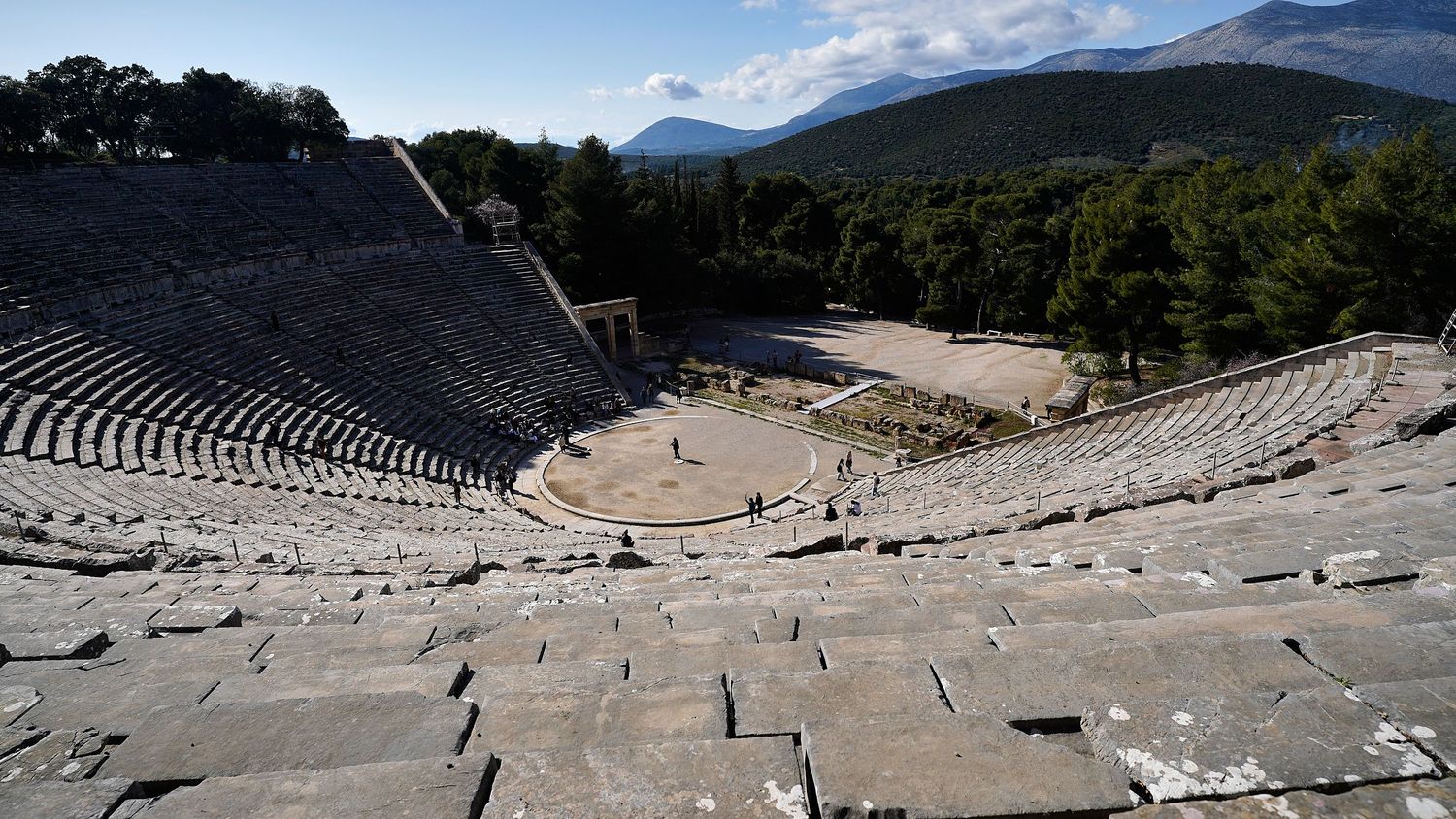
Ancient Theatre at the Asclepieion of Epidaurus, Greece.
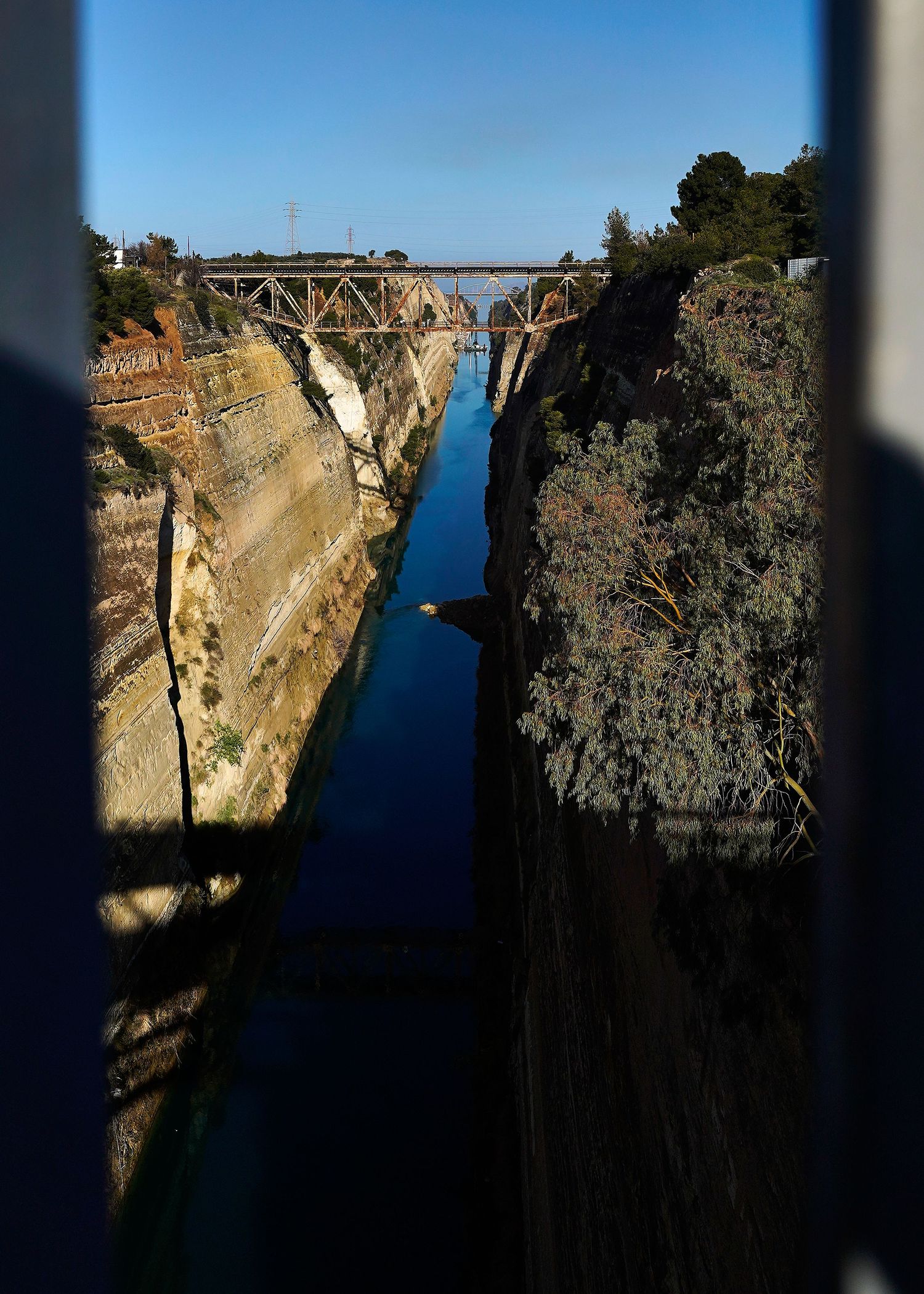
The Corinth Canal in Corinth, Greece.
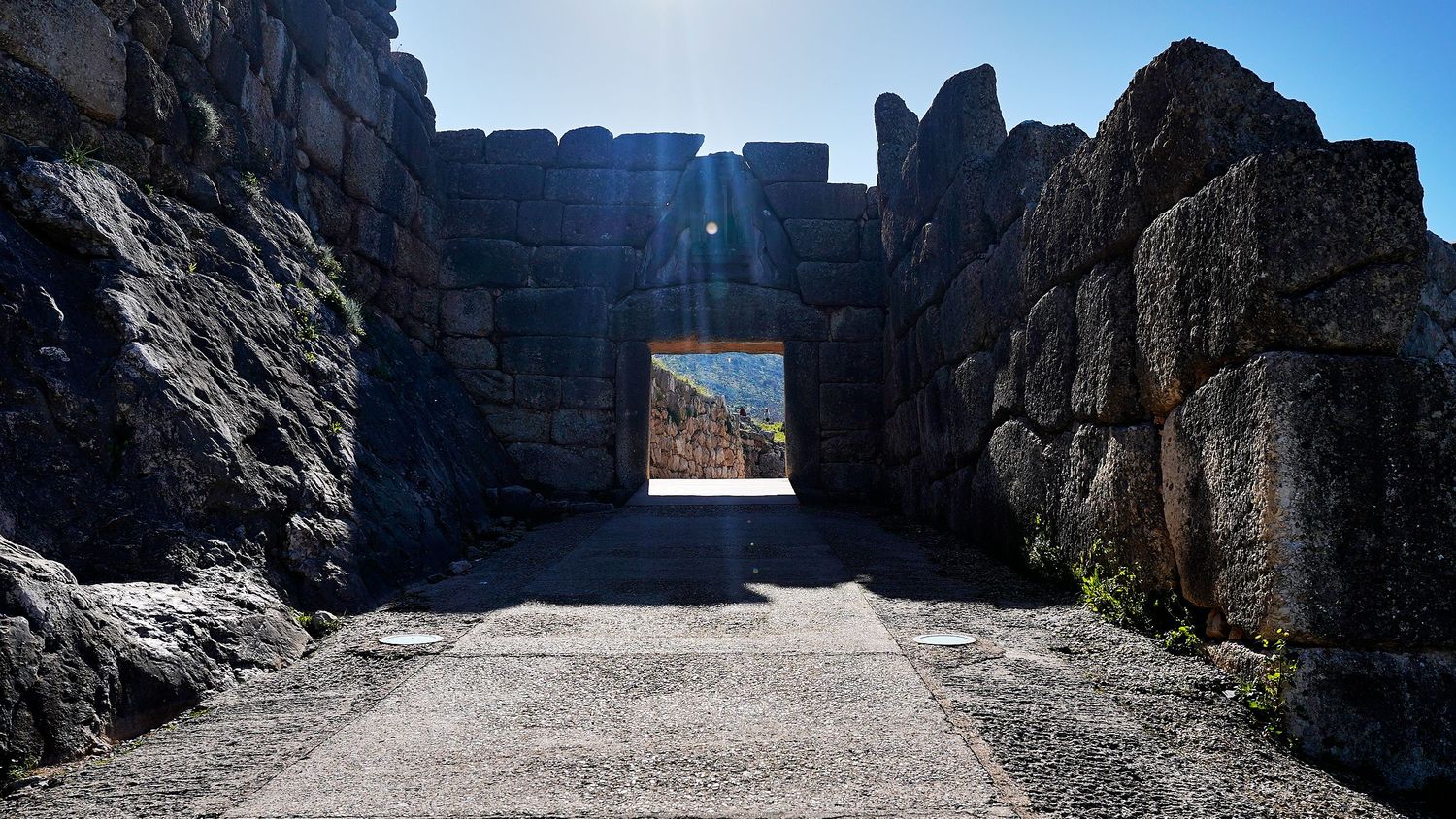
The Lion Gate into the Archaeological Site of Mycenae in Argolis, Peloponnese, Greece.
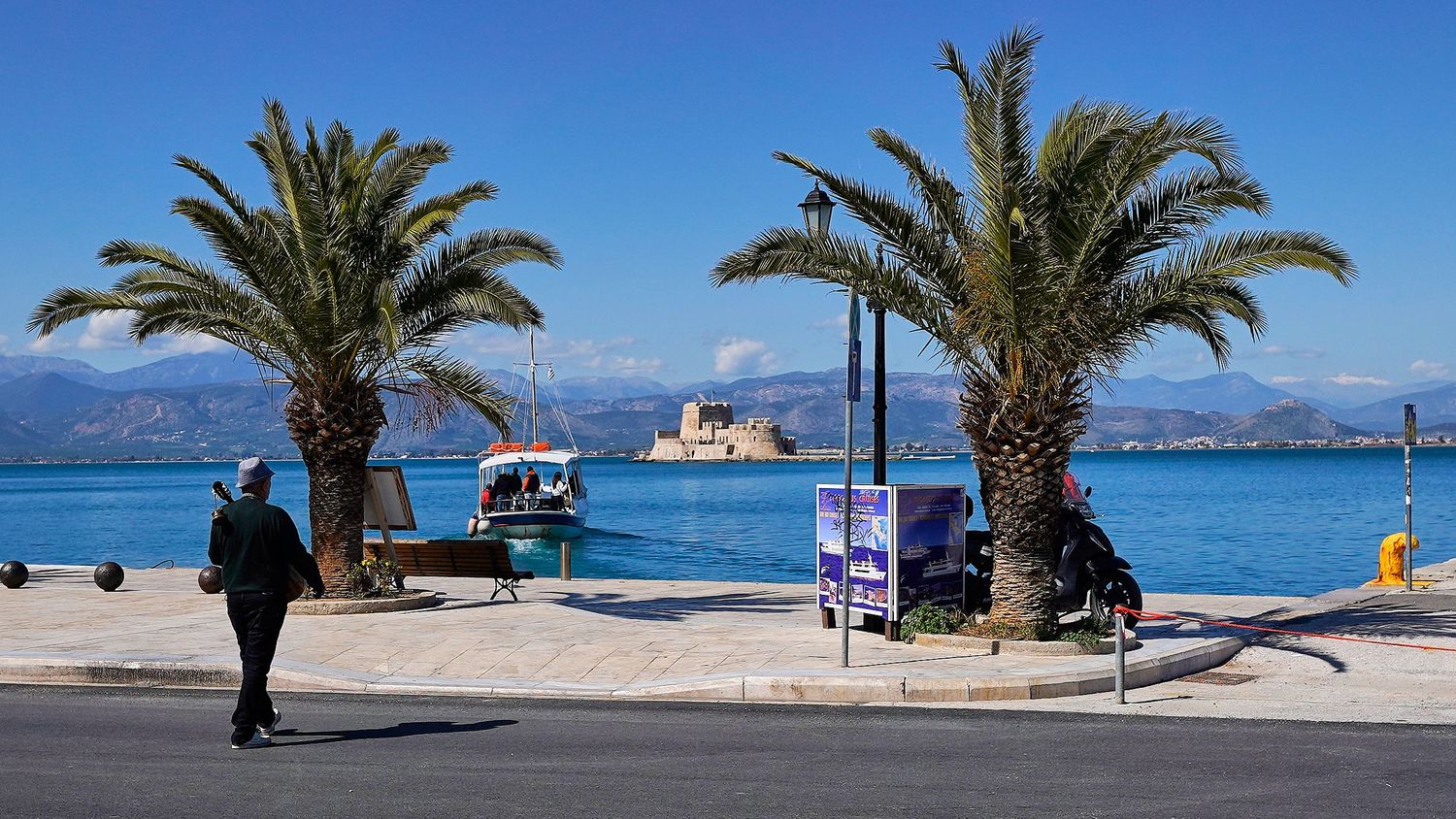
A boat with a group of passengers head towards Bourtzi Castle, Nafplio, Greece.
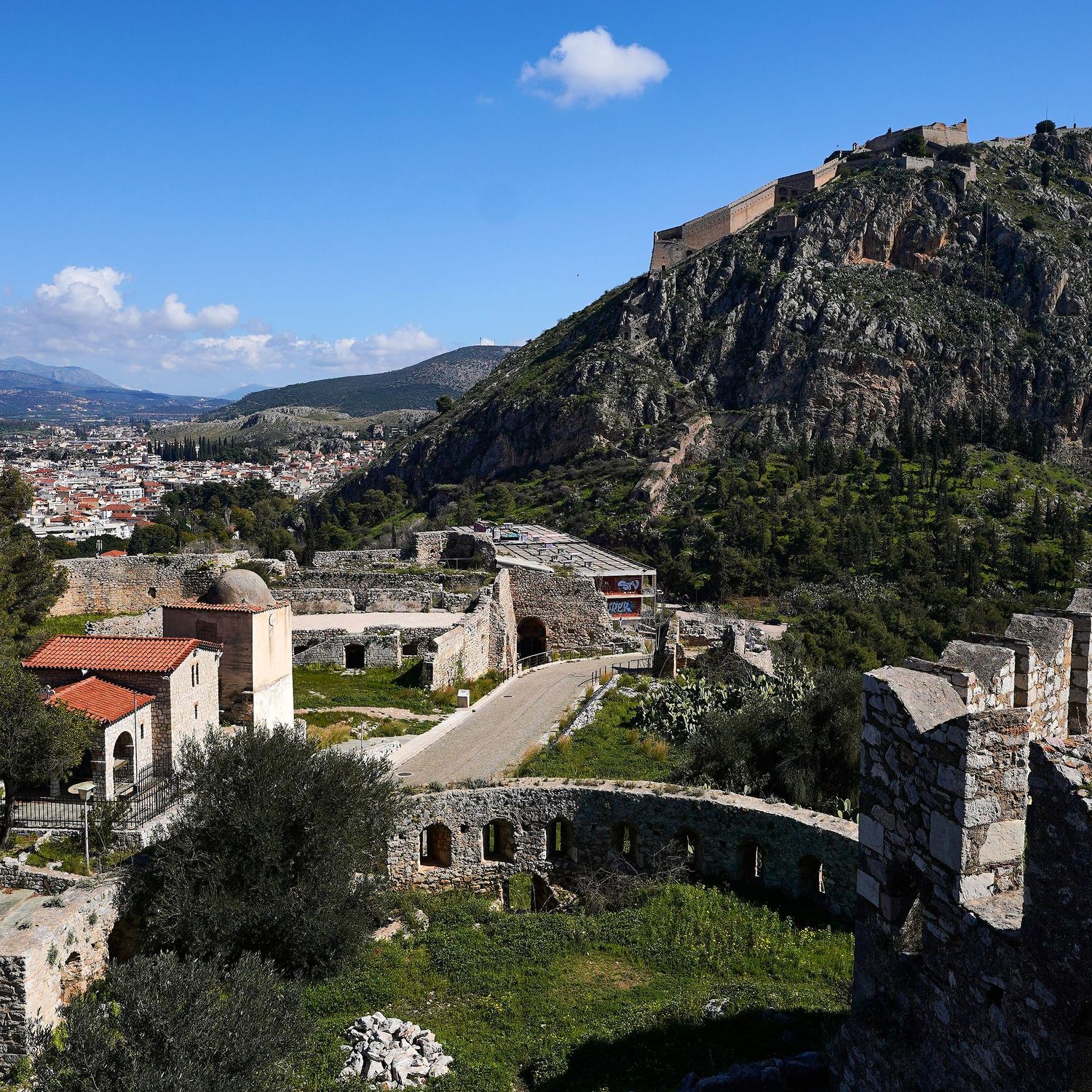
Fortress of Palamidi in Nafplio, Southern Greece.
6th Day-05/03/2024-Athens to the Temple of Poseidon:
Our day started with a short trip through Athens National Park to the iconic Panathenaic Stadium, which is a majestic marble stadium credited with hosting the Olympic Games in 1896 and being the start of the Olympic Flame's journey. The stadium's origins can be traced back to around 330 BC after being commissioned by Herodes Atticus and is located on a racecourse. The site's original purpose was to host the Panathenaic Games, an athletic and religious ceremony held every four years and honour the namesake of the city, Athena. It wasn't until the 19th century that the stadium was discovered and rebuilt to host the modern Olympic Games. In its heyday, it is believed it hosed 50,000 people but nowadays it hosts less than that and is used for musical and dance concerts. As I laid eyes on the stadium I was taken aback by the sheer size of the landmark, inside was a track where the locals could exercise and contained three busts. Walking up the stairs to the top where the Olympic Games logo was located was very tiring but also empowering because of the breathtaking view it provided of the stadium and the city of Athens. After, catching our breath we went down a dark-lit hallway toward the museum, which was closed but on the walls were flags, posters and the flame's torches from previous Olympic Games like the 2020 Tokyo Olympic Games. Outside groups of tourists headed towards the landmark and some had their picture with a man fully dressed in Fustanella uniform holding a rifle. Overall, the stadium was jaw-dropping not only in its grand size but also in its design.
We later came across the tourist sites of The Arch of Hadrian and The Temple of Olympian Zeus. From inside the enclosure, I saw the Acropolis in the distance. The Arch of Hadrian was very imposing on the surrounding environment and exquisite in detail and it reminded me of the Porta Sempione, located in Milan. Like its counterpart, the landmark was a tall, imposing structure monument on the surrounding environment, behind us was a park, which housed various Ancient Greek & Roman ruins and of course The Temple of Olympian Zeus. The Arch of Hadrian is a triumphal archway located in Athens, built by the Athenians in honour of Roman Emperor Hadrian in the 2nd century. The monument's location symbolizes the start of Hadrian's new city and the end of Ancient Greece. Designed in an Ancient Roman architectural style, the monument also features inscriptions mentioning Theseus and Hadrian as the founders of Athens. Once inside the park, we explored the ancient bathhouse and houses but my attention was immediately drawn to The Temple of Olympian Zeus, located in the centre of the park. Although the structure isn't fully preserved, it was still magnificent to gaze upon and its current renovations reminded me of Nasa's launchpad, when space shuttles are launched into space. The Temple of Olympian Zeus was created by the architects Antistates, Callaeschrus, Antimachides and Phormos around 470 BC during the Ancient Olympic Games. Consisting of both the architectural styles of the Corinthian Order and Classical architecture, the temple was built to honour Zeus.
Afterwards, we bought some Greek pastries such as Baklava from Veneti Bakery and walked back to our hotel. Once in our room for the last time, we ate the food which was delicious but very sweet. We also checked our luggage was packed and proceeded to check out. With our coach trip planned, in the evening, the staff allowed us to leave our luggage at the hotel, Brown Lighthouse Athens, which was great, as it would be a hassle dragging it around with us on our coach trip. The weather was sunny, and on that particular day, I felt ready for the adventure that waited for us. We then traversed to our meeting point at Halandri Station to meet our tour guide outside the station. On the bus, we travelled outside of Athens to Thorikos to see the ruins of a decadent Ancient Greek amphitheatre called the Theatre of Thorikos, which dates back to the 6th and 7th centuries. Walking up the rocky steps was a challenge, but when we reached the top, it provided an excellent view of the village as well as a cargo ship passing by on the Aegean Sea. As I explored the old ruins, I also made out the foundations of a small building next to the amphitheatre and walked down the mud-soaked pathway, middle-aged locals were selling gemstones, handmade jewellery, and other items to travellers. After spending two hours on the coach listening to our tour guide cite Greek mythology and briefly talking about when the Romans tore down a temple dedicated to Athena to reuse the building material during their conquest of Greece, we finally arrived at our destination Cape Sounion to see the Temple of Poseidon during sunset. Our tour guide later pointed out the foundations of the destroyed temple on a hilltop. After leaving the coach we purchased entry tickets from the ticket office and went up the cliff to view The Temple of Poseidon, in all its entirety from all its angles. It was majestic. Behind me, I saw a few cargo ships on the Myrtoan Sea, and below the cliff-top was a small coastal seaside town. It seemed like a quiet and idyllic place, but in the distance across the sea were the Greek Islands of Patroklos & Makronisos.
As I looked around the historical landmark of the Temple of Poseidon which is situated on the cliff, which isn't fully intact, but its scale and ingenuity overrode the scenery. But as I looked closer, I could make out the etchings of people's surnames on the bricks of the monument, and one name that stood out was that of Lord Byron. Considered a folk hero by the Greeks, he was instrumental in helping the Greeks gain independence from the Ottoman Empire. However, Lord Byron died in 1824 after suffering from a fever in the first two sieges of Missolonghi. Before the sunset occurred, two Rock Partridges walked slowly around a corner of the landmark, pecking the ground for food as some tourists were fascinated by them and took pictures of the birds. I picked out my position to photograph the sun's rays as its sunlight directly hit the interior of the temple. As the sunset occurred, sun rays shone onto the ancient temple, a beautiful array of colours rested upon the interior of the landmark, and in the background were the Greek islands, of course. From that position, it produced a beautiful, colourful array of colours, which was so enchanting, magnificent and stunning that its beauty left me speechless. The Temple of Poseidon which is located in Cape Sounion, was created by Iktinos between 444 and 440 BCE. The temple features both Doric and Ancient Greek architectural styles and was a place of worship and offerings to the Greek sea God Poseidon. The temple also once featured a 20-foot bronze statue of Poseidon. After the sunset, we walked down the cliff's pathway to another part of it and looked out to the Myrtoan Sea before rushing back to our coach. Overall, the chance to witness that sunset upon the Temple of Poseidon was not only remarkable but mesmerising to see, like when I first encountered the Northern Lights.
On our coach trip back to Athens, our tour guide gave us an in-depth account of the Greek myth of Theseus, who killed the Minotaur. The story starts with a Greek athlete called Androgeus who won all the gold medals at the Panathenaic Games. Participating in the same events was King Aegeus, the King of Athens and he kept coming second to Androgeus. He and the Athenians felt humiliated coming second to this Greek athlete outside of the city and the Crete which they looked down on. Consequently, the Athenians killed the athlete, who was also the Prince of Crete. Instead of going to war against the Athenians, King Minos wanted to retain his alliance with the Athenians so he imposed a blood tax on them. This meant each year 10 young males would travel to Crete and be sacrificed to the minotaur in the Labyrinth. Theseus and his father became disenchanted with paying a blood tax to King Minos, so Theseus travelled with the Athenian boys who were to be sacrificed to the Minotaur to kill it. Upon his return, Theseus's father, King Aegeus, ordered him to put a white sail up on his ship if he was victorious in killing the Minotaur; otherwise, a black sail signified his death for King Aegeus to see. Theseus killed the minotaur, led the Athenians out of the labyrinth, after following a ball of string and sailed with his wife Ariadne away from Crete. Ariadne previously taught him the secret to killing the minotaur and escaping the labyrinth. Wanting to celebrate his victory over the minotaur, Theseus and his wife celebrated on the island of Naxos. Whilst on the island, Theseus encountered the Greek God Dionysius, who proposed that he should swap his wife Ariadne for some wine promised by the deity. Theseus agreed. After setting sail, Theseus forgot his pledge to his father most likely from his intoxication. Upon returning to Greece, Theseus forgot to change the black sail to the white sail, and his father, upon seeing this, flung himself off a cliff after being stricken by grief at the false death of his son. This story combines revenge, adventure, heroism, drama, and temptation in one narrative. The Greeks fully understood the key components essential in creating a Greek Tragedy. As we arrived back in Athens and approached the city centre, our tour guide taught us some Greek before dropping us at Syntagma Square station. Overall, the tour was very informative, insightful and great value for money. We later collected our luggage from the hotel to take to our new hotel, The Acropolis Select. While the hotel wasn't as grand as our previous one, the staff were very welcoming, helpful, and friendly. The room was very big and spacious, and the bathroom was large. The balcony was very spacious and offered a great view of the Acropolis, even though it was partially obscured by some building work.
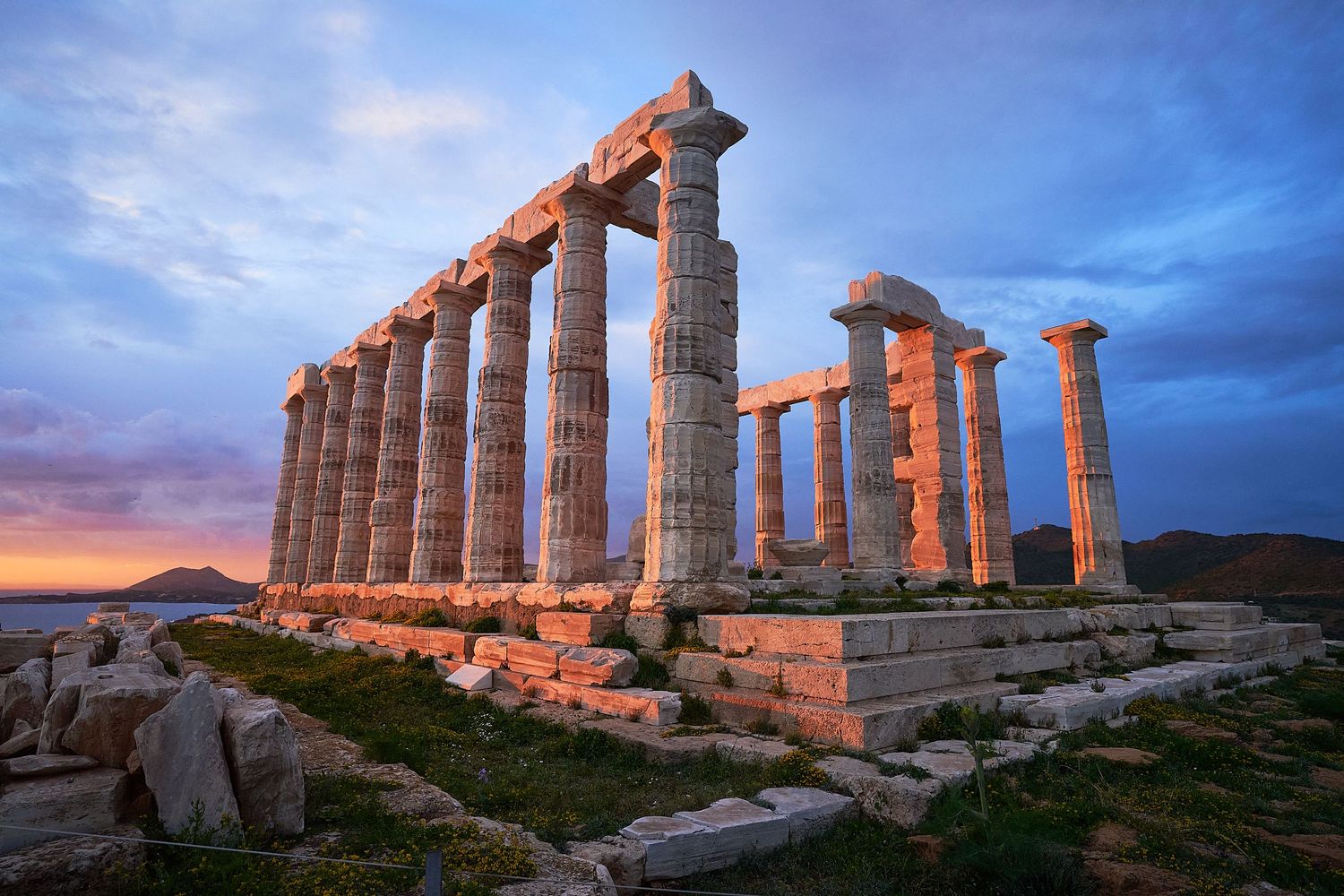
The Temple of Poseidon, Cape Sounion, Greece.
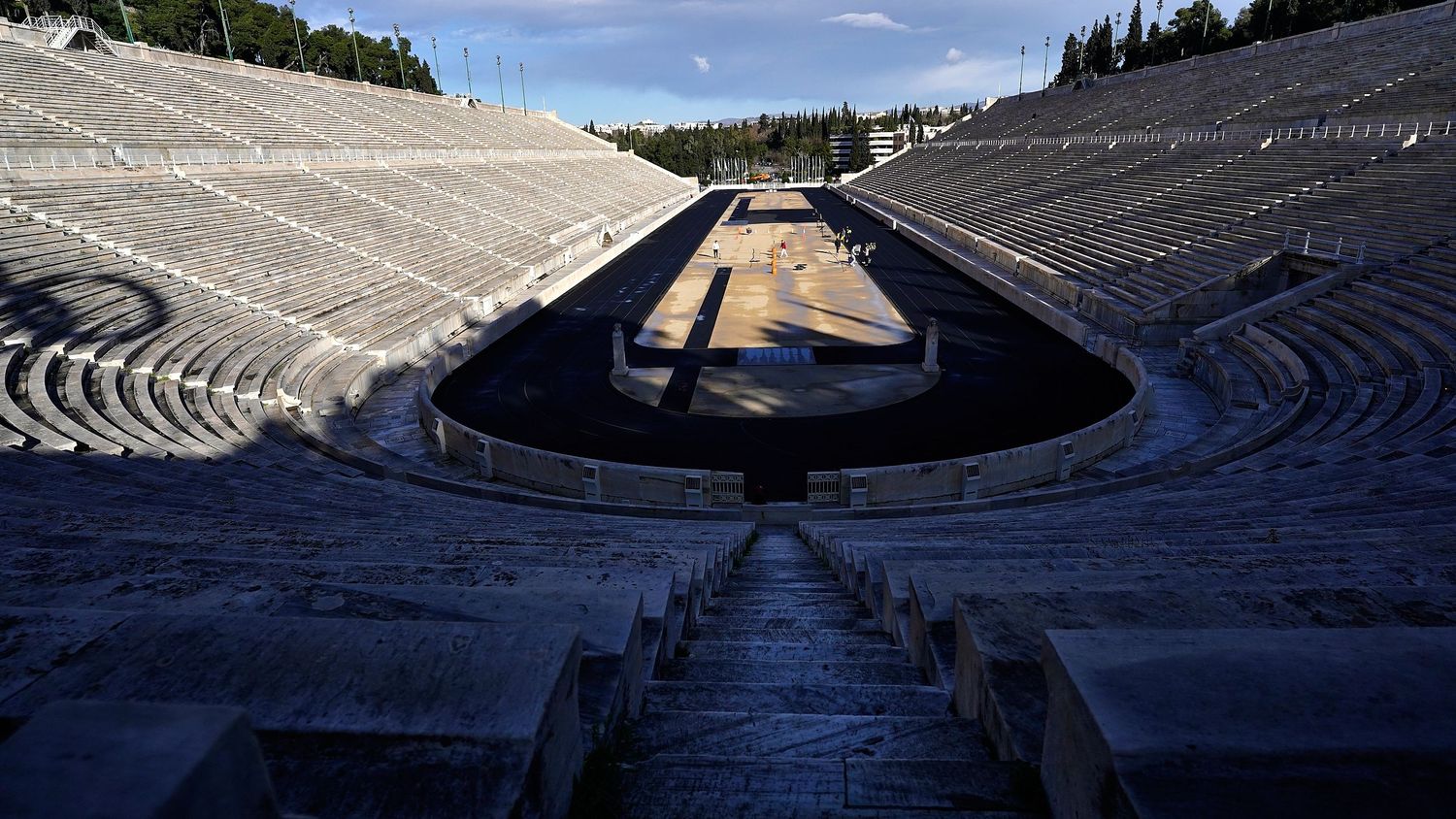
Panathenaic Stadium in Athens, Greece.
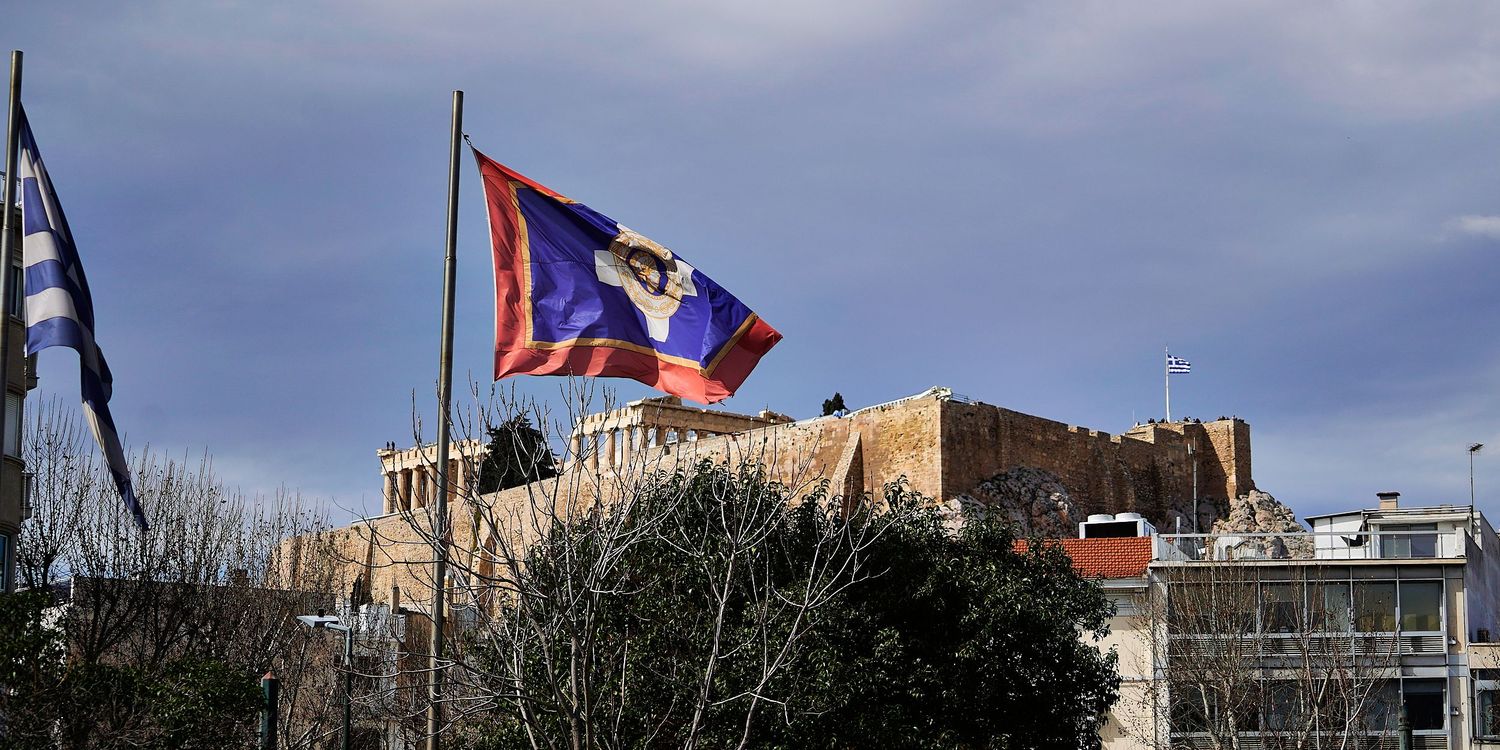
Flags of Greece (Hellas Republic-Left) and Athens (Middle) with The Acropolis (Background) in Athens, Greece.
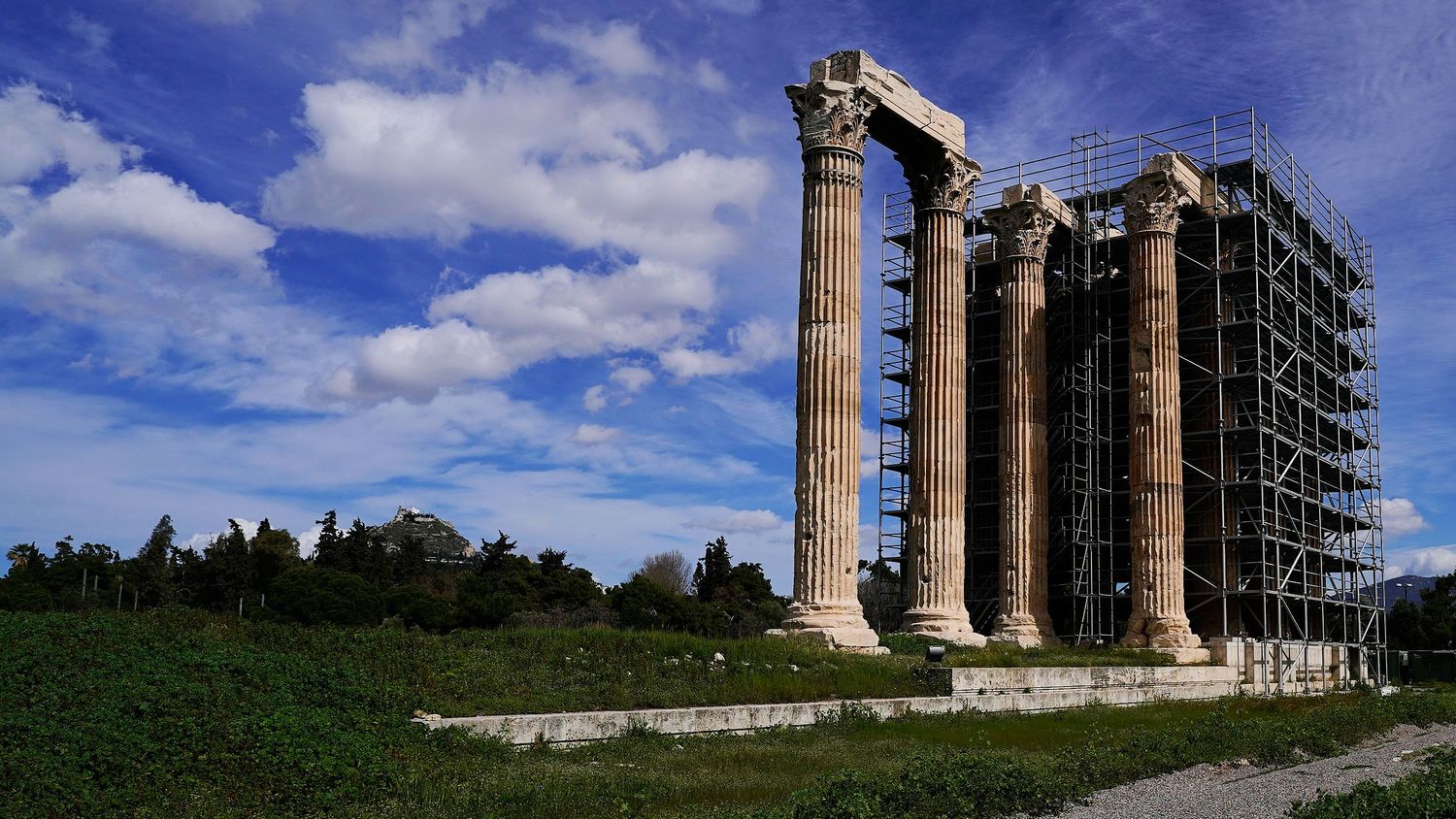
The Temple of Olympian Zeus in Athens, Greece.
7th day-06/03/2024-Athens-Theatre of Dionysius and the National Arcaheological Museum:
In the morning, we woke up around 6 am, grabbed some breakfast and headed back to our room to collect the rucksack and bags in anticipation of the day ahead of us. The weather was very clear and bright. After previously, being denied entry into the Theatre of Dionysius, as they had run out of tickets. Today we arrived early, and gained entry, as usual, we explored the old ruins, busts and foundations of ancient buildings which lay on the ground. After traversing a few stairs, we reached the Theatre of Dionysius. The historic landmark was grand but small in scale in comparison to other amphitheatre but it was great to see that most of the amphitheatre was still intact. It made me think that back in ancient times political messages and plays would've taken place there. Something, that they don't tell you on social media is that there's a pathway near the Temple of Dionysius which leads directly to the Acropolis. As we walked up the stairs we passed the Odeon of Herrodes Atticus. Looking down on the historic landmark, I couldn't help but have my eyes drawn to the centre of the structure and just marvel at how grand the structure was. Located on the southwestern slope of the Acropolis, the Odeon of Herodes Atticus is a stone Roman theatre created around 160-174 AD. Originally it was commissioned by the wealthy benefactor Herodes Atticus to commemorate his wife Regilla. Since the 1950s, the structure has been used for the Athens and Epidaurus Festival and events from concerts to art exhibitions. We then entered the Acropolis for the second time. This time the Acropolis was less busy as there weren't as many tourists as before. It's probably because it was early in the morning. On the Acropolis, we looked at the Parthenon and the Erechton one last time, admired the view from the hilltop and headed towards the Acropolis Museum. As you can imagine, the Acropolis Museum, housed a lot of statues, pottery, weapons and busts of figures like Alexander the Great to plaster copies of the Parthenon Marble Sculptures and under the museum was an excavation site, which was amazing and unexpected to see. We also travelled to the National Archaeological Museum, which housed many ancient Greek artefacts like the Artemison Jockey (Below), the real Mask of Agamemnon (Below), The Statue of a Wounded Gaul to a mosaic entitled "The Fatal Look of Medusa", which is both beautiful and unsettling. To see historic antiquities like the Mask of Agamemnon, was truly impressive, especially given its association with the mythical Mycenae King and of course his involvement in the Trojan Wars. Initially, used as a burial death mask for those buried in a royal cemetery in Mycenae, the mask represents status, wealth and honour. The artefact got its name from archaeologist Heinrich Schilemann in 1876, after he found it in Mycenae and named it after the mythological King from Homer's Iliad. After finding the artefact, Schileman was convinced that the Trojan War was a real historical event.
Afterwards, we walked towards The Arch of Hadrian and looked upon the landmark, as a group of runners passed in front of it and looked at the Temple of Olympian Zeus from afar. We then proceeded to Veganaki and ordered some food, which we took back to our hotel. I ate my food on the balcony as I looked at the Acropolis in the distance, as builders continued their work on a nearby house. We also tried to get into the Acropolis for a third time, as it was free on that day but by the time we got to the gates, the entrance was closed. As it was getting pretty dark in the evening, we grabbed some food from the Vegan Beats again. We headed back to our hotel, with the food in hand. Back at the hotel, we ate the food which was life changing and we were exhausted from that day.
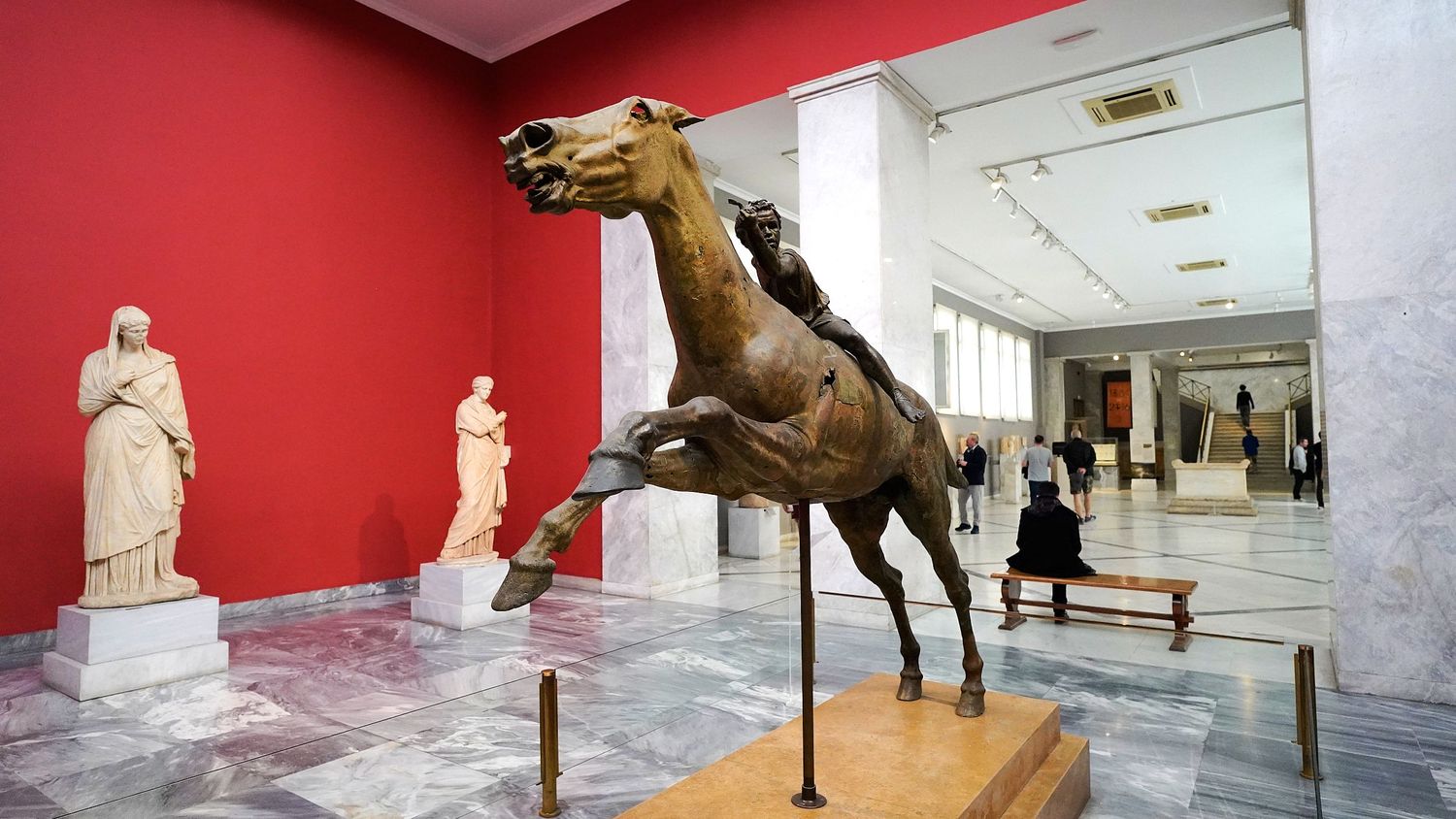
The Artemision Jockey in The National Archaeological Museum in Athens, Greece.
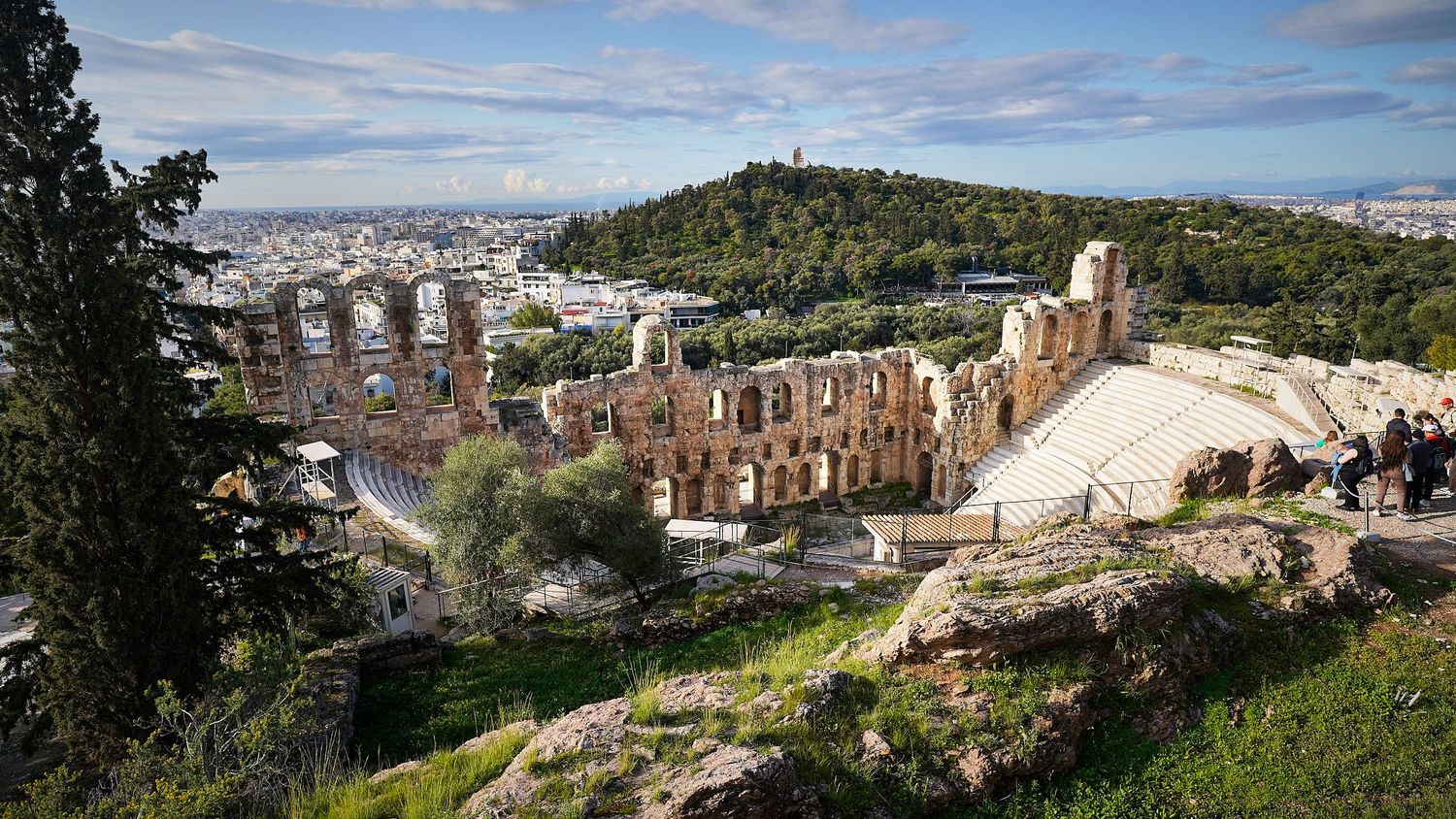
The Odeon of Herodes Atticus in Athens, Greece.
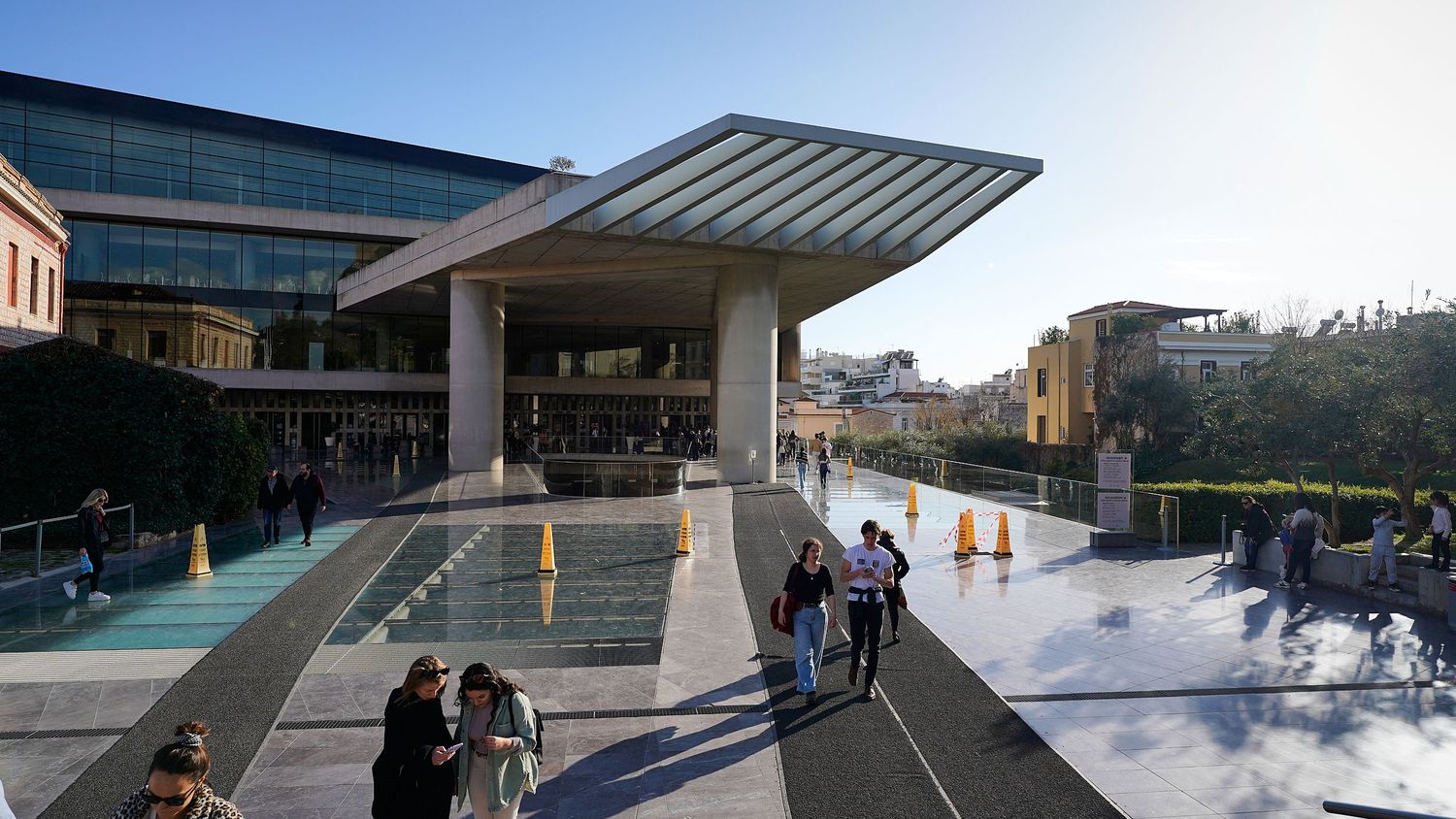
The Acropolis Museum in Athens, Greece.
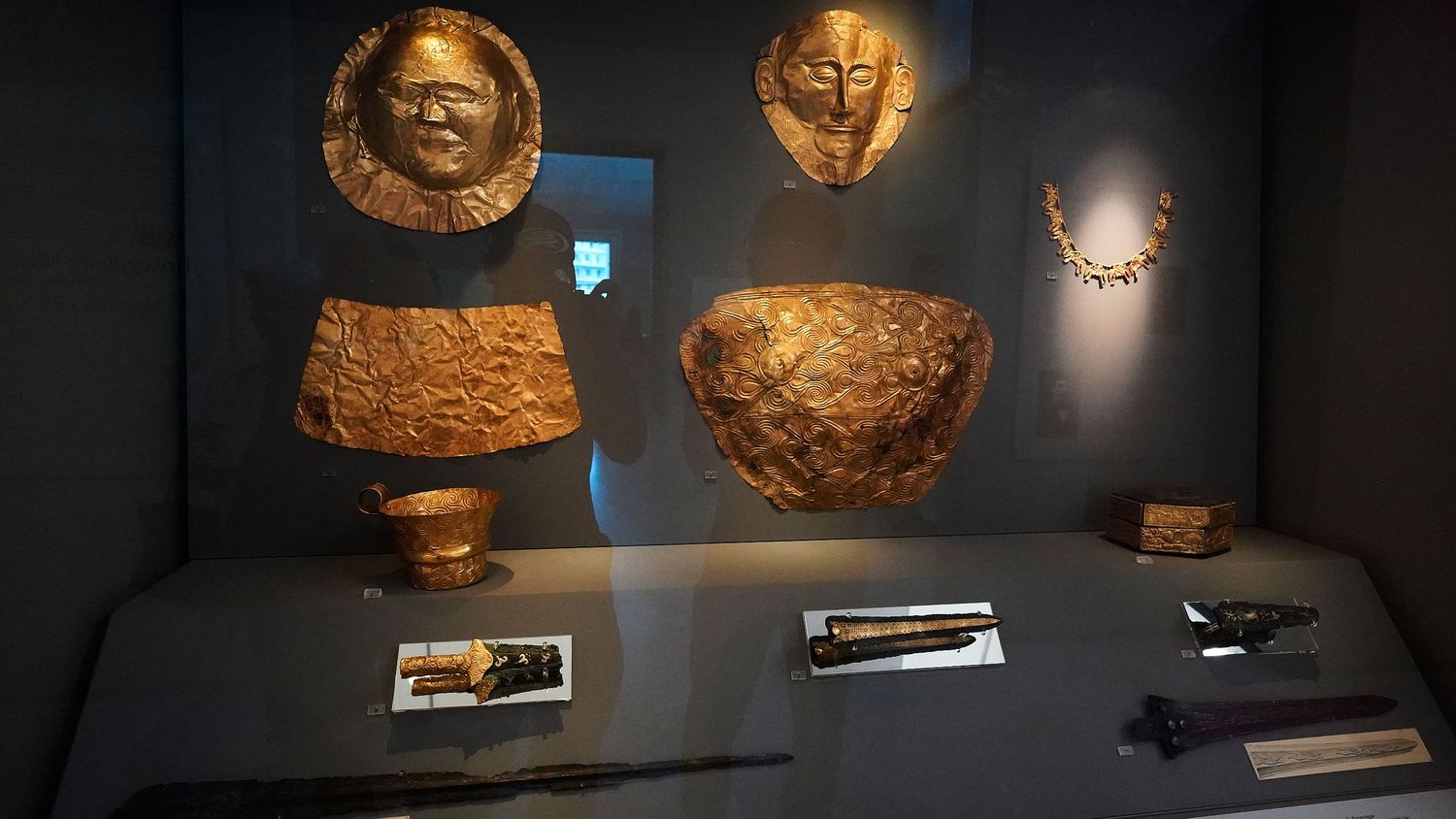
The Mask of Agamemnon (Top middle) at the National Archaeological Museum in Athens, Greece.
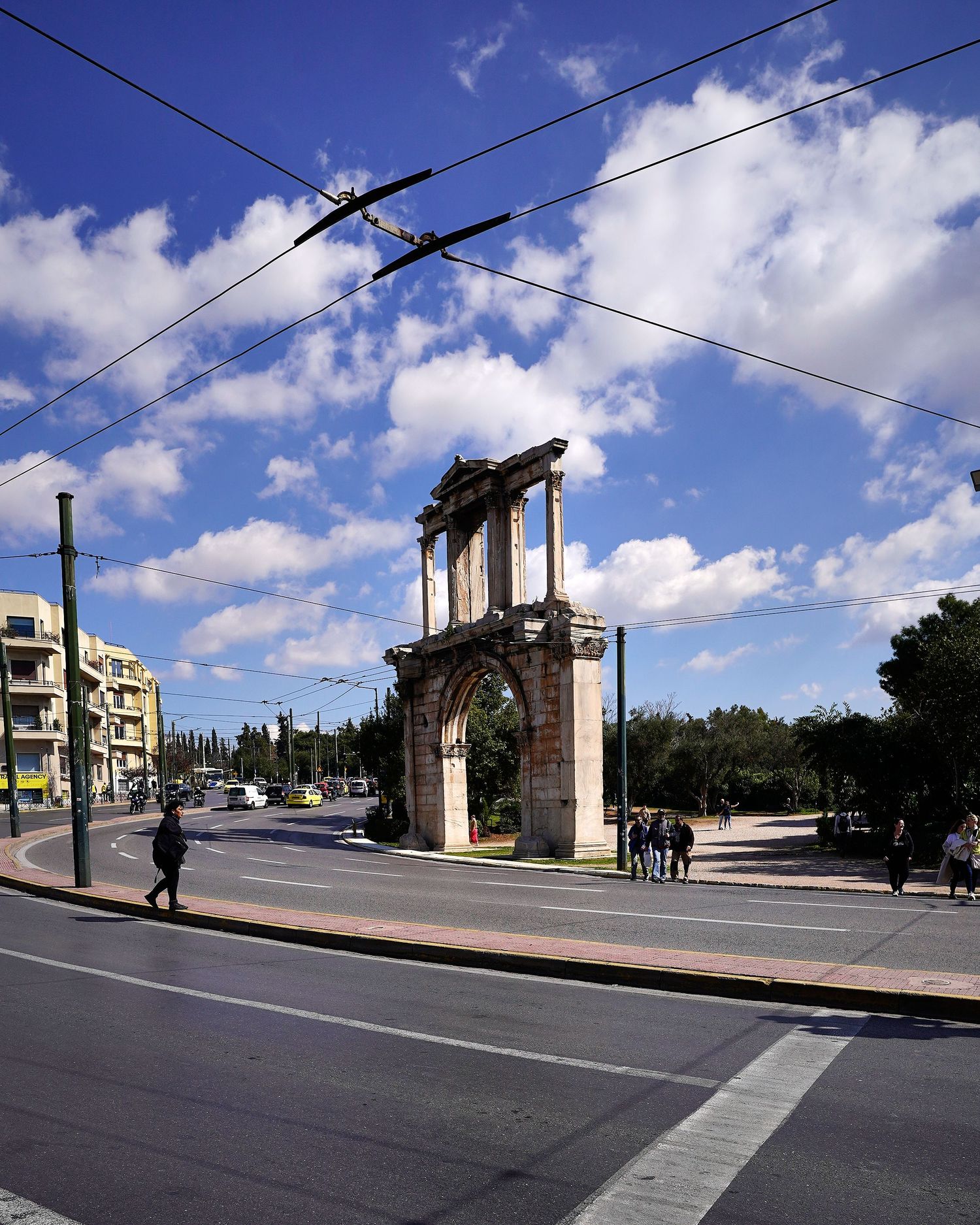
The Arch of Hadrian in Athens, Greece.
8th Day-07/03/2024-Athens-Philopappos Hill, Lycabettus Hill to the Airport:
Having stayed at a new hotel called Acropolis Select for a second night, we walked to Philopappos Hill, which is among the biggest hill hills in Athens. On the way through the forest, we came across the ruins of the Prison of Socrates, which we briefly read and looked at. Located on Philopappos Hill, The Prison of Socrates housed Socrates who awaited his trial in 399 BC on the charges of impiety and for the corruption of the city's youth. Unfortunately, the philosopher was found guilty of those crimes and sentenced to death, by digesting poisonous hemlock. The story is seen as a cautionary tale of when democracy descends into anarchy. We then progressed up the trail and finally reached the hilltop after enduring a 15-minute hike. We saw the Philopappos Monument, which stood on the hilltop, overlooking the city. The Philopappos Monument is a mausoleum of Roman architecture style which stands atop the Philopappos Hill, built around 116 AD to commemorate the life of Gaius Julius Antiochus Epiphanies Philopappos. Otherwise known as the Prince of Commagene, he came to live in Athens, after Commagene became a part of the Roman Empire. On one side of the mausoleum, is a statue of Philopappos with his grandfather King Antiochus and on the other side a statue of King Seleukos Nikator.
After looking at the monument, we got some excellent views of the city, where we saw iconic places like the Acropolis, Lycabettus Hills, and behind us, Piraeus Port. After spending some considerable time on the hilltop, we grabbed lunch from Lukumades served in Vegan Praline Chocolate and walked back to our hotel. The lukumades were delicious. However, what I've noticed from trying Greek cuisine is the Greeks have quite a sweet tooth.
After being refuelled, we passed Syntagma Square and walked towards the highest cliff in the city, Lycabettus Hill, which supposedly is the highest hill in the whole of Athens and provides excellent panoramic views of the city. On the way to the hill, we passed by The Arch of Hadrian, The Temple of Olympian Zeus, Aristotle's Lyceum and The Byzantium Museum. Founded by Aristotle, the teacher of Alexander the Great in 334 BC, he taught his students about philosophy and mathematics. It also housed the Athenian Assembly and students received military training. and of course, many legendary philosophers such as Socrates and Plato taught there. Unfortunately, all that remains are the ruins of the school, as the school was later destroyed by Roman General Sulla during the Sack of Athens in 86 BC. Close by is the Byzantine Museum which includes numerous relics, manuscripts, mosaics, paintings and pottery from the Byzantine Empire. However, walking through various streets in the city and up the cliff pathway, it must have taken us at least two and a half hours to get to and up the hill. But, as I mentioned, the views were excellent. During the walk towards the top of the mountain, we passed by many tourists. The stairways provided excellent views of tourist destinations like the Acropolis, the Panathenaic Stadium and in the distance the Philopappos Monument on Philopappos Hill as well as the Aegean Sea in the background. On the hillside were trees and cacti etched with people's names or initials. On the pathway, there were no handrails, which was somewhat dangerous as it was a long drop and it made me think that like the dwarves from Moria, the Greeks aren't concerned that much concerned about safety around the hill. As well as cacti, I came across another cat which isn't surprising as this city is full of cats. What surprised me was seeing a tortoise near the top of the hill, as it was so unexpected. After finally getting to the top and spending some time there, we sat down to regain our breath from the hike and took on fluids. After, having one last look at the panoramic views of the city which left me speechless, instead of getting a Funicular which would've cost a few euros and taken 10 mins to get to the bottom, we decided to walk down the hill to enjoy the wonderful scenery and picturesque views of the city one last time.
After walking down the hill's pathway and through various streets, we reached Athens National Park and sat down to rest and relax for around 20-30 minutes. After going through our itinerary we walked at a slow pace through the park, admiring the trees, the carp in the pond as well as the monk parakeets. The birds made chirping noises, communicating to one another as they flew swiftly from one branch to another and other birds looked for food on the ground. We left the park and met a Greek firefighter wearing some of his uniform, noticed that we were tourists, walked up to us and he mentioned to us how he visited London a few times. The conversation made me think, do I stick out as a tourist? I thought I was blending in, being inconspicuous but not. Nevertheless, we walked down a pathway outside of the park, it was by chance we encountered military personnel with some evzones dressed in full ceremonial outfits marching away from Syntagma Square. Later on, we entered a few churches, full of Byzantium iconography such as mosaics, paintings etc, which as you can imagine were extraordinary to see and we also came across a statue of Constantine XI Palaiologos, the last emperor of the Byzantine Empire, which fell to the Ottoman's during the fall of Constantinople in the 15th century. We then walked to the archaeological site of Kerameikos. Unfortunately, the site was closed, so we just admired it from the outside on a nearby hill next to a railway. We relaxed for a while and then walked to the Museum of Ancient Greek Technology near the Acropolis. Seeing these ancient pieces of ancient technology from the Ancient Greeks was remarkable, it showed how ingenious their society was. We then entered two more Greek Orthodox churches, grabbed dinner (Space Gyros) from Vegan Beat and hurried to Cafe Veneti to purchase some of their delicious delicacies and bread which included Tsoureki and Kourkoubini. We then rushed back to our hotel to grab our luggage, headed towards Sigroux-fix station, purchased two airport tickets, and got off at Syntagma Square Station to catch our train to Athens Airport for our 10:10 pm flight back to the UK. Our last day in Athens was very relaxed, adventurous and interesting. The holiday provided me with a unique insight into Greek culture, identity, and history and I saw every tourist landmark, I wanted to see. It was truly an excellent holiday and if given the chance, I would visit the home of democracy again and possibly next time to see some of its surrounding islands.
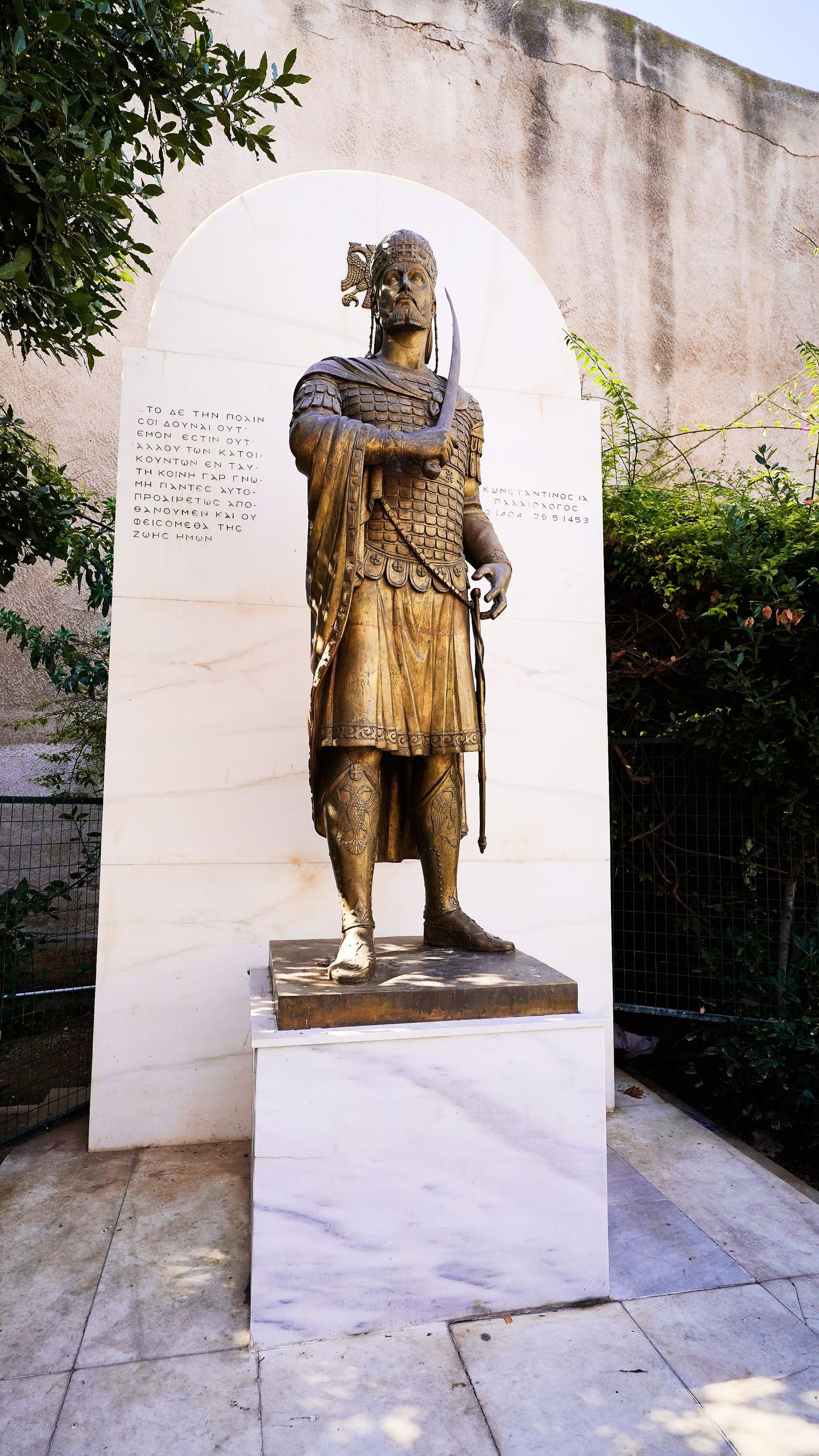
Statue of the last Byzantine Emperor Constantine XI Palaiologos near the Agios Eleftherios Church, Little Metropolis, Athens, Greece.
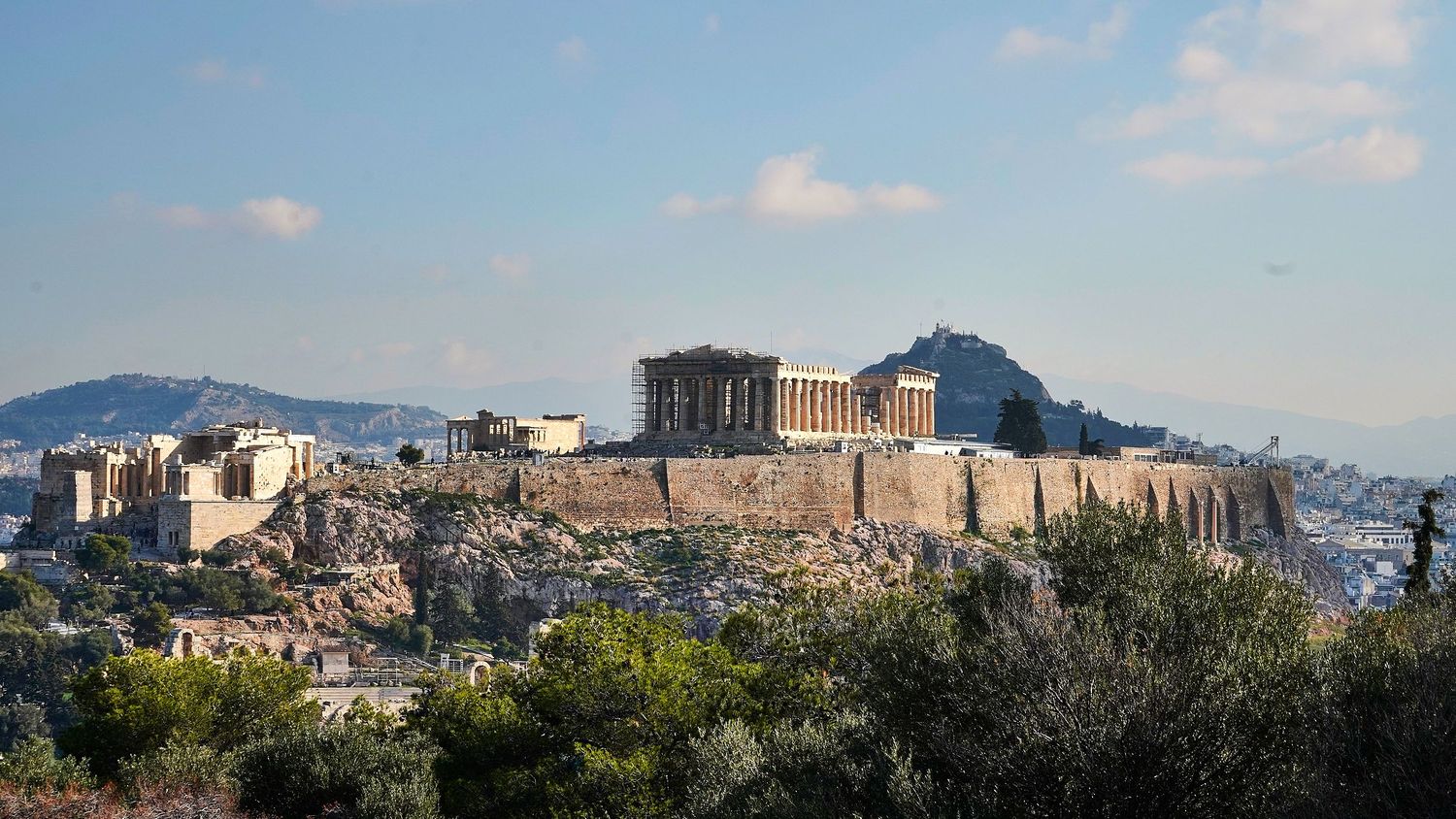
A view of the Acropolis from Philopappos Hill in Athens, Greece.
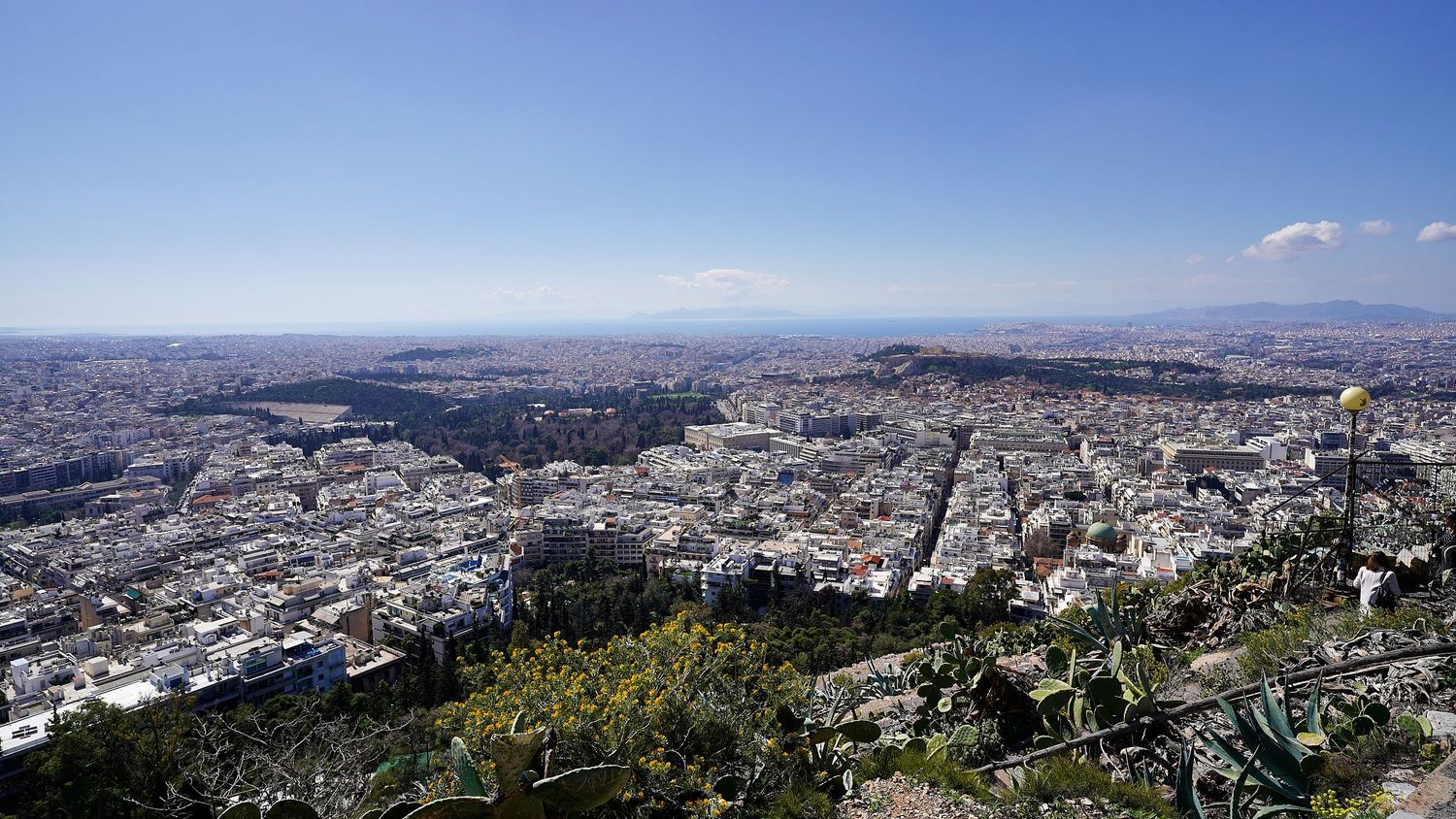
Landscape view of Athens from Lycabettus Hill in Athens, Greece.
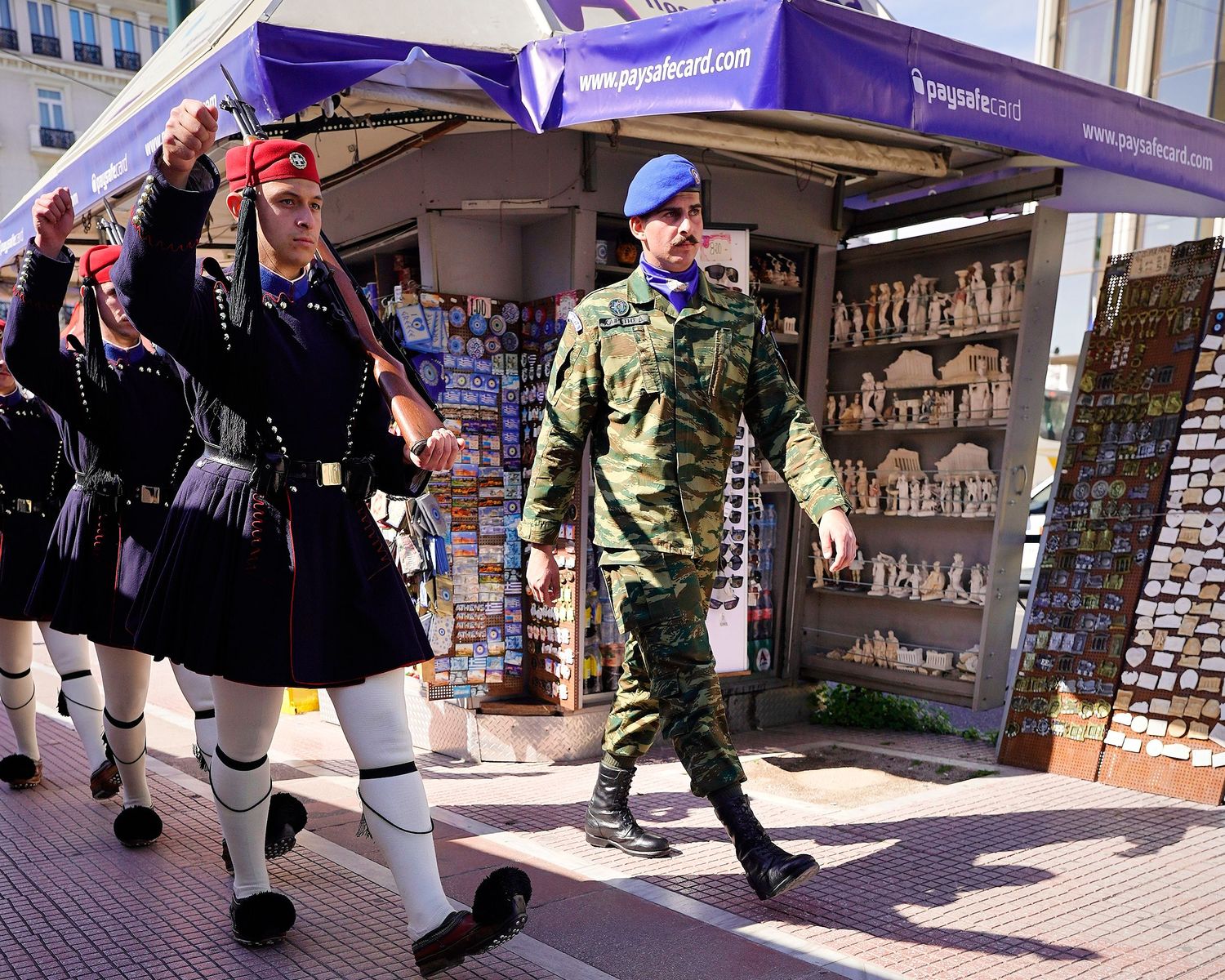
The Evzones marching with a military personnel near Syntagma Square, Athens, Greece.
Η μνήμη είναι ο γραφέας της ψυχής. Αντίο, ελληνική μου οδύσσεια (Memory is the scribe of the soul. Goodbye, my Greek odyssey):
Thank you for taking the time out of your day, to read this travel blog about my travel experience in the Greek capital of Athens, as well as the ancient ruins of Meteora, Delphi, Corinth, Mycenae, The Temple of Poseidon to the countryside town of Nafplio. This will be the last travel blog experience I'll be writing for a while, so if you like this travel blog, please recommend it for other people to read and enjoy. Who knows maybe this blog experience will bring someone some comfort, an insight into Greek culture and propel someone to pursue their passion in photography, writing or even travel. Remember to always be creative, not to be distracted by the many items nowadays and as the Greeks say Πιάσε τον ταύρο από τα κέρατα και αντίο (Grab the bull by the horns and goodbye).
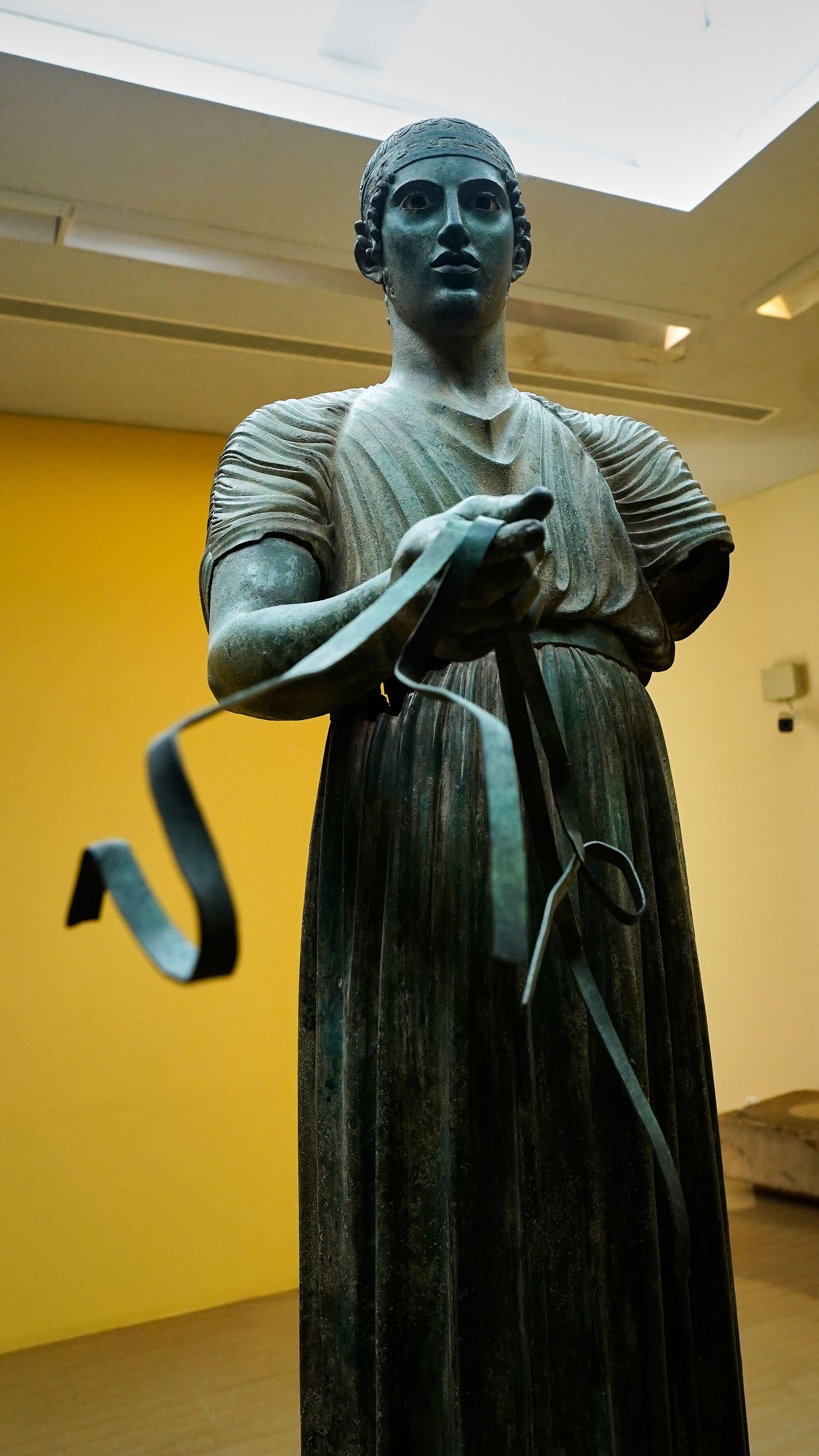
Charioteer of Delphi (Heniokhos) at the Delphi Archaeological Museum in Delphi, Greece.