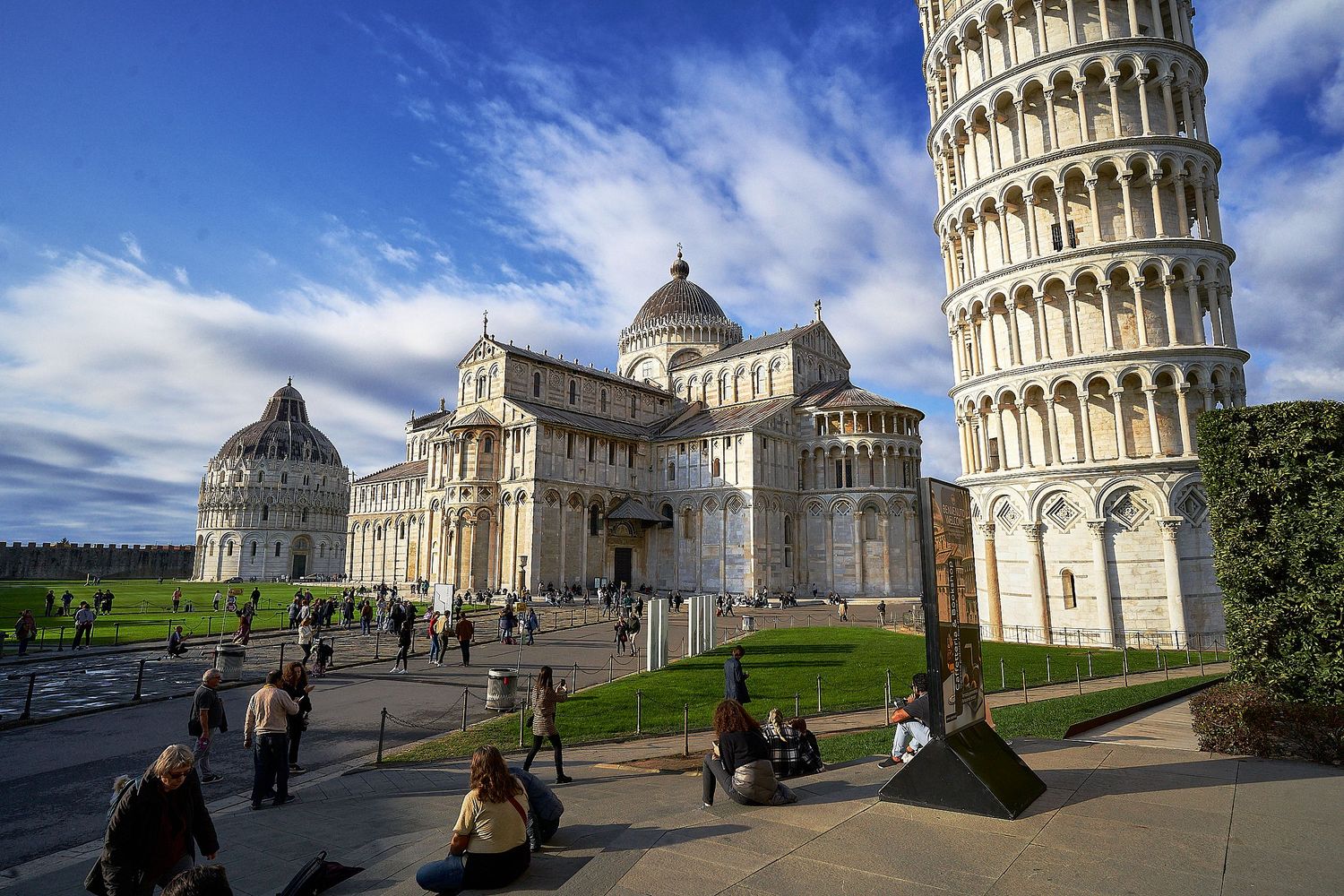
Pisa Baptistry (Left), Pisa Cathedral (Centre) & The Leaning Tower of Pisa (Right).
PISA-10/11/2022
PISA is a magnificent city, a city which I have been meaning to see for years. A central Italian city is known over the world for its Leaning Tower, it also houses other significant historical sites and is next to the Arno River. On the first day we arrived, we immediately got a cab to Pisa to see the sites and from outside its wall, lays a market. However, when I pass over the threshold walking towards the buildings inside the wall, I found myself completely mesmerised by the grandeur nature of the surrounding buildings. Inside we left our luggage in secure lockers. Walking around inside the wall feels like we are immersed in another world but to use our time wisely, we immediately explore the Tower of Pisa. Walking up those 294 steps was a little exhausting but the views that waited for us at the top were amazing of the Arena Garibaldi stadium, Pisa as well as other buildings in the Cathedral Square like the Cathedral, Pisa Baptistry and the Camposanto. Inside the Leaning Tower of Pisa are two levels providing excellent panoramic views but be aware of the stairs as they have become worn down over the years and slippery so be cautious. We then explored Pisa Cathedral, it was filled with beautifully decorated artwork on the ceiling, various biblical motifs and columns which directed my attention towards the altar. Due to the Pisa Baptistry being closed, we next walked to the Camposanto and later to the Museo dell'Opera del Duomo. This Camposanto was an excellent sight to see as it housed statues and restored frescoes, some of which had been destroyed during WW2. This part of the city is truly a magnificent sight to behold, it really captures your attention and there is definitely more to Pisa than just The Leaning Tower of Pisa.
Tired from our first day in Italy we retreated to our hotel room in Florence and as it turned to the evening, instead of resting I decided to grab some vegan gelato from Gelateria Edoardo Organic Ice Cream (Edoardo il gelato biologica) I had been recommended. I thought the ice cream I bought in Iceland was delicious but the ice cream I purchased there was enchanting as I walked around looking at the exterior of Florence's Cathedral, Baptistry and Giotto's Bell Tower. This was definitely a taste of things to come within Florence and never in my wildest dreams would I realise the impact that Florence, the heart of the renaissance would've on me.
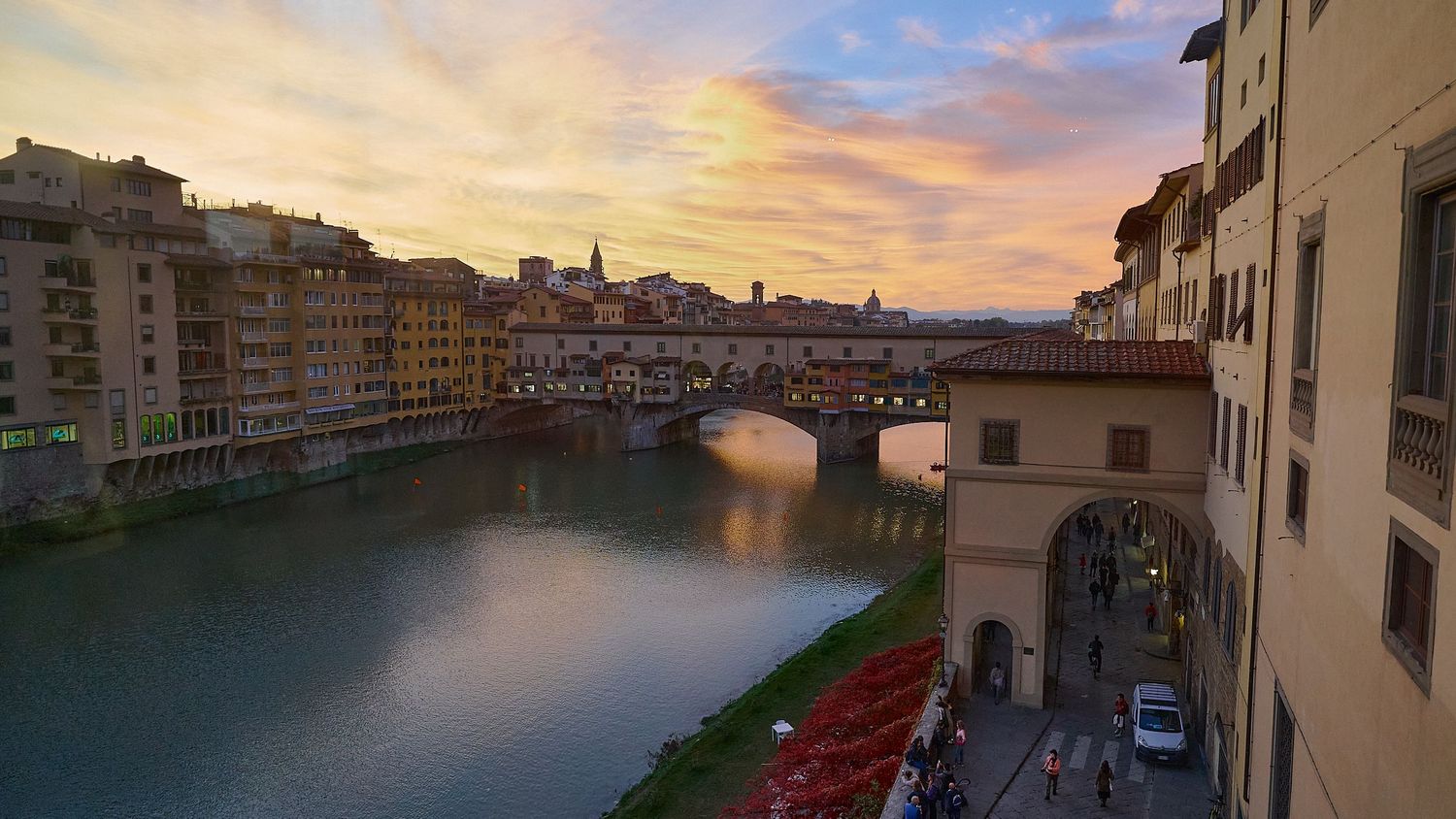
The Ponte Vecchio Bridge stands over the Arno River, Florence.
FIRENZE-11/11/2022
We got to the entrance of the Santa Maria Del Fiore Cathedral early in the morning, a small queue of people had already formed waiting for the doors of the side entrance of the cathedral to the Dome to open so that we could make our way up the 463 steps. As I approached the cathedral, I cannot help but marvel at the different styles of architecture which are intertwined and influenced within this building and its surrounding buildings, which include a mixture of Gothic, Renaissance to Romanesque architecture. The building immediately catches your eye in the centre of Florence not only with its domineering presence over the landscape but with its beautiful but elegant features, which make references to biblical motifs within its clear white marble facade. This landmark was designed by Arnolfo de Cambio in 1296 but it would remain uncompleted until the 18th century. It is the third-largest church in Europe and since 1412 is dedicated to Santa Maria del Fiore, the Virgin of the Flower, a reference to Florence's symbol, the lily. As a TV crew leave a side entrance, we are allowed into the cathedral, we walked towards the stairs through a narrow staircase in the dome, as you go further up the stairs, you gain little glimpses of the Florence cityscape via various windows and gaps. These access points provide almost a picturesque but downward gaze onto the cityscape as well as the square below. Like St Paul's Cathedral, you get to a higher level near the dome, where you get a good view of the cathedral from above but as I looked up I remained completely mesmerised by the intricate beauty, storytelling and craftsmanship which is distinct in The Last Judgement painting on the ceiling. The fresco painting was commissioned by Grand Duke Cosimo I de Medici and created by Italian Renaissance artist Giorgio Vasari but wasn't completed until 1579 by Federico Zuccari after Vasari's death. At the top of the Dome, you get excellent panoramic views of Florence in its entirety and a chance to tourist sites like the Piazza Della Republica. As I descended down the stairs, I cannot stress this enough you really have to be cautious and take your time with the stairs but be aware of how narrow it is especially when people pass you by on the stairs. Afterwards, walking down the stairs you walk into the cathedral itself, which is filled with elaborate marble designs on the floor, exquisite painting paintings, Christian iconography, romanesque columns that look like they go on forever and of course, The Last Judgement fresco painting only adds to the magnificent and unique status of this building. In the cathedral, you'll also come across some stairs that take you down to the archaeological site which includes remains of the old Santa Reparata basilica such as its columns, and beautiful mosaic floors. A church that has a history dating back to Carolingian times, it was rebuilt after wars between the Goths and Byzantium.
After that, we walked up towards the top of Giotto's Bell Tower, you get an excellent view of Florence as well as unique views of the cathedral and the dome but of the below levels of the tower but I'll say that the 398 stairs do leave you somewhat tired so remember to pace yourself. After, leaving the tower we stepped into a more busy Giotto's Campanile square, filled with people trying to sell tourists memorabilia, caricature artists and people sitting outside nearby cafes and restaurants. After that interesting but somewhat tiresome experienced, I entered the Opera del Duomo Museum, which houses monuments by masters such as Donatello, Michaelangelo and other artists. I would definitely recommend this museum to fellow history, art and museum enthusiasts, as it provides a real in-depth study of Florentine history and culture and on its top floor provides an excellent view of both Florence's Cathedral and Brunelleschi's Dome. After walking through all those twenty-eight rooms, we walked towards The Basilica of San Lorenzo, with a nearby art exhibit of a statue pushing against the building. Although it doesn't have an elaborate decorative design such as the buildings previously mentioned it still carries much significance within Florence, it holds a variety of significant paintings inside, from artists like Verrocchio, and Donatello to Lippi as well as the colourful and beautiful Glory of the Florentine Saints, a courtyard and a room filled with religious relics that belonged to the Medici family. However, the more significant part of the building is the Medici Chapels. The Chapels are believed to be created around the 16-17 centuries, and were built as extensions to the 15th Century church designed by Brunelleschi and are dedicated to Patrons of the Church, the Grand Dukes of Tuscany and the Medici family. In the Medici Chapel, there is a room called The Chapel of the Princes, which is decorated with a beautiful marble interior, covered with various sarcophaguses of Medici Grand Dukes, a marble floor decorated with various Tuscany city coats of arms and above the altar is an enormous fresco painting on the dome that's beauty renders you speechless and allude to significant chapters of Jesus's life. Next to that particular room, lies a room called the Sagrestia Nuova designed by Michaelangelo in the 16th century, which contains sculptures that stand on the tombs of Lorenzo the Magnificent and his brother Guiliano.
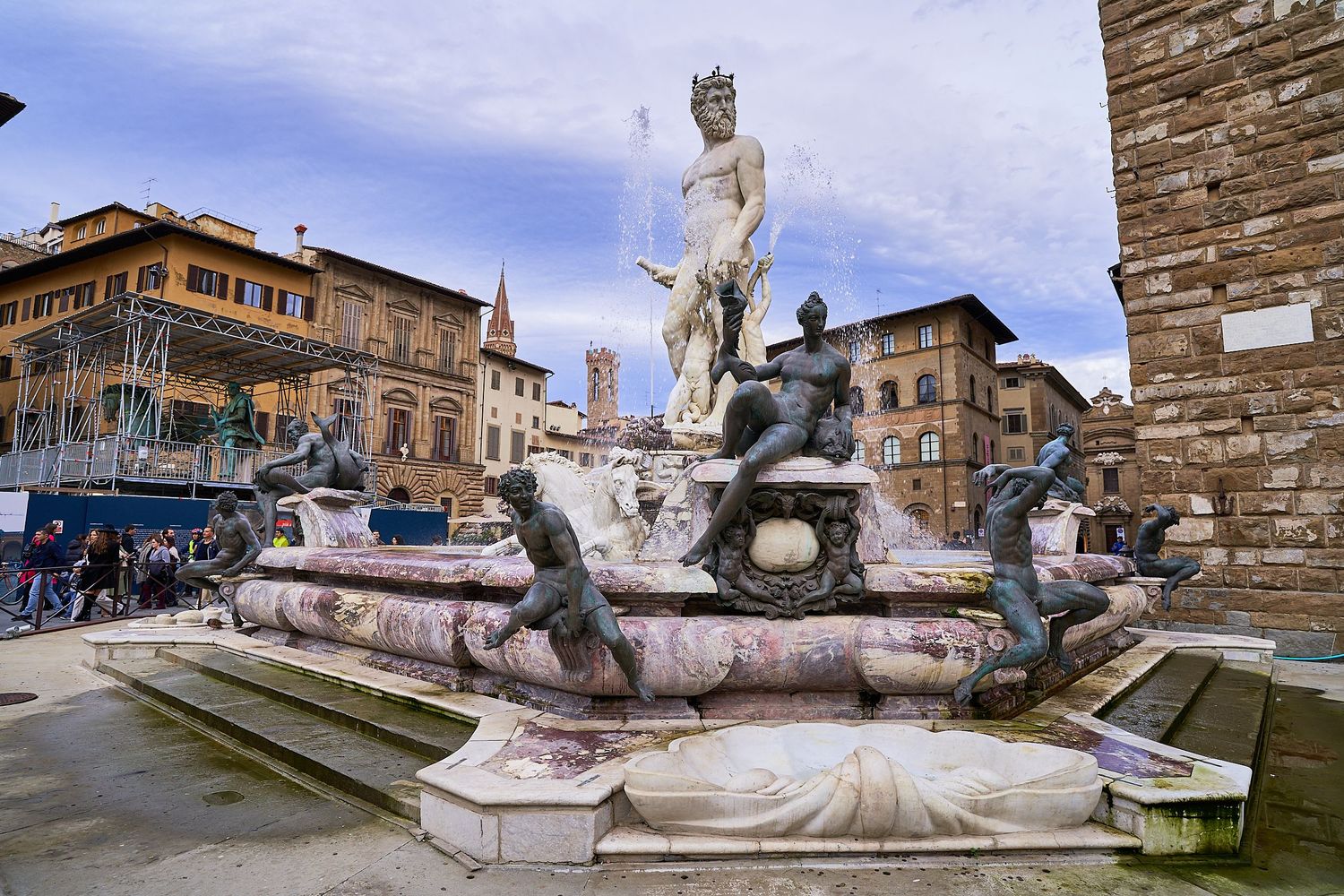
The Fountain of Neptune, Piazzale della Signoria (Signoria Square), Florence.
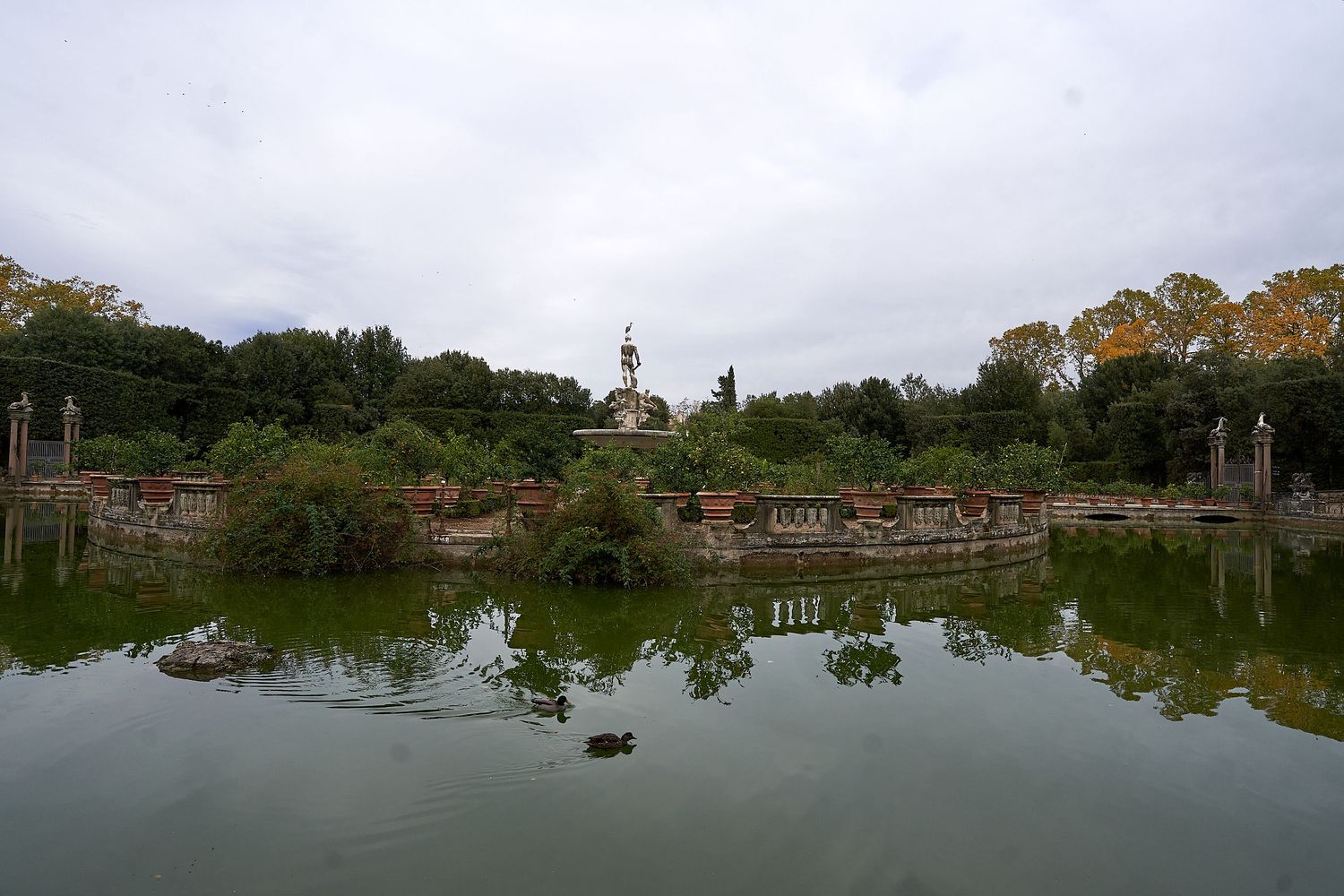
Fontana dell'Oceano, Bobboli Gardens, Florence.
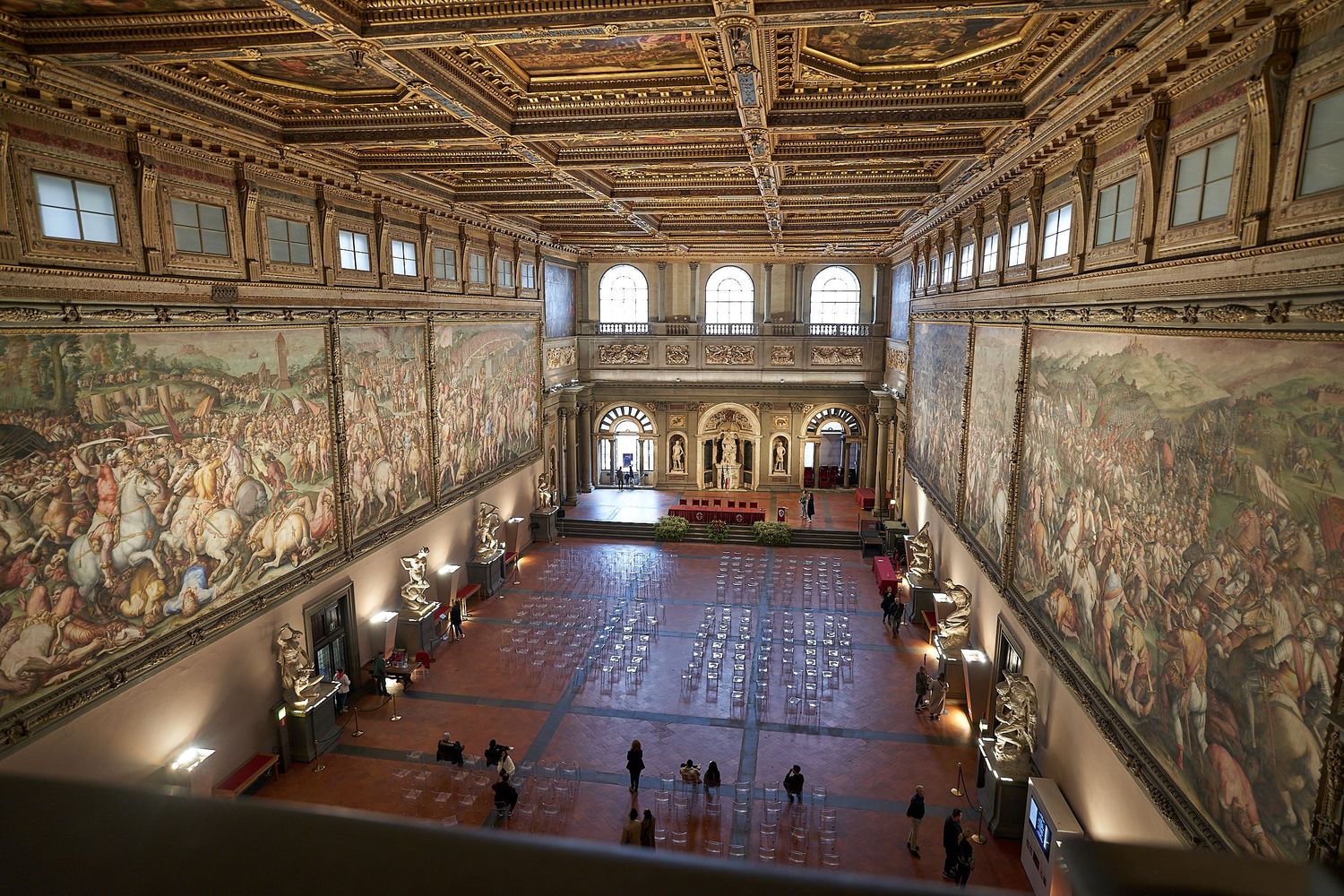
Inside the Palazzo Vecchio, Florence.
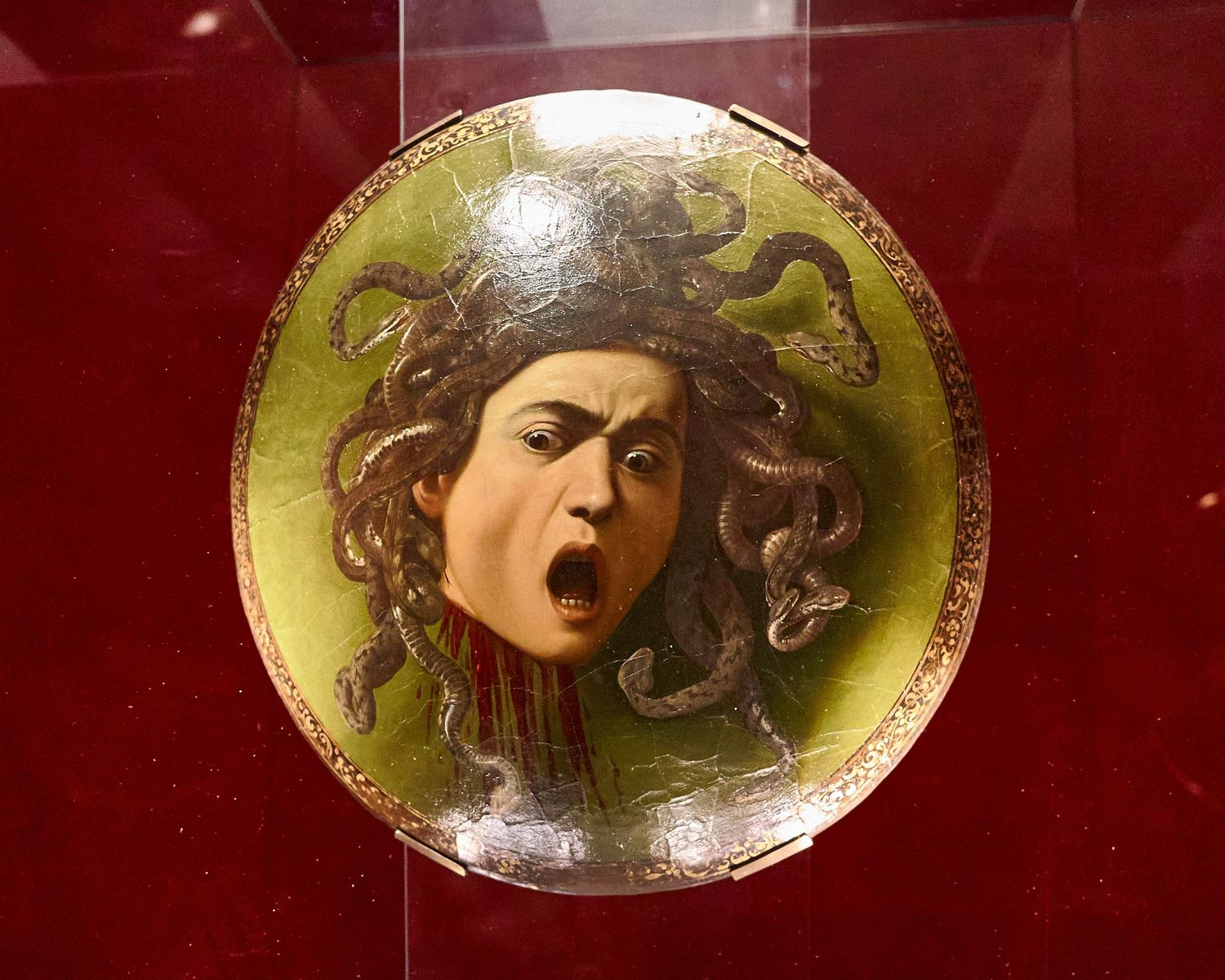
The Head of Medusa by Caravaggio, 1598. The Uffizi Gallery, Florence.
Florence-12/11/2022
Today, we started the rest of our exploration in Florence by going through the Piazza della Signoria, and through a street under the Uffizi Gallery towards the Ponte Vecchio Bridge. As we started the day pretty early the streets weren't as crowded as it was quieter and much less hectic. As we walked towards the Ponte Vecchio bridge, I noticed a rower sitting in his boat practising his rowing technique or preparing the sporting event, as he went under the bridge but back on the bridge stores had yet to be opened, flags bearing different insignia were flowing in the wind and a statue of the sculptor Benvenuto Cellini lookout towards the Arno River. Across the bridge, we walked past a few stores until we got to Pitti Palace, a Renaissance palace named after a Florentine banker called Luca Pitti, the residence would later become a symbol of Medici power over Tuscany after Cosimo de Medici and his wife Eleanor of Toledo purchased it in 1550 as the new Grand Ducal residence. Afterwards, other notable families would take up residence in the palace like the House of the Habsburg-Lorraine and the Kings of Italy from the House of Savoy. Nowadays, the palace contains five museums and stands at the foot of the Boboli Gardens. Within the main courtyard, it houses many cultural landmarks such as the Fountain of the Architoke. As you enter the Boboli Gardens you are surrounded by nature, and various statues but it also provides one hell of a view of Florence. Throughout, the garden has various pathways that take you to different areas of the gardens such as the Knight Building and Rampart, which provides a unique view of the Florentine country to the Fontana dell'Oceano fountain. Each area of the garden is filled with various pieces of vegetation and different wildlife like birds and squirrels but the craftsmanship of these sculptures and statues is outstanding. Afterwards, we explored the various rooms of Pitti Palace, like The Treasury of the Grand Dukes and the Museum of Russian Icons, the Palatine Gallery to the Gallery of Modern Art. These rooms really provided me with an insight into how people lived there, the customs, and culture and how it changed over various time periods.
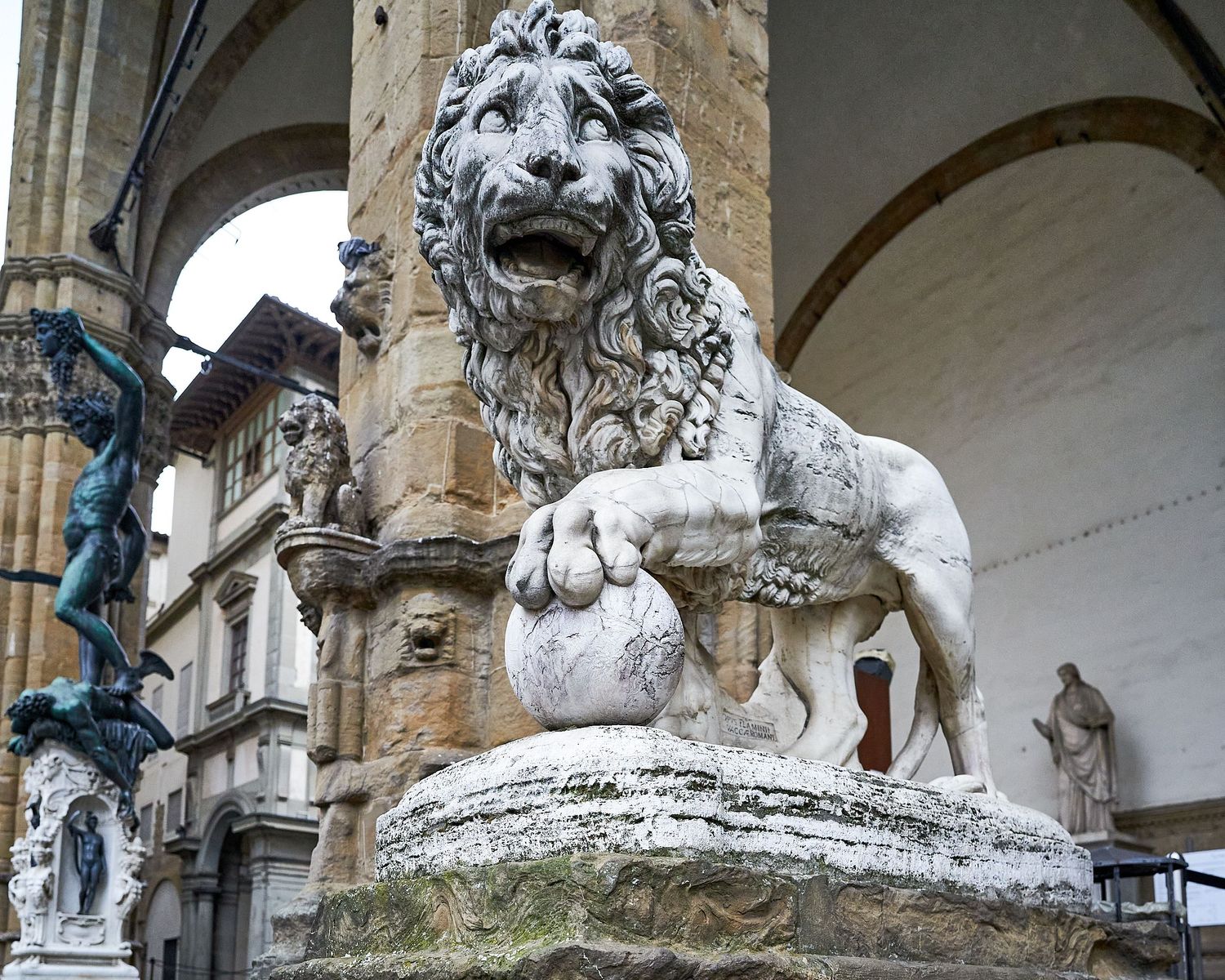
After leaving the residence, the streets weren't so quiet, people were either sitting down outside the Pitti Palace, queuing to get into the palace or walking past shops towards the Ponte Vecchio bridge. The bridge was filled with people, as I walked in the road I could see people buying tourist items, like jewellery and books from nearby stores. Walking down the main road, I noticed people taking pics of a statue, on the bridge was more vibrant with life as compared to the morning. Brunelleschi's Dome could be seen in the distance and people on a side street to the bridge watched the rower practice his rowing technique on the Arno River. We next went to the Uffizi Gallery, where many statues of prominent figures such as Machiavelli, Da Vinci to Lorenzo de Medici are situated, we were really excited about seeing this place in Florence, as its holds many masterpieces from artists such as Caravaggio, and Michaelangelo, Giotto to Botticelli as well as ancient Greek & Roman statues and busts, that once belonged to the Medici. The gallery was designed between 1560-80 by Giorgio Vasari and is known worldwide for containing collections of art from the Middle ages to the Modern Period. I was just glad we got to see masterpieces like Botticelli's Birth of Venus and go through every other room in the building. Afterwards, we walked towards the Palazzo Vecchio, a town hall that looks over the Piazza delle Signoria (Town Square). Inside, we entered many rooms containing marble statues, paintings, frescos on the walls and a Putto with the Dolphin sculpture in the middle of the courtyard but I was just awestruck when I noticed the frescos on either side of the Salone dei Cinquecento that was extraordinary, it wasn't something I had ever seen in my life. After just looking at it, the time had come for us to leave, so we hurried to take some pics of The Fountain of Neptune, the bronze statue of Cosimo I, statues within the Loggia dei Lanzi and the replica statue of David and Bandinelli's Hercules and Caucus that remain outside the entrance to the Palazzo Vecchio.
We next turned our attention to the Galleria de Accademia, a gallery which housed many significant pieces of art but there was one in particular, that we wanted to see. It was the evening, the streets were busy with tourists and locals, and street lights shined against the dark background. Making our way through the Florentine streets, on the way we passed the Cathedral of Santa Maria Del Fiore, which was hustling with people. We later reached the Galleria de Accademia after a twenty-minute walk, a large queue had formed that stretched from the building's entrance to around the corner but I was so glad, that we wouldn't have to join the queue as we had already purchased the tickets in advance. We entered and walked up the corridor marvelling at various sculptures and paintings by Florentine artists from the 14th to 16th centuries. However, as I walked further up the main corridor, I noticed a massive crowd that had formed around all sides of an artwork, it was Michaelangelo's sculpture of David. The statue of David was created by Michaelangelo between 1501 to 1504, it was originally created with the intention to be displayed outside Florence's Cathedral but was placed instead outside the Palazzo Vecchio until it was replaced by a replica and moved to its current position in 1873. The statue symbolizes Florentine's strength and independence against rival, powerful city-states and the hegemony of the Medici family. The statue's fixated stare is focused towards Rome, as that is where the Medicis lived. As I got closer to the statue, I brushed through the crowd to get a better view of it and I looked up in awe, excited to see one of the greatest pieces of art in western civilisation. The detail, craftsmanship and techniques that Michaelangelo utilised must have been outstanding and time-consuming to create this beautiful artwork. I walked away thinking I was glad to have seen this magnificent piece of art in my lifetime.
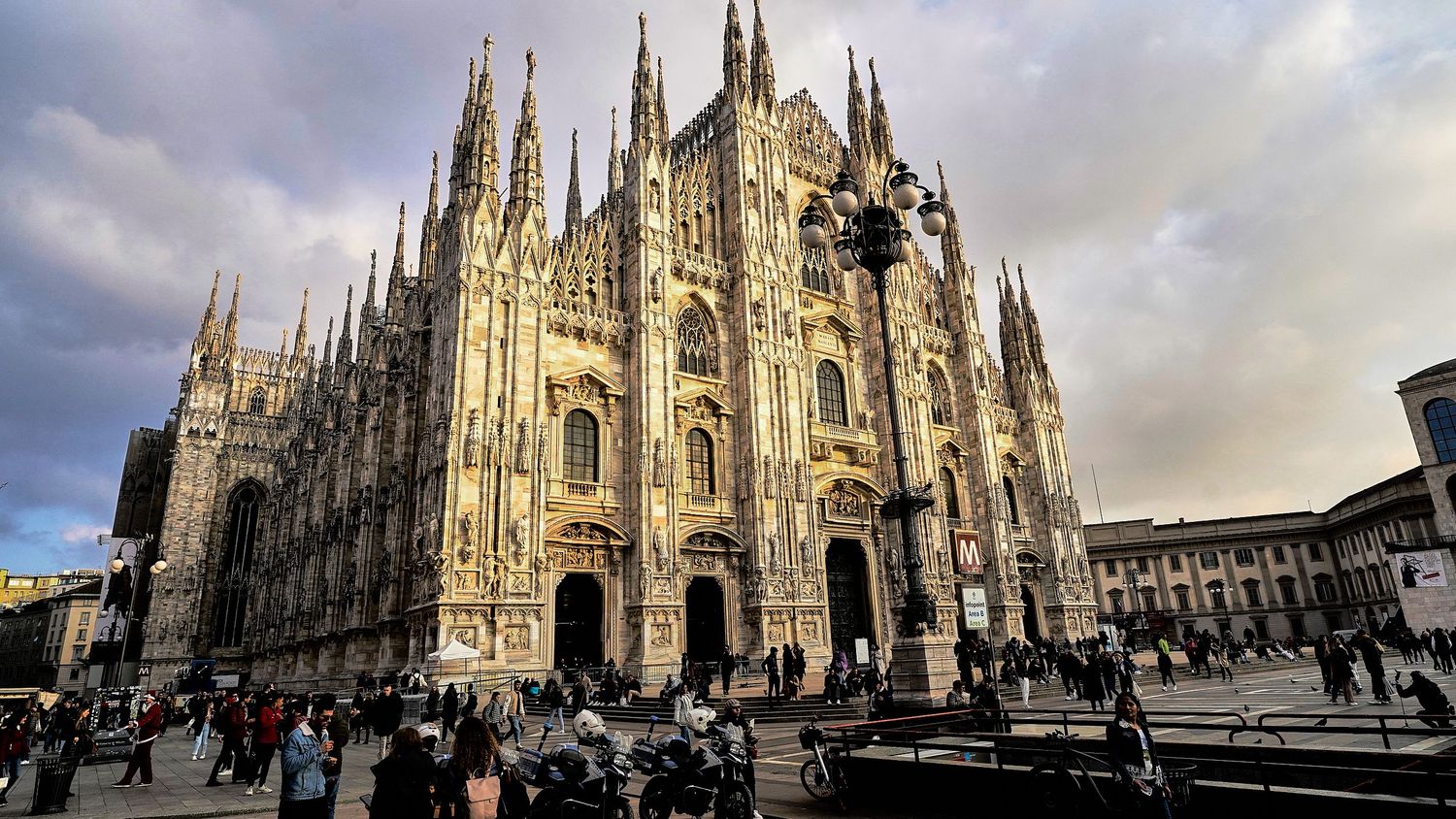
The Duomo di Milano, Piazza del Duomo, Milan.
MILAN-13-14/11/2022
Early in the morning on the 13th of November, I and my brother hurried towards the Firenze Santa Maria Novella from the hotel to catch our Italo train to Milan Centrale Station. We arrived with a few minutes to spare, where we boarded a dark red train and headed towards our seats in Economy Class. A few minutes after the train left the station, we charged our phones and ordered croissants and a latte for our breakfast from an Italian staff member who also speaks English. That was great because we didn't exactly have enough time for breakfast back at the hotel or were not exactly fluent in Italian. Anyway, as I relax in my seat, eating my croissant and watching a movie via the WiFi network, I found myself thinking this is the best train experience I've ever experienced in my life, why can't more trains in London be more like this?
We arrived in Milan the capital city of Lombardy at 10:20 am, as we disembarked the train to the platform, we headed with a crowd of people towards the exit and head towards the nearby taxi station, waited patiently behind some people for our taxi, as neither one of us can contain our eagerness and excitement to start exploring this very modern city. Milan is considered a leading alpha global city, which has historical roots as a major political centre that dates back to late antiquity as the Western Roman Empire's capital, the capital of the Duchy of Milan from the 12th to 16th century and was a very powerful force during the Renaissance. The queue isn't too long as people dash to get into their taxis, which is great as we don't have to wait too long unlike in Paris to get in a taxi to head to the first tourist attraction in Milan, The Duomo di Milano (Milan Cathedral). After progressing through the Milan streets, we come to Cathedral Square, we set our sights on not only the Milan Cathedral but the Galleria Vittorio Emmanuel II and a statue of Vittorio Emanuele II, dedicated to the first king to rule a united Italy from 1861 to 1878. As I looked straight ahead at the Duomo di Milano, I was rendered awestruck and speechless by its beauty and the intricate design of the Renaissance and Gothic architectural style building. Like St Paul's Cathedral, it has a very long-rooted history, construction of the original building began in 1386 by Simeone di Orsenigo but it took six centuries for the final details to be completed in 1965, and further restorations of the building are still underway. It's also considered the largest church in the Italian Republic and is dedicated to the Nativity of St Mary. Instead of taking the 250 stairs, we took a lift to the first floor and I couldn't wait to start taking pictures. We reached the first floor, stepped out of the lift onto the clear white marble floor and there were a lot of people. As I glanced around I was intrigued by the design of the building, the nearby statues, the crown of spires that held biblical figures atop, the Gold Madonna at the top of the cathedral and the different panoramic views of Milan you could see from the top were breathtaking, amazing but also daunting if you not a fan of heights. Anyway, these views of the Milan cityscape were like having an insight into another world and era. Although we walked up the rest of the stairs to the rooftop, I just couldn't help but admire and marvel at the elaborate beauty of the surrounding cityscape from that entire experience. At the top, there were numerous people like me taking many photos of the surrounding environment, trying to capture our experience as I would never know if this would be the only time that I visited the cathedral. On the rooftop, I spent two hours with my telephoto lens, capturing the Golden Madonna and the surrounding landscape and later we would walk down all the stairs to have a look around the interior of the cathedral, which was equally as magnificent and elaborate as its exterior.
Worried that we were falling behind time, we rushed down the stairs to the nearby Museo del Duomo, where we quickly browsed its statues and tapestries and then later hurried towards the Sforza Castle. Growing up in England I have always been awestruck by castles such as Hampton Court Palace and the Tower of London but in my opinion, those buildings pale in comparison to the Sforza Castle. As you walk towards its entrance, you are gobsmacked at its red facade and the dominant presence it imposes on its surrounding environment and the fountain in front of the entrance rivals the fountains in Trafalgar Square in terms of ingenuity. Stepping into the court space, I was surrounded by numerous statues, and pieces of artwork mainly attributed to the Romans as well as pathways that lead to various art gallery exhibitions and masterpieces from artists such as Michaelangelo, Titian, and Da Vinci to Canaletto as well as historical items. Sforeszco Castle is a medieval fortification, built in the 15th century by Francesco Sforza the Duke of Milan on the remains of the 14th-century fortification which was built by Galeazzo II Visconti and his successors. In the 16th and 17th centuries, it was enlarged and renovated and after it was extensively rebuilt by Luca Beltrami in the late 19th century, it now houses art galleries and museums. Unfortunately, due to the lack of time and the castle usually being closed on Mondays, we quickly went through a lot of the art galleries and museum exhibitions before closing times, so we couldn't spend as much time viewing the items as we would've liked to. Whilst browsing I was especially captivated by the paintings by Canaletto of the Venice canals, especially by the techniques, and passion of the craft which had been poured into the paintings. For me, those paintings not only captured the significance of its trading from its ports and atmosphere associated with Venetian culture but it was like it transported me back to 18th-century Venice.
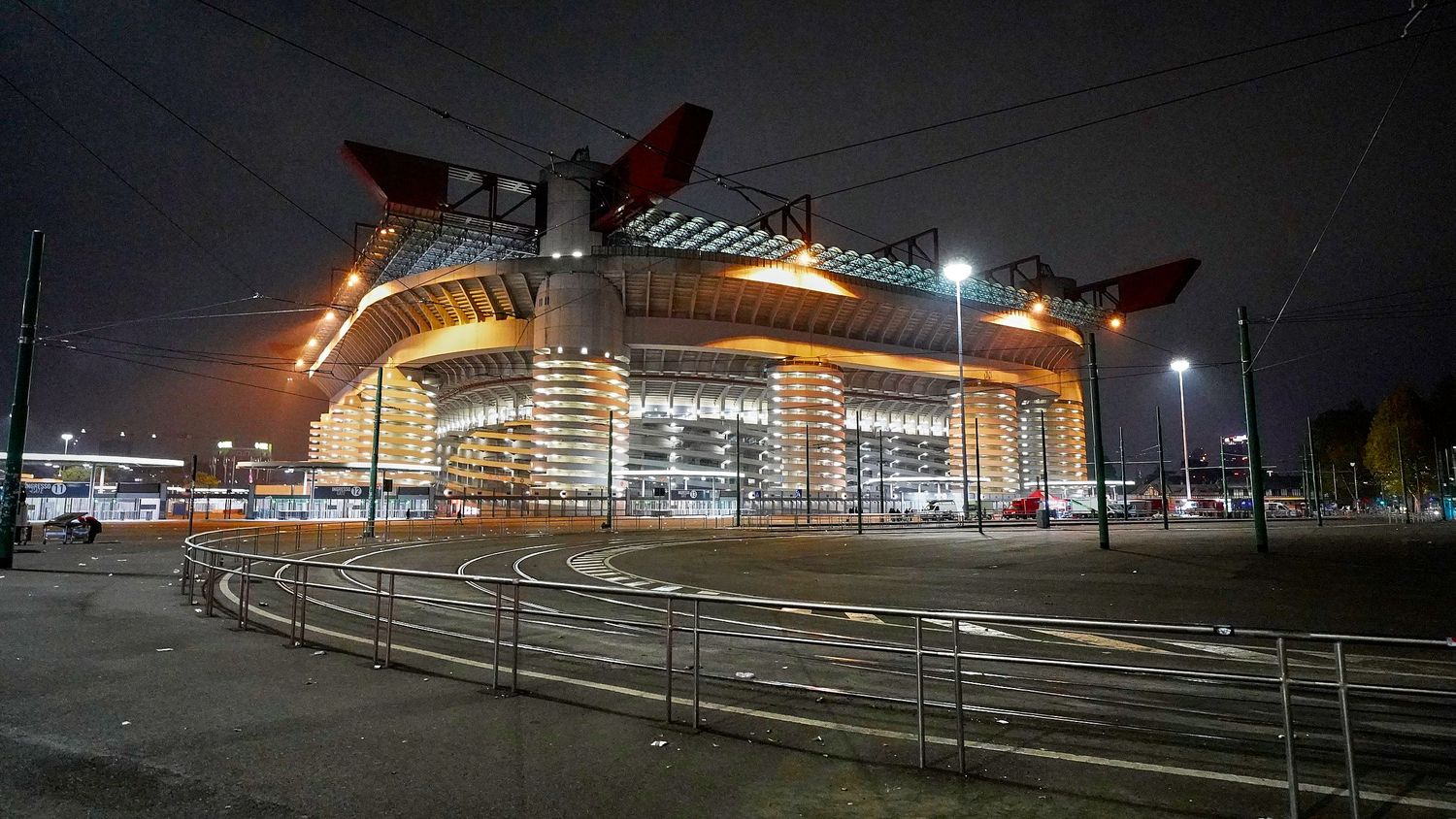
The San Siro Stadium, Milan.
The Atmosphere at the San Siro Stadium
Checking into the hotel, the staff was so friendly and welcoming to us and after getting to our room we got some much-needed rest. Later that evening, we set off from our hotel for the San Siro Stadium, the walk took us some 20 minutes. The San Siro Stadium which was constructed in 1926, holds a seating capacity of 80,000, making it the largest stadium in Italy and is home to both AC Milan and Inter Milan. As we got nearer to the stadium, we were joined by other football fans, when we reached the stadium I was blown back by its grandeur as fans lined up to get inside and vendors sold scarves and shirts for the upcoming match. We queued up to get inside the stadium, the queue moved quickly as people passed the security checks, it was our turn my brother gets in without any issue but I'm turned away by an Italian football steward who resembles the chicken man from Toy Story 2 because I'm carrying a camera. After everyone else gets through the gates my brother pleads with the stewards to let us in saying it was expensive coming to see the match from London and that I am not a professional photographer or an amateur photographer. After a few minutes, the football stewards let me through on the condition I don't use my camera inside the stadium, which I quickly agree to. We look at our watches and run to get to our seats before the match between AC Milan and Fiorentina starts, as we enter the stadium looking for our seats the players are exchanging badges. The sound and atmosphere around the stadium were loud, magical and electric and as the game got underway, I glanced at the small contingent of Fiorentina fans to the top left corner of the stadium compared to the large contingent of AC Milan fans to my right-hand side numerous tiers behind the goal. Passionate are both sets of fans, the Fiorentina fans cheer on their team whilst some hardcore AC Milan fans, hold up massive AC Milan banners, and numerous flares were let off producing a large amount of smoke, the crowd was buzzing as they chanted and a few AC Milan fans during the match hang off the stadium rails trying to further whip up and influence the crowd. The game proved to be end-to-end stuff, Rafael Leao scored for Milan first but Fiorentina later equalised through Barak. Throughout the game, each team tries to score with their chances, but neither of the teams capitalizes on their goalscoring opportunities, tackles are flying around, the referee really needs to impose himself on the game and tension is increasing between both the teams and the opposing managers on the touchline as the clock winds down. Fiorentina is dominating the tempo of the game and looked like the team most likely to score next. But that's the funny thing about football, it's not predictable as AC Milan wins the game due to an own goal from Milenkovic. The game ends, and the Milan ultras are very delighted about their side's win and passionately sing into the night as fans leave the stadium and others take pictures.
After a thoroughly enjoyable and excellent game of football, we go down to a part of the stadium for a meal, where we are greeted by a row of women wearing red business professional suits, which reminds me of the Qatar Airlines Stewardess attire seen on those TV adverts. We are immediately escorted to our table, given a vegan meal and enjoy the atmosphere and music from the DJ and the violinist. The food is outstanding, and the atmosphere is exquisite, before leaving I get pictures of myself in front of the pitch and I am left thinking AC Milan FC really treat their fans really well and appreciates the loyalty and commitment of their fanbase. Leaving the stadium, I have a kick around with some Milan fans and take some pics of the stadium as my brother purchases an AC Milan scarf for me to remember this unique experience. From my first experience in Milan, I would say, don't take a camera to a football game in Milan as you won't be allowed to enter the stadium, the fans are much better behaved compared to the 80s and 90s but still be wary of people and your surroundings but also enjoy the overall occasion. After an overnight stay at a hotel, on the 14th of November, we returned to Florence.
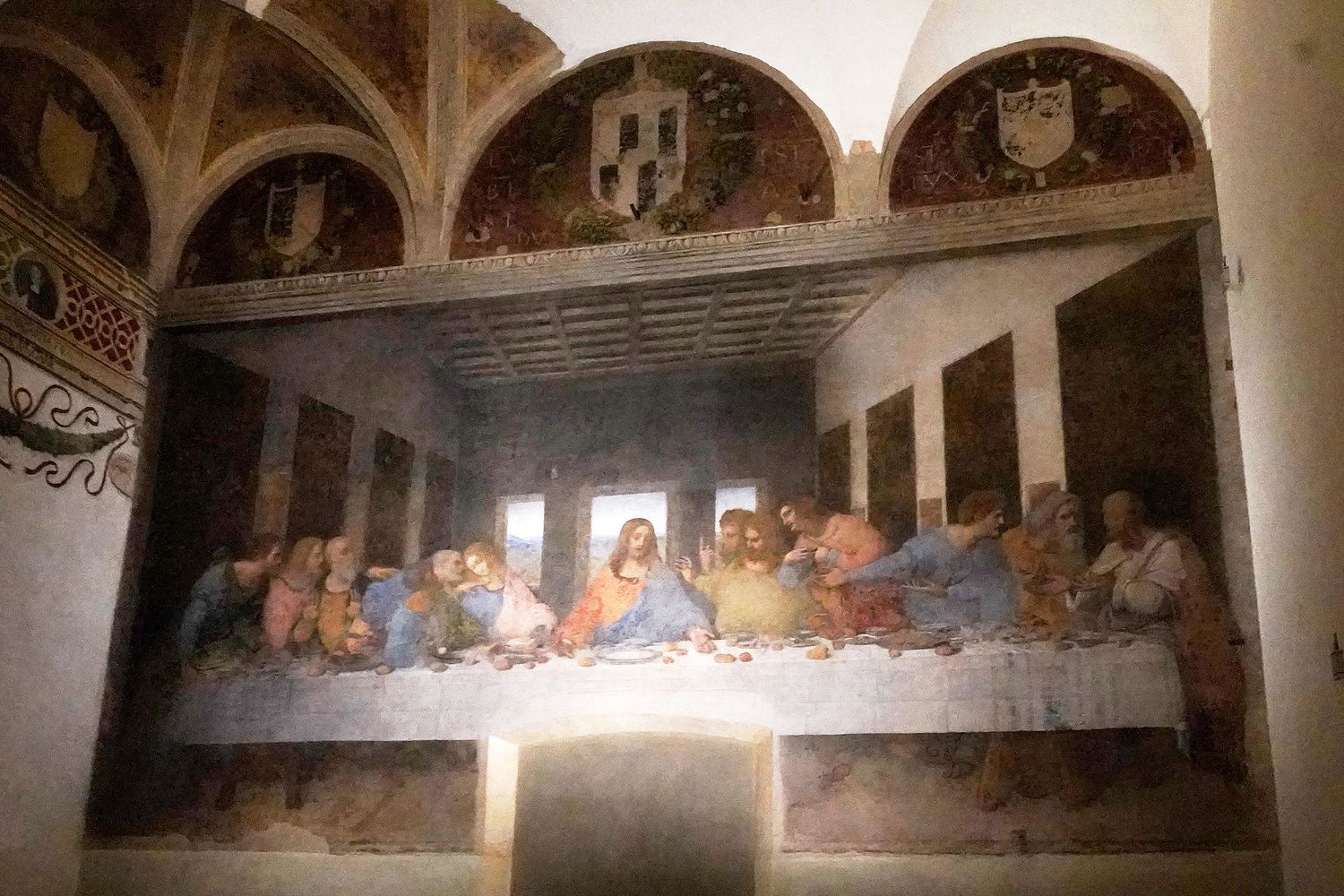
The Last Supper by Leonardo Da Vinci. The Santa Maria Delle Grazie, Milan.
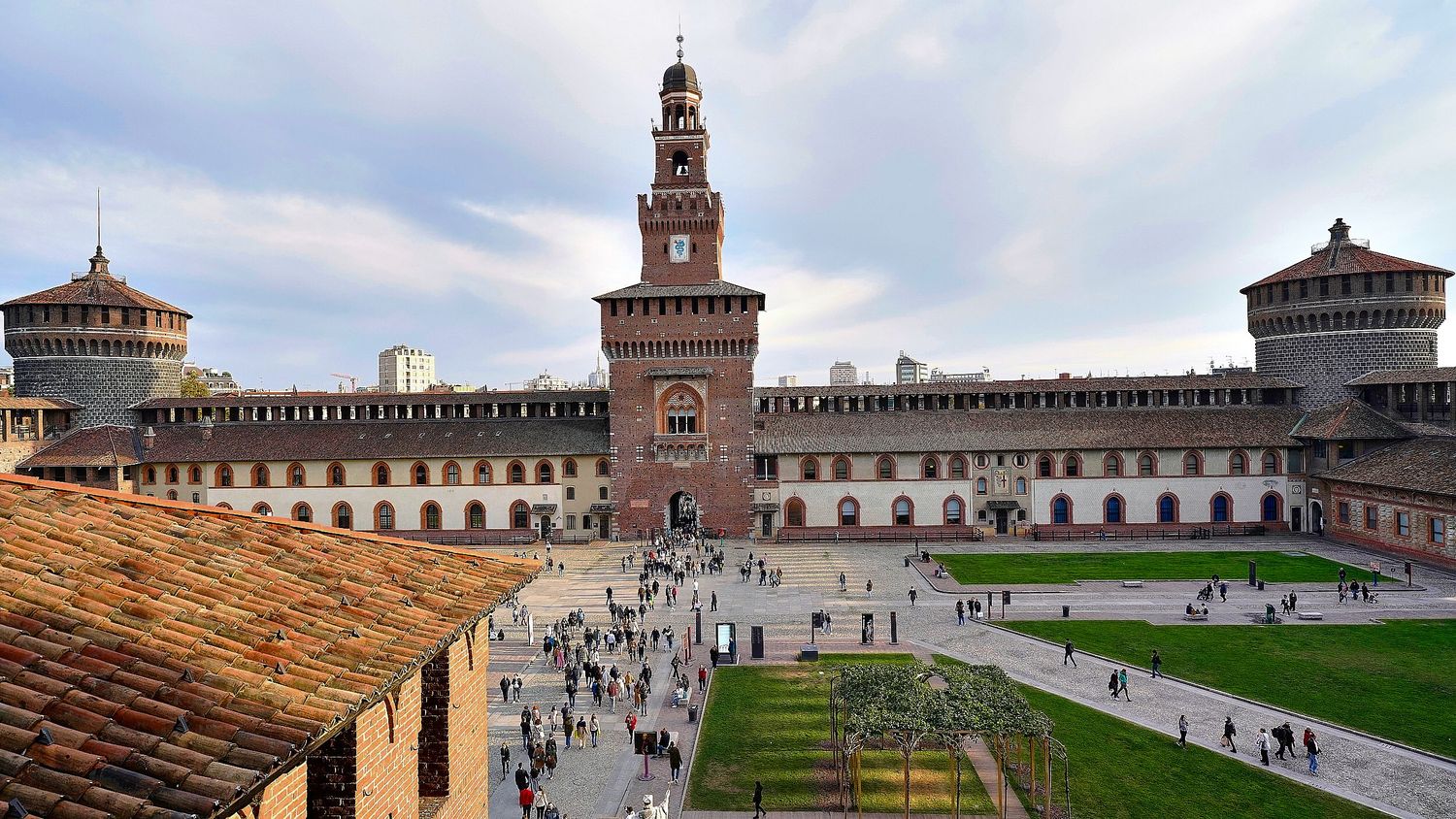
Sforza's Castle, Milan.
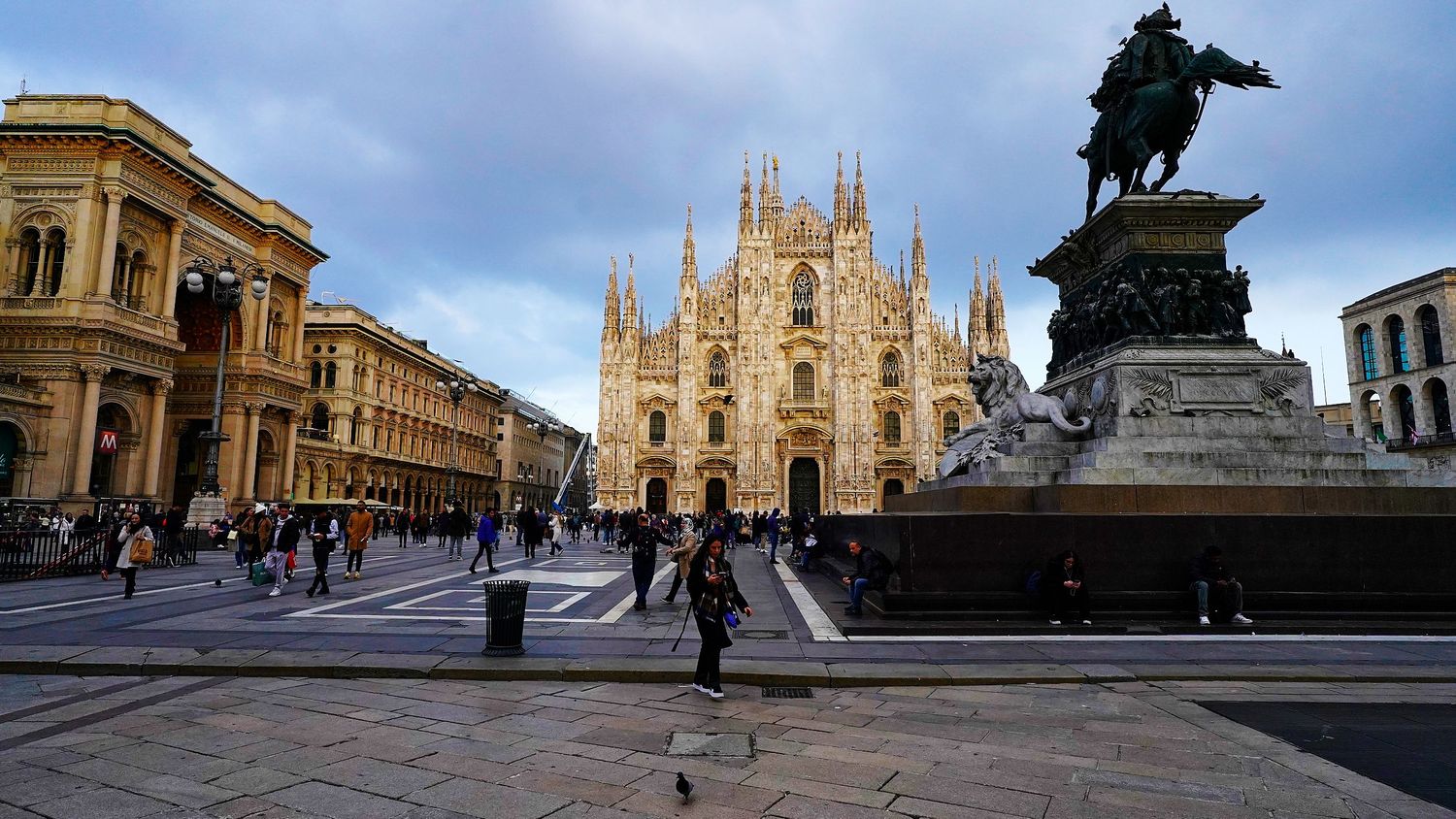
Galleria Vittorio Emanuele II (Left), Duomo di Milano (Back) & statue of King Vittorio Emanuele II (Right) in the Piazza del Duomo, Milan.
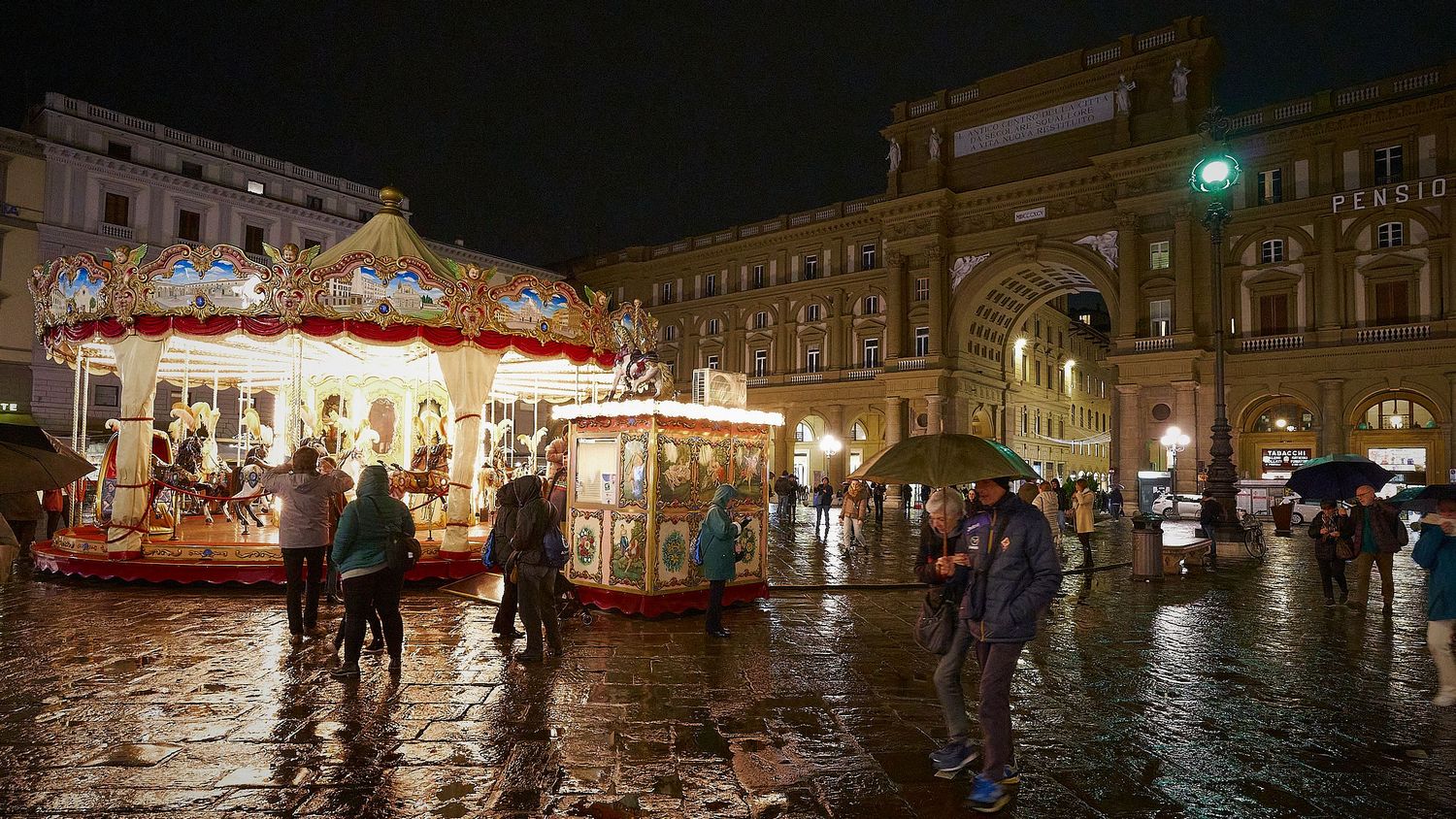
Piazza della Republica, Florence, Italy.
Milan & Florence-15/11/2022
After returning to Florence, the next day we immediately returned back to Milan to see the Pinacoteca Ambrosina, the Santa Maria delle Grazie, to see the original Last Supper painting, Sforza's castle, The Arch of Peace, Milan's Cathedral and lastly the Galleria Vittorio Emanuele II. The Pinacoteca Ambrosina is a historic library in Milan, it houses many pieces of artwork, from statues, paintings etc, it consists of 24 rooms and it houses work from artists such as Botticelli, Caravaggio, Titian, DaVinci and other artists like Raphael to Nuvolone. The library was founded in 1618 when Cardinal Federico Borromeo donated his personal collection of statues, drawings and paintings. The Santa Maria delle Grazie building with its red exterior really is enormous and when you step inside, you enter a room with a group of people, the doors immediately closed behind me and you are given a certain amount of time to view and appreciate the beauty and the majestic craftsmanship of the original Last Supper. We next walked to the Arch of Peace which is located in the Parco Sempione park behind Sforza's Castle, which dates back to the 19th century when it was constructed under Napoleonic rule, it also contains bass reliefs referencing various historical moments. The Neoclassical arch is truly amazing with its dominant presence within the surrounding area, imagery and historic roots, I couldn't help but think of how much the arch is similar to one in Marble Arch. Whereas, Sforza's Castle towers above everything else in the surrounding landscape and you are spoiled for choice with its various museums and art exhibitions. When I got to the main square in Cathedral square, you are almost lost in the crowd in this tourist hotspot, the elegant beauty of the Milan Cathedral is just majestic and the Galleria Vittorio Emanuele II is vibrant with atmosphere as people shop and enjoyed eating various meals at nearby restaurants throughout the day but I was taken aback by the glass roof of the arcade, which I could see from the top of the Milan Cathedral, the colourful imagery inside and I was also amazed by the marble floor, especially the various iconography such as the She-wolf (Roman Mythology), which is a symbol of Rome. From my second experience in Milan, I would say take your time in exploring Milan, grab some Milan cuisine to get a feel of the local culture and purchase tickets to see the original the Last Supper painting weeks or months ahead before you travel, as the tickets tend to sell out very quickly. I also passed by a Milanese chocolate shop called Venchi near Sforza's Castle and their chocolate was delightful, and a Luca Faloni store, and their staff were so friendly, knowledgable and helpful when it comes to fashion. After chatting with one of the store members, he showed us how much of a passionate AC Milan supporter, by showing his football tattoos and we learned that he had attended the same match as we did. After purchasing a product, we celebrated with Prosecco, which I thought was a really excellent way to celebrate the end of my time in Milan.
Back in Florence via a two-hour train journey to Florence, once we get to the train station I hurried towards the Palazzo Vecchio to get to the Torre di Arnolfo but sadly due to the rain, the tower is closed down. Although, this is a great disappointment at first the tour guide agrees to take the group to the highest point within the Palazzo Vecchio. After walking various stairs and observing pieces of art along the way, we get to the top of the Palazzo Vecchio, which provides some really amazing panoramic views of Florences from various angles. Knowing this might be the last time that I'm going to be in this building, I decided to take full advantage of this opportunity by walking around it twice and taking multiple pictures of the views of the city from various angles. The various angles in the building provided a different perspective of Florence in its magnificence and beauty. However, as I photograph the Torre di Arnolfo Tower and later descend down the building towards the exit, I can't help but think about the views of the city that I would've captured with my camera if it wasn't for the rain. What could've been but I'm just glad we didn't experience much rain throughout the duration of my holiday. As I got to the ground floor, I purchased a marble statue of a Lion underlined with the word Firenze. It was pretty dark stepping out of the Palazzo Vecchio onto the street, as we walked towards the Piazzale Michaelangelo, which we later reached, it was pretty dark and full of tourists but we stayed there for an hour or so. I took many pics of the Florentine landscape lit up at night. As we descended down the staircase, we promised to come back to this location one last time on our last day in Florence. We left the square to head towards our hotel, as we walked back we passed by some tourist sights such as the Ponte Vecchio bridge, Fountain of Neptune, Fontana del Porcelino (The Bronze Fountain of the Boar) and a Merry-go Round ride in the Piazza dell Repubblica (Historic city square) and the Florence streets were decorated with hanging Christmas lights shining through the night.
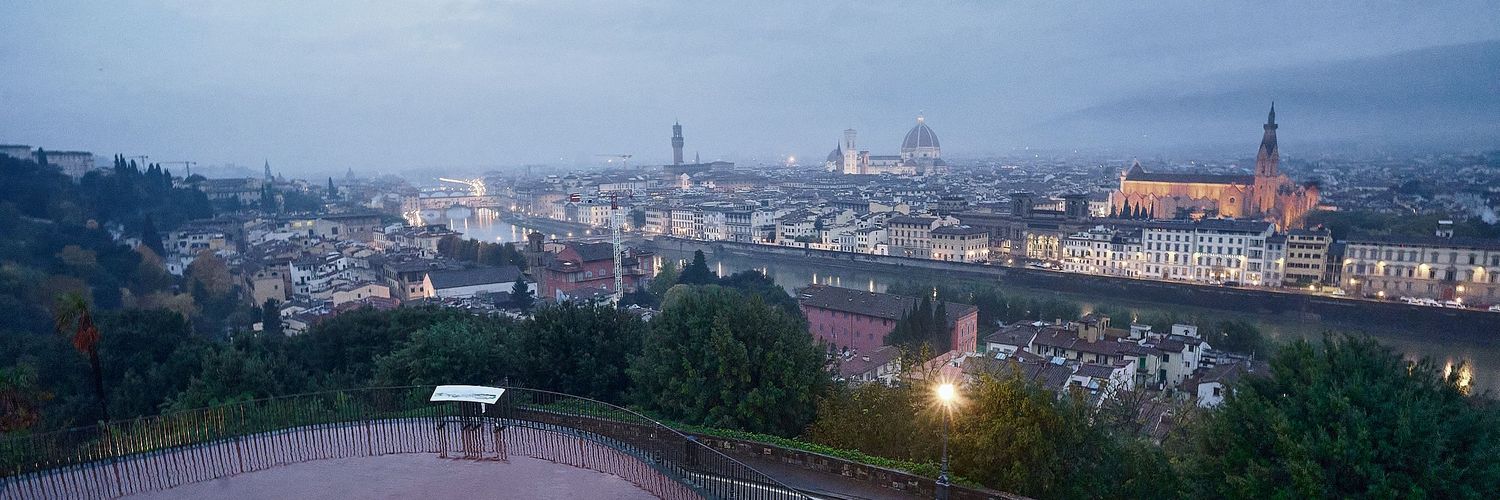
Florence cityscape taken from the Palazzo Michaelangelo.
Last Day in Florence-16/11/2022
Our last day in Florence has finally arrived. With our flight in the afternoon, we made the choice to go and explore Florence one last time. On this particular day, we left the hotel early around 6:15 am in the morning, it was lightly raining as we explored tourist sites one last time such as the Porcellino (Bronze Fountain of a boar), the Piazza della Repubblica (Florence city square), The Piazza della Signoria square and its statues, and we walked through the Piazzale degli Uffizi to across the Arno River on the Ponte Vecchio bridge. From that side of the river, we walked a few minutes towards the 14th-century Tower of Porta San Niccolo and then on towards the Piazzale Michaelangelo. A famous square in Florence that includes a replica statue of David and spectacular panoramic views of the Florence cityscape from across the Arno River as well as Florence's former city walls and the Boboli Gardens. When we reached the Piazzale Michaelangelo, it was empty and eerily quiet. It was an awesome place for taking pics of Florence lit up, and being able to appreciate the city more when there aren't as many people was a great experience. In the distance, we then walked to a nearby church called the Santa Maria Novella, which was quiet, and spacious but was under refurbishment at the time. After exploring the church we walked fast back towards Florence's Cathedral, and later with a gelato in my hand I had purchased from a nearby cafe called II Bottegone, it was scrumptious, I walked around the buildings twice before heading off to the hotel to get ready to travel to the airport. Also, let me not forget to mention, as I was so occupied with exploring tourist sites within Florence, I survived mainly pizza from Ciro and Sons-Restaurant Pizzeria Firenze. The Margherita pizzas were thin-based, the sauce was enjoyable and the cheese easily fell off the base with little effort but the overall food was mouth-wateringly delicious.
As I walked through the streets of Florence towards the station and on the train journey, I was left sad that my time in Florence had come to an end. However, I not only thought about how lucky I was to experience various tourist sites and meet some people and Florentine culture on this unique journey but also the great memories I had accumulated through this vacation. I remarked on what a beautiful and remarkable, historical city, Florence is but I asked myself, could I actually envision myself putting down roots and living there? The answer to that was a resounding YES. Nowadays, it seems that happiness is predicated on finding that special someone in your life, but I believe that is wrong you don't need to find someone to find true happiness in life. Although I may be British, Florence is where my heart yearns to return to. To amend a Gertrude Stein quote, the UK is my county, and Florence is my hometown.